
In the vast expanse of Mongolia, where the rugged terrain and the boundless blue skies meet, a captivating tradition unfolds that resonates with a sense of mastery, culture, and the deep connection between humans and nature.
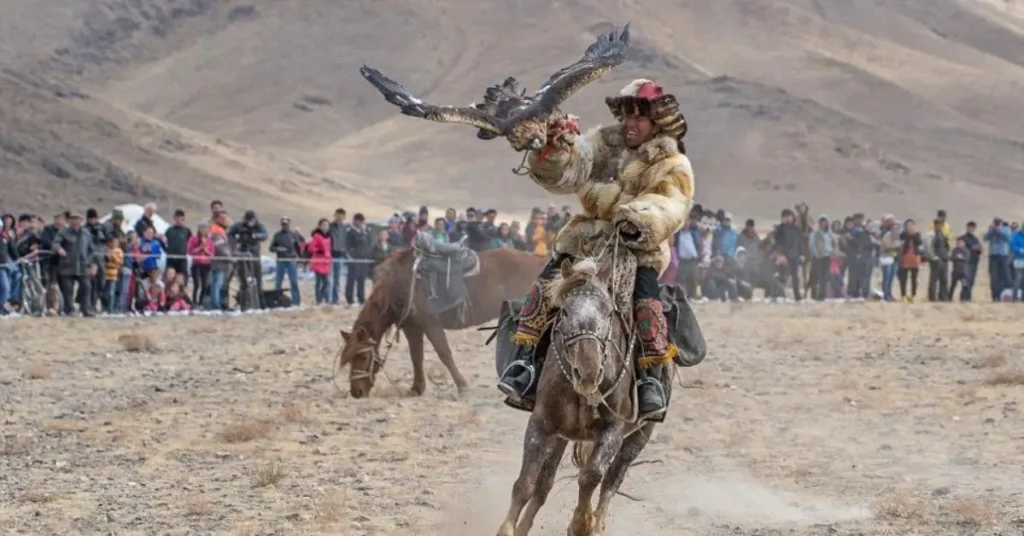
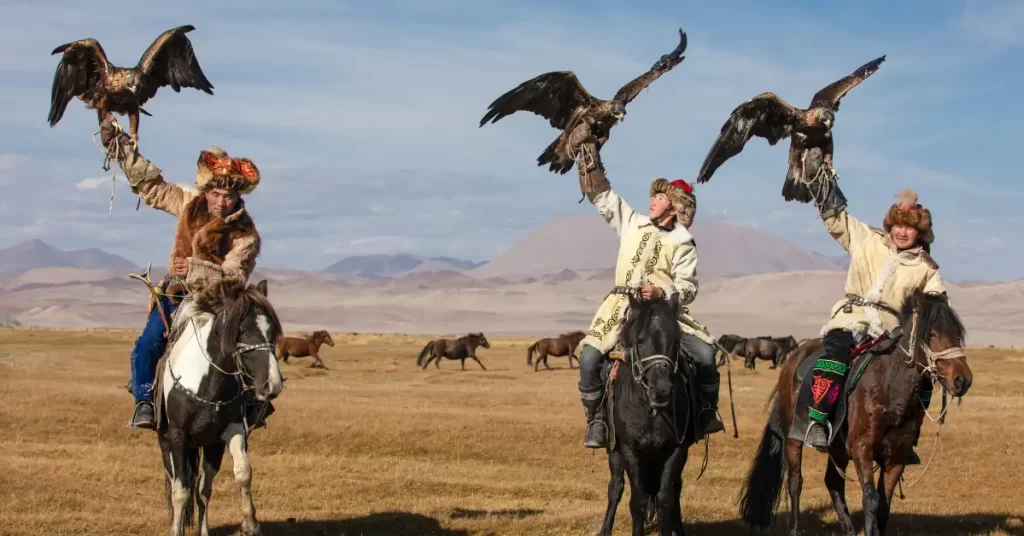
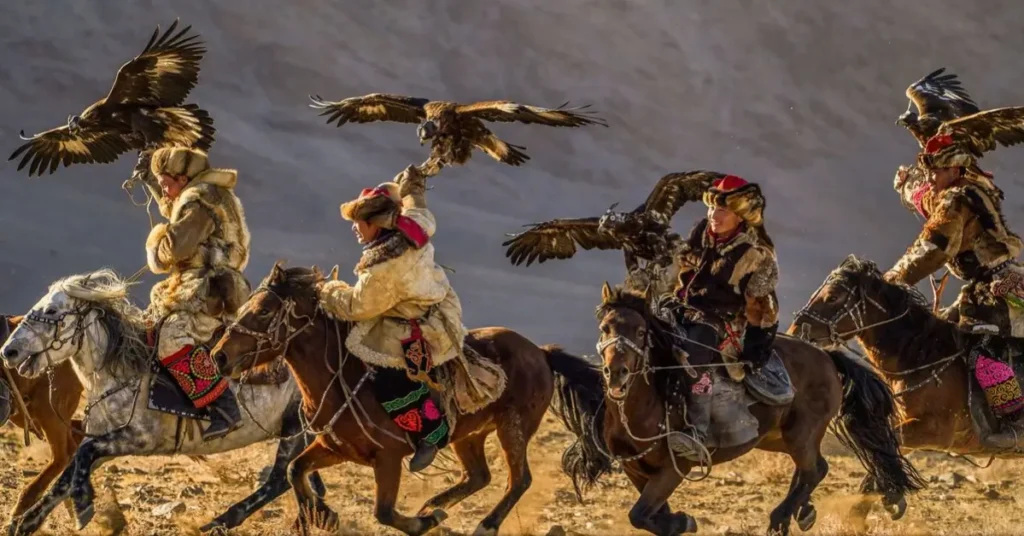
Eagle hunting in Mongolia is an ancient practice that has been passed down through generations, it is not only a display of remarkable skill but also a profound reflection of the relationship between humans and these majestic birds of prey.
In this article, we delve into the captivating world of eagle hunting in Mongolia, exploring its historical significance, the artistry involved, and the bond forged between the hunters and their feathered companions.
The Golden Eagle: A Majestic Partner
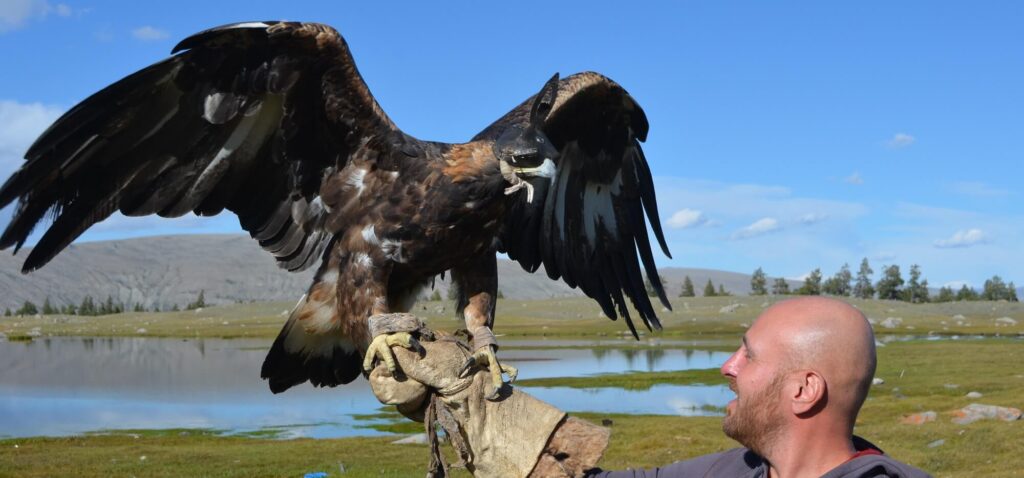
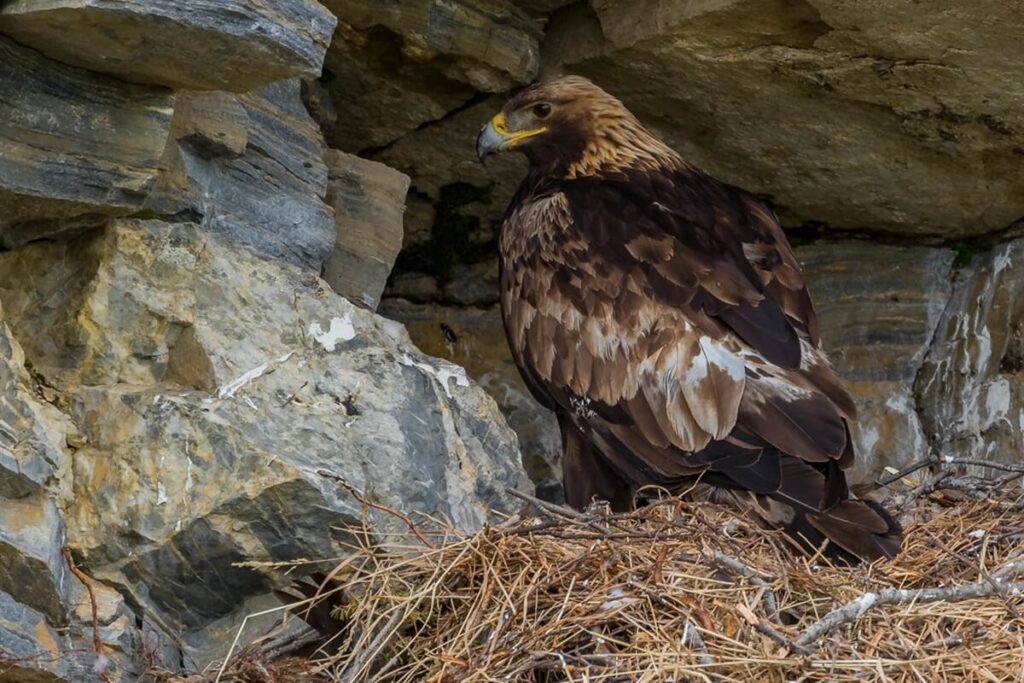
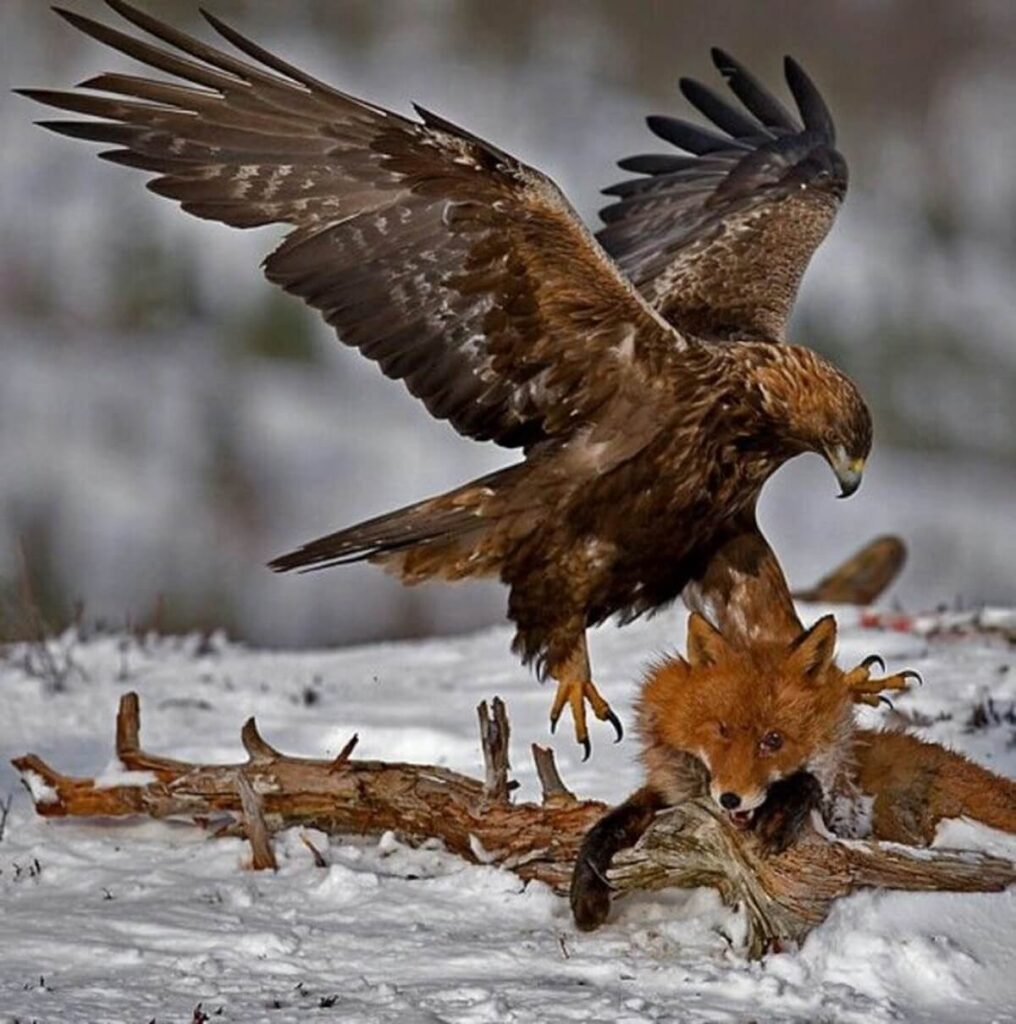
The eagle at the heart of this tradition is the Golden Eagle (Aquila chrysaetos), one of the most powerful birds of prey in the Northern Hemisphere. These birds are revered for their keen eyesight, which is up to eight times more powerful than a human’s, and their formidable talons. Eagle hunters, or Burkitshi, almost exclusively train female eagles because they are significantly larger and more powerful than males, weighing up to 7 kg (15 lbs) with a wingspan that can exceed 2.3 meters (7.5 feet). This size advantage makes them capable of hunting prey as large as foxes and young wolves, which is essential for survival in the harsh Altai winter.
The Kazakhs of Bayan-Ölgii: Keepers of the Tradition
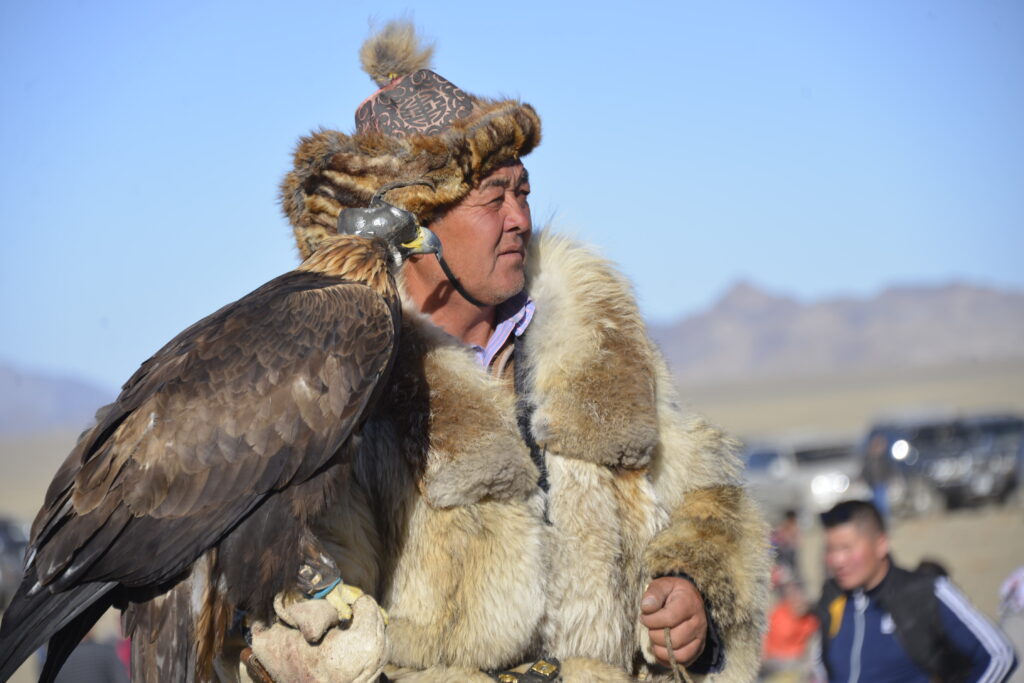
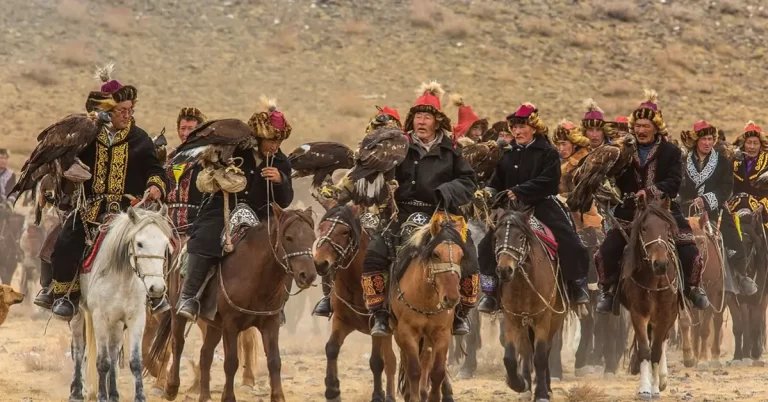
While Mongolia is a diverse country, the art of eagle hunting is practiced almost exclusively by the ethnic Kazakhs in the westernmost province of Bayan-Ölgii. This remote, mountainous region is the heartland of the tradition, which the Kazakhs brought with them from the Central Asian steppes over centuries. The practice, known as Burkitshi, is a cornerstone of their cultural identity and is passed down from father to son (and, increasingly, to daughters). In 2011, UNESCO recognized “Falconry, a living human heritage” on its Representative List of the Intangible Cultural Heritage of Humanity, acknowledging the cultural significance of this practice for communities including those in Mongolia.
Aisholpan and the Rise of the Eagle Huntress
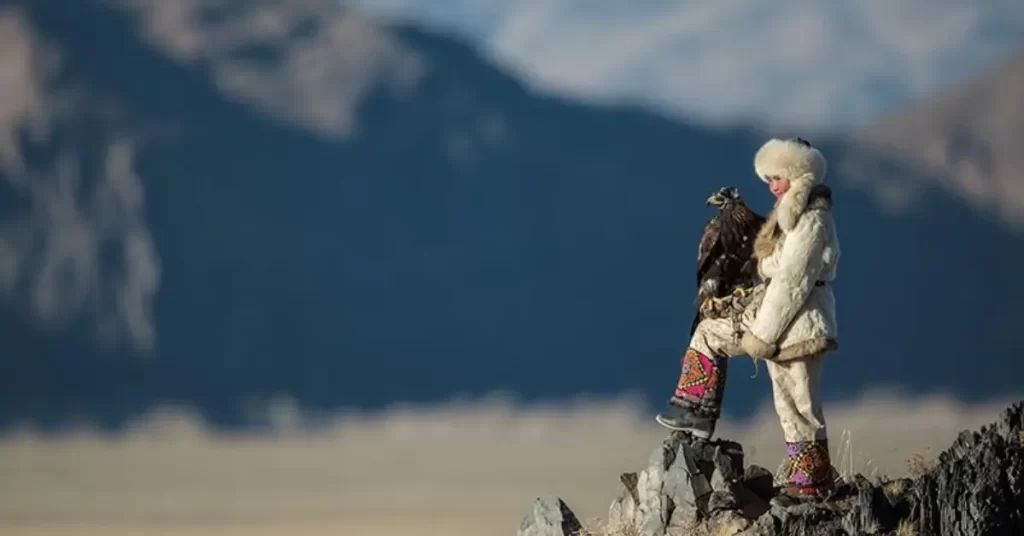
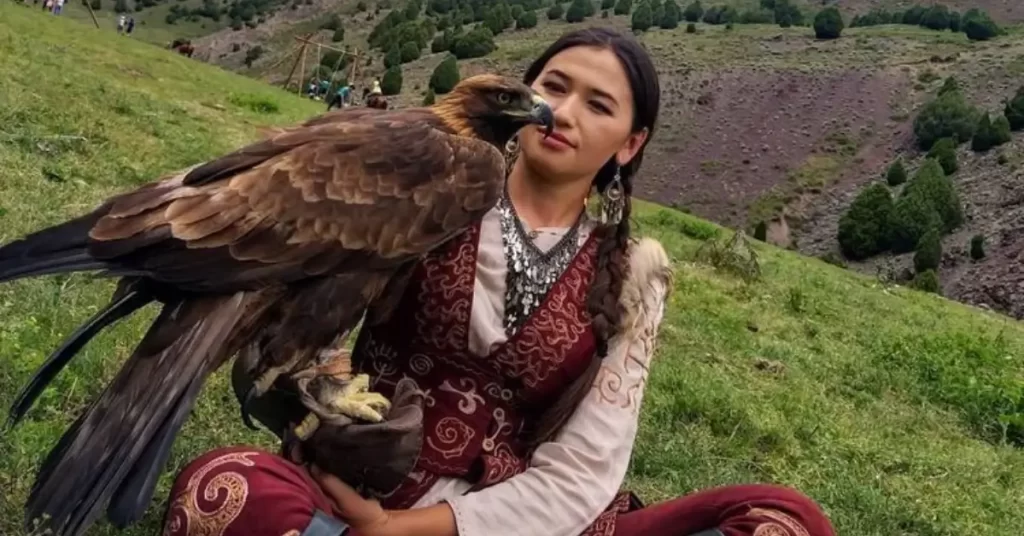
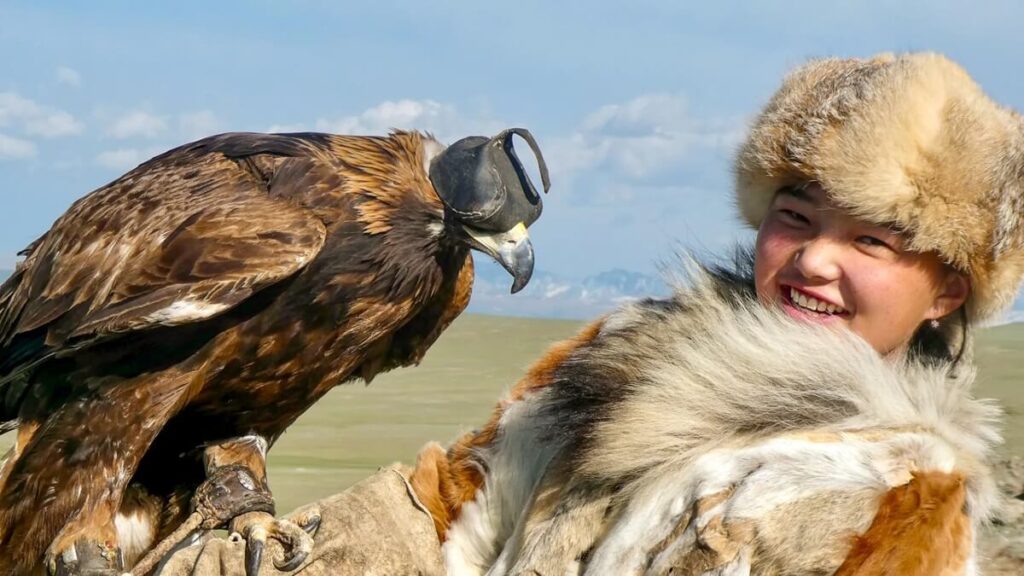
The ancient tradition of eagle hunting is not frozen in time. In the 21st century, it gained a new, famous face: Aisholpan Nurgaiv. Her journey was chronicled in the 2016 documentary The Eagle Huntress, which brought global attention to her story as she trained her own eagle and competed in the Golden Eagle Festival at the age of 13. While historically a male-dominated practice, Aisholpan broke barriers and proved that skill and dedication, not gender, define a true Burkitshi. Her success has inspired other young girls and women to take up the practice, ensuring the tradition evolves while being preserved for future generations.
We offer you GOLDEN EAGLE FESTIVAL PHOTOGRAPHY TOUR. Come and enjoy the stunning landscape that is covered with ancient mountains, rivers, and Mongolian history. Join us to watch a great festival with truly great hunters! 🤩🤩
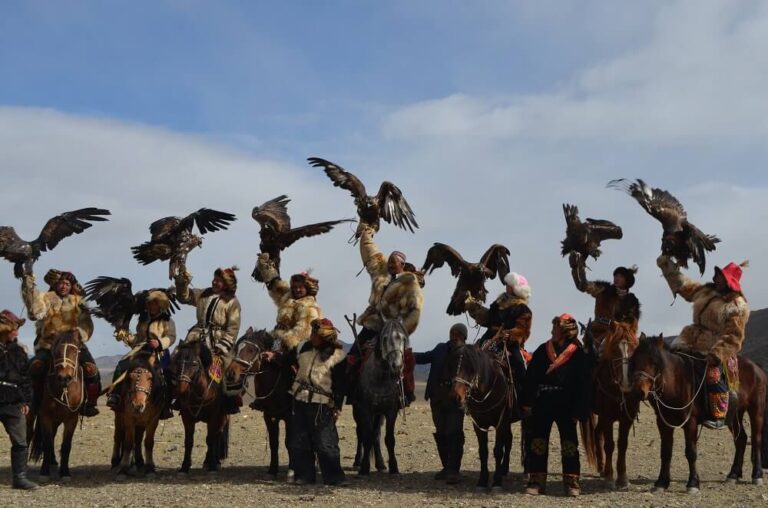
A Glimpse into History of Eagle hunting in Mongolia
Eagle hunting, also known as falconry, has been an integral part of Kazakh culture for centuries. Rooted in the nomadic lifestyle of the region, this practice was initially developed as a means of survival.
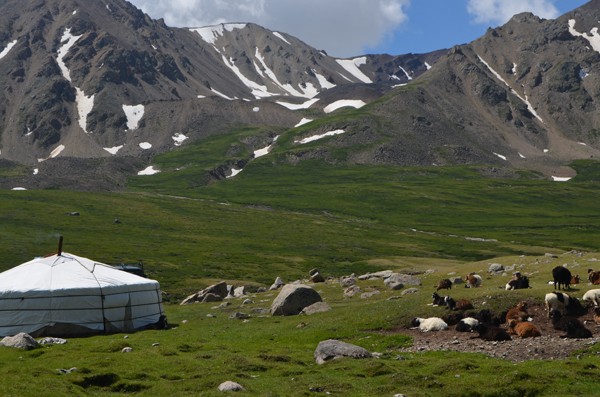
For countless centuries, Kazakh nomads have roamed the vicinity of the Altai Mountains tending to their livestock.
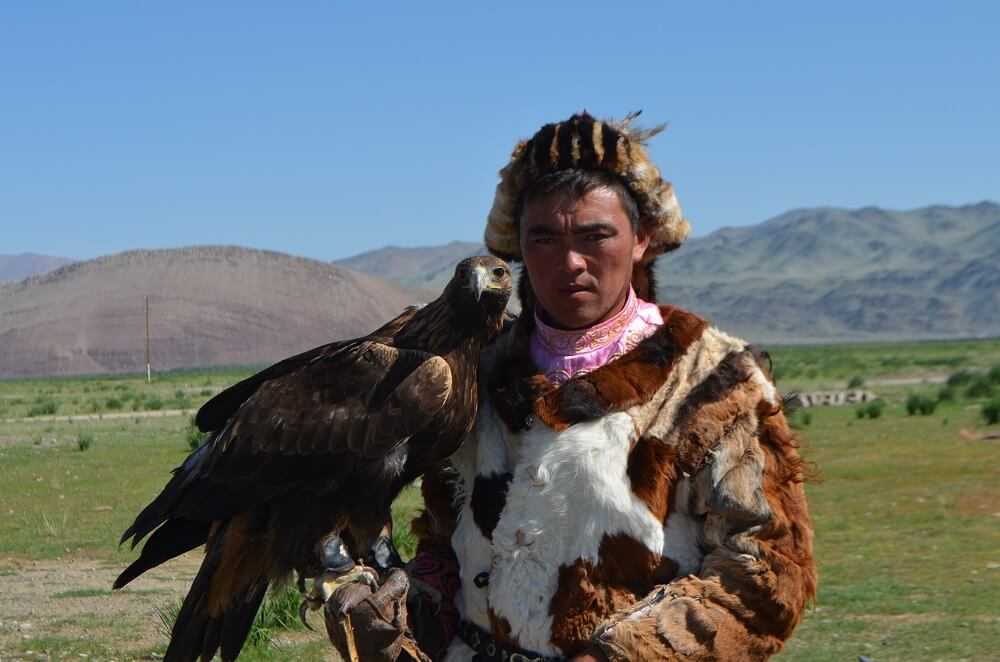
Following the Mongolian revolution of 1921, an enduring border was drawn, dividing Mongolia from China and Russia.
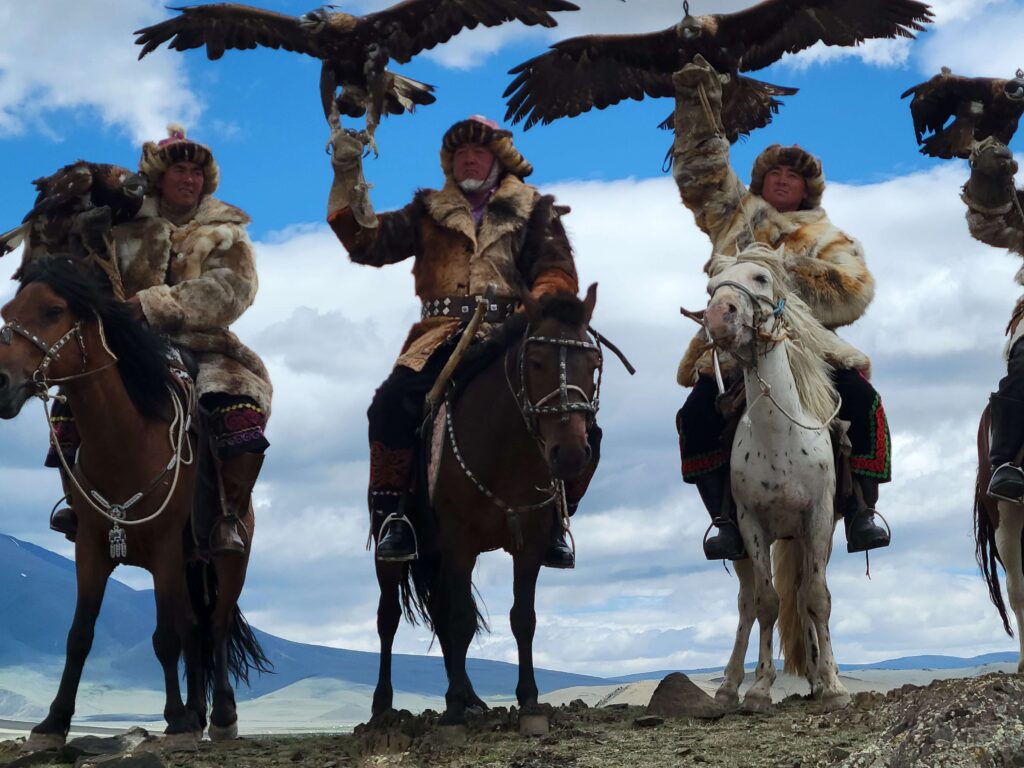
As a result, the Kazakh herders found an unexpected abode within the borders of Mongolia. Nowadays only in western Mongolia, the Kazakh buckthorn hunts with horses and eagles. This is an ancestral heritage passed down through generations.
The vast Mongolian landscape presented challenges of both climate and terrain, and the people needed a way to harness the natural resources around them for sustenance. Thus, the art of training eagles to assist in hunting emerged.
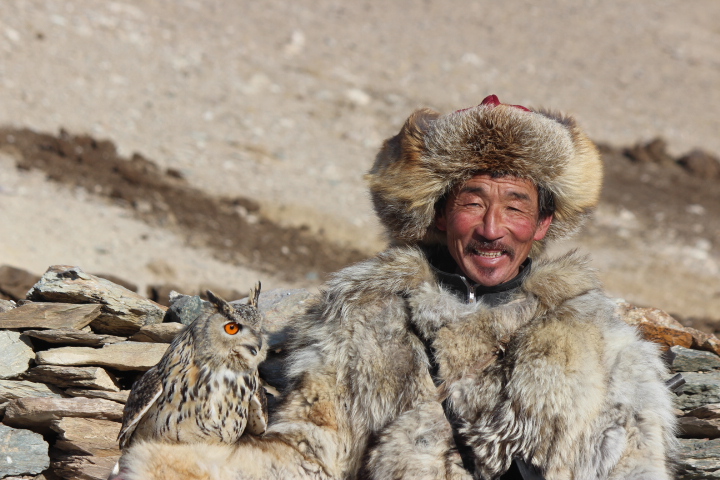
The Art of Training
Eagle hunting is not a mere task; it is an art that demands patience, dedication, and a deep understanding of avian behavior.
Young eaglets are captured from their nests and brought up in the intimate company of their human handlers. According to one Kazakh eagle catcher, all Kazakh children enjoy eagle training and scouting. By the time they are 12 or 13, eagle catchers will have their own eagle.
The bond formed between the hunter and the eagle is profound, built on trust and mutual respect. The training process involves teaching the eagle to respond to specific commands, to spot prey from great distances, and to return to the hunter with their catch.
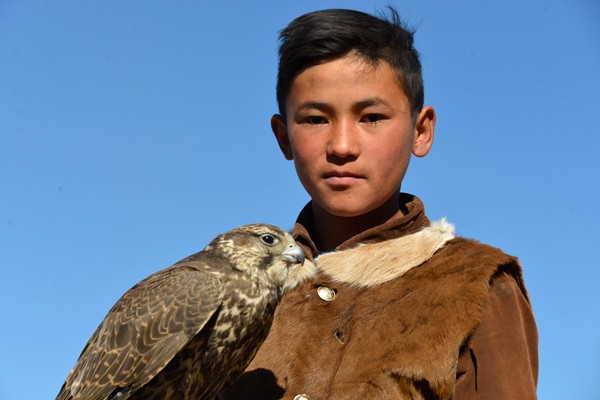
When Mongolian eagle hunters make their choice, they usually choose female eagle. These females not only possess a larger body size but also exhibit greater bravery compared to their male counterparts.
However, the practice of capturing these female eagles during their breeding years has a significant impact on the overall population growth.
To address this challenge, eagle hunters typically release their eagles after a span of 6 to 7 years, with the goal of ensuring a stable and balanced eagle population.
The partnership between the eagle and the hunter is a testament to the harmony that can exist between humans and the animal kingdom.
The eagle’s keen eyesight, incredible speed, and deadly talons are perfectly complemented by the hunter’s knowledge of the land, wind patterns, and prey behavior. This harmony results in a successful hunt that is not only a triumph of skill but also a beautiful display of nature’s synergy.
Preserving Tradition in the Modern Age
In today’s rapidly changing world, the practice of eagle hunting faces numerous challenges. Modernization, urbanization, and changing societal dynamics have all contributed to a decline in the number of eagle hunters.
However, a passionate community of individuals and organizations is dedicated to preserving this ancient tradition.
Festivals and competitions such as Golden Eagle Festival celebrating eagle hunting have gained international attention, shedding light on the significance of this practice and its cultural importance. And if you want you can visit Mongolian Eagle hunter anytime in Mongolia with us.
Suggested Tours:
ALTAI EAGLE FESTIVAL 2026
Unleash your adventure spirit, explore Mongolia on your own terms ALTAI eagle festival tour (Sept 17–18) ⭐⭐⭐⭐⭐ 5.0 · 72…GOLDEN EAGLE FESTIVAL TOUR (2026)
Unleash your adventure spirit, explore Mongolia on your own terms Golden Eagle Festival TOUR – 8-DayS Photography Tour (2026) By…Mongolia Altai Mountain Tour 2026 — 8 Days: Peak Climb + Culture + Nomadic Stay | $1,700
Unleash your adventure spirit, explore Mongolia on your own terms MONGOLIA ALTAI MOUNTAIN TOUR ⭐⭐⭐⭐⭐ 5.0 · 72 reviews on…
Related Blogs:
Golden Eagle Photography: How to Shoot Wild Eagles, Hunters and the Festival
Golden eagle photography rewards preparation more than luck. For birds in flight, start at 1/2500s, f/6.3, auto-ISO capped at 3200,…Eagle Festival Packing List 2026: What to Wear in Olgii’s October Cold
The Mongolia Eagle Festival in Bayan-Ölgii runs in late September and early October at elevation 1,710 metres, where October average…Sagsai vs Golden Eagle Festival 2026: Which Mongolia Eagle Festival Should You Attend?
Mongolia hosts two distinct Kazakh eagle festivals each autumn in Bayan-Ölgii Province, the country’s western Kazakh-majority region. The Sagsai Golden…







When is the best time of year to see eagle hunting in Mongolia?
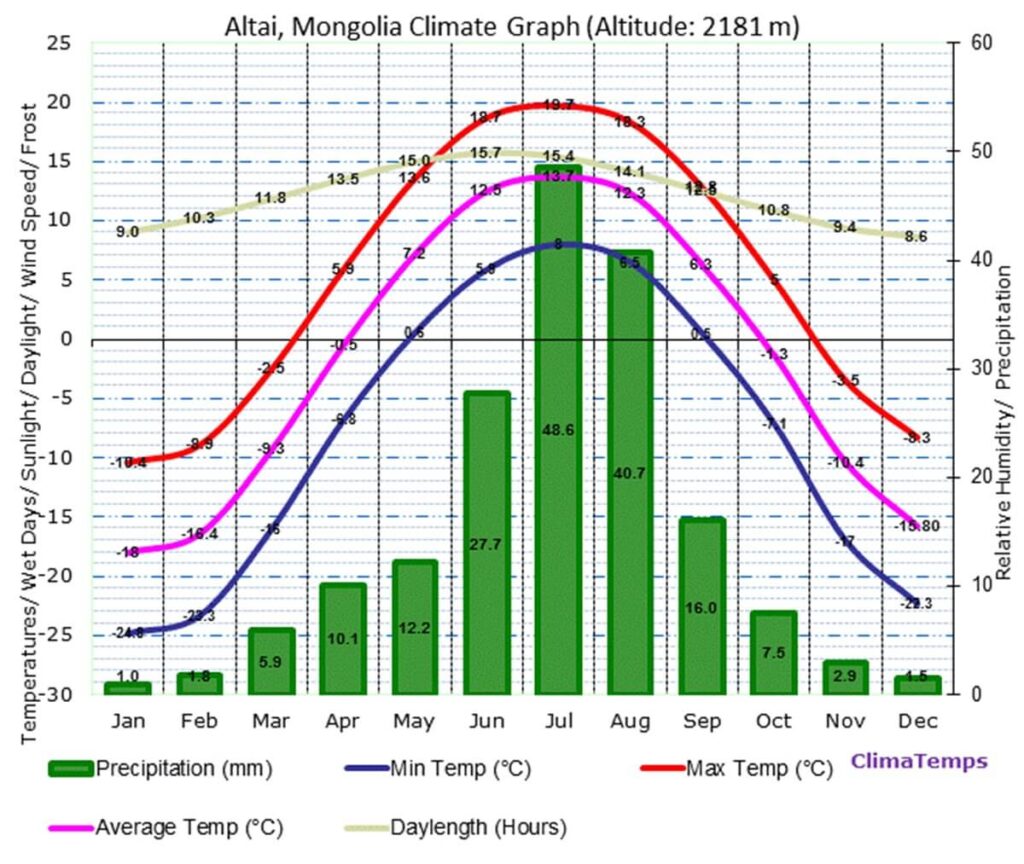
The best time depends on the experience you seek. The authentic hunting season runs during the cold winter months, typically from late October to early February, when the snow makes it easier to track prey like foxes and hares. For a more accessible and festive experience, the best time is during the annual Golden Eagle Festivals. The two main festivals are held in Bayan-Ölgii province in mid-September and the first weekend of October. These events showcase the hunters’ skills and are a vibrant celebration of the culture.
Is eagle hunting ethical and does it harm the eagles?
This is a valid concern for many modern travelers. The practice, when done traditionally, is based on a partnership with a wild animal, not permanent ownership. The eagles are typically taken from nests as chicks, but after 6-10 years of hunting, they are released back into the wild to breed. This release is a crucial part of the tradition, ensuring the wild eagle population remains healthy. The Golden Eagle is not an endangered species, and responsible tour operators work with local communities to ensure the practice remains sustainable and respectful to both the animals and the culture.
Can I hold a golden eagle on a tour?
Yes, on most eagle hunting tours, you will have the opportunity to meet the hunters and, under their close supervision, hold a golden eagle on your gloved arm. These birds are heavy, often weighing over 6 kg (13 lbs), so a wooden support that rests on the saddle is often used during long rides. This interaction is a powerful way to appreciate the size and majesty of the birds and the strength required by the hunters. It’s a common and memorable part of the cultural experience offered to visitors.