
Winter eagle hunting in Mongolia is a centuries-old Kazakh tradition practised between October and April in the Altai Mountains of Bayan-Ölgii Province, where temperatures drop to -27 °C (-17 °F) in January. Hunters known as berkutchi fly female Berkut eagles (Aquila chrysaetos daphanea) at red foxes, corsac foxes, and hares across the snow. The tradition is inscribed on UNESCO’s list of intangible cultural heritage and survives through annual festivals, family transmission, and a small but growing winter tourism economy that bring travelers to remote ger camps to witness the hunt firsthand.
Key Takeaways
- Eagle hunting season runs October to April, peaking in the deep cold of December–February
- Practised by ethnic Kazakh nomads in Bayan-Ölgii Province, far western Mongolia
- January average low in Ölgii city: -27 °C (high: -12.3 °C); winters are bone-dry with only 73.6 mm annual snowfall
- Hunters use female golden eagles (larger and more aggressive) trained for 5–10 years before release
- Two main winter festivals: the Sagsai Eagle Festival (early October) and Golden Eagle Festival (late September / early October)
- Recognised by UNESCO Intangible Cultural Heritage since 2010 (Kazakhstan), with Mongolia listed as a practising state in 2021
Why is Eagle Hunting a Winter Tradition?
Eagle hunting is winter work for a simple reason: that is when the eagle’s prey is trackable in the snow. Red foxes, corsac foxes, and hares leave clear lines of prints across windswept hillsides; against snow, an eagle’s brown plumage and a fox’s red coat both become high-contrast targets visible to a soaring bird from a kilometre away.
There are practical reasons too. Mongolia’s Altai summers are short and the prey species are dispersed across the high pastures; in winter, foxes hunt close to ger camps and herder valleys where livestock leftovers attract them. The cold also keeps the eagle alert and lean. A summer-fed eagle is a sluggish hunter; a wintering bird at fighting weight is a precise one.
For the Kazakh herders of Bayan-Ölgii, winter is also when the rest of pastoral life slows down — livestock is stabled, wool is spun, leather is worked — and there is finally time for the long, patient days of hunting from horseback.
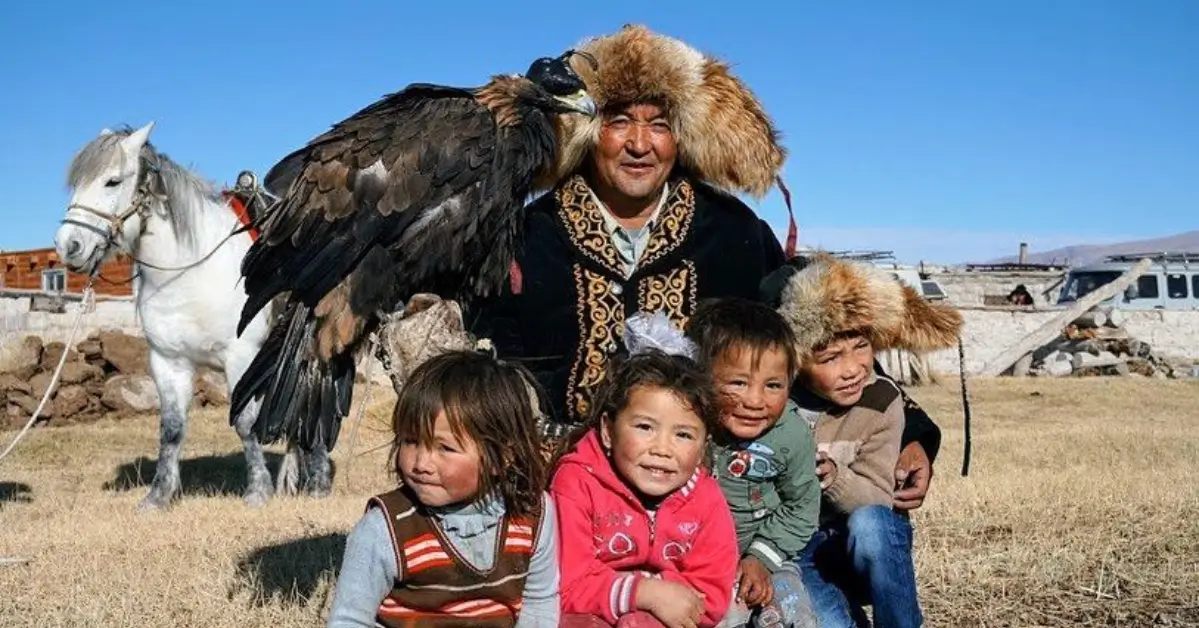
When Exactly is the Eagle Hunting Season?
The traditional eagle hunting season in Mongolia runs from early October to mid-March.
| Month | Conditions | What hunters are doing |
|---|---|---|
| October | First snow, mild winter (-5 to +5 °C) | Festivals open the season; eagles sharpened on small game |
| November | Hard freeze sets in (-10 to -20 °C) | Active hunting; foxes are well-pelted and visible |
| December | Deep cold (-15 to -25 °C) | Peak hunting; ger camps host visitors |
| January | Coldest month (-27 °C lows in Ölgii) | Hunting continues but shorter daylight; herders shelter at home |
| February | Slow thaw begins (-15 to -10 °C) | Eagles still active; visitor season picks up |
| March | Snow softens, prey disperses | Season closes; Eagles released or rested through the summer |
Where in Mongolia Does Winter Eagle Hunting Happen?
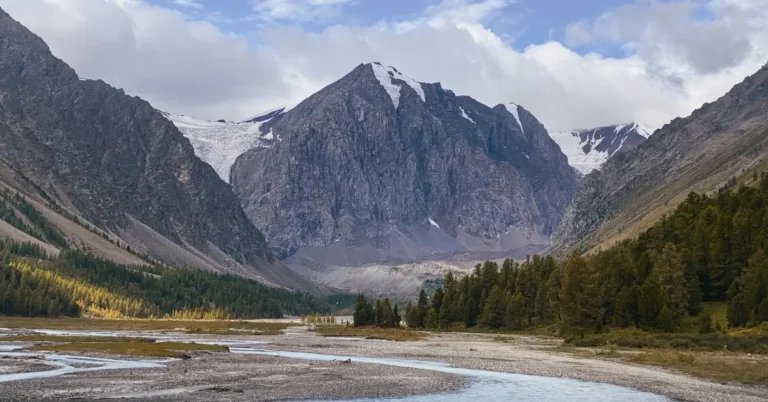
Almost all winter eagle hunting takes place in Bayan-Ölgii Province, the westernmost and only majority-Kazakh province of Mongolia. The capital, Ölgii, sits at roughly 1,710 m elevation in a high desert basin between the Mongolian Altai and the Sailyugem Range.
The provincial population is approximately 108,530 (2020) spread across roughly 46,000 km² — a population density that means a hunter’s nearest neighbour might be a half-hour ride away. Most active eagle-hunting families live in the Sagsai, Altai, Bulgan, and Tsengel sums (districts), each within a day’s drive of Ölgii city.
Climbing higher into the Altai, the climate becomes more severe. Ölgii city itself has a recorded January average low of −27 °C (−17 °F) and January average high of −12.3 °C, with most days below freezing from late October to early April. Surprisingly for a place this cold, annual precipitation is only about 73.6 mm — the Altai winter is dry, sunny, and bitterly cold rather than snowy.
This is why, despite the punishing temperature, the high passes are still passable to 4×4 vehicles and horseback through most of the season — the snow is hard-packed and crunchy rather than deep and soft.
What Does a Winter Eagle Hunt Look Like?
A traditional winter hunt follows a daily rhythm that has barely changed in centuries.
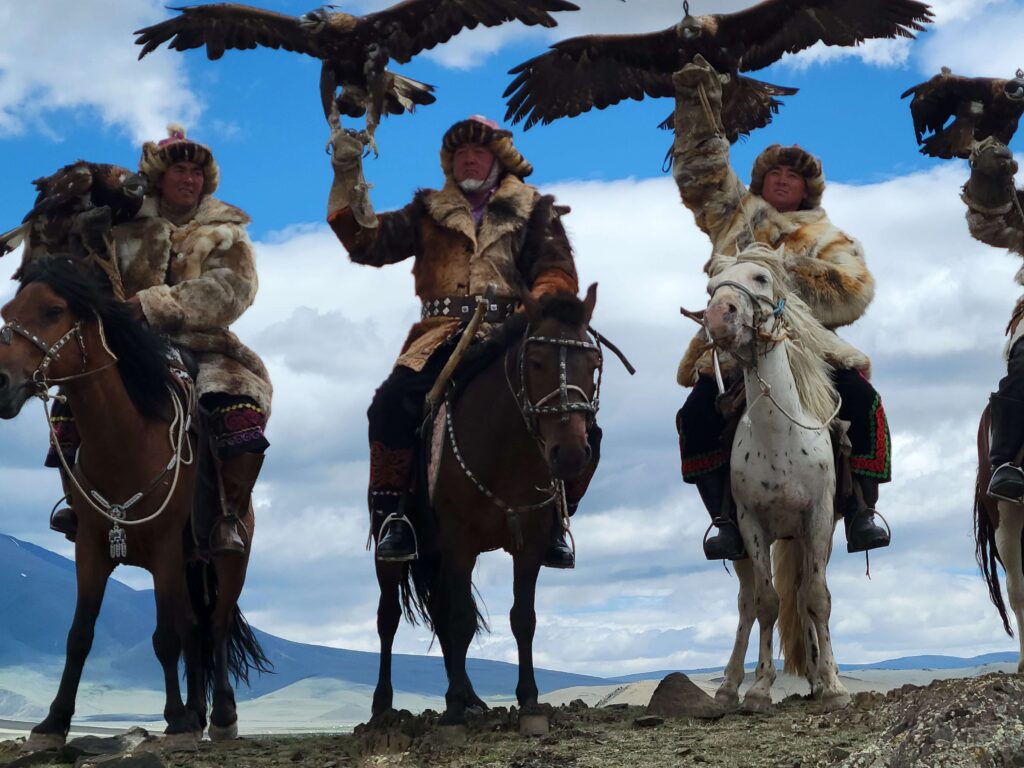
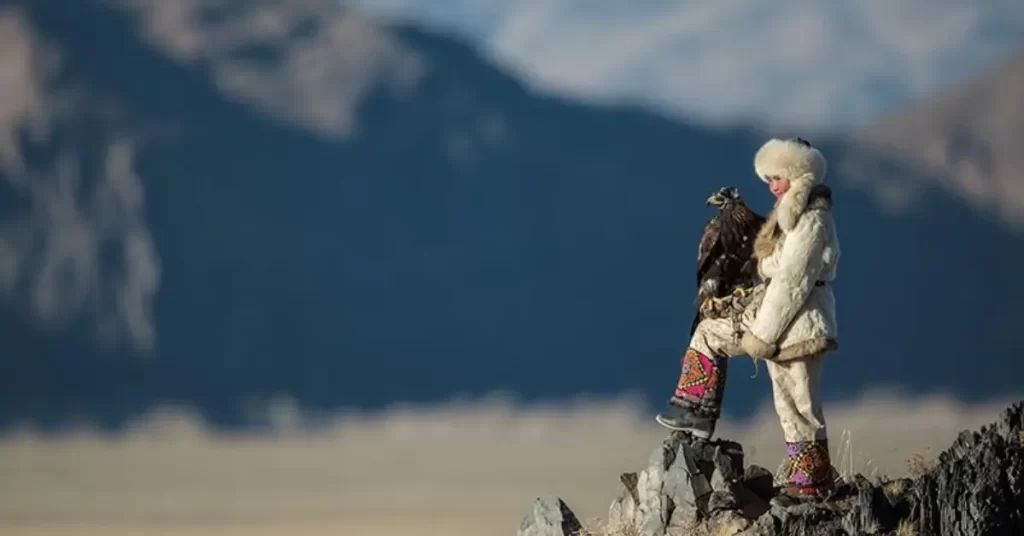
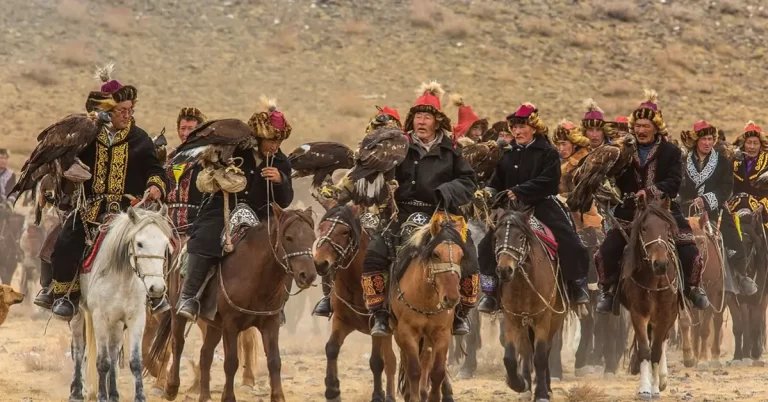
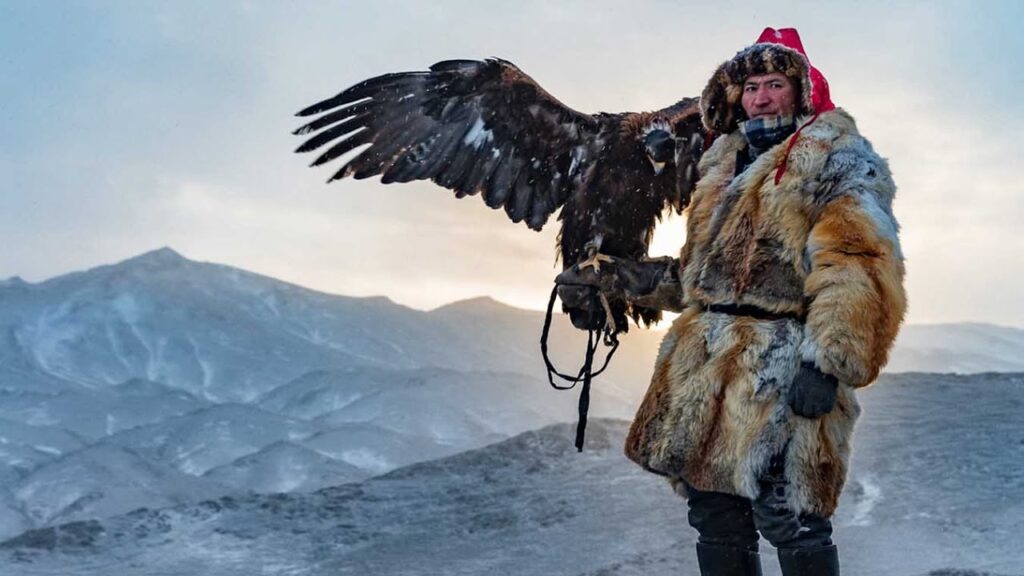
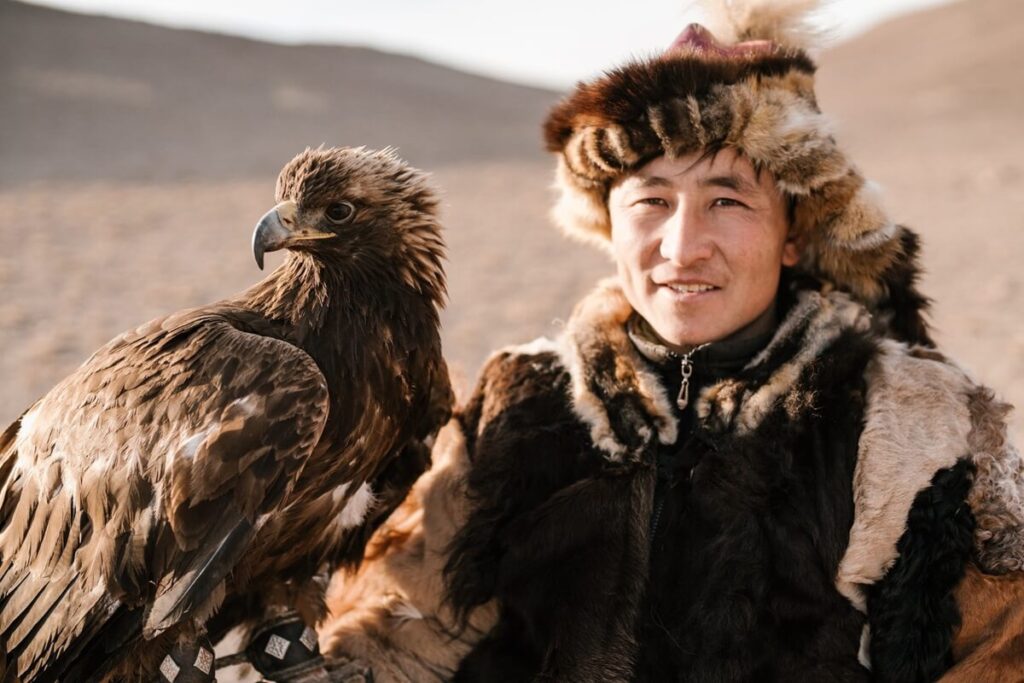
Before sunrise, the hunter dresses in layered woollen tunics, a fox-fur coat (tonn), felt boots, and a tall fur hat trimmed in marmot or fox. The eagle is unhooded, weighed, and fed a small amount to bring her into hunting condition.
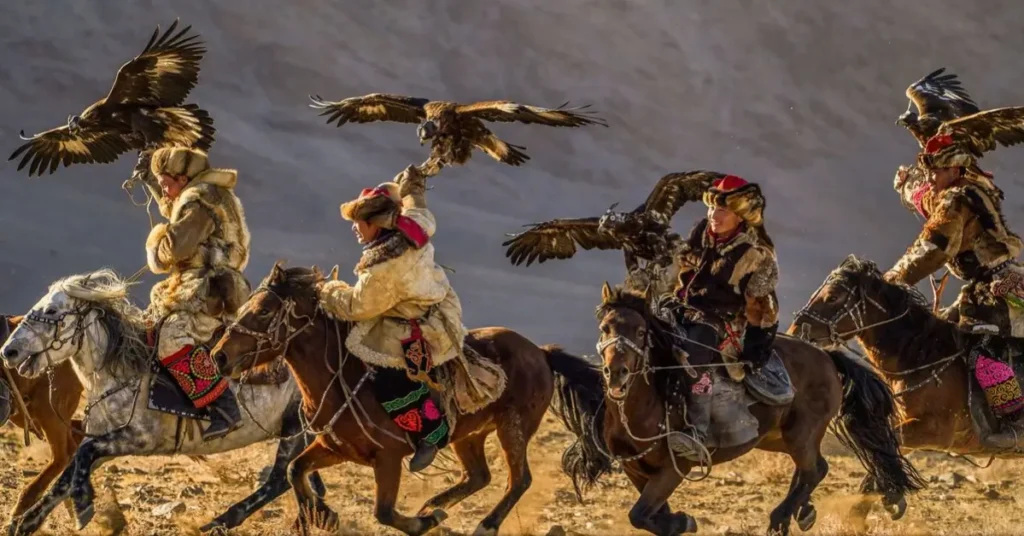
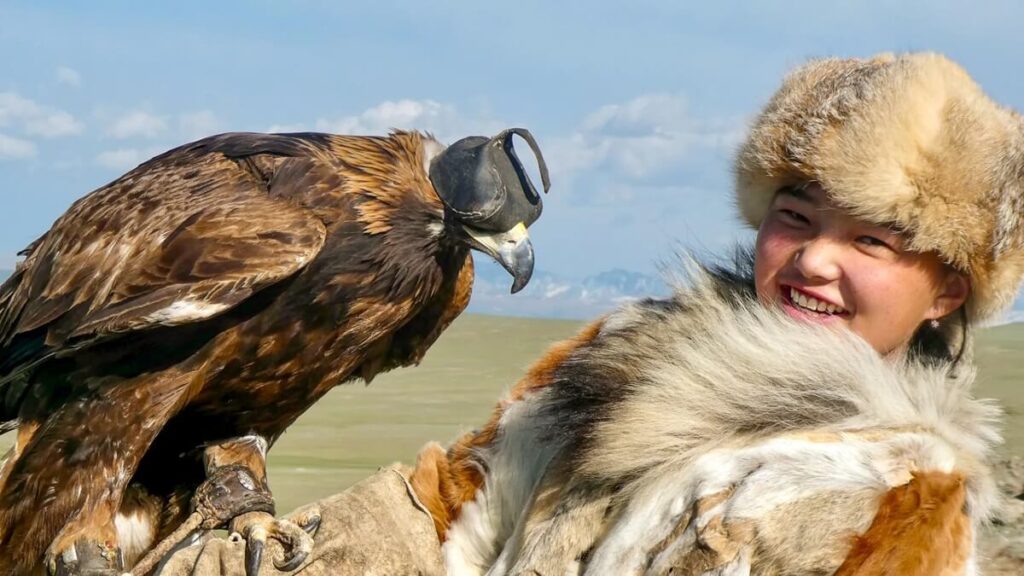
By mid-morning, the hunter and his eagle are on horseback at a high vantage point — typically a wind-swept ridge with a view across several kilometres of snow-covered slopes. The eagle rides on a heavy gloved fist (the leather glove, biyalai, is thick enough to absorb her grip), often with a wooden support strapped to the saddle.
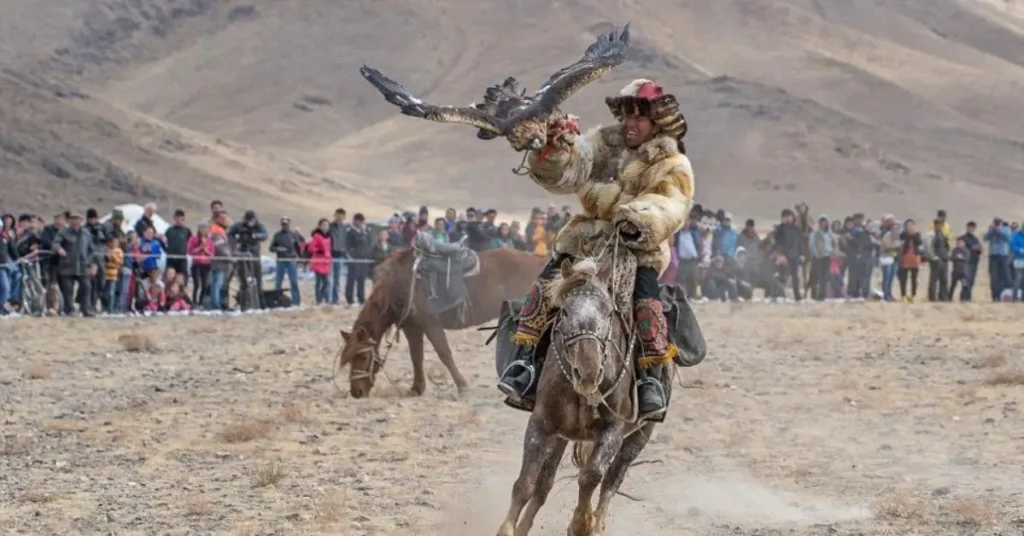
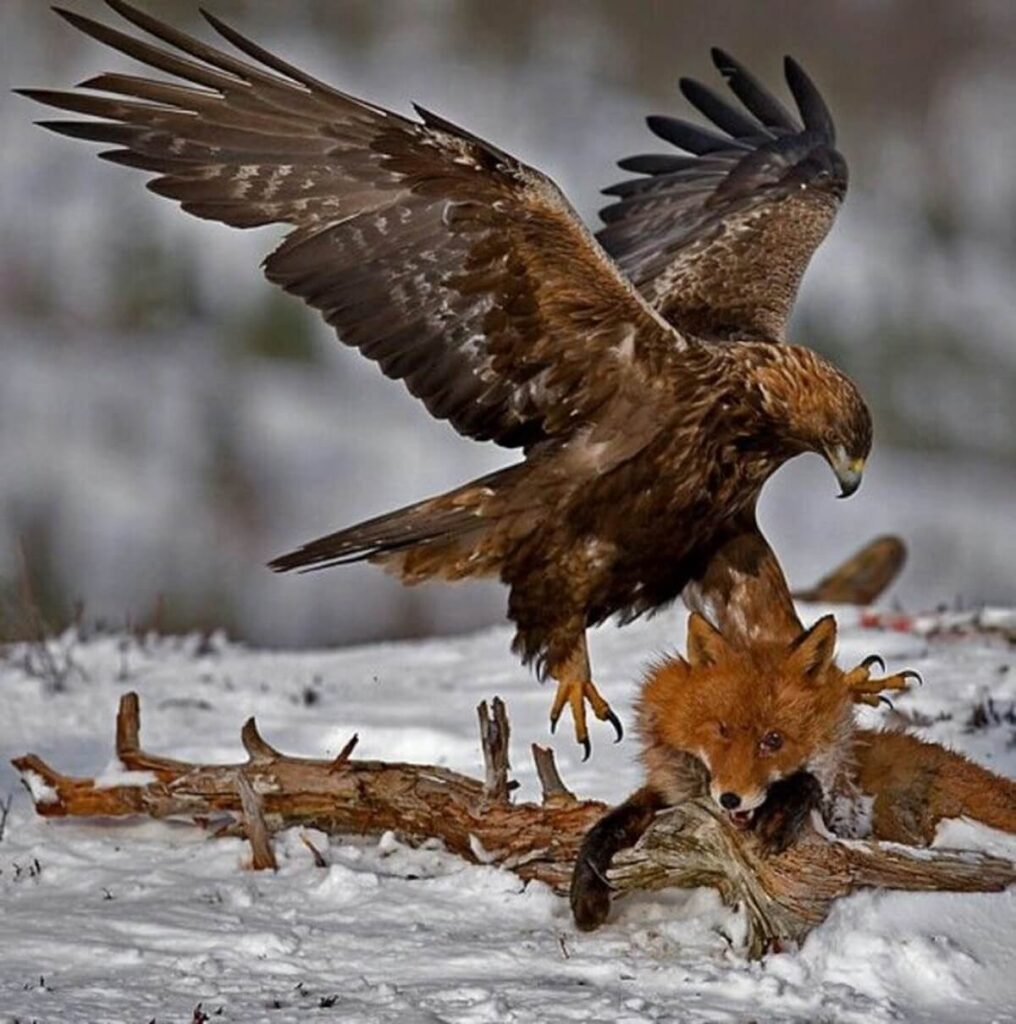
When the hunter or a partner spots prey — a fox or hare moving across snow — the eagle is unhooded, the leather jesses are released, and the bird launches. A trained Berkut eagle can reach diving speeds approaching 240 km/h (150 mph) and intercept a running fox within seconds. The hunter rides hard to reach the kill before the eagle can be injured by a struggling animal.
A successful hunt is a partnership. The eagle gets the warmest organs of the prey (heart, liver) immediately, and a hood is replaced before tension can build. The pelts of foxes are then either traded, used for the hunter’s own fur clothing, or sold at market in Ölgii.
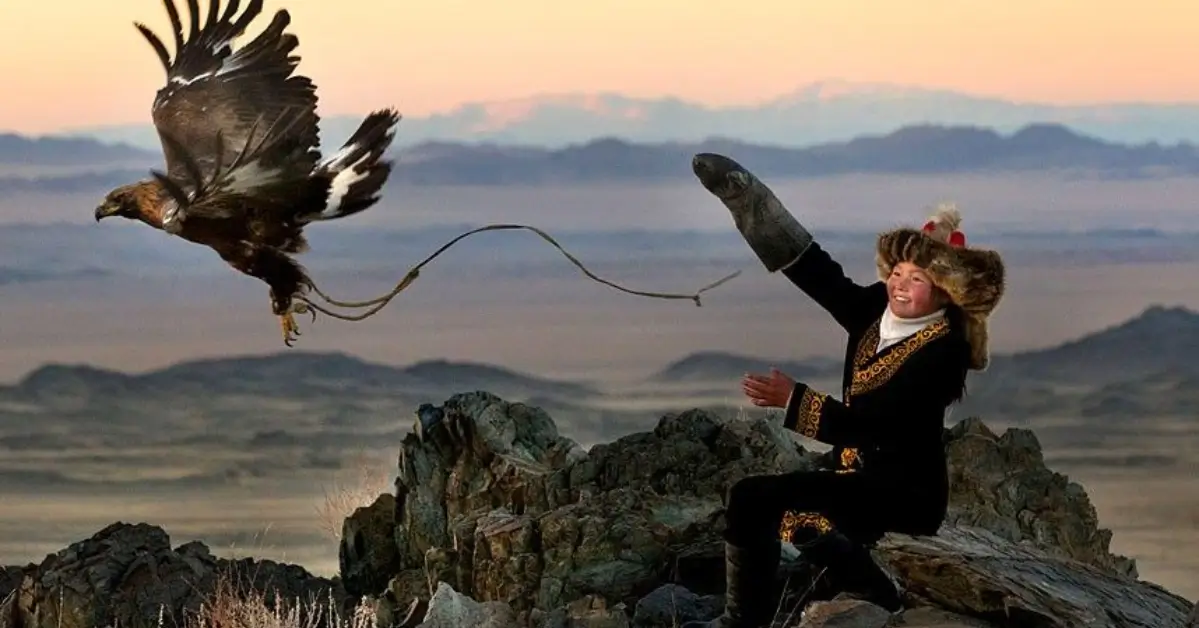
The Berkut Eagle: Built for the Cold
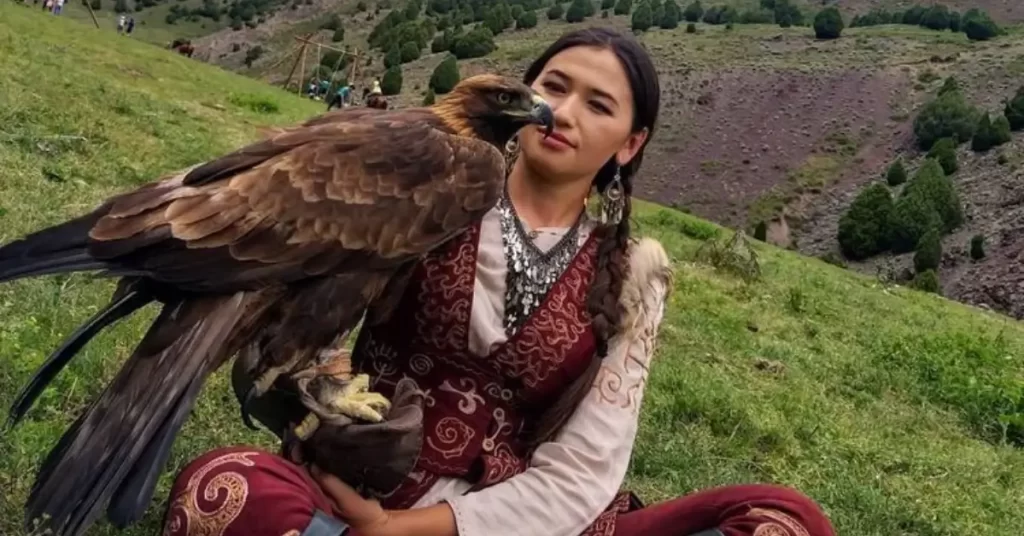
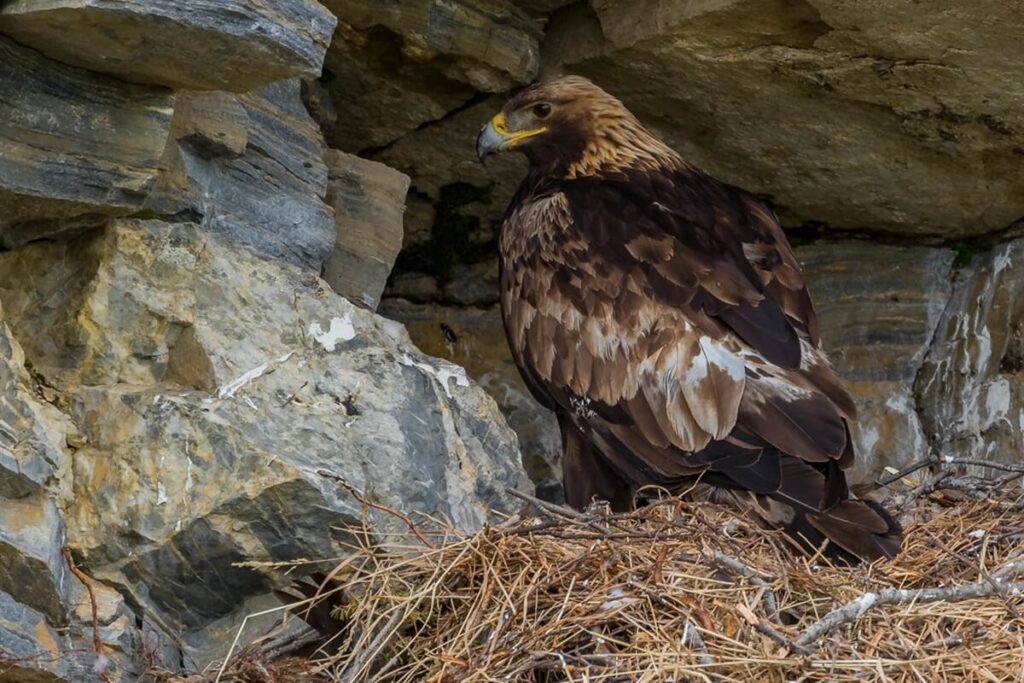
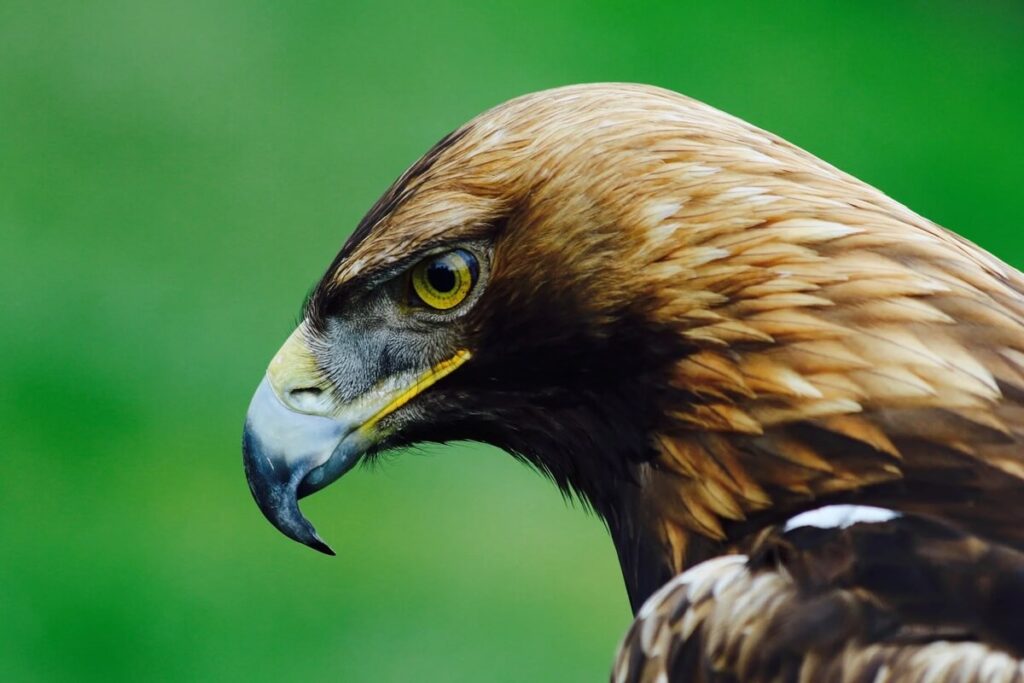
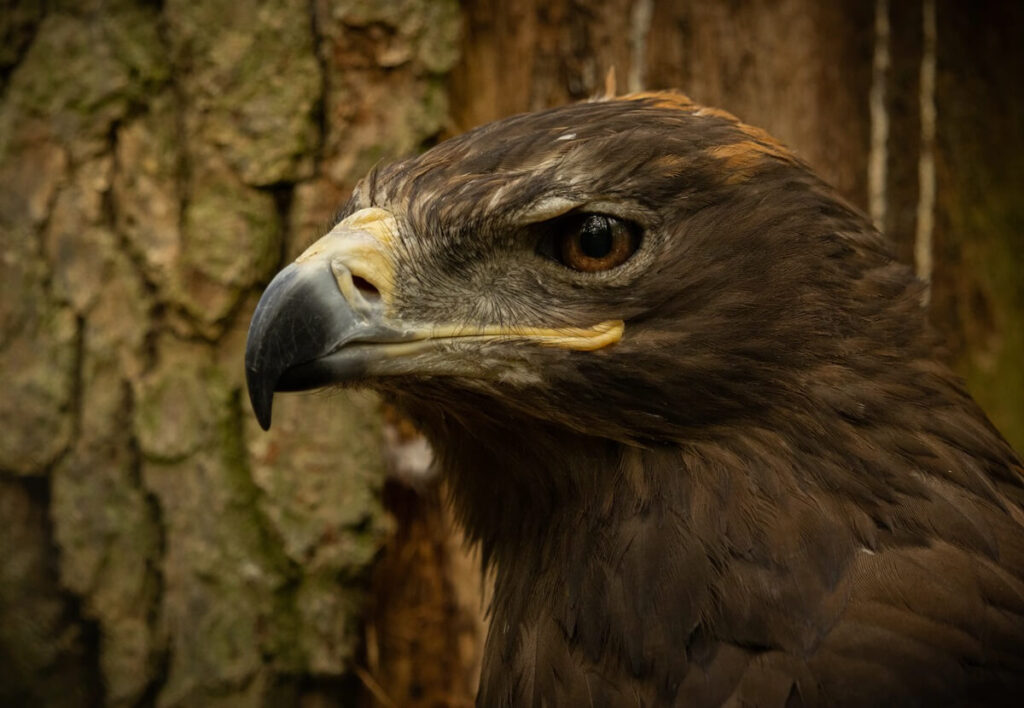
The eagle used in Mongolian winter hunting is the Berkut, scientifically Aquila chrysaetos daphanea — the Asian subspecies of the golden eagle and the largest of the six recognised golden-eagle subspecies. A mature female Berkut weighs 5–7 kg with a wingspan that can reach 234 cm (over 7.6 feet).
Female eagles are universally preferred for hunting because they are roughly 30% larger and heavier than males, with proportionally bigger feet and stronger grip. A male Berkut might bring down a hare; only a female reliably kills foxes and the occasional small wolf.
Berkut eagles are exceptionally cold-tolerant. Their two-layer plumage (downy underlayer plus oiled outer feathers) keeps body temperature stable down to the -30 °C range. The legs are feathered down to the toes — a trait called aquila (eagle leg) that’s diagnostic of golden eagles versus other raptors. Even the talons stay warm enough to grip prey because the bird shunts arterial blood through a counter-current heat exchanger near the leg surface.
These adaptations are why hunting with a Berkut works in winter where lighter falcons and hawks would freeze out.
The Hunters and the Cultural Heritage
Eagle hunters call themselves berkutchi (sometimes spelled bürkitshi or qusbegi). The tradition is an estimated 1,000+ years old, brought into the Altai by Turkic and later Kazakh nomads.
Falconry — the broader tradition that includes Mongolian eagle hunting — was first inscribed on UNESCO’s intangible-heritage list in 2010 (initially submitted by 11 countries) and broadened in 2021 to include Mongolia among the practising states.
A few cultural specifics that distinguish the Mongolian Kazakh tradition from Middle Eastern falconry: – Eagles, not falcons — the bird is much larger and the hunting rituals are entirely different – Horseback, not from foot — hunts cover 20–40 km of ground per day – Female eagles only — males are released – A 5–10 year working relationship before the eagle is released back to the wild to breed – Skills passed within the family — most active berkutchi today are the sons or daughters of berkutchi
The total number of currently active eagle hunters in Mongolia is estimated at roughly 400–500, with the next generation (under 30) estimated at fewer than 100. The tradition is under demographic pressure but, thanks largely to winter tourism and the festival economy, is currently stable.
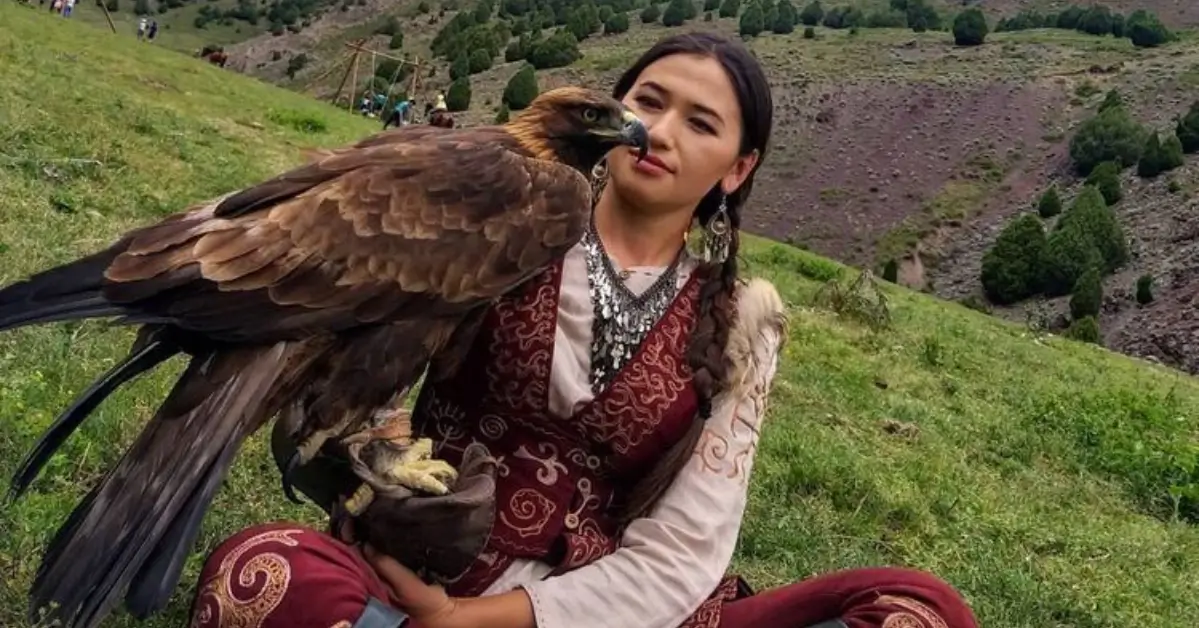
The Two Big Winter Eagle Festivals
Two major festivals anchor the winter visitor season:
Sagsai Eagle Festival — held in early October in Sagsai sum (about 70 km southwest of Ölgii), this is the smaller, more intimate festival. Around 30–50 hunters compete; visitor numbers are typically a few hundred. The atmosphere is closer to a family gathering than a tourism event. To attend, see our tour built around the Sagsai Eagle Festival.
Golden Eagle Festival — held in late September or early October outside Ölgii city, this is the larger festival, drawing 60–80 hunters and around 1,000 international visitors. Events include eagle-calling competitions, fox-pelt drag tests, and traditional games such as kokpar (goat-pulling) and tiyn teru (coin-pickup at gallop).
Both festivals fall just before the deep winter sets in — meaning visitors get the cultural spectacle without the hardest cold. For travelers wanting the actual winter hunt experience (not just the festival), the prime months are December and February, when temperatures are punishing but the hunting is at its peak. Our Mongolian Eagle Hunters tour includes ger-camp homestays during these months.
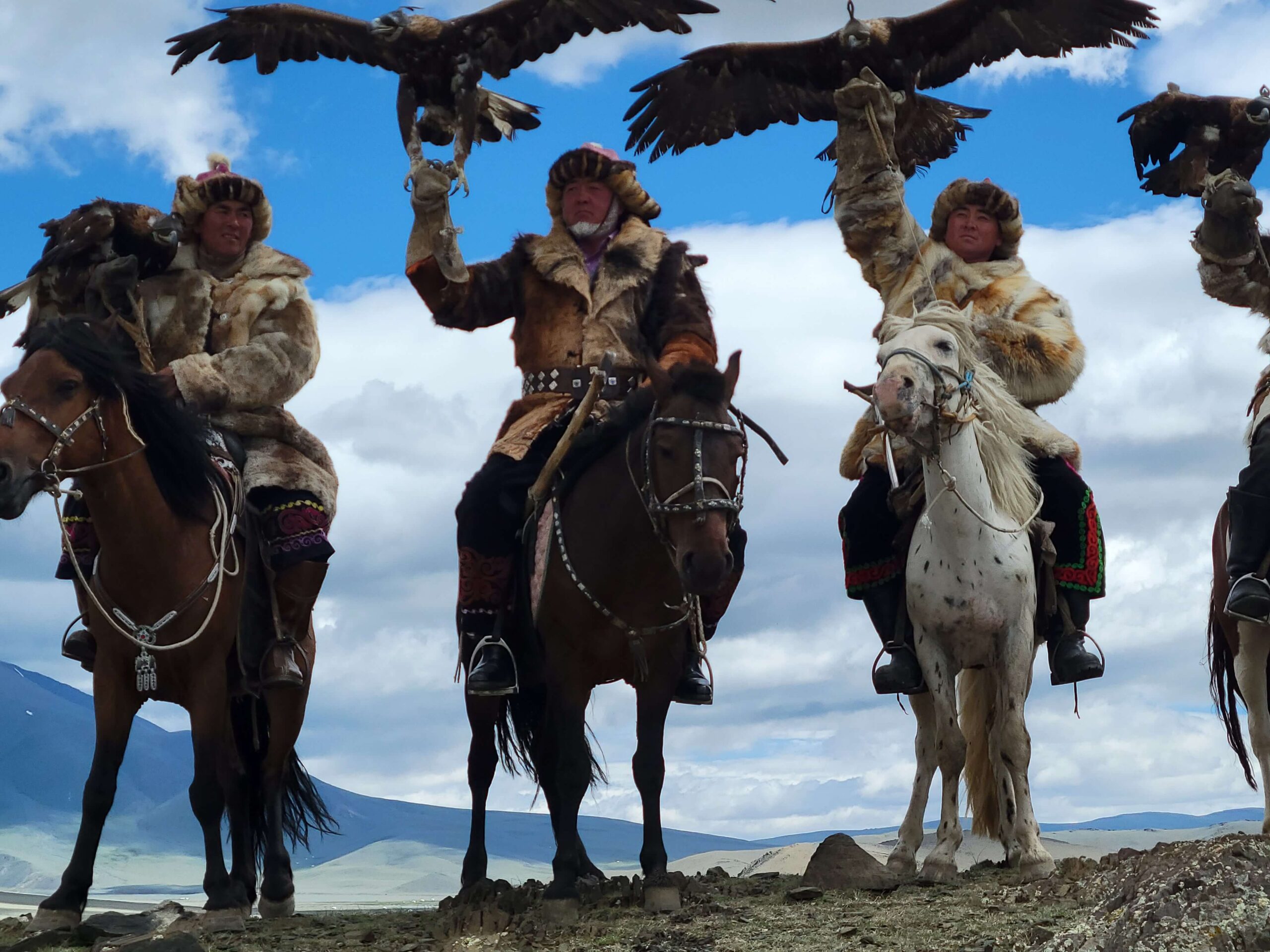
How to Visit a Winter Eagle Hunt Safely
Travelling in Bayan-Ölgii in winter is logistically demanding. A few practical realities:
- You need a licensed local guide. Independent travel into hunter family camps is impractical and culturally awkward — relationships have to be set up in advance.
- Plan for −25 °C operational temperatures. Standard “cold weather” gear from Western Europe or North America is generally not sufficient. Mongolian-style felt boots and thick wool layering work much better than synthetic outdoor shells alone.
- Allow 2–3 days minimum with a hunter family. The hunt itself happens around dawn; afternoons are for tea, conversation, and watching the eagle being trained or weighed.
- Photography is welcomed but ask first. The eagle hunt is a working day for the hunter — flash, drone, and aggressive movement near the eagle are unwelcome.
- Border-zone permits are required for travel to many high-mountain areas. These are arranged by the licensed tour operator, never directly.
For a structured first-time visit, a guided 7–10-day winter eagle-hunting tour is the practical option. Most international visitors fly Ulaanbaatar → Ölgii (a 3-hour domestic flight) and then transfer to a hunter family by 4×4.
Suggested Tours:
Suggested Blogs:
Golden Eagle Photography: How to Shoot Wild Eagles, Hunters and the Festival
Golden eagle photography rewards preparation more than luck. For birds in flight, start at 1/2500s, f/6.3, auto-ISO capped at 3200,…Eagle Festival Packing List 2026: What to Wear in Olgii’s October Cold
The Mongolia Eagle Festival in Bayan-Ölgii runs in late September and early October at elevation 1,710 metres, where October average…Sagsai vs Golden Eagle Festival 2026: Which Mongolia Eagle Festival Should You Attend?
Mongolia hosts two distinct Kazakh eagle festivals each autumn in Bayan-Ölgii Province, the country’s western Kazakh-majority region. The Sagsai Golden…




When is the best time to see eagle hunting in Mongolia?
The full eagle hunting season runs October–March. For the festivals (high-energy, many hunters in one place) visit late September or early October. For the actual winter hunt itself (one or two hunters working remote terrain), visit December–February. The cold is most extreme in January with average lows near -27 °C in Ölgii city.
Where do Mongolian eagle hunters live?
Almost all active berkutchi (eagle hunters) live in Bayan-Ölgii Province in far western Mongolia. The town of Ölgii (population ~31,000) is the regional hub; most hunter families live in the surrounding rural sums (districts) such as Sagsai, Altai, Bulgan, and Tsengel.
How cold is winter in Bayan-Ölgii?
Punishingly cold but dry. Ölgii city has a recorded January average low of -27 °C (-17 °F) and average high of -12.3 °C. Snowfall is light (annual precipitation only ~73.6 mm). Most days from late October through early April stay below freezing, with bright sunshine and bitter wind chill.
Do hunters use male or female eagles?
Female eagles only. A mature female Berkut (Aquila chrysaetos daphanea) is roughly 30% larger and heavier than a male and has the grip strength to take down foxes. Male eagles are released; only females are trained for hunting.
Is eagle hunting protected as cultural heritage?
Yes. Falconry — including Mongolian Kazakh eagle hunting — is inscribed on UNESCO’s Representative List of the Intangible Cultural Heritage of Humanity. The original 2010 inscription has been expanded several times; Mongolia is among the listed practising states.
How long do hunters keep their eagles?
Typically 5–10 years. Berkut eagles can live 25–30 years in captivity but the working partnership ends when the eagle approaches breeding age. The hunter releases her to the wild to breed, completing the cycle that keeps wild Altai eagle populations stable.