
For roughly 90% of international hikers, a fully-guided Mongolia trekking tour is the right format — the supported 11-day package costs around $2,100–$2,400 and removes the four genuinely difficult parts of trekking the Altai: pulling the border-zone permit, food and camp logistics, route-finding on unmarked steppe, and medical evacuation if something goes wrong. Self-guided trekking is realistic only for hikers with previous Mongolia or Central Asia experience, fluent navigation skills, and the willingness to accept that some routes (notably the southern lake basin) are simply unreachable without an operator-pulled permit. The cost gap is smaller than it looks once permits, food and evacuation insurance are added in.
Key Takeaways
- Guided tour: $2,100–$2,400 — full support, max 12 trekkers, fixed itinerary
- Self-guided + porter: $900–$1,500 — you handle food, gear, permits, evacuation
- Real cost gap (once everything is added): $500–$900, not the $1,500 it appears
- Decision driver: experience level + tolerance for solo recovery — NOT price
- Permits: the southern Altai lake basin requires a permit only operators can pull
- Safety: guided format has guide-leader + cook + horseman + evacuation plan
- The hidden trade: guided buys certainty; self-guided buys autonomy
The Headline Difference Between Guided and Self-Guided
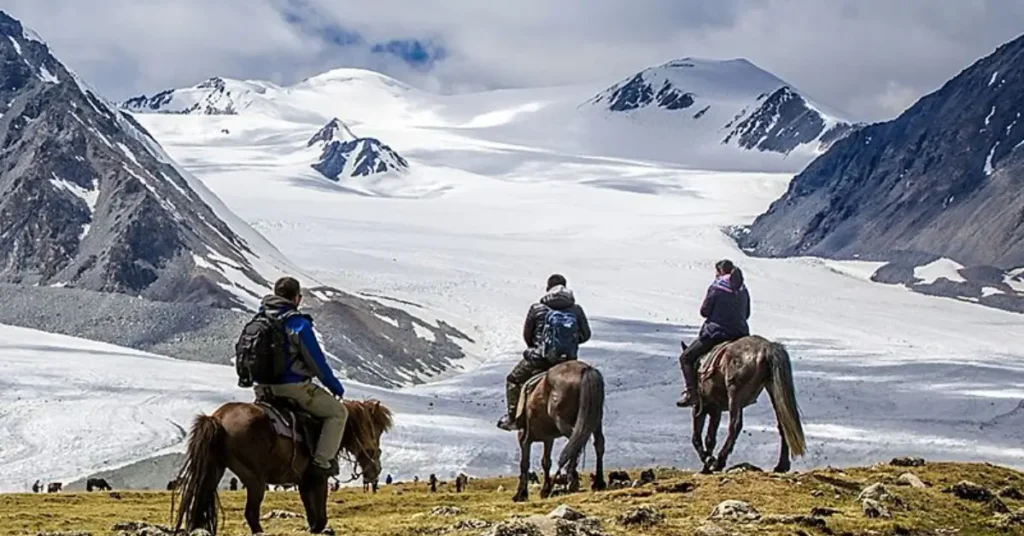
The difference between a guided and a self-guided Mongolia trekking tour is not the trail, and it is not the scenery. The route through Altai Tavan Bogd is a finite set of valleys, passes and lake basins that every operator and solo hiker eventually traces.
The real difference is who absorbs the risk and the friction. On a guided trek, the operator handles the friction (permits, food prep, horseman, camp setup, weather calls, evacuation) and prices it into the package. On a self-guided trip, the friction lands on the hiker — usually unevenly, almost always when conditions are worst.
There is a third, less-common format that splits the difference: private custom expeditions for groups of 2–4 trekkers who hire a guide-leader but build their own itinerary. These run $3,200–$4,500 per trekker for 10–11 days and are the right answer for experienced groups who want the support without the fixed schedule.
For most hikers comparing the two main formats, the relevant questions are not “which is cheaper” — the gap is smaller than it appears — but “which absorbs the risk profile I actually want.”
Cost — What Each Format Actually Adds Up To
Published prices look further apart than they really are. A self-guided trip at $100/day for a porter is $1,100 — about half the $2,200 guided mid-range price. But that comparison ignores everything the guided price includes that the self-guided hiker still has to pay for:
| Cost component | Guided ($2,200) | Self-guided ($1,100 porter + extras) |
|---|---|---|
| Porter / guide for 11 days | included | $1,100 |
| All meals on trail | included | $200–$300 |
| Camp gear (tent, kitchen, water filtration) | included | $150–$300 rental or carry |
| Pack horses for luggage | included | $200–$400 if hired separately |
| Border-zone permit | included | not obtainable solo |
| National-park entry | included | $40–$110 |
| Transfers Ölgii ↔ trailhead | included | $80–$200 |
| Medical evacuation reserve | usually included | $150–$400 insurance add-on |
| Realistic total | $2,200 | $1,920–$2,810 |
The honest gap is $0–$600, not the $1,100 the headline number suggests. And the self-guided estimate excludes the very real cost of a real emergency — a helicopter evacuation from the Altai can exceed $15,000 if your insurance does not cover high-altitude trekking. That is the cost of risk the guided format silently absorbs.
For a complete cost breakdown of the guided format’s full 2026 pricing, see our Mongolia trekking tour cost guide.
Permits and Access — The Deal-Breaker Most Hikers Miss
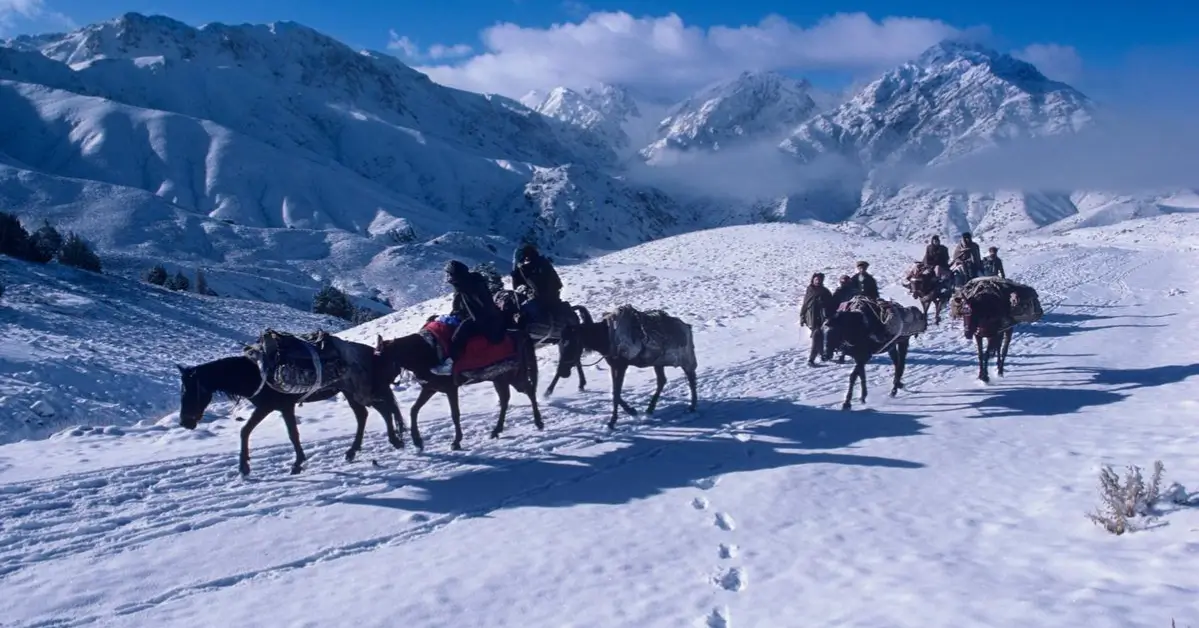
This is the single point at which the self-guided option breaks down completely for many trekkers. The standard Altai Tavan Bogd route passes through the border-zone restricted area along the Mongolia–China–Russia frontier. The permit to enter that zone is free, but it has two requirements that solo hikers cannot meet:
1. Only a licensed Mongolian tour operator can apply for it — not a hotel, not a porter, not the trekker themselves 2. Application takes 30–60 days and requires a registered Mongolian operator to submit on your behalf
This means a solo hiker who shows up in Ölgii planning to walk into the southern lake basin (Khoton, Khurgan, Dayan) is legally barred from the route without going through an operator anyway — at which point you are paying for half a guided trip with none of the support.
The northern routes (Tsagaannuur side, Russia-border-adjacent) have similar permit constraints. The handful of routes a solo hiker can legally walk without a permit are short day-hikes from Ölgii and a few foothill trails — not the iconic multi-day routes that drew you to Mongolia in the first place.
This is the single biggest reason “Mongolia self-guided trekking” looks attractive on paper and falls apart in practice: the country has not built up the independent-hiker infrastructure that Nepal, Patagonia or the Alps offer. The legal framework alone pushes most hikers into the guided format whether they expected to or not.
Safety and Evacuation Reality
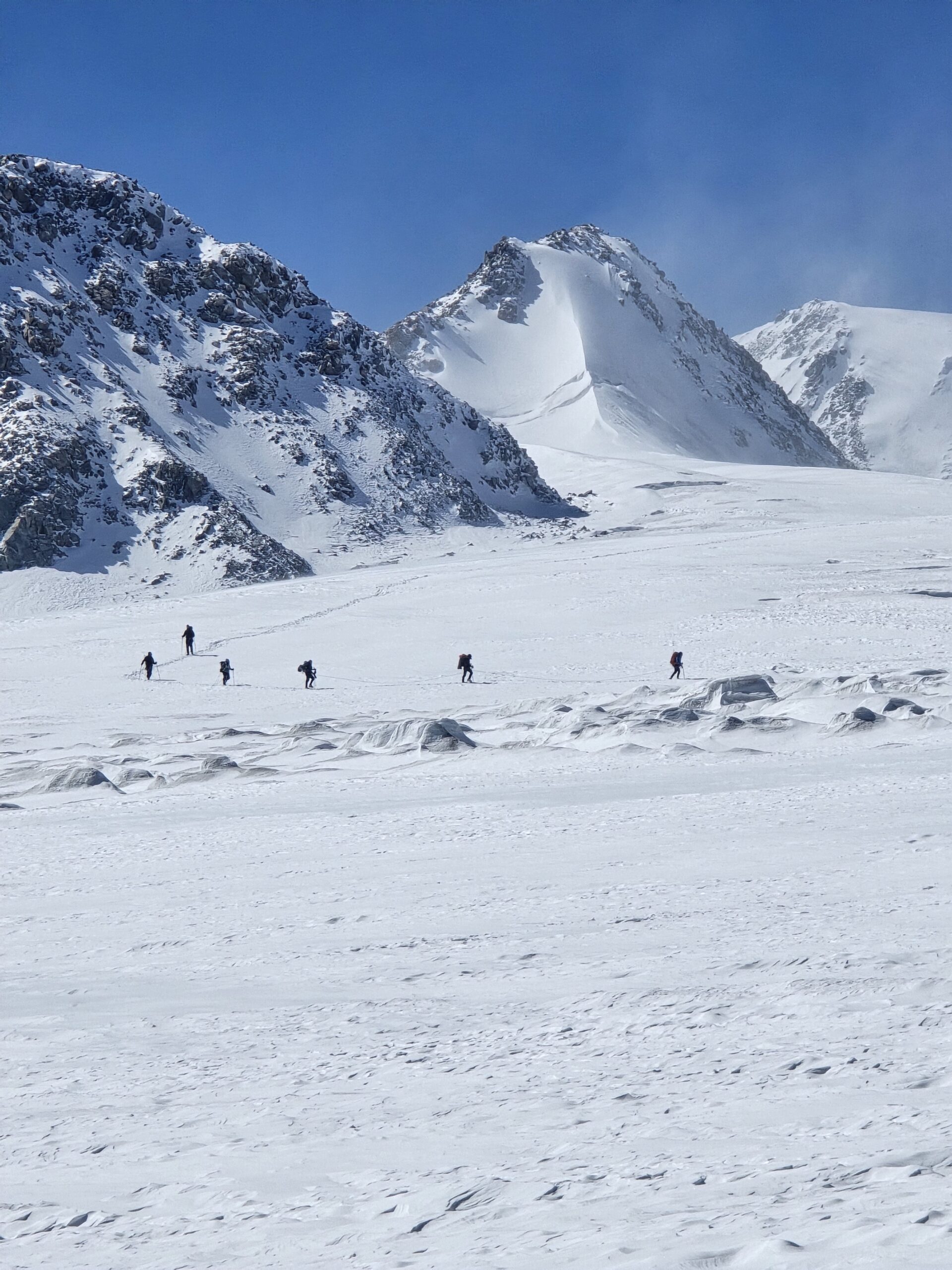
This is where the formats genuinely diverge. The Altai is not a forgiving place to have a problem: cell coverage drops within an hour of Ölgii, fuel/rescue infrastructure is 200+ km away, and a single river crossing in high snowmelt can turn a manageable trek into a real emergency.
Guided tour safety stack: – Lead guide trained in remote first aid – Support team with cook + horseman + sometimes a doctor on premium tours – Pre-planned evacuation route (UAZ jeep to Ölgii, air ambulance to Ulaanbaatar) – Daily satellite check-in with the operator’s office – Established relationships with nomadic families along the route who can host an injured hiker – Group format means a second hiker can ride for help while the guide stays with the casualty
Self-guided reality: – Single porter (if any), no medic, no support vehicle – Satellite communicator (Garmin inReach) is the only reliable comms past 100 km from Ölgii – Evacuation requires self-organisation; no Mongolian operator is contractually bound to mobilise a rescue for a solo hiker – Solo hikers particularly exposed: a sprained ankle alone at 3,000 m is survivable; a sprained ankle alone at 3,000 m in a snowstorm is not
The honest math: an experienced hiker on a guided trek faces roughly 5–10% the rescue exposure of an experienced hiker going solo on the same route. Beginner hikers going solo face exposure orders of magnitude higher.
Flexibility and Itinerary Control
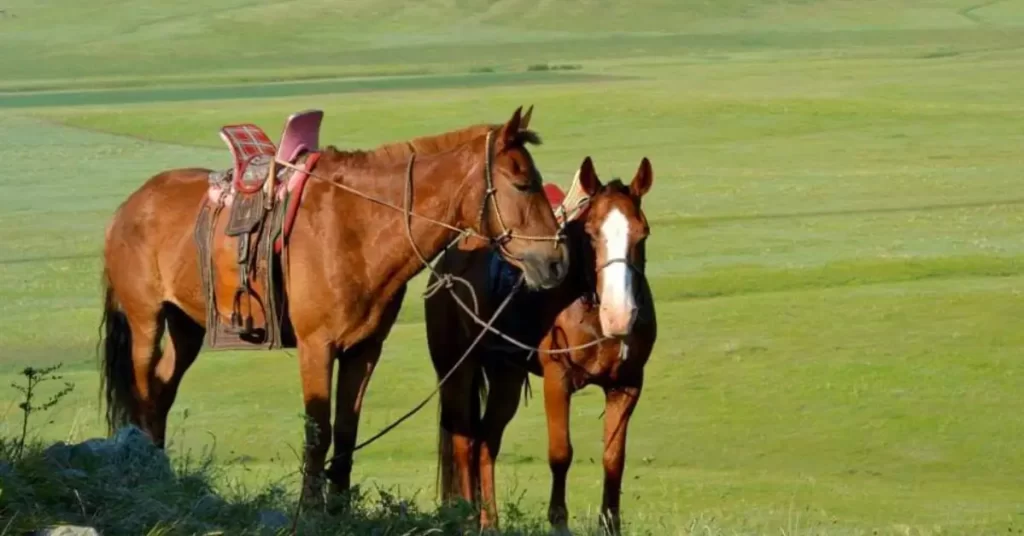
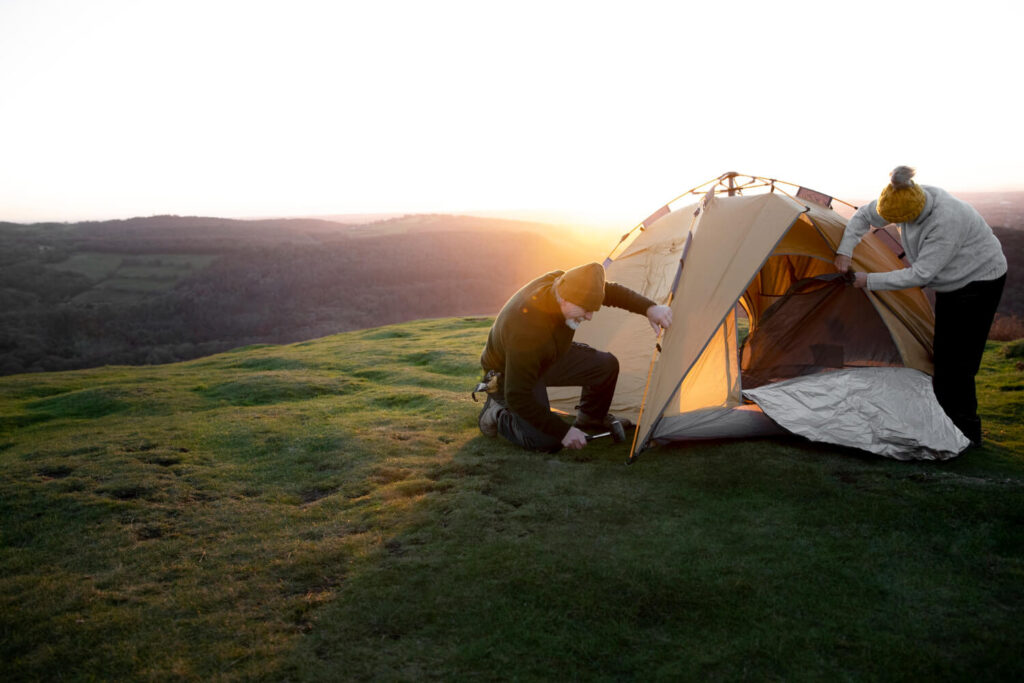
This is the strongest argument for self-guided trekking. A guided trip follows a fixed schedule with specific overnight points and pre-arranged ger camps; you cannot decide on day 4 to spend an extra day at Khoton Lake because the cook is already prepping dinner at the next basecamp.
Self-guided format gives the hiker: – Pace control — hike 8 km one day, 22 km the next – Side-trip flexibility — detour to a viewpoint, swap the southern route for the northern corridor – Solo or pair walking — no group dynamic to manage – Cultural pacing — stop and accept a herder’s tea invitation for two hours without holding up 11 other hikers
Guided format gives the hiker: – Removal of decision fatigue – Built-in cultural inclusions (eagle hunter family visit, ger-camp overnight, Naadam-adjacent timing) negotiated by the operator – The tent, the meal and the route are all arranged before you arrive
For hikers who value autonomy and have the experience to use it well, self-guided wins flexibility hands-down. For hikers who value the trip’s content and want to be present rather than logistically loaded, guided wins. The honest test: how much do you actually enjoy planning a trek vs walking it? Answer that and the format chooses itself.
Cultural Access and Local Connections
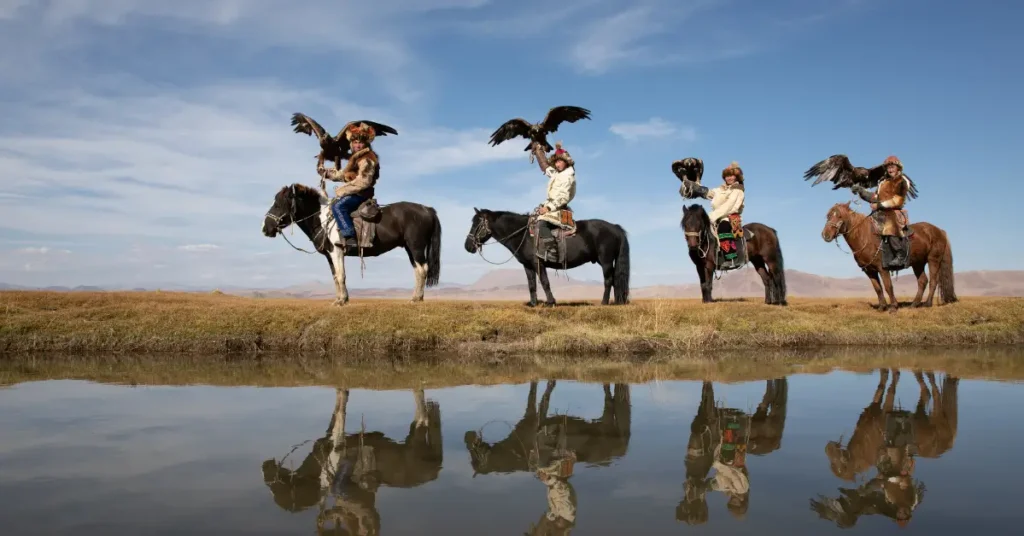
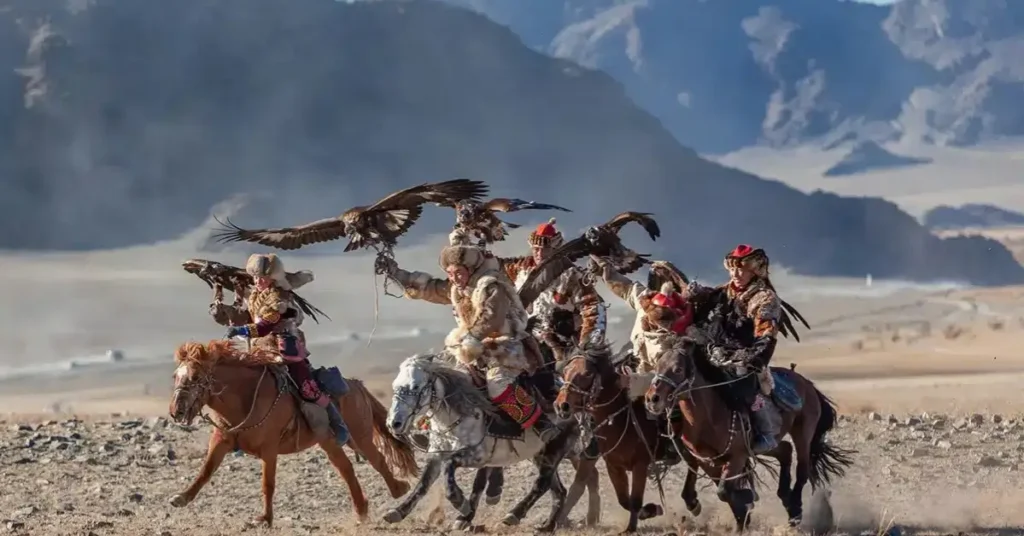
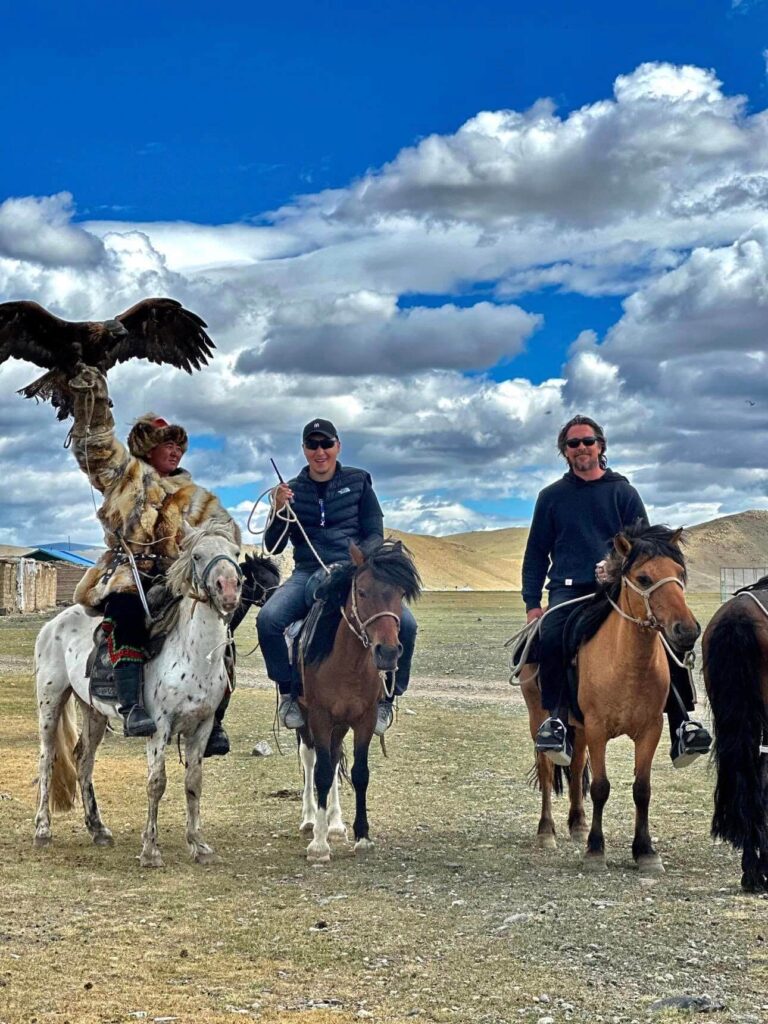
The single biggest underappreciated value of a guided Mongolia trek is access. A licensed Bayan-Ölgii operator includes a Kazakh eagle hunter family visit because they have a 10-year working relationship with that family — you arrive, you are welcomed, the eagles come out, the family shares a meal. A solo hiker passing through the same village cannot replicate that experience: language barriers, absence of pre-arrangement and the sheer logistics of cold-calling at a ger gate make spontaneous cultural access rare and shallow.
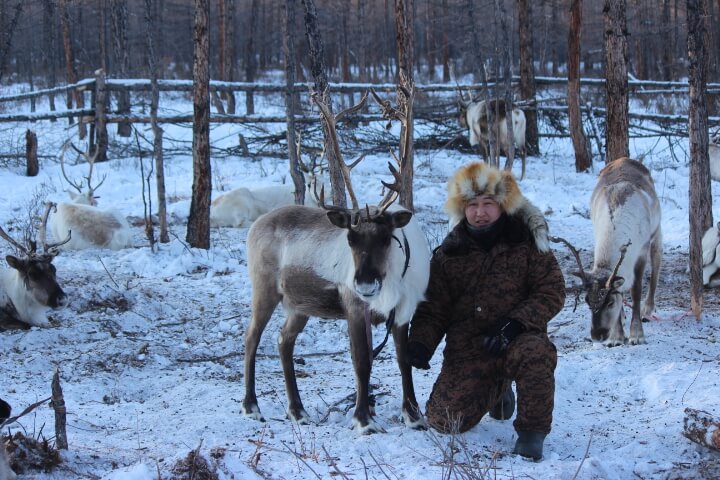
The same applies to: – Nomadic family overnight stays — operators have pre-paid arrangements; solo hikers are often turned away or charged ad-hoc rates – Naadam-adjacent timing — operators time treks to catch local sum-level festivals that don’t appear in travel guides – Mongolian language and translation — guides translate, negotiate and explain context that a solo hiker misses entirely – Local food and ger cooking — trail cooks prepare authentic regional meals; solo hikers eat freeze-dried imports
Self-guided hikers with previous Central Asia experience and some Russian or Mongolian language can build some of this connection over time. First-time visitors get a fraction of it.
Who Should Pick Which — The Decision Matrix
The right format depends on the intersection of your hiking experience, your Mongolia familiarity, and what you actually want from the trip:
| Profile | Best format | Why |
|---|---|---|
| First-time visitor to Mongolia, any hiking level | Guided | The country is harder to navigate than the trekking is |
| Experienced multi-day hiker, first Mongolia trip | Guided | Permit constraints alone push toward guided |
| Mongolia veteran returning solo | Self-guided (with porter) | You know what you’re getting into; the savings are real on non-permitted routes |
| Friend group of 2–4 wanting flexibility | Private custom | Splits the cost gap, retains support, lets you set the schedule |
| Solo hiker with limited time, money no object | Premium guided | Pay for compression — pre-built itinerary, lodge-style camps where available |
| Beginner multi-day hiker, road or day-hike only | Guided (period) | The Altai is not the place to learn multi-day expedition trekking |
| Photographer/journalist with content goals | Private custom | Daily flexibility for shoots, support for logistics |
The single most reliable filter is: if you have to ask whether you can handle a self-guided Mongolia trek, you probably can’t yet. Experienced multi-day hikers who can do it know they can do it. If you are reading this article for permission to try solo, the article is itself the answer: you are not yet at the experience level where the savings outweigh the risks.
Suggested Tours:
Suggested Blogs:
How Hard Is the Altai Tavan Bogd Trek? Fitness, Altitude, and an Honest Reality Check
The standard 11-day Altai Tavan Bogd trek is graded “moderate” by Mongolian operators and by international trekking standards. You will…Mongolia Trekking Tour Cost in 2026: What You’ll Actually Pay (and What’s Included)
A guided 11-day Mongolia trekking tour in the Altai Tavan Bogd costs $2,100–$2,400 per person in 2026 when booked through…Altai Tavan Bogd Trekking Routes: Khoton Lakes, Potanin Glacier, and the Khüiten Climb
There are three established trekking routes through Altai Tavan Bogd National Park: the Khoton & Khurgan Lakes loop (50–70 km,…


Can I do the Altai Tavan Bogd trek with no Mongolia experience?
Yes, with the guided format. International first-timers form the majority of guided trek customers, and the operator handles all the logistics that make Mongolia daunting (language, permits, food, transport, weather contingencies). Self-guided with no Mongolia experience is not realistic — between the permit barrier and the route-finding difficulty, you will either fail to reach the iconic routes or take on serious risk trying.
How much can I really save going self-guided?
Less than you think. The honest 2026 numbers: guided 11-day trek at $2,100–$2,400, self-guided with porter + permits + food + gear at roughly $1,900–$2,800. The published gap is $1,000+; the real gap once everything is added is closer to $0–$600. Self-guided saves money only if you already own all the gear, eat cheap, and avoid the permitted routes — at which point you are doing a different (shorter, less iconic) trek.
What if I want flexibility but can’t justify private custom pricing?
Look at the off-peak guided departures (early June or early September). These run with smaller groups (often 4–6 hikers instead of 10–12), the guide has more latitude to adjust the schedule, and pricing is at the lower end of the standard $2,100–$2,400 range. You won’t get day-by-day itinerary control, but you’ll get more room to extend a basecamp by a day or take a side trip than the peak-July departures allow.
Can two hikers share a single guided tour booking if only one is doing the full trek?
Most operators offer a “non-trekker” rate (typically 40–50% of the trekker price) for a partner who joins the start and end of the trip but doesn’t do the full trek, instead doing easier day-hikes from basecamps or staying with the support team. This is a popular option for couples where one person is more committed to the multi-day trek than the other.
What’s the most underestimated risk of self-guided Mongolia trekking?
Solo hiker fatigue compounding over multiple consecutive days. The Altai routes demand 100% concentration for 6–8 hours per day on unstable terrain, and the mental load of also navigating, cooking, water-filtering and managing camp logistics adds another 2–3 hours of decision-making before and after the day’s hike. After 4–5 days, most solo hikers are operating at 60–70% of their best-day capacity — which is exactly when the rocky descents and river crossings punish you. The guided format trades autonomy for the cognitive offload that keeps you safe on day 8.