
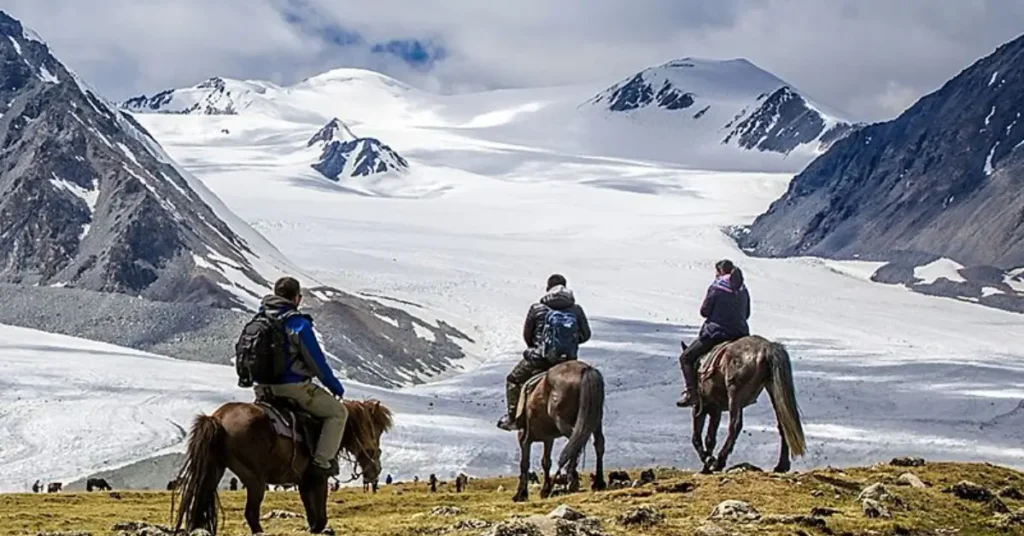
The standard 11-day Altai Tavan Bogd trek is graded “moderate” by Mongolian operators and by international trekking standards. You will hike 6–8 hours per day across a mix of grass meadows, rocky moraines and snow patches, gaining and losing 400–700 m of elevation each day, with the highest pass topping out around 3,200 m. There is no technical climbing, no rope work, no ice axes on the standard route. Most reasonably-fit adults aged 15–65 can complete it with 8–12 weeks of preparation hiking. The real challenge is consecutive long days at altitude, not raw difficulty — it is harder than a UK Lake District multi-day but significantly easier than Everest Base Camp.
Key Takeaways
- Difficulty grade: Moderate (UIAA T2 / B / 2–3 on European standards)
- Hiking time: 6–8 hours/day, 9 trekking days out of 11 total
- Daily elevation: 400–700 m gain/loss; max pass altitude ~3,200 m
- Technical skills required: None — no climbing, ropes, or ice axes
- Fitness baseline: Complete a UK Lake District multi-day without serious fatigue
- Training window: 8–12 weeks of weighted hiking before departure
- Honest red flags: below-average cardio, no recent hiking, untreated altitude history
What the “Moderate” Grade Actually Means on This Trek
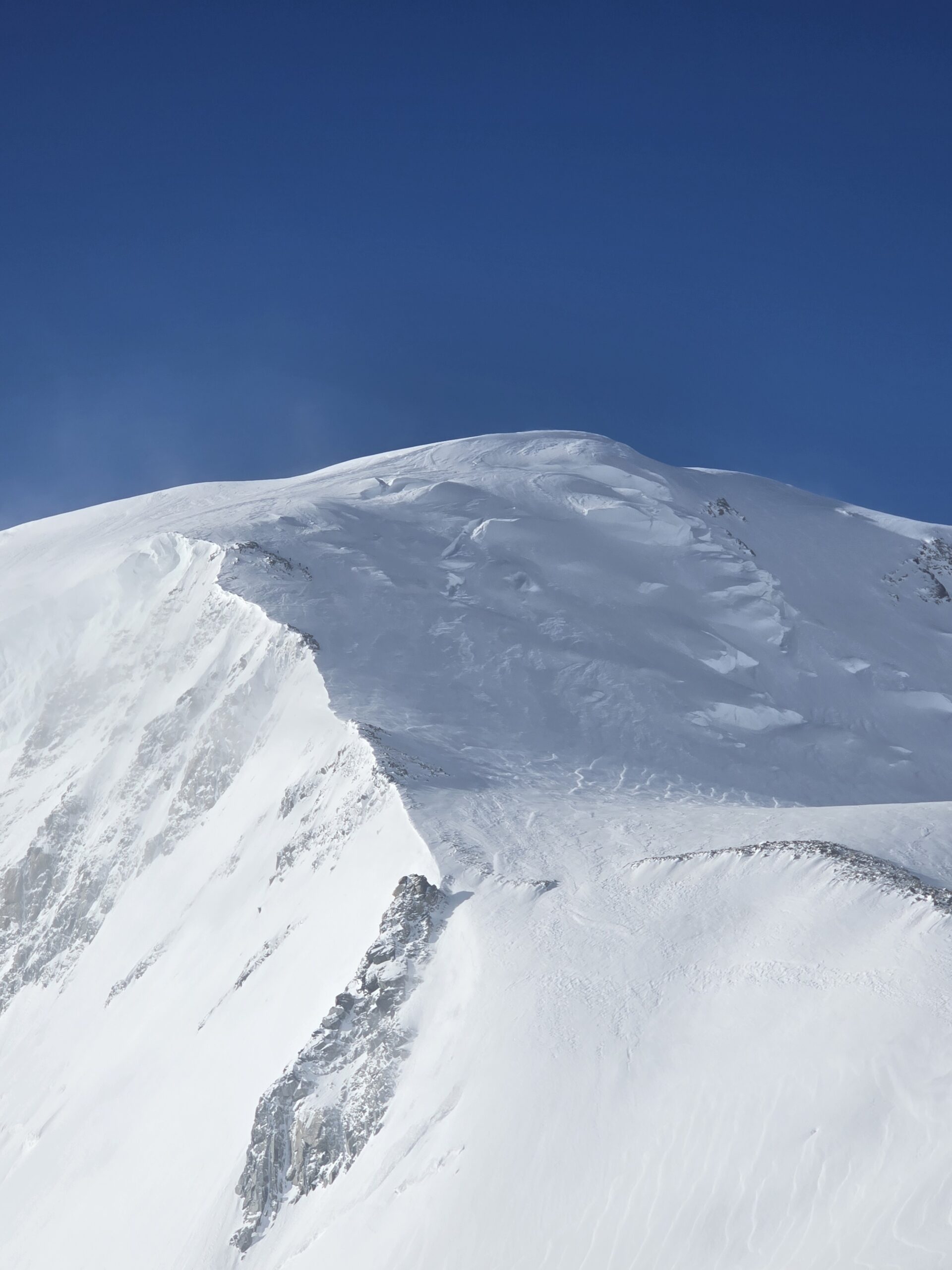
“Moderate” is one of the most overused words in adventure travel, and on the Altai Tavan Bogd it covers a specific reality. By UIAA hiking grades, the standard route falls between T2 (mountain hike) and T3 (demanding mountain hike) — well-marked trails for most of the route, some sections of unmarked tussock or moraine, occasional scrambling on stable rock, but no exposure that would require ropes or specific climbing skill.
In plain terms, this means:
- You can complete every section using regular trekking boots and poles
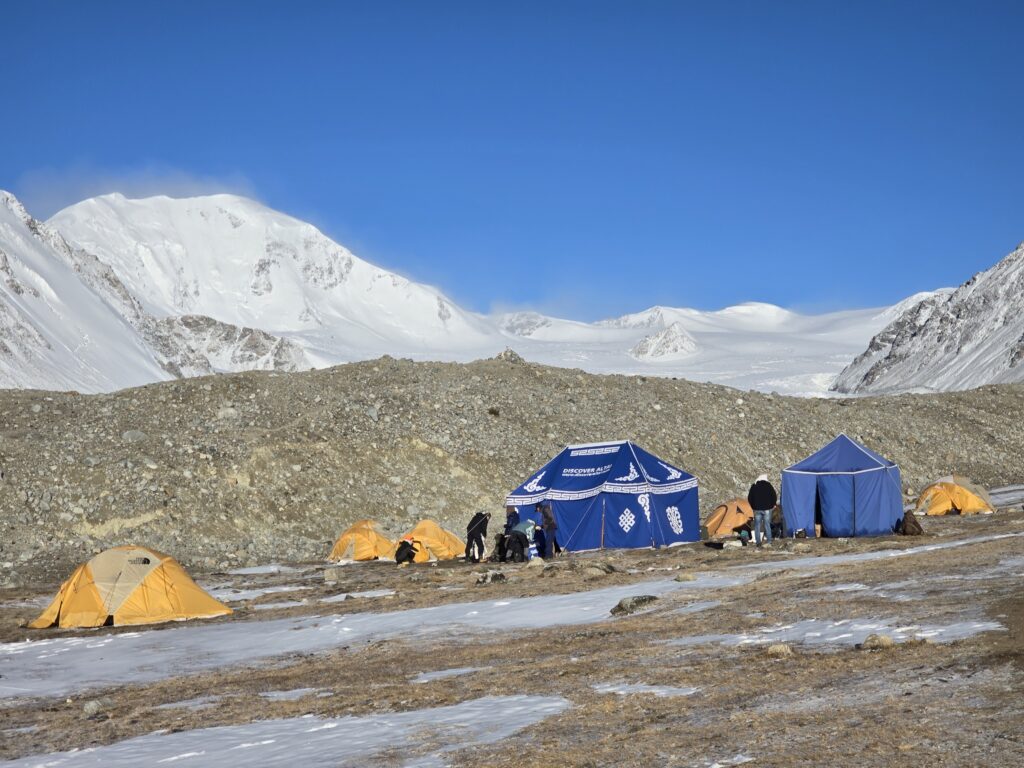
- You will need to step over and onto boulders for short stretches near the lake basecamps
- You will probably get one or two days where snowfields are involved, traversed with normal boots and trekking poles (no crampons unless you take the optional Malchin summit add-on)
- You will not be exposed to fall-risk on the standard route — the “exposed” sections are ridge walks with several metres of safe ground on either side
The route is harder than a Lake District three-day, the Alta Via 1 in the Dolomites, or the West Highland Way. It is easier than Everest Base Camp, the Annapurna Circuit, or the GR20 in Corsica. If you have completed any of the harder trails in that “easier than” list, the Altai Tavan Bogd will feel familiar within the first two days.
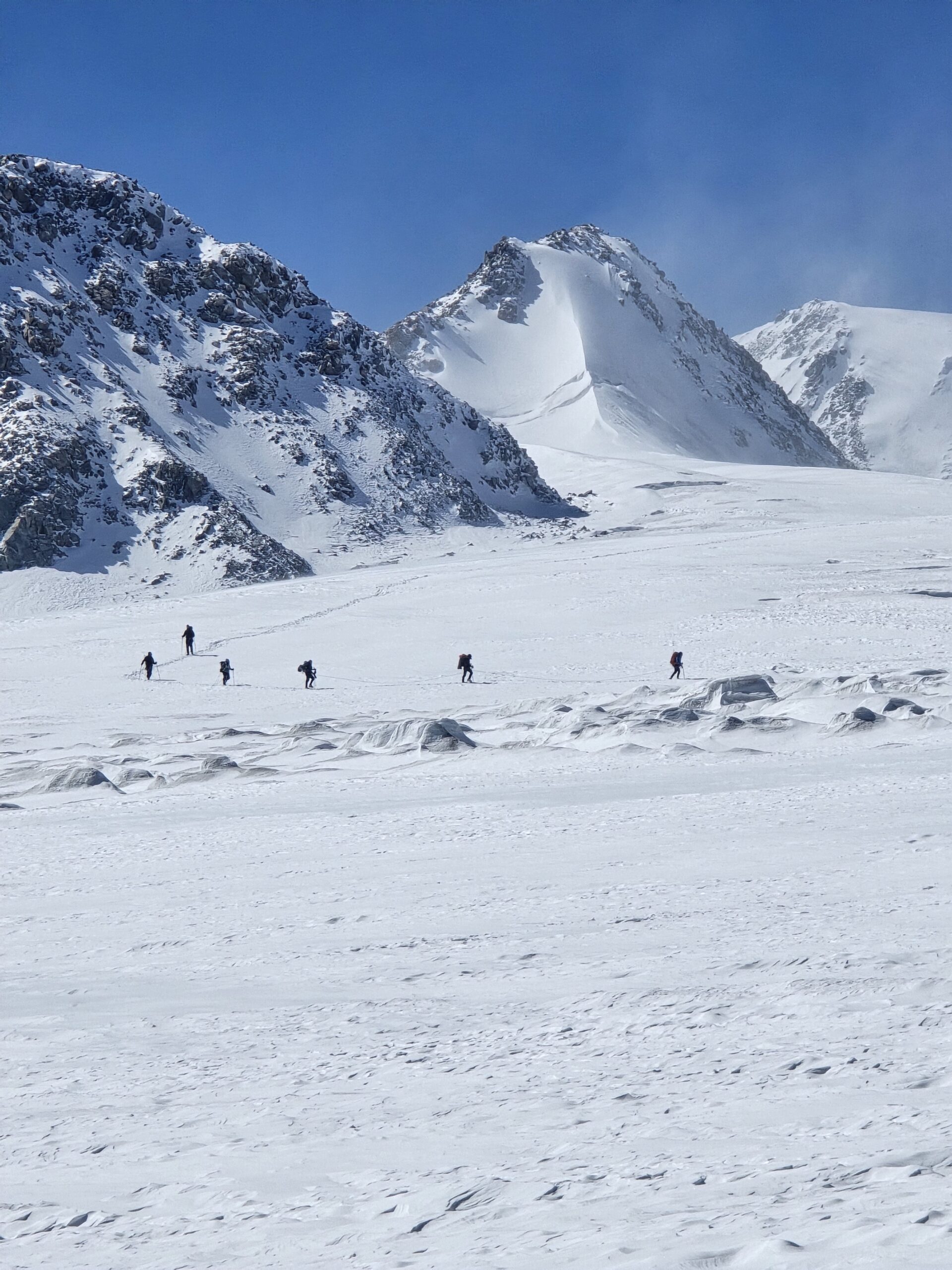
Daily Reality — What 6–8 Hours of Trekking Looks Like
The published tour spec says “6–8 hours per day” but those are not gym hours. On the trail, this breaks down realistically as:
- 6:30–7:30 AM: breakfast at camp, pack up your day pack
- 8:00 AM: start hiking; first hour is generally the easiest gradient of the day
- 10:30 AM: snack break, water refill, layers adjustment
- 12:30 PM: lunch stop — usually around 30–45 minutes at a viewpoint or stream
- 1:15 PM: afternoon section — typically the steeper or longer half of the day
- 3:30 PM: approaching the next camp or pushing over the day’s pass
- 5:30–6:30 PM: arrive at camp, set up your tent, change into camp clothes
Pure walking time inside that day usually adds up to 5.5–7 hours, with 1–2 hours of stops. Distance covered ranges from 10–16 km per day depending on terrain and elevation profile. The lighter days are short transfers to a basecamp; the heavier days involve a 700 m climb and 600 m descent over a single pass.
What surprises most first-timers is not the steepness — it’s the cumulative load. By day 4 of consecutive hiking, your legs feel heavier than they did on day 1 even on similar terrain. This is normal, predictable, and the entire reason the route includes one rest/exploration day roughly mid-trek to let muscles recover.
Altitude on the Route — The Real Number to Plan for
The Altai Tavan Bogd route is not extreme altitude by Himalayan standards. The numbers that matter:
| Location | Elevation | Time spent |
|---|---|---|
| Ölgii (start/end) | 1,710 m | 2–3 nights |
| Trailhead transfer | 2,100 m | 1 day |
| Lake basin camps (Khoton, Khurgan, Dayan) | 2,200–2,500 m | 4–5 nights |
| Highest pass on standard route | ~3,200 m | 30–60 min crossing |
| Optional Malchin Peak summit | 4,037 m | half-day excursion |
| Optional Khuiten Peak summit | 4,374 m | only for mountaineering tour, not standard trek |
For reference, most travellers from Europe and North America experience zero altitude symptoms below 2,500 m and only mild headaches between 2,500–3,500 m. The standard Altai Tavan Bogd trek spends most nights at 2,200–2,500 m and crosses the 3,200 m pass only briefly. Altitude is a real factor for the optional summit add-ons, but a non-event for the standard route.
That said, if you have a known altitude problem from previous travel (true headaches above 3,000 m, sleep disruption, persistent nausea), tell your operator at booking — they can adjust the basecamp height and skip optional summit days without affecting the rest of the experience.
What Level of Fitness You Actually Need
The honest fitness floor for the standard Altai Tavan Bogd trek is:
- You can hike 6–7 hours with a small day pack (5–8 kg) on undulating terrain without feeling wrecked the next day
- You can climb 400 vertical metres in under 90 minutes without stopping to recover for more than 30 seconds
- You can descend 500 vertical metres on rough terrain without your knees giving out
- You can repeat the above on consecutive days — three days in a row is the right test
Specific real-world tests that map well to the route:
- A weekend in the Scottish Highlands doing 20 km/day with a small pack
- The Tour du Mont Blanc (any 3-day section)
- A two-day rim-to-rim Grand Canyon trip
- Mount Whitney one-day via the standard route
If any of those would currently destroy you, you need 8–12 weeks of training before booking the trek. If they sound difficult-but-doable, you are at the right baseline today.
What you do not need: – Marathon-level cardio – Climbing or rope skills – Off-trail navigation skills (the guide handles this) – Extreme cold-weather tolerance (it is summer trekking)
Training Plan — 8–12 Weeks to Ready
The single most effective preparation for the Altai Tavan Bogd is repeated long-day hiking, ideally with hills. A simple 8–12 week ramp:
- Weeks 1–2: 2 hikes per week of 90 minutes on rolling terrain, no pack
- Weeks 3–4: 2 hikes per week of 3 hours, one with a 5 kg pack
- Weeks 5–6: 2 hikes per week of 4–5 hours, both with a 7 kg pack; add stairs/hill repeats once per week
- Weeks 7–8: at least one 6+ hour day per week; one back-to-back two-day weekend at 4–5 hours each
- Weeks 9–10: one full 7-hour day with 8 kg pack; one back-to-back 6+5 hour weekend
- Weeks 11–12: taper — short maintenance hikes, focus on sleep and recovery before departure
Add these supporting sessions:
- Twice weekly: strength work focused on glutes, quads, calves and core (squats, lunges, step-ups, planks)
- Once weekly: cycling, swimming or rowing for cardio without high impact
- Daily: 10 minutes of ankle mobility and calf stretches — most non-hiker discomfort on day 4+ comes from tight calves and ankles, not big-muscle fatigue
The biggest training mistake is doing only gym work. Treadmill hours and indoor cycling build engine fitness but do not prepare your feet, knees, ankles, and posture for 6–8 hours per day of unstable terrain. Get outside, on real trails, with a real pack, well before you fly to Mongolia.
Who Should NOT Book This Trek
The honest answer is also the most useful. The standard Altai Tavan Bogd trek is not the right choice if any of these apply:
- You have not hiked more than 90 minutes in the last 6 months
- You have known cardiac or pulmonary conditions that are not stable under exertion
- You have a documented altitude problem above 2,500 m
- You are under 14 or over 70 with no recent multi-day trekking experience
- You cannot honestly commit to 8+ weeks of training before departure
- You want a soft-adventure holiday — short hikes between lodge nights — rather than a true expedition
For the soft-adventure traveller, the 6-day Best of Altai Tavan Bogd tour is a better fit — same scenery, more vehicle time, shorter daily hikes, ger-camp accommodation. For travellers under-prepared for the standard route, your honest options are: (a) train more, (b) book the shorter 6-day option, or (c) pick a different destination this year and aim for Altai Tavan Bogd next season.
Operators that quietly accept everyone without screening are not doing you a favour — they are setting up a trip neither of you will enjoy. The screening conversation at booking is a feature, not a hurdle.
What the Guide Actually Does to Keep You Moving
A trained Altai trek guide does far more than navigate. The role on a typical day:
- Pace setting: matches the speed to the slowest sustainable trekker, never the strongest
- Daily route adjustment: weather check at 5:30 AM determines whether the day’s pass is crossed or held
- Hydration / nutrition prompts: physical reminders to drink and eat at regular intervals
- Foot care intervention: spotting blister formation early before it becomes a trip-killer
- Altitude monitoring: noting subtle behaviour changes that precede altitude sickness
- Camp setup management: ensuring tents, water filtration and food are set up before the cook arrives
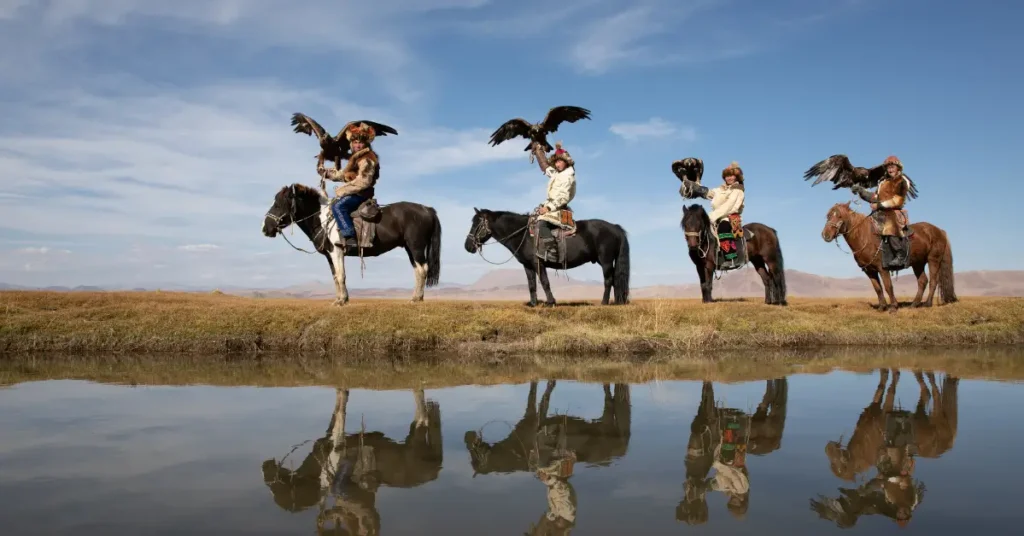
- Cultural translation: brokering interactions with nomadic herders, eagle hunter families, and villagers along the route
- Emergency response: first aid, evacuation calls, satellite communicator operation
The guide is the reason that “moderate” stays moderate. On the same trail, a well-guided group of 8 trekkers will finish each day in better condition than 4 self-guided trekkers attempting the same route — because the guide absorbs every minor friction (the wrong sock, the missed water refill, the slightly aggressive descent) before it compounds into late-trek exhaustion.
This is what the Mongolia trekking tour price actually buys. The trek is “moderate” partly because of the route and weather, and partly because the guide makes it so.
Suggested Tours:
Suggested Blogs:
Mongolia vs Kyrgyzstan: Which Nomad Adventure Is Right for You?
Choose Mongolia for true wilderness, very few other travellers, Kazakh eagle hunters, glaciers in the Altai and deep nomadic immersion…Mongolia Travel Vaccines: A Practical Guide for Rural Travel
For a trip to rural Mongolia, most travel clinics recommend being up to date on routine vaccines, plus hepatitis A…Self-Guided vs Guided Trekking in Mongolia: Which One Actually Fits Your Trip?
For roughly 90% of international hikers, a fully-guided Mongolia trekking tour is the right format — the supported 11-day package…


How does the Altai Tavan Bogd compare to Everest Base Camp in difficulty?
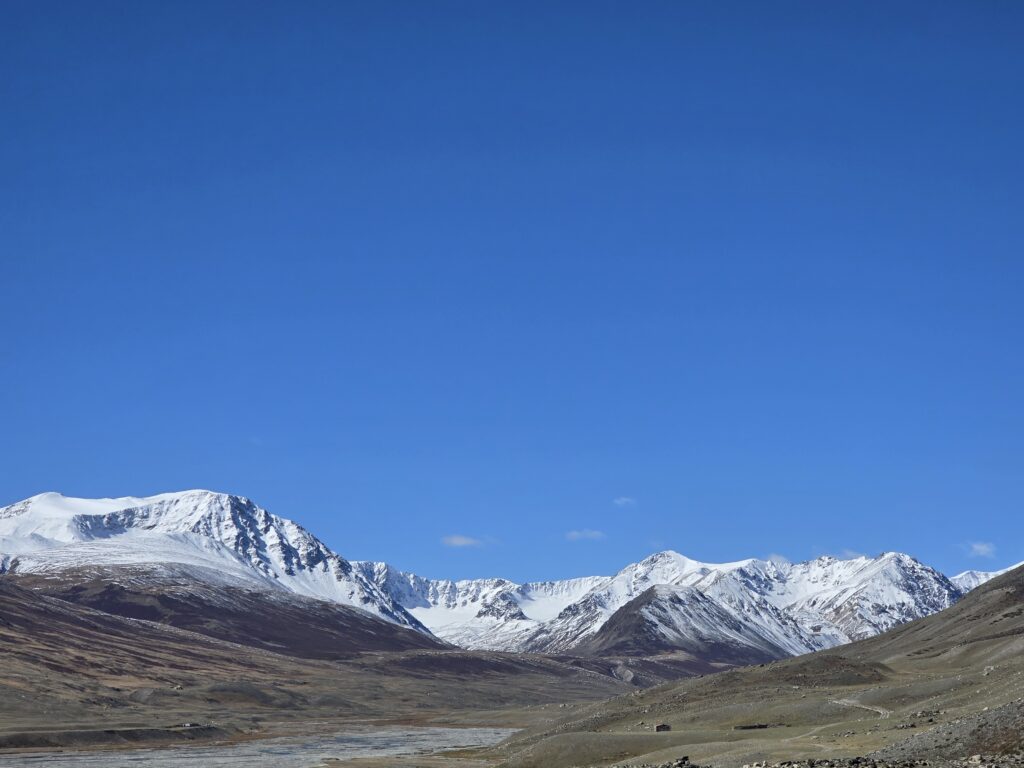
Significantly easier. EBC reaches 5,364 m elevation with sustained nights at 4,000+ m; the standard Altai Tavan Bogd tops out around 3,200 m with most nights at 2,200–2,500 m. EBC is 10–14 trekking days at noticeable altitude impact; Altai Tavan Bogd is 9 trekking days with mild-to-zero altitude effect for most travellers. If you have done EBC, the Altai is a step down in physiological demand while delivering comparable scale of scenery.
Do I need to take altitude medication for this trek?
Almost certainly not for the standard route. The basecamp nights at 2,200–2,500 m are well below the altitude where prophylactic medication (Diamox/acetazolamide) is typically recommended. Travellers planning the optional Malchin Peak summit (4,037 m) sometimes choose to carry Diamox as insurance, but most complete that summit without it. Always consult your doctor before any altitude medication.
What if I can’t keep up with the group pace?
The guide manages this in real time. Group pace is set to the slowest sustainable trekker — not the average and certainly not the fastest. If you fall significantly behind, the guide adjusts the day’s plan: shorter section, longer break, or — rarely — the support team rotates you into a horseback section while the group continues on foot. Most trekkers find that day 2–3 they’re slightly behind, then settle into the group pace by day 4 as fitness compounds. This is normal and accounted for in the itinerary buffer.
Can children or teenagers do this trek?
Yes, with caveats. Operators typically accept trekkers from age 15 with parent/guardian accompaniment, provided the child has demonstrated multi-day hiking experience and can commit to the same 6–8 hour days as adults. Younger children (under 14) generally do not have the joint development for repeated long days at altitude. Strong, hiking-experienced teenagers (15+) often actually outperform adult clients on this route — they recover faster between days. Confirm child-acceptance policy with the operator at booking.
What’s the most underestimated part of the trek’s difficulty?
Not the hiking itself — it’s the cumulative load on knees, ankles and feet by day 4+. Most trekkers focus their training on cardio and ignore lower-leg specific work. Ankle mobility, calf strength and core stability are what keep you moving on day 7, not your VO2 max. The single most impactful pre-trek exercise is daily calf stretches plus weekly long descents with weight — the latter is what builds true downhill durability.