
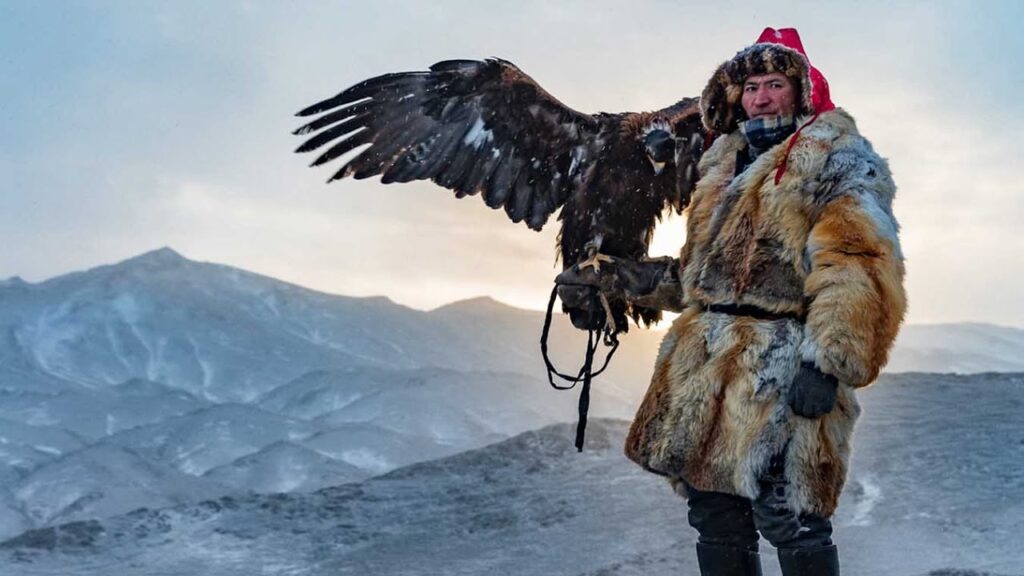
When most travellers think of falconry in Mongolia, they think of the golden eagle on a Kazakh hunter’s glove in the Altai. That image is real, but it is one species inside a much wider Central Asian falconry tradition. Mongolia is home to the saker falcon, declared the country’s national bird in 2012 and listed as Endangered by the IUCN, alongside the Eurasian goshawk, sparrowhawks, and other raptors that have been flown by hunters across the steppe and forest-steppe for centuries. UNESCO inscribed the broader practice of falconry as Intangible Cultural Heritage of Humanity in 2010, with Mongolia among the 24 States Parties on the expanded 2021 listing.
Key Takeaways
- The saker falcon (Falco cherrug) is Mongolia’s national bird, designated in 2012, and is IUCN Endangered with only 7,200 to 8,800 mature individuals globally
- The Eurasian goshawk (Accipiter gentilis) winters in northern Mongolia and was historically the noble’s hawk in medieval Europe, prized for its agility in forest hunting
- Together with the golden eagle, these species form Mongolia’s three-bird falconry tradition — each suited to different terrain, prey, and hunting style
- Saker falcons can dive at 120 to 150 km/h, a speed that makes them lethal on medium-sized birds and small mammals
- UNESCO inscribed falconry as Intangible Cultural Heritage in 2010, and Mongolia joined the multinational expansion in 2021 alongside 23 other countries
- Illegal trapping for the Middle Eastern falconry market is the single largest threat to wild saker populations across Central Asia
The Three Falconry Birds of Mongolia
A working Mongolian falconry tradition rests on three species, each chosen by hunters for the terrain they live in and the prey they need to take.
| Species | Mongolian/Kazakh use | Typical prey | Sex used | Status (IUCN) |
|---|---|---|---|---|
| Golden eagle (Aquila chrysaetos) | Kazakh berkutchi in Altai | Foxes, hares, marmots, rarely wolves | Female (heavier) | Least Concern |
| Saker falcon (Falco cherrug) | Steppe and forest-steppe falconry | Ground squirrels, pigeons, gamebirds | Both | Endangered |
| Eurasian goshawk (Accipiter gentilis) | Forest and forest-edge hunting | Corvids, pigeons, grouse, hares | Female (much larger) | Least Concern |
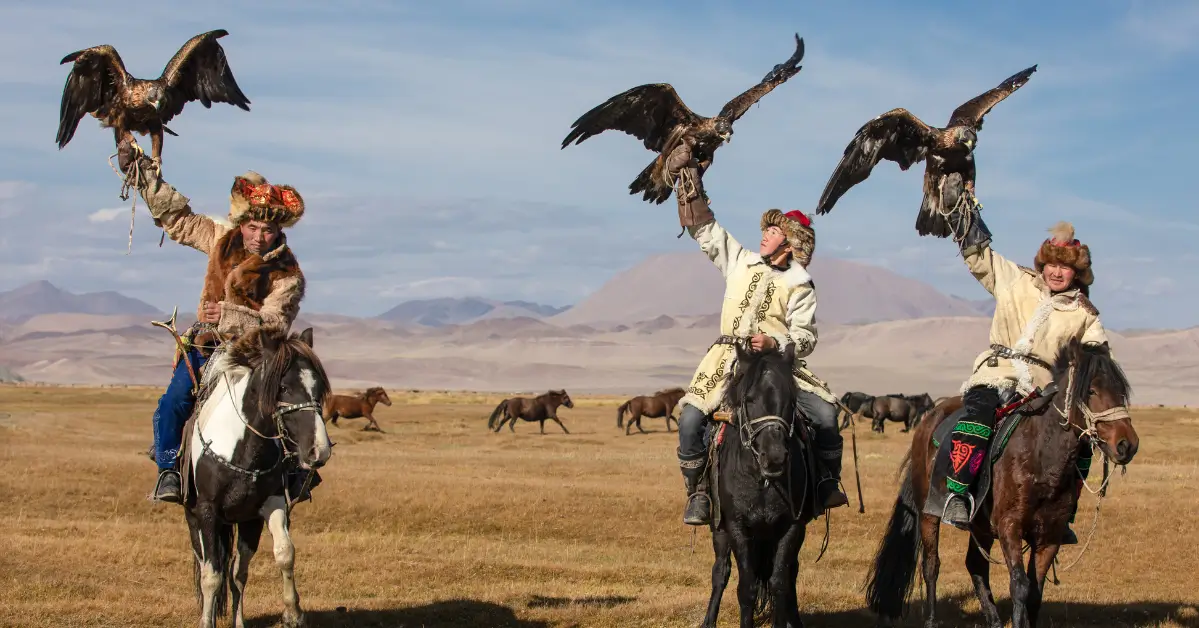
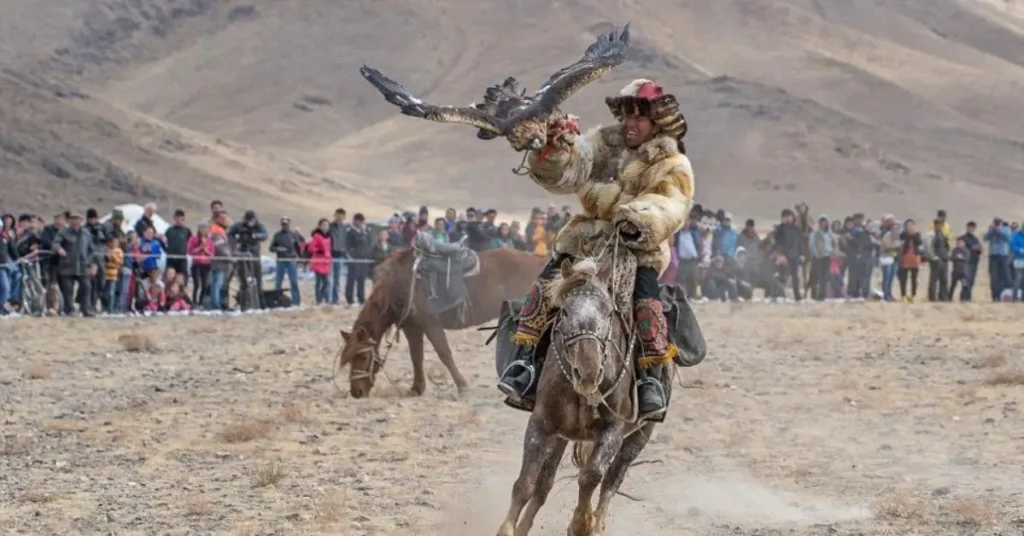
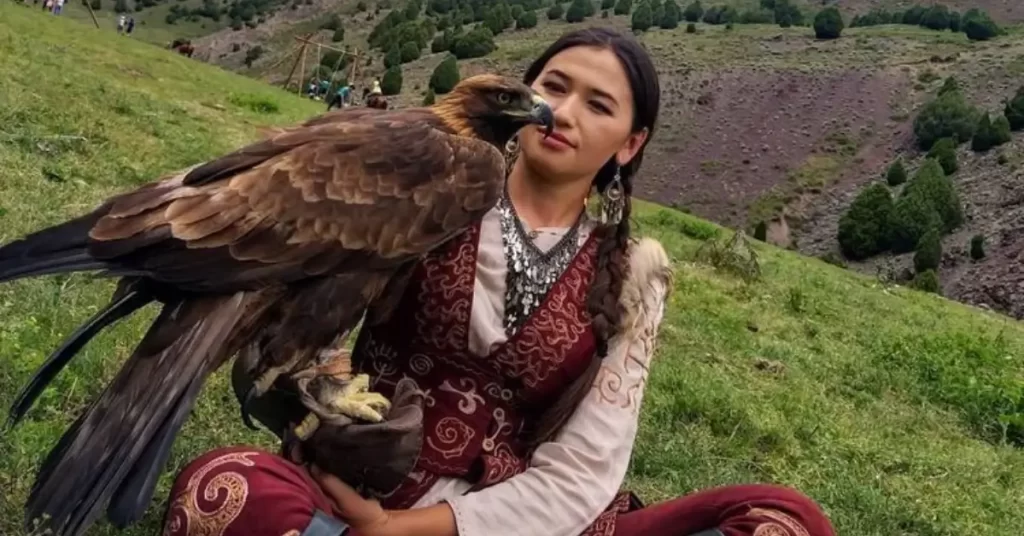
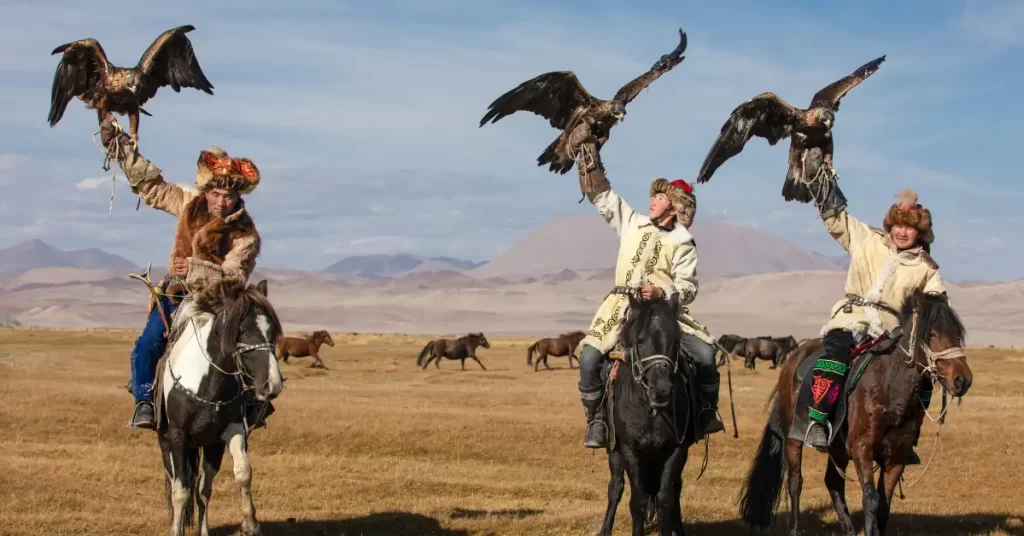
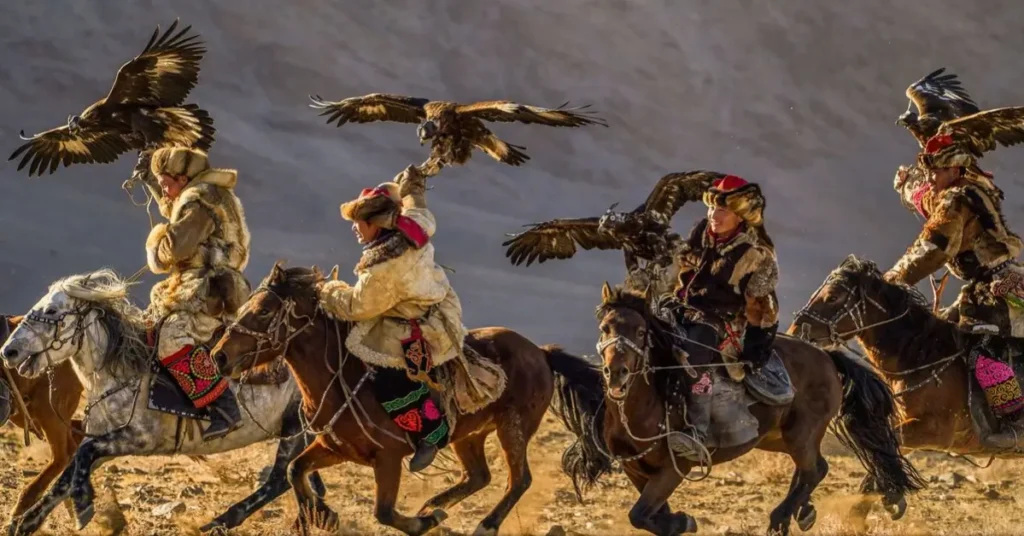
The golden eagle dominates the visible image of Mongolian falconry — particularly in the Altai, where Kazakh hunters have built an entire cultural identity around the bird. But on the open steppe and along the forest fringe, the saker falcon and the goshawk have been used for hundreds of years, often by Mongol rather than Kazakh hunters, and often for game too small or too fast for an eagle to bother with.
The Saker Falcon — Mongolia’s National Bird
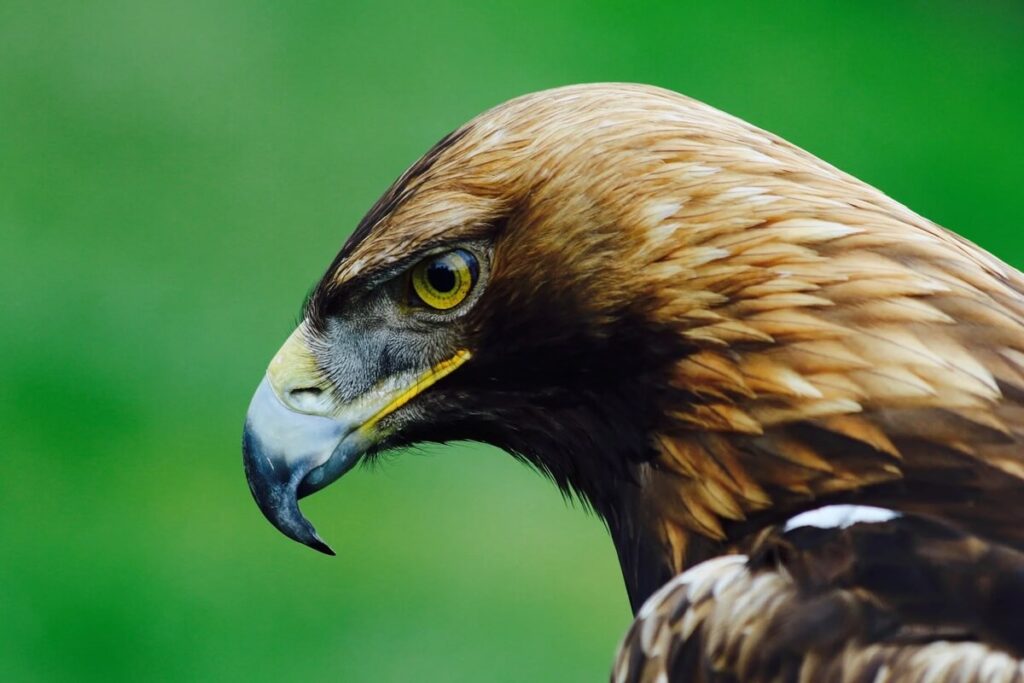
In 2012, the Government of Mongolia named the saker falcon (Falco cherrug) the country’s national bird. The choice was deliberate: the saker is one of the most prized falconry birds in the world, and it has been associated with Central Asian steppe hunting for centuries.
The bird is not large by raptor standards. A male measures 45 to 57 cm in length, weighs 730 to 990 g, and carries a wingspan of around 97 to 126 cm. Females, as in most raptors, are heavier — 970 to 1,300 g. What makes the saker exceptional is what it does in the air. The bird is “swift and powerful” and reaches speeds of 120 to 150 km/h in a stoop, suddenly swooping down on prey.
For a falconer, that means a bird that can be flown at medium-to-large gamebirds with high success and brought back to the glove. The saker’s diet in the wild is dominated by rodents and birds — in Europe specifically, ground squirrels and feral pigeons are the most common prey items. The species breeds across central Europe and the Palearctic eastward to Manchuria, and Mongolia sits squarely in that breeding range.
But the IUCN classifies the saker as Endangered. The global population was estimated at between 7,200 and 8,800 mature individuals in 2004, and the trend has been downward since. The reasons are covered later in this post.
The Eurasian Goshawk — The Noble’s Hawk in the Altai Winter
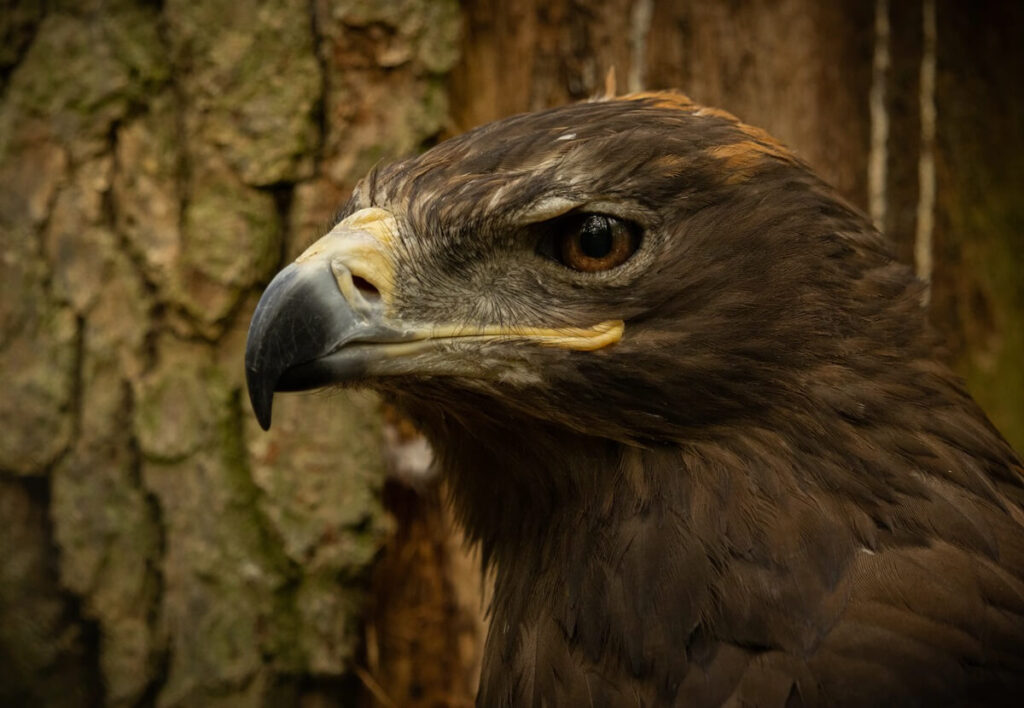
The Eurasian goshawk (Accipiter gentilis) is the second pillar of historic Central Asian falconry. The species winters into northern Mongolia. In medieval Europe, the goshawk was so prized that its scientific name carries the legacy: gentilis means “noble” or “gentle” because in the Middle Ages only the nobility were permitted to fly goshawks for falconry.
In physical terms the goshawk is smaller than a golden eagle but built for explosive acceleration in close cover. Males have a wingspan of 89 to 122 cm; females reach 108 to 127 cm. The female outweighs the male significantly — males average around 762 g, females around 1,150 g, roughly fifty percent heavier. Most of a goshawk’s wild diet is birds: corvids, pigeons, grouse, pheasants, thrushes, and woodpeckers, supplemented by squirrels, rabbits, and hares.
For a Mongolian falconer working the forest-steppe edge — the transitional band between open grassland and the larch and pine forests of northern Mongolia — the goshawk fills a niche the golden eagle cannot. An eagle is too heavy and too slow for hunting in tight cover. A goshawk threads between trees and takes pigeons or hares from a low perch. The two birds are not competitors; they are tools for different jobs.
Why Kazakh Hunters Chose the Golden Eagle
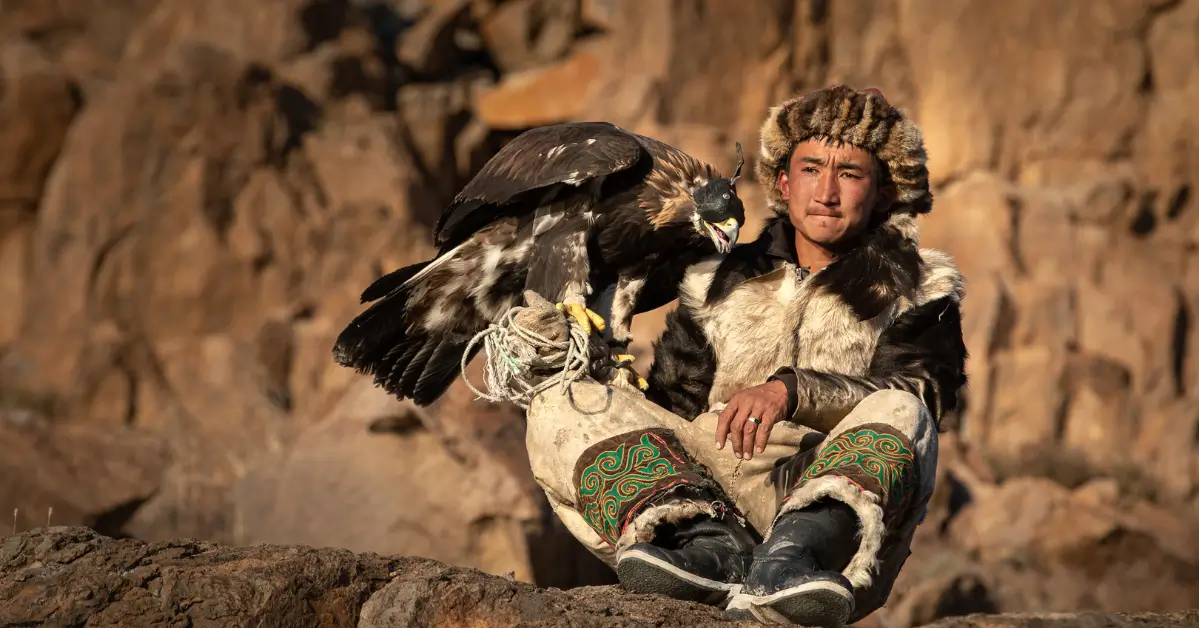
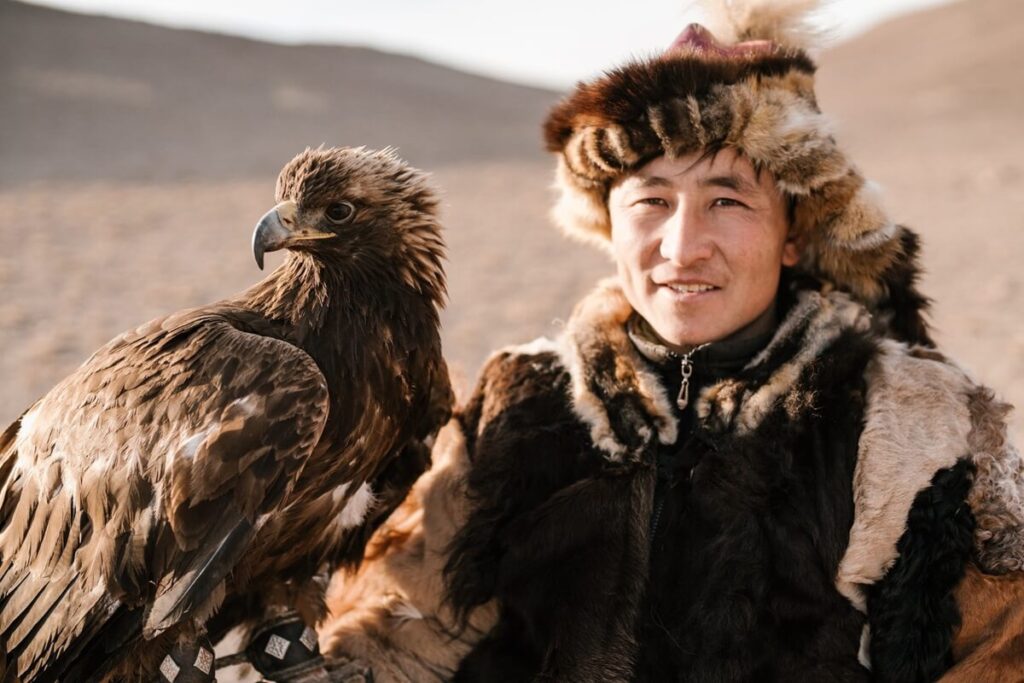
Within the broader Mongolian falconry tradition, the Kazakh community of the Altai stands apart for choosing the golden eagle as their working bird. The reasoning is practical, not just cultural.
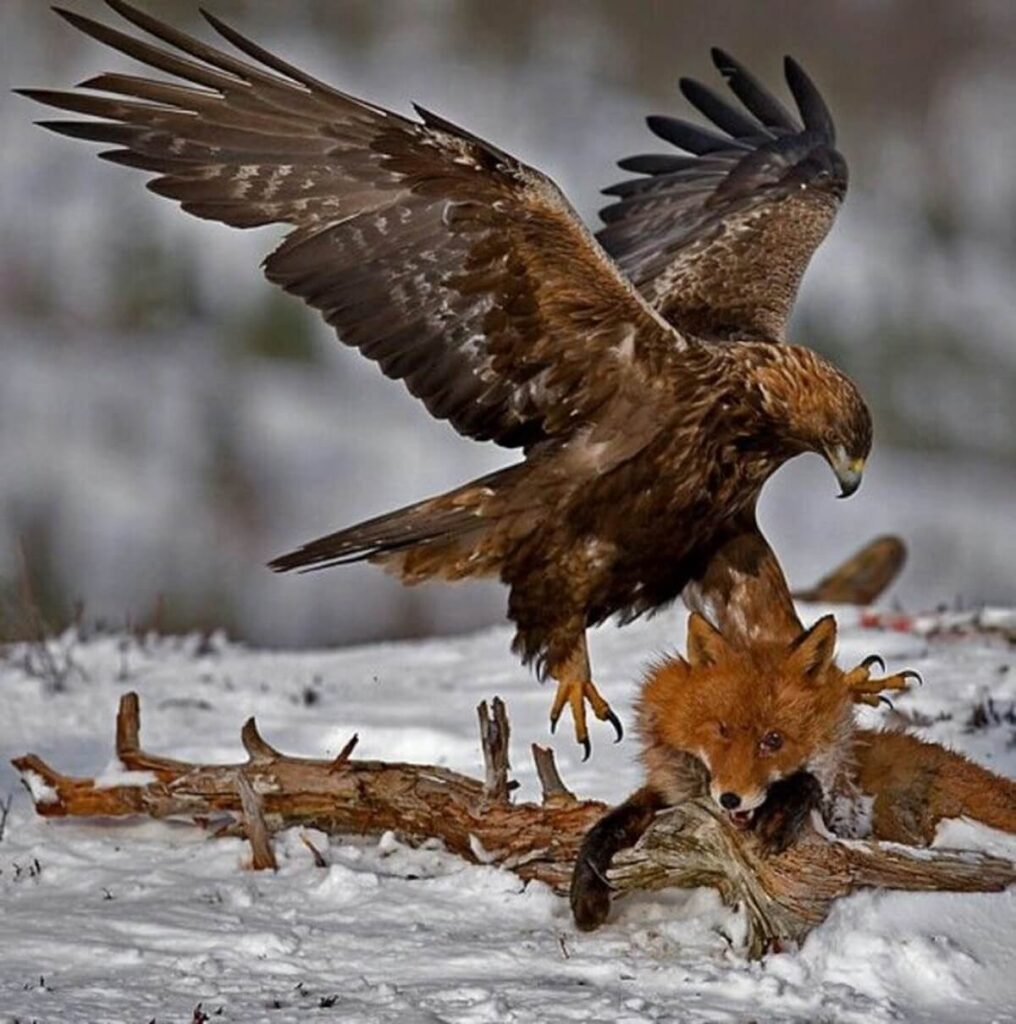
The Altai is open, vertical country. Cliff faces, alpine meadows, and treeless slopes do not suit a goshawk’s forest hunting style. The prey base — large mammals such as foxes, marmots, hares, and occasionally wolves — calls for raw striking power, not agility in cover. The Britannica entry on falconry confirms the regional pattern: in Kazakhstan, Kyrgyzstan, and Mongolia, golden eagles are flown at wolves, foxes, and gazelles. A female golden eagle, with her 26 to 37 percent weight advantage over the male, can deliver the strike that an eagle’s prey demands.
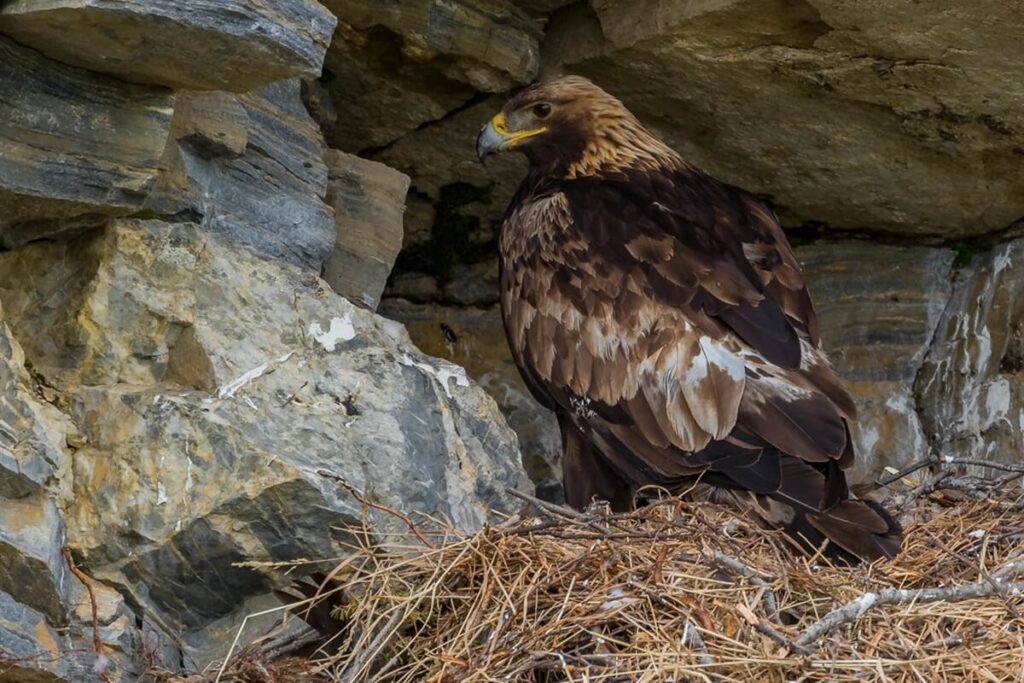
The Kazakh tradition also evolved around the bird’s biology. Wild golden eagles can live 30 years or more, which is why the eagle release ritual exists in the first place — a hunter borrows a bird for years and then returns her to the wild while she is still young enough to breed. The saker falcon and the goshawk follow different timelines and different practices, which is part of why the Kazakh and Mongol falconry communities developed distinct traditions even within the same country.
The Threat — Illegal Trapping and the Middle Eastern Market
The single biggest threat to falconry birds in Central Asia is not habitat loss, agricultural change, or climate. It is illegal trapping for the Middle Eastern falconry trade.
The Wikipedia entry on the saker falcon documents the scale: trappers operate across the migration corridor through the Middle East, the Arabian Peninsula, and Pakistan. Kazakhstan alone loses up to 1,000 saker falcons per year to illegal capture. The market is driven by demand for trained falcons in Gulf states, where falconry is a status sport with very high prices for top birds.
Mongolia is part of this picture. The country’s open landscapes, low human density, and proximity to the trapping corridors make it attractive to organised trappers. The Mongolian government has tightened export laws and increased enforcement at border checkpoints, but the wild saker population continues to decline.
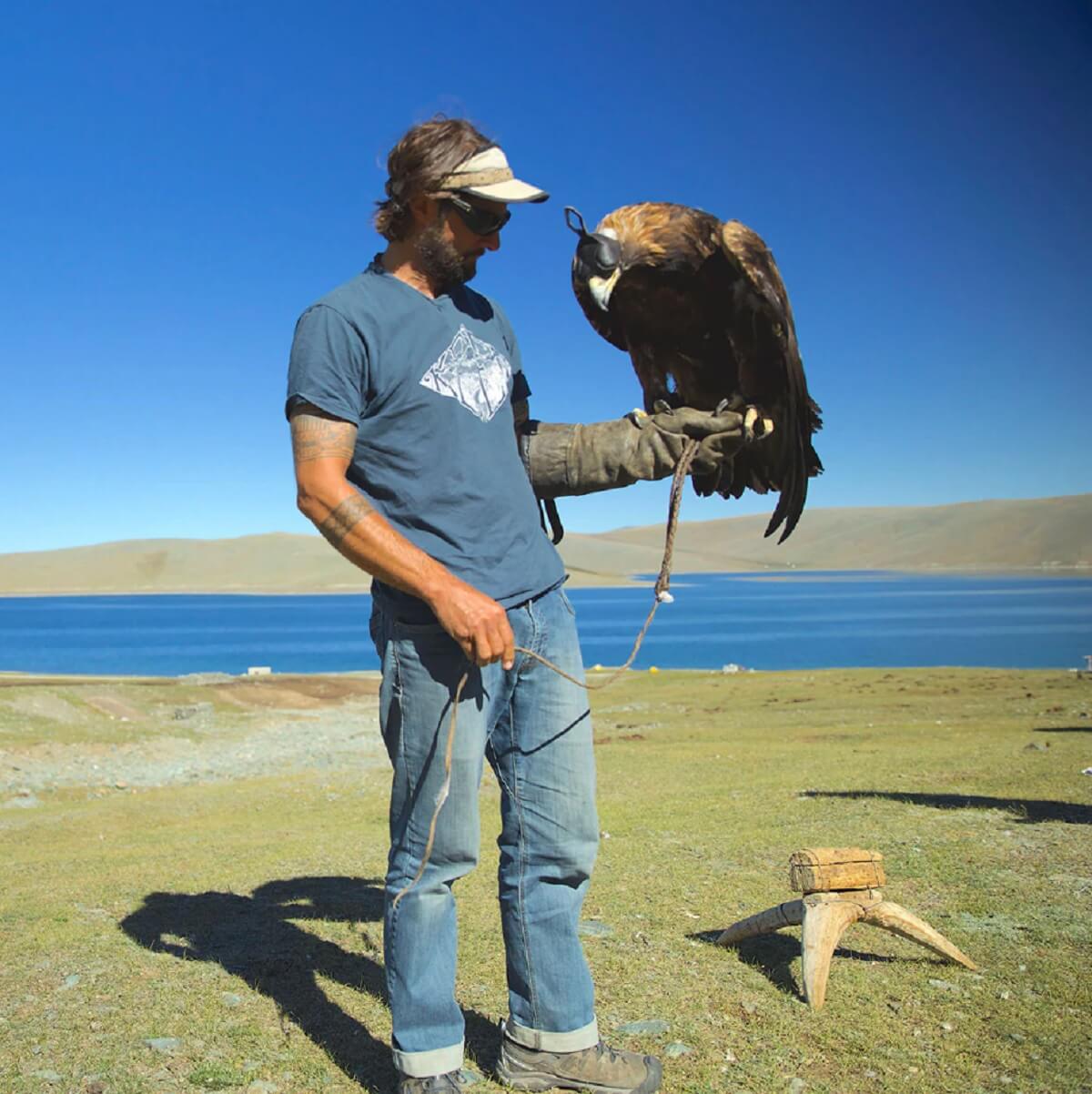
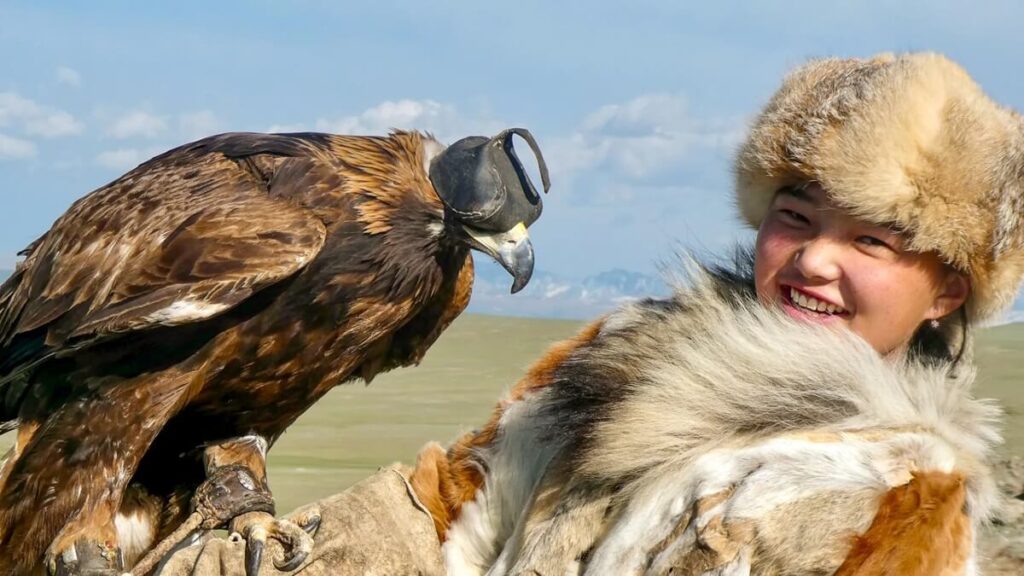
The traditional Kazakh practice in the Altai operates on a fundamentally different model. A berkutchi takes one chick from a nest, trains her for a working partnership, then returns her to the wild. Multiply that across the 250 active berkutchi in Bayan-Ölgii and the impact on wild populations is small and sustainable. Industrial trapping for export, by contrast, removes adult breeding birds permanently and at scale.
UNESCO Recognition and Modern Conservation
Falconry was inscribed on the UNESCO Representative List of the Intangible Cultural Heritage of Humanity in 2010, and the inscription was expanded in 2021 to cover 24 States Parties — including Mongolia and Kazakhstan. The recognition matters at two levels.
For traditional practitioners — Kazakh berkutchi in the Altai, Mongol falconers in the steppe — UNESCO listing brings legitimacy that helps the next generation see the practice as worth continuing rather than as a relic. UNESCO’s documentation specifically highlights that the practice is transmitted from generation to generation through mentoring within families or in training clubs, which is exactly how knowledge of how to take a chick from a cliff nest, condition her to flying weight, and return her to the wild is preserved.
For conservation, the listing creates a clear distinction between sustainable traditional practice and industrial trapping for export. A berkutchi family with a hood, a glove, and a single working female eagle is participating in an internationally protected cultural heritage. A trapper netting saker falcons for shipment to the Gulf is not.
Where to See Mongolian Falconry Today
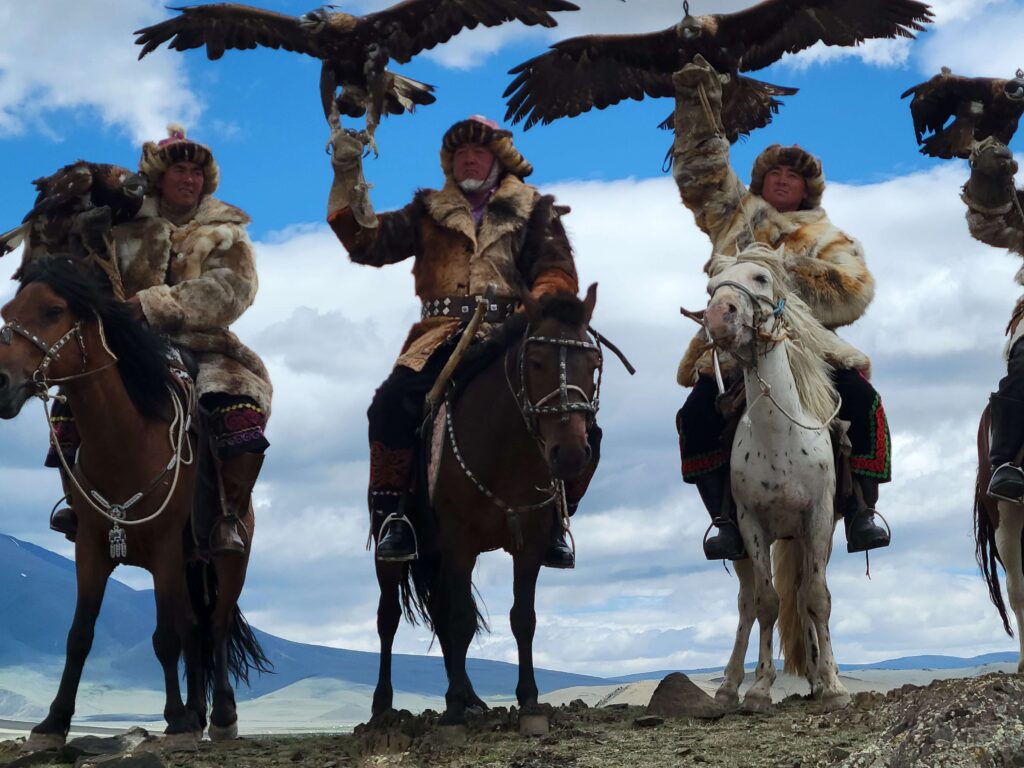
The visible centre of Mongolian falconry is Bayan-Ölgii province in the far west — Kazakh country, golden eagle country. The two annual festivals are the Sagsai eagle festival in September and the Ulgii Golden Eagle Festival in October. Both draw active berkutchi from across the province and offer the only easy way for a visitor to see trained birds in flight.
Saker falcons and goshawks are far harder to encounter on a tour. Working falconers using these birds tend to operate quietly, away from festivals and away from photographers, and they are a smaller community with much smaller numbers. A visitor with a serious interest in the broader falconry tradition is best off arranging time with a single berkutchi family, where the conversation can extend beyond eagles into the wider history of birds-of-prey hunting in the Altai.
For travellers who want to begin with the eagle and then learn how it fits into the broader tradition, our Eagle Hunters Adventure places you with active berkutchi families in Bayan-Ölgii, the Altai Eagle Festival tour covers the September Sagsai gathering, and the Golden Eagle Festival tour covers the larger October event.
Suggested Tours:
Suggested Blogs:
Golden Eagle Photography: How to Shoot Wild Eagles, Hunters and the Festival
Golden eagle photography rewards preparation more than luck. For birds in flight, start at 1/2500s, f/6.3, auto-ISO capped at 3200,…Eagle Festival Packing List 2026: What to Wear in Olgii’s October Cold
The Mongolia Eagle Festival in Bayan-Ölgii runs in late September and early October at elevation 1,710 metres, where October average…Sagsai vs Golden Eagle Festival 2026: Which Mongolia Eagle Festival Should You Attend?
Mongolia hosts two distinct Kazakh eagle festivals each autumn in Bayan-Ölgii Province, the country’s western Kazakh-majority region. The Sagsai Golden…






What birds besides golden eagles are used for falconry in Mongolia?
The two other key species are the saker falcon (Mongolia’s national bird since 2012) and the Eurasian goshawk. The saker is used on open steppe and forest-steppe terrain for medium gamebirds and small mammals; the goshawk is a forest and forest-edge hunter used for corvids, pigeons, grouse, hares, and squirrels. The golden eagle dominates Kazakh falconry in the Altai because the open vertical terrain and large prey suit the eagle’s striking power.
Why is the saker falcon Mongolia’s national bird?
The Government of Mongolia designated the saker falcon (Falco cherrug) as the country’s national bird in 2012. The species has been associated with Central Asian steppe falconry for centuries and is one of the most prized falconry birds in the world. The bird’s IUCN Endangered status also gives the designation conservation weight.
How fast can a saker falcon dive?
A saker falcon can reach 120 to 150 km/h in its hunting stoop, suddenly swooping down on prey. That speed is what makes it effective against medium-sized to large gamebirds and what has made it a target for the international falconry trade.
Is falconry recognised as cultural heritage in Mongolia?
Yes. UNESCO inscribed falconry on the Representative List of the Intangible Cultural Heritage of Humanity in 2010, and the inscription was expanded in 2021 to include 24 States Parties, with Mongolia and Kazakhstan among them. The recognition covers traditional practice, including the breeding, training, and care of the birds and the bond between falconer and bird.
How endangered is the saker falcon?
The IUCN Red List classifies the saker falcon as Endangered. The global population was estimated at between 7,200 and 8,800 mature individuals in 2004 and has been declining since. The single largest threat is illegal trapping for the Middle Eastern falconry trade — Kazakhstan alone loses up to 1,000 saker falcons per year to illegal capture.
Can I see traditional falconry on a tour to Mongolia?
Golden eagle falconry is widely accessible in Bayan-Ölgii province through homestay tours and the September Sagsai and October Ulgii eagle festivals. Saker falconry and goshawk falconry are far less visible — these communities are smaller and tend to work away from tourist circuits. A private homestay with a berkutchi family is the best way to learn about the broader Mongolian falconry tradition beyond eagles.