
Becoming a Kazakh burkitchi (eagle hunter) is a years-long family apprenticeship, not a course or a profession one applies for. A child grows up beside the father’s eagle on its perch, learns to ride a horse before learning to read, and gradually takes on more of the daily care of the bird until they are trusted to handle one of their own. UNESCO documents the practice as one transmitted from generation to generation through mentoring within families, a structure that has produced families of seven or more generations of hunters in Bayan-Ölgii. Today the apprenticeship pipeline supports roughly 250 active berkutchi in western Mongolia, and the question of who carries the tradition forward is now one of its central concerns.
Key Takeaways
- Apprenticeship is family-based — UNESCO confirms transmission “from generation to generation through mentoring within families or in training clubs”
- The documentary The Eagle Huntress profiled Aisholpan, a 13-year-old whose family had practised eagle hunting for seven generations
- A burkitchi must master horsemanship, mountain terrain reading, and falconry — the eagle is only the most visible skill
- Around 250 active berkutchi remain in Bayan-Ölgii province, the heart of Kazakh eagle hunting in Mongolia
- The first female competitor at the Ulgii eagle festival entered in the 2010s, opening the apprenticeship to daughters
- UNESCO inscribed falconry as Intangible Cultural Heritage in 2010 and expanded the listing in 2021 specifically to safeguard the transmission chain
What Apprenticeship Actually Means in This Tradition
A Kazakh burkitchi apprenticeship is not a fixed programme with a syllabus and a graduation date. It is the lived experience of growing up in a household where a working golden eagle sits on a perch in the corner, where the father returns from the cliffs with an eaglet, and where the language of falconry is the family’s daily vocabulary.
UNESCO’s documentation of falconry — which lists Mongolia and Kazakhstan among 24 States Parties since the 2021 expansion — describes the transmission method directly: the practice is passed “from generation to generation through a variety of means, including through mentoring, within families or in training clubs.” For the Kazakh communities of Bayan-Ölgii, the family is the training club. Knowledge is transferred by demonstration, by handing the child a glove, and by years of observation.
This is also why the apprenticeship is hard to formalise or transplant. A child raised in Ulaanbaatar cannot become a burkitchi through a weekend course; the apprenticeship requires the cliffs, the horses, the seasons, and the family that holds the accumulated knowledge.
The First Years — Growing Up Beside the Eagle
The earliest stage of an apprenticeship is invisible. A Kazakh child in an eagle-hunting family grows up around the bird from infancy. The eagle is part of the household — fed daily, weighed, hooded for travel, taken out to fly. The child watches.
| Apprenticeship stage | Typical activity | What is being learned |
|---|---|---|
| Childhood | Daily proximity to the family eagle | Bird behaviour, fear management, household routines |
| Pre-teen | Riding instruction, helping with bird care | Horsemanship, weight management, basic glove handling |
| Teenage | Accompanying father on hunts, handling bird under supervision | Field judgment, hunting cycle, terrain reading |
| Late teens / young adult | Capture and conditioning of own first eagle | Independent falconry, full responsibility |
This table reflects the broad shape of family transmission documented by ethnographers and confirmed by UNESCO’s framing of mentored, family-based heritage transfer. Specific timing varies hunter by hunter and family by family — there is no fixed graduation age.
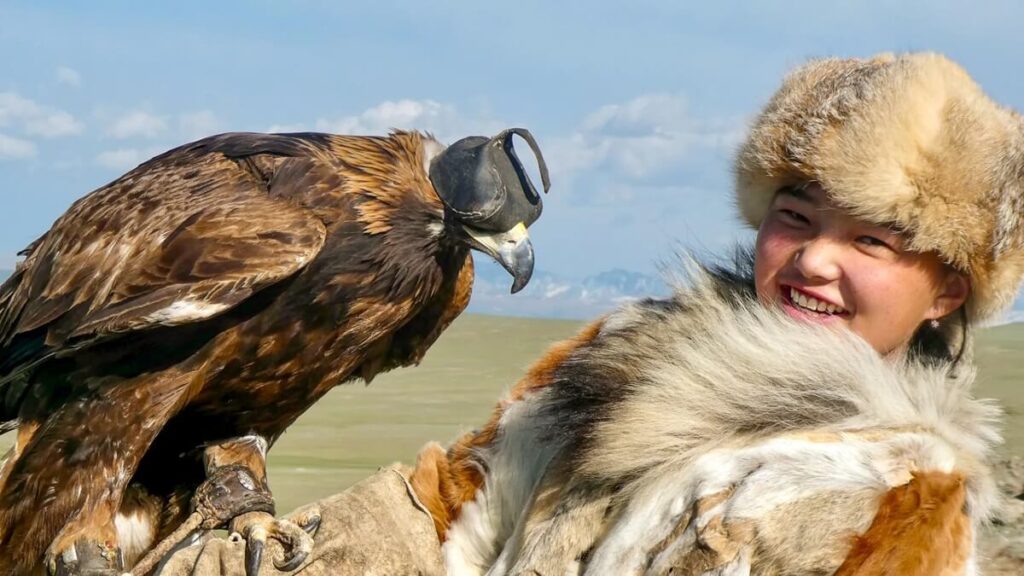
The documentary The Eagle Huntress brought one example into public view. The film follows Aisholpan, a 13-year-old Kazakh girl from Mongolia, who attempts to become the first female to enter the eagle festival competition. The men in her family have been eagle hunters for seven generations. The “seven generations” detail is what matters here: the apprenticeship pipeline does not begin with the trainee. It begins with whichever ancestor first took an eagle from the cliffs, and continues through the descendants who carry the knowledge forward.
The Horse Before the Bird
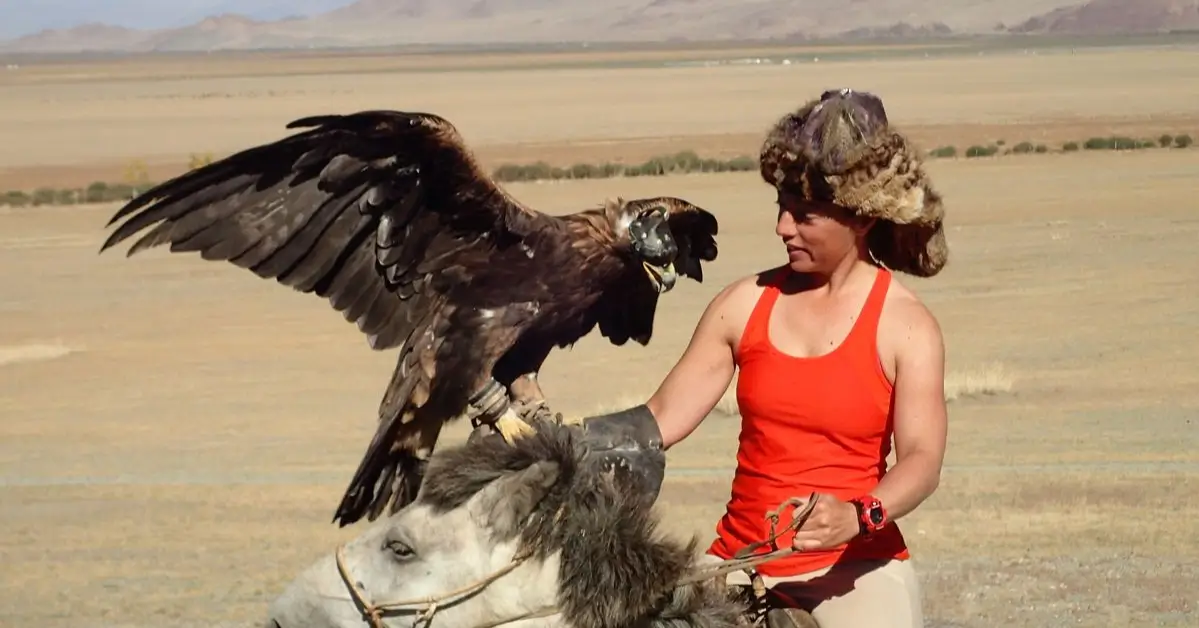
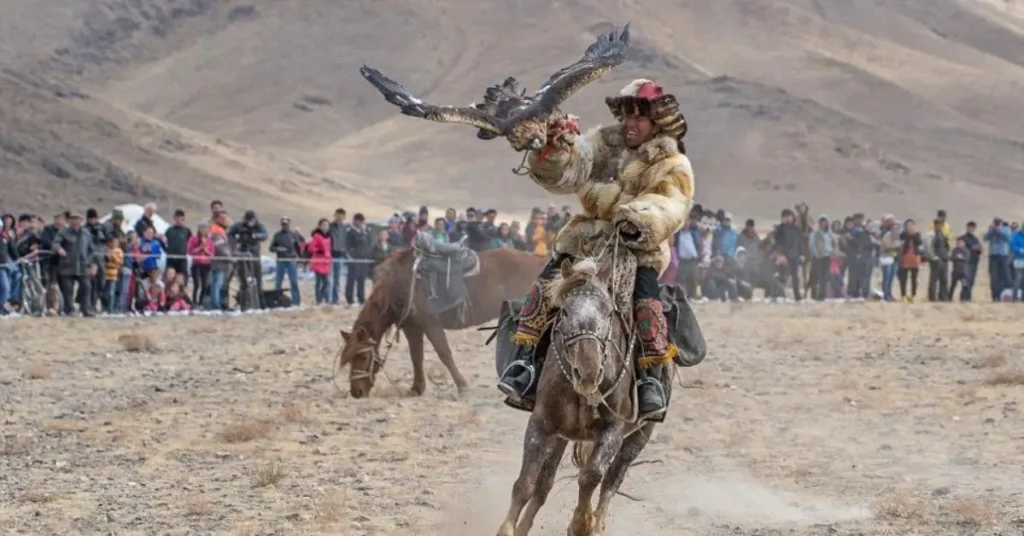
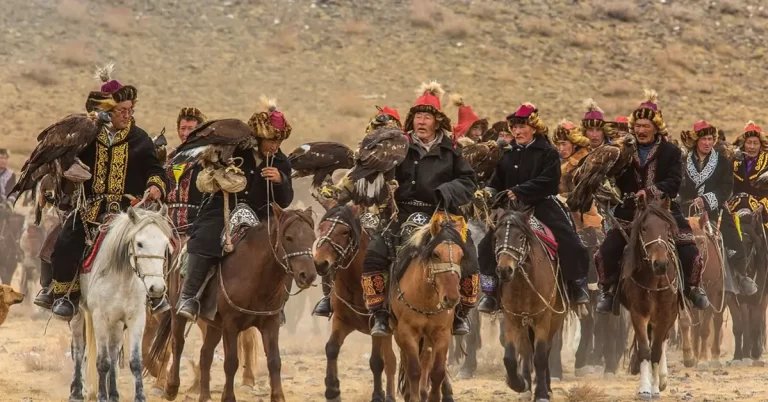
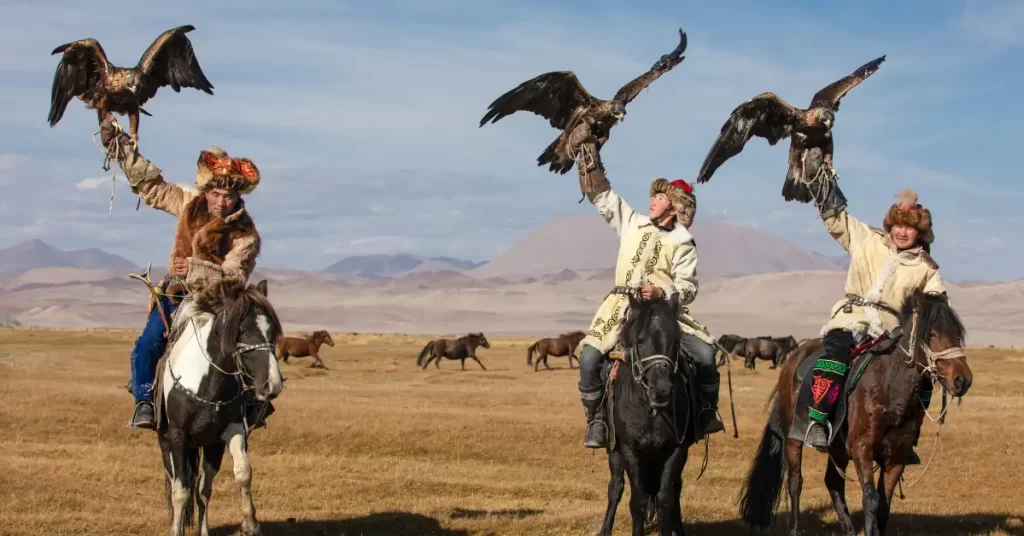
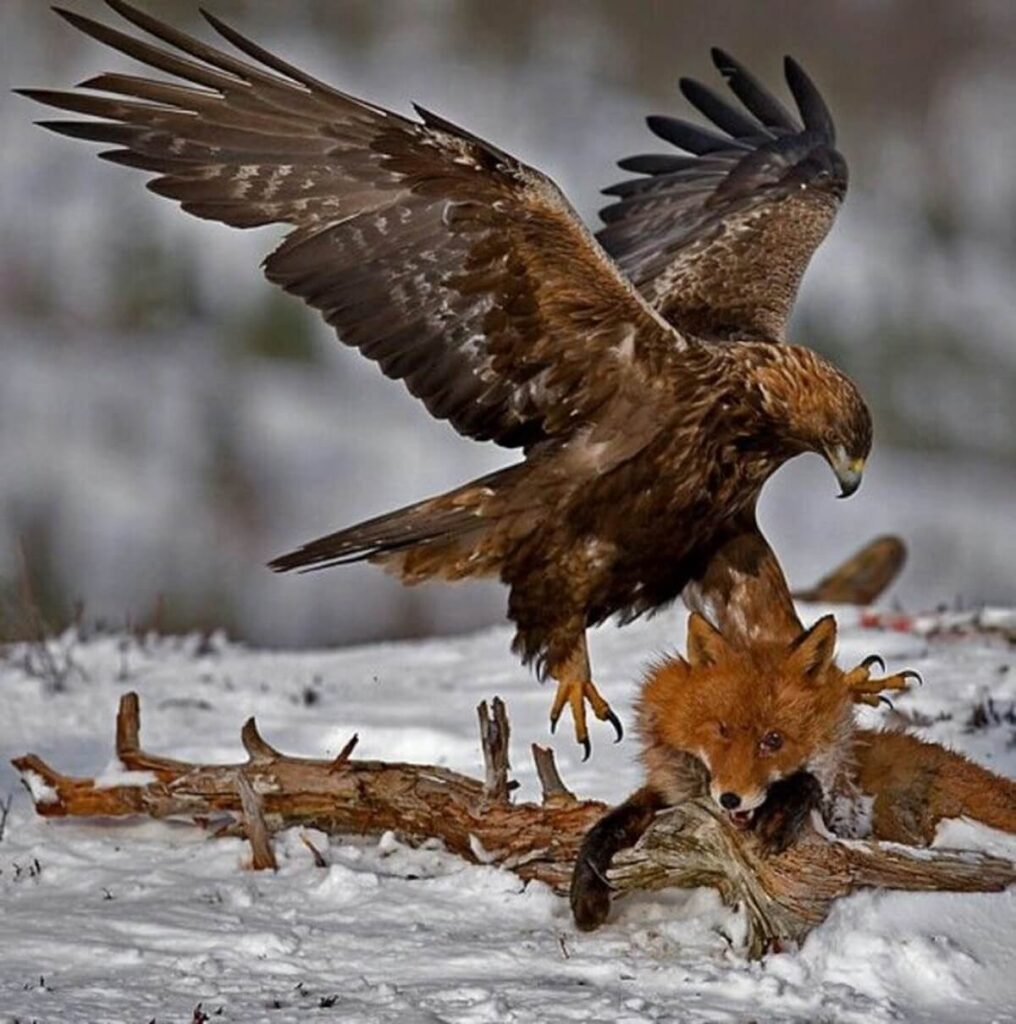
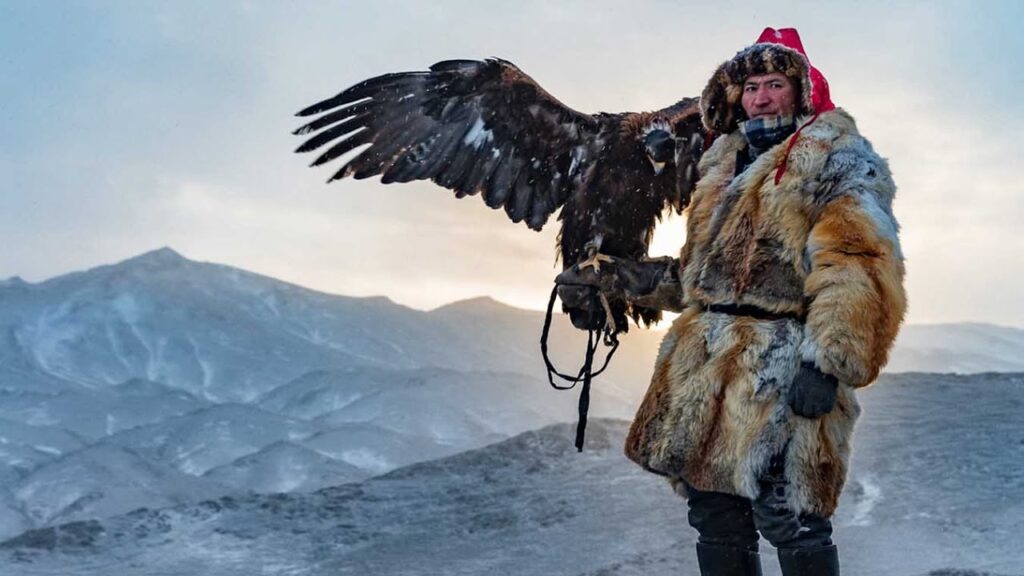
In any Kazakh hunting tradition, the horse comes first. The Wikipedia overview of hunting with eagles notes that the falconry custom involves hunting with golden eagles on horseback, and primarily targets red foxes and corsac foxes. The hunter rides into rough country with an eagle on his glove. If the rider cannot control the horse, the bird is unsafe and the hunt is impossible.
For an apprentice, this means learning to ride competently before being trusted to handle a working eagle in the field. Mongolian and Kazakh children commonly learn to ride from early childhood — long before the eagle apprenticeship begins in any formal sense. The horse is not an accessory to eagle hunting; it is the platform from which eagle hunting is conducted.
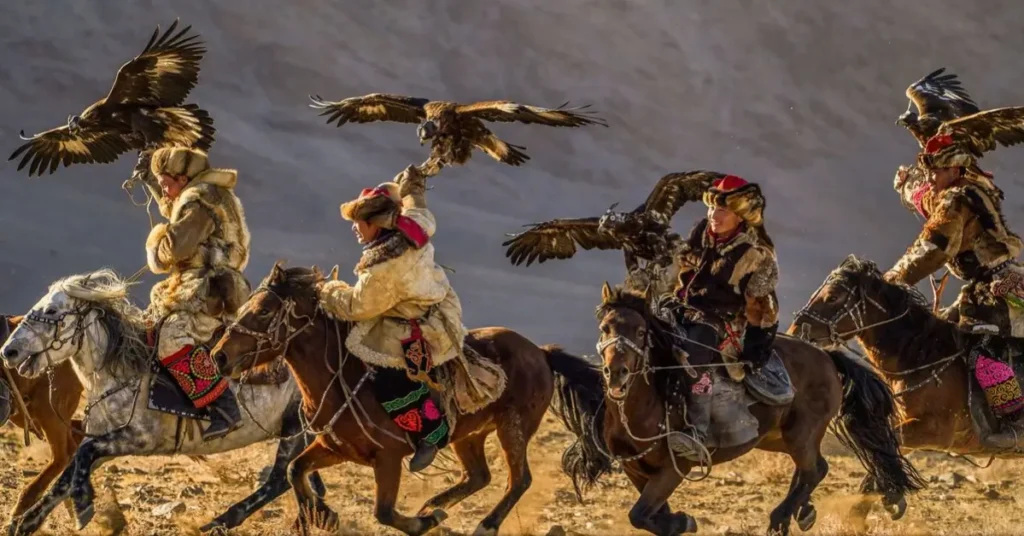
The combined skill is unusual. A skilled equestrian who is not a falconer can ride. A skilled falconer who is not an equestrian can fly birds at the lure. Only a burkitchi does both at speed, in the high country, while keeping a 5-kilogram bird balanced on a gloved fist.
Handling, Training, and the First Eagle
Once an apprentice is trusted around the family eagle, the next layer of training is technical falconry. The Britannica entry on falconry sets out the universal principle: the key to a hawk’s training is conditioning, which means finding the correct flying weight; an overweight hawk will be comparatively wild. Birds progress through manning (acceptance of the falconer), glove-feeding, flights on a creance (a long lightweight training line), and finally to free flight at the lure or live game.
For a Kazakh apprentice, learning this involves daily participation in the care of the family bird. The apprentice learns to weigh the eagle each day, to read her body language, to recognise when she is ready to fly and when she needs rest. These skills cannot be taught from a book; they accumulate.
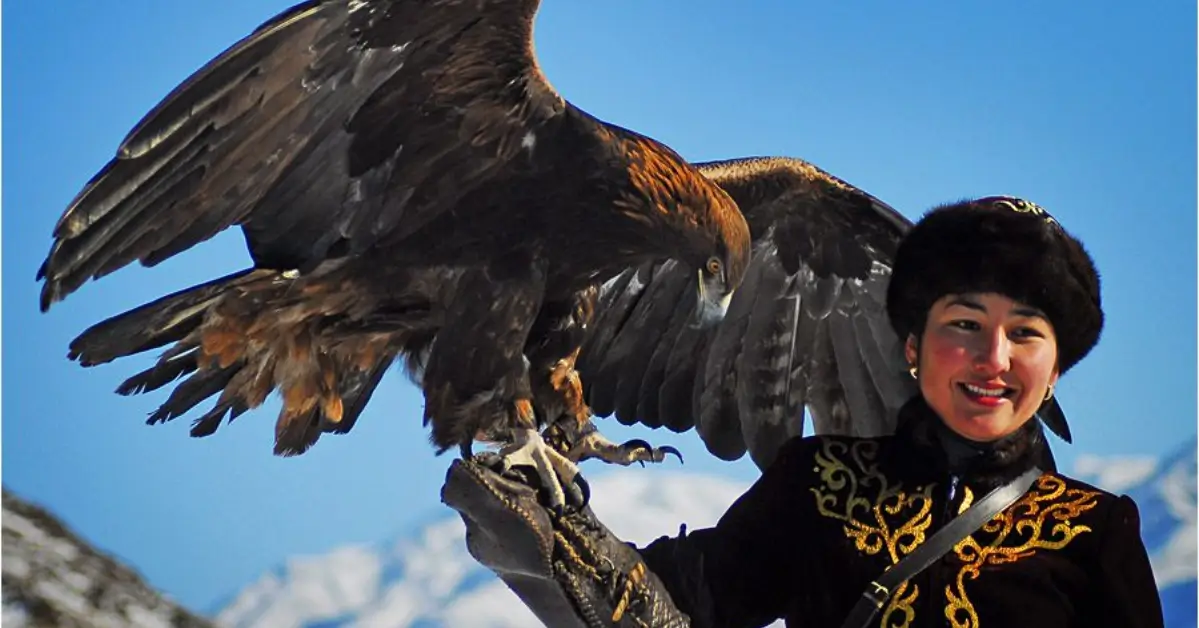
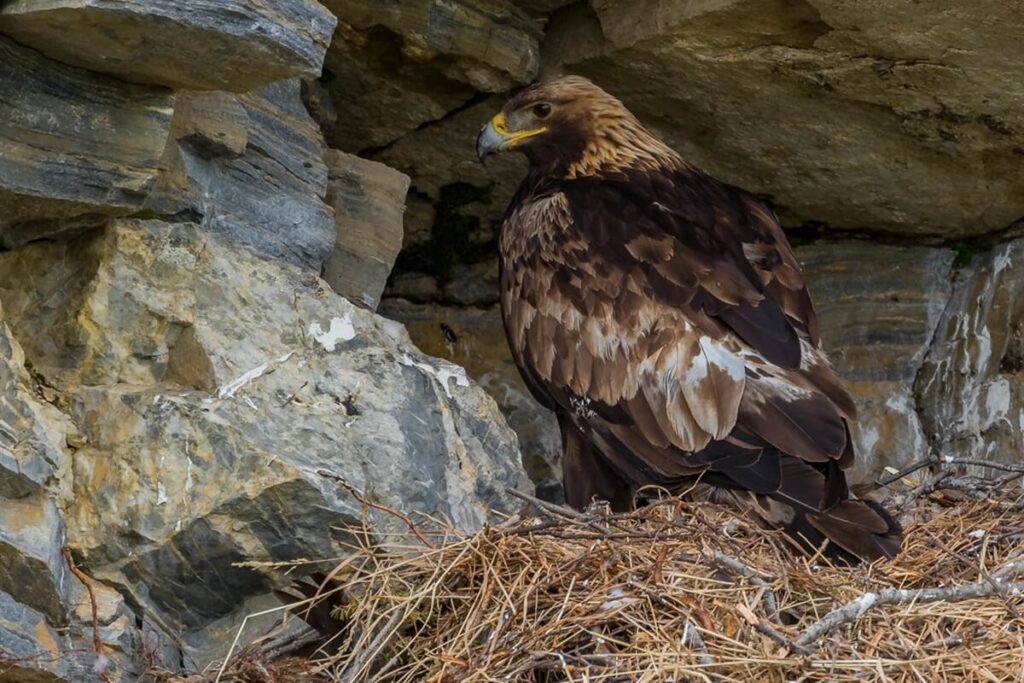
The transition moment in a burkitchi apprenticeship is the apprentice’s own first eagle. The bird is taken from a cliff nest — almost always a female, because female golden eagles are 26 to 37 percent heavier than males and have longer wings, giving them the striking power needed for fox and hare. The apprentice now becomes a working hunter, with full responsibility for the bird’s training, feeding, hunting, and eventual release.
Daughters as Apprentices — The Recent Shift
Historically, Kazakh eagle hunting in Mongolia has been a male tradition. The Wikipedia documentation of Berkutchi consistently uses male pronouns. The ethnographic record describes father-to-son transmission. Aisholpan’s documentary subtitle — that she became the first female to enter the festival competition — only carries weight against this background.
In the 2010s the pattern began to change. Aisholpan’s success at the Ulgii Golden Eagle Festival was widely reported and prompted other Kazakh families to consider training their daughters. The shift is partial and recent. Most active berkutchi today are still men. But the apprenticeship itself — the years of horse riding, daily care of the bird, observation of the father — is no longer exclusive to sons in every family.
For visiting travellers this can be a confusing detail. The image of the eagle hunter that has reached international audiences via the Aisholpan documentary suggests women hunters are common; on the ground in Bayan-Ölgii, a female hunter remains the exception, not the norm. Both facts are true at the same time.
The Numbers and the Question of Succession
The total number of active berkutchi in Bayan-Ölgii is small. Wikipedia’s overview of falconry estimates “a little over 300 active falconers using eagles in Central Asia, with 250 in western Mongolia, 50 in Kazakhstan, and smaller numbers in Kyrgyzstan and western China.” The Berkutchi entry confirms the same figure for Bayan-Ölgii specifically.
These are not large numbers. Two hundred and fifty active hunters means perhaps a few hundred apprentices in active training at any given time, distributed across an enormous pastoral region. Modern pressures — urban migration, formal schooling that requires children to live away from the steppe, declining herding economies — affect every nomadic tradition in Mongolia, and burkitchi families are no exception.
The succession question is what makes the apprenticeship pipeline the central concern of the heritage. An eagle can be replaced from a wild nest. A trained hunter cannot. Once the chain of mentorship from father to apprentice is broken in a family, the specific knowledge accumulated over those seven generations is lost.

UNESCO and the Formal Protection of Transmission
The UNESCO inscription of falconry as Intangible Cultural Heritage of Humanity — first listed in 2010 and expanded in 2021 to 24 States Parties including Mongolia and Kazakhstan — exists specifically because the apprenticeship pipeline is the part of the tradition most at risk.
The listing’s framing makes this explicit. Falconry is described not as a static cultural artefact but as “the traditional art and practice of training and flying falcons (and sometimes eagles, hawks, buzzards and other birds of prey)” with practices including “methods of breeding, training and caring for birds, the equipment used and the bonds between the falconer and the bird.” Crucially, the inscription emphasises that this body of practice is transmitted through mentoring within families. The intervention UNESCO offers is recognition that this transmission is heritage worth protecting at the national and international level.
For an apprentice burkitchi today, that recognition can mean small but real benefits: legitimacy with state institutions, protection of festival traditions like the Sagsai eagle festival and the Ulgii Golden Eagle Festival, and a framework that argues the practice is worth investing the years it takes to learn.
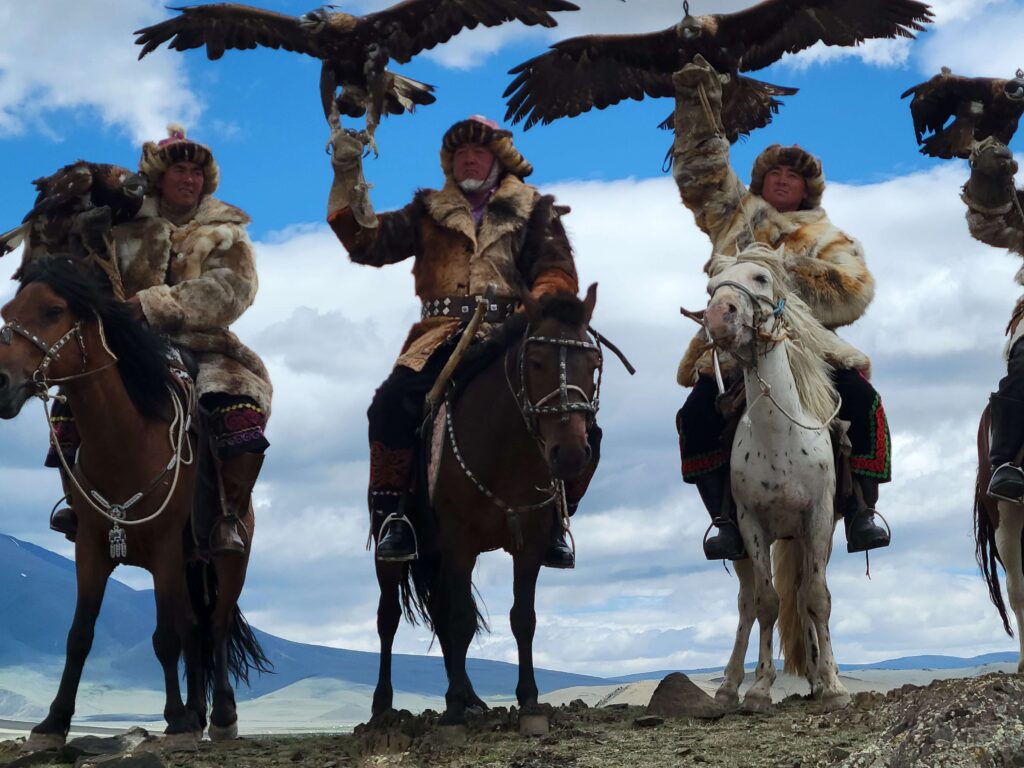
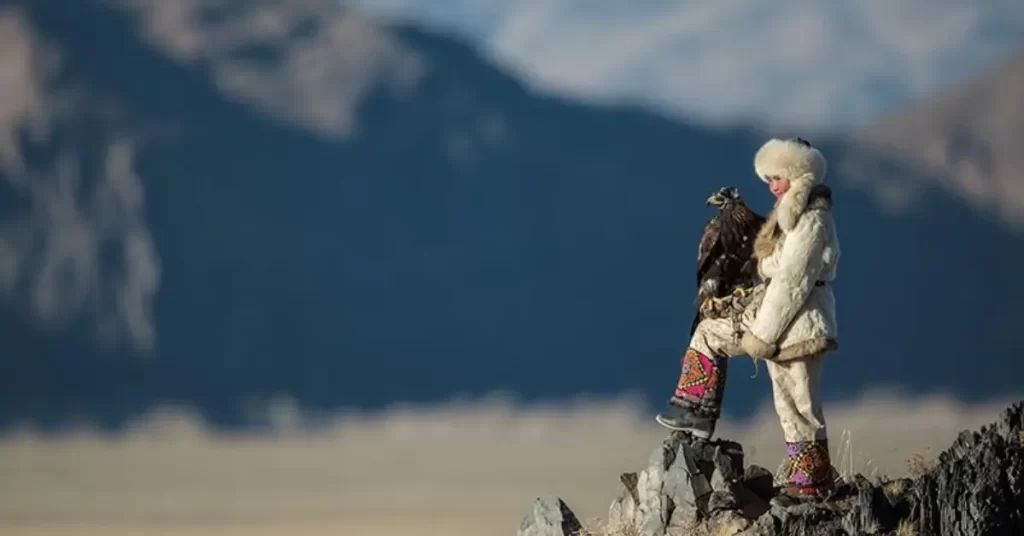
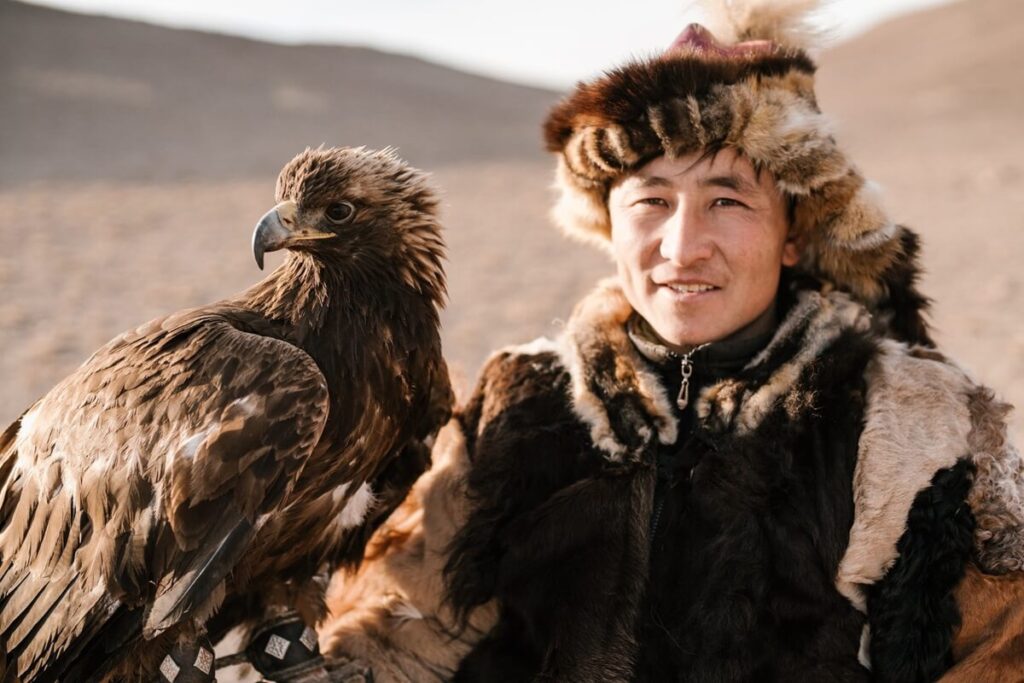
For travellers visiting Bayan-Ölgii on an Eagle Hunters Adventure or attending the Altai Eagle Festival or Golden Eagle Festival, the visible part of the tradition is the eagle. The hidden part — the family apprenticeship that produced the hunter standing in front of you — is what keeps the practice alive into the next generation.
Suggested Tours:
Suggested Blogs:
Golden Eagle Photography: How to Shoot Wild Eagles, Hunters and the Festival
Golden eagle photography rewards preparation more than luck. For birds in flight, start at 1/2500s, f/6.3, auto-ISO capped at 3200,…Eagle Festival Packing List 2026: What to Wear in Olgii’s October Cold
The Mongolia Eagle Festival in Bayan-Ölgii runs in late September and early October at elevation 1,710 metres, where October average…Sagsai vs Golden Eagle Festival 2026: Which Mongolia Eagle Festival Should You Attend?
Mongolia hosts two distinct Kazakh eagle festivals each autumn in Bayan-Ölgii Province, the country’s western Kazakh-majority region. The Sagsai Golden…





How does someone become a Kazakh eagle hunter?
The process is a family-based apprenticeship that begins in childhood and continues for years. A child in an eagle-hunting family grows up beside the family bird, learns to ride a horse competently, gradually takes on more responsibility for the eagle’s daily care, and eventually captures and trains an eagle of their own. UNESCO formally recognises this transmission method as part of falconry’s intangible cultural heritage.
At what age does a Kazakh child start learning eagle hunting?
There is no fixed starting age. Children grow up around the family bird from infancy, and formal handling typically begins in the pre-teen and teen years. The Eagle Huntress documentary follows Aisholpan, a 13-year-old who entered the Ulgii festival competition. By that point she had years of family exposure already behind her.
Can girls become Kazakh eagle hunters?
Historically the apprenticeship has passed from father to son. In the 2010s, Aisholpan became the first female to enter the eagle festival competition, and her family had practised eagle hunting for seven generations. Some Kazakh families now train their daughters, but most active burkitchi today are still men.
How long does the apprenticeship take?
There is no formal duration. The apprenticeship is an accumulation of years of daily exposure, riding training, and bird handling. By the time an apprentice captures and trains their own first eagle, they have typically spent most of their childhood and teen years immersed in the practice.
How many active eagle hunters are there in Mongolia today?
An estimated 250 active berkutchi practise the tradition in Bayan-Ölgii province. A further 50 or so practise in Kazakhstan, with smaller numbers in Kyrgyzstan and western China. The succession of these hunters through their family apprenticeships is the central question of the heritage today.
What other skills besides falconry does a burkitchi need?
Two equally important skills are horsemanship and mountain terrain reading. Kazakh eagle hunting is conducted on horseback in the cliff country of the Altai Mountains. A burkitchi must be able to control a horse in rough terrain while balancing a 5-kilogram bird on a gloved fist, read snow and weather, and identify likely hunting ground for fox and hare. The eagle is the most visible skill but it sits on top of an entire pastoral training that begins in childhood.