
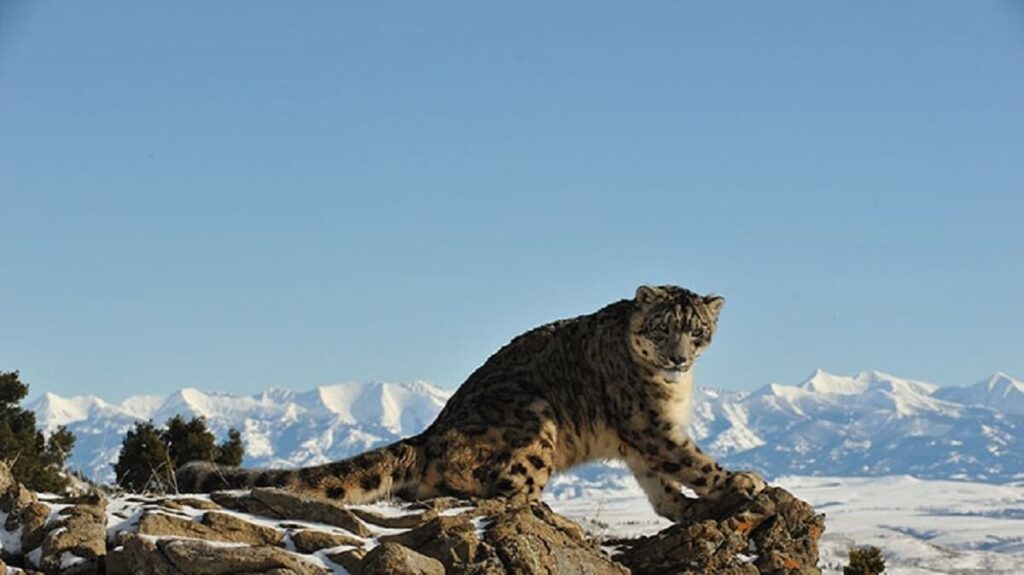
A snow leopard sighting in Mongolia is most likely in the Altai Mountains of Bayan-Ölgii or the Tost-Tosonbumba reserve of South Gobi, on multi-day winter expeditions led by trained local trackers. Mongolia holds roughly 950–1,000 snow leopards — the world’s second-largest population — but the cats are solitary, nocturnal, and exquisitely camouflaged, so even a serious 10-day expedition has only a moderate chance of a confirmed sighting. Best months: late October through early March. Best hours: dawn and dusk.
Key Takeaways
- Mongolia is home to an estimated roughly 950–1,000 snow leopards, second only to China globally
- Best regions for sightings: Altai Tavan Bogd National Park (west) and Tost-Tosonbumba Nature Reserve (south Gobi)
- Best season: late October – early March, when snow forces cats to lower elevations
- Best hours: dawn and dusk — snow leopards are crepuscular
- A guided 10–14 day expedition typically yields a 30–60 % chance of a confirmed sighting, depending on conditions and tracker skill
- Camera-trap surveys photographed snow leopards on 33 of 43 cameras in Tost in 2024 — the cats are present, just hard to see
- Listed as Vulnerable on the IUCN Red List; close approach is regulated and ethical guidelines must be followed
How Many Snow Leopards Live in Mongolia?
Snow leopards (Panthera uncia) live across 12 countries of high-mountain Central and South Asia, but Mongolia is an outsized stronghold. The most recent national assessment puts Mongolia’s population at roughly 950–1,000 individuals — about a fifth of the global total of 4,000–6,500 mature cats.
Within Mongolia, the population is concentrated along three mountain spines:
| Region | Estimated population | Habitat character |
|---|---|---|
| Altai Mountains (west) | ~500–600 | High alpine, dense ibex/argali prey; protected by Altai Tavan Bogd NP |
| Gobi-Altai & Tost-Tosonbumba | ~250–350 | Semi-desert mountains with sparse cover; long-term Snow Leopard Trust study site |
| Khangai & central ranges | ~100–150 | Lower density; isolated populations |
This distribution matters for the visitor: most commercial snow-leopard expeditions concentrate on the Altai (because of access from Ölgii) and the South Gobi (because of the long-running research presence and relatively accessible roads from Dalanzadgad).
Where are Snow Leopards Most Often Spotted?
Two regions account for almost all confirmed visitor sightings.
1. Altai Tavan Bogd National Park (Bayan-Ölgii) — the high massif on Mongolia’s western border with Russia, China, and Kazakhstan. The park’s craggy mountains, glaciated valleys, and dense ibex herds support the highest snow leopard density in the country. Winter expeditions typically base in the Tsambagarav, Tavan Bogd, or Sailyugem ranges, with trackers from Kazakh herder families who know individual cats by their pugmarks.
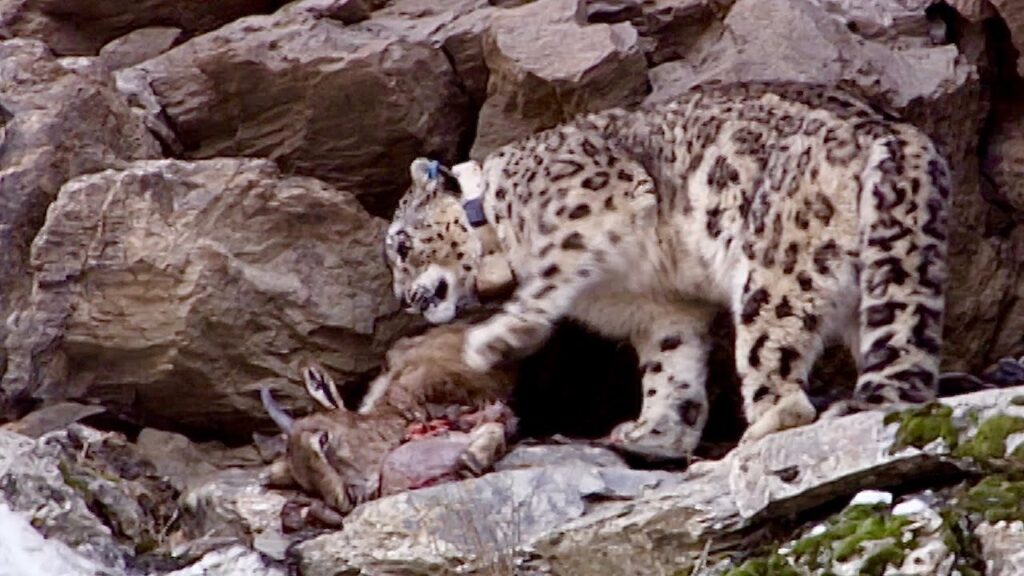
2. Tost-Tosonbumba Nature Reserve (South Gobi) — a 7,284 km² reserve created in 2016 specifically to protect snow leopards. Tost has been continuously monitored by long-term ecological research for over 18 years, producing the deepest data set on individual snow leopards anywhere in the world. In late 2023 community rangers deployed 43 camera traps; 33 of them photographed snow leopards in 2024, generating 86 distinct encounters.
Smaller numbers of sightings come from the Khangai range, the Mongolian sector of the Sayan Mountains, and the Khövsgöl border region — but these are not yet established visitor routes and access logistics are difficult.
When is the Best Time of Year for Sightings?
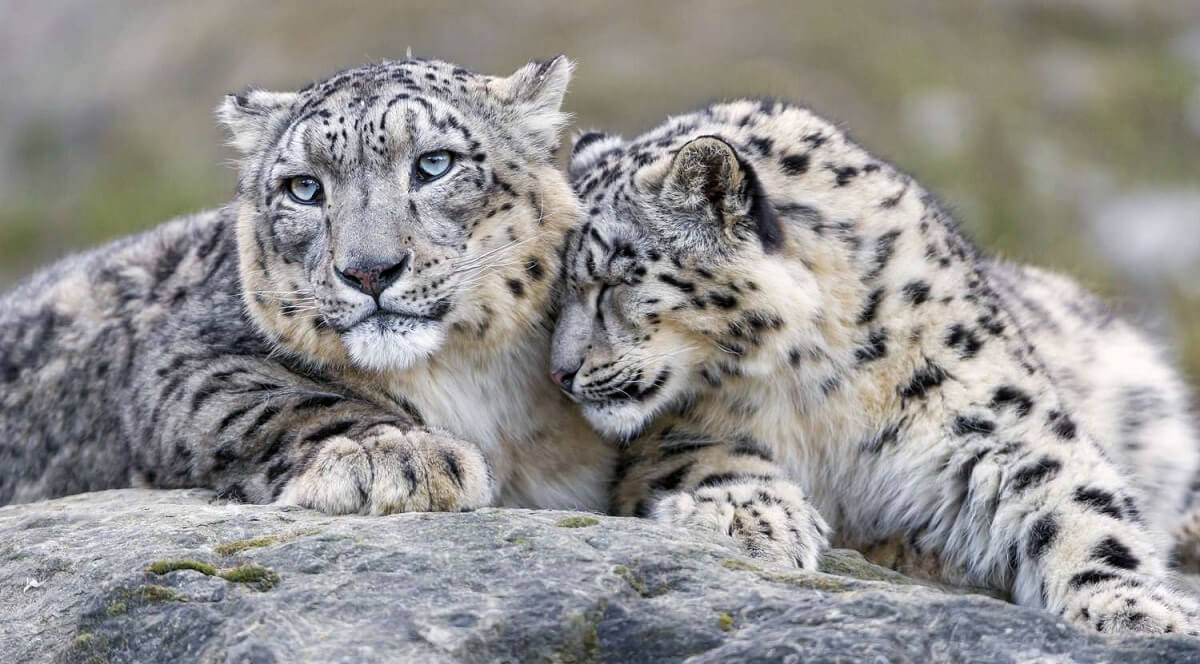
The snow leopard tracking season is short and sharply defined: late October through early March, with the prime window in December, January, and February.
| Month | Conditions | Sighting odds |
|---|---|---|
| October | First snow at altitude; cats still high | Low |
| November | Hard freeze; ibex move down, cats follow | Moderate, rising |
| December | Deep cold (-20 to -30 °C); active hunting at lower elevations | High |
| January | Coldest; shorter daylight; cats most concentrated | High |
| February | Mating season begins; females call, scent-mark visibly | Highest |
| March | Snow softens; cats begin moving back up | Moderate |
| April–September | Cats disperse to high alpine; almost never seen | Very low |
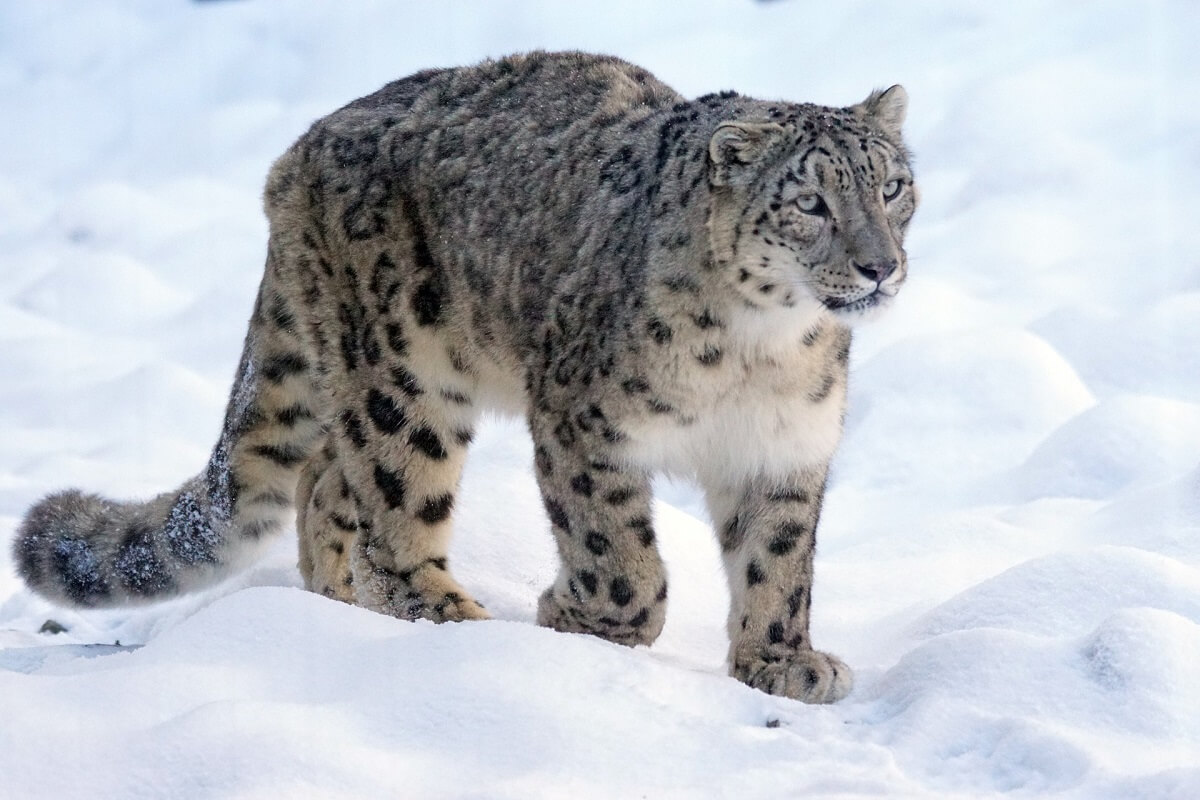
Two factors converge in winter: snow forces ibex and argali sheep down into narrower valleys, which in turn pulls the snow leopards down with them; and snow records pugmarks clearly, giving trackers a working trail. In summer, ibex spread across broad alpine pastures and cats follow; the terrain becomes too vast and the prints disappear on dry rock.
What Does a Snow Leopard Expedition Look Like?
A typical guided expedition lasts 10 to 14 days and follows a daily rhythm built around dawn and dusk — the hours snow leopards are most active.
A standard day:
- 05:30 — Hot tea in camp; scope tripods set up at high vantage points before first light
- 06:30–10:00 — Glassing valleys with spotting scopes (20–60×); trackers walk ridges checking pugmarks and scrapes
- 10:00–14:00 — Return to camp; rest, lunch, photo review; cats inactive in midday
- 14:00–18:00 — Second glassing session at a fresh vantage; ibex behaviour watched as a leading indicator (alarm calls = predator nearby)
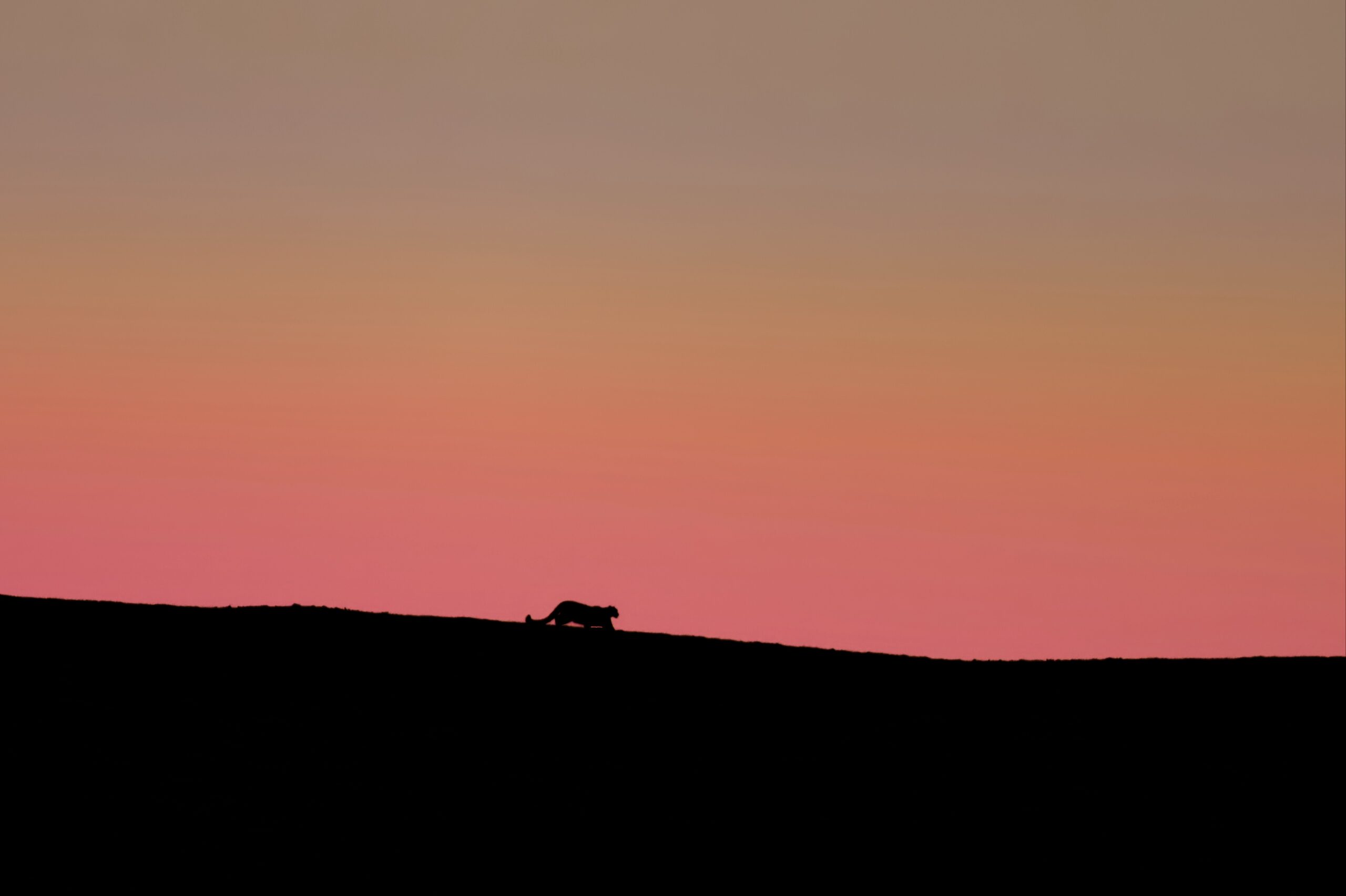
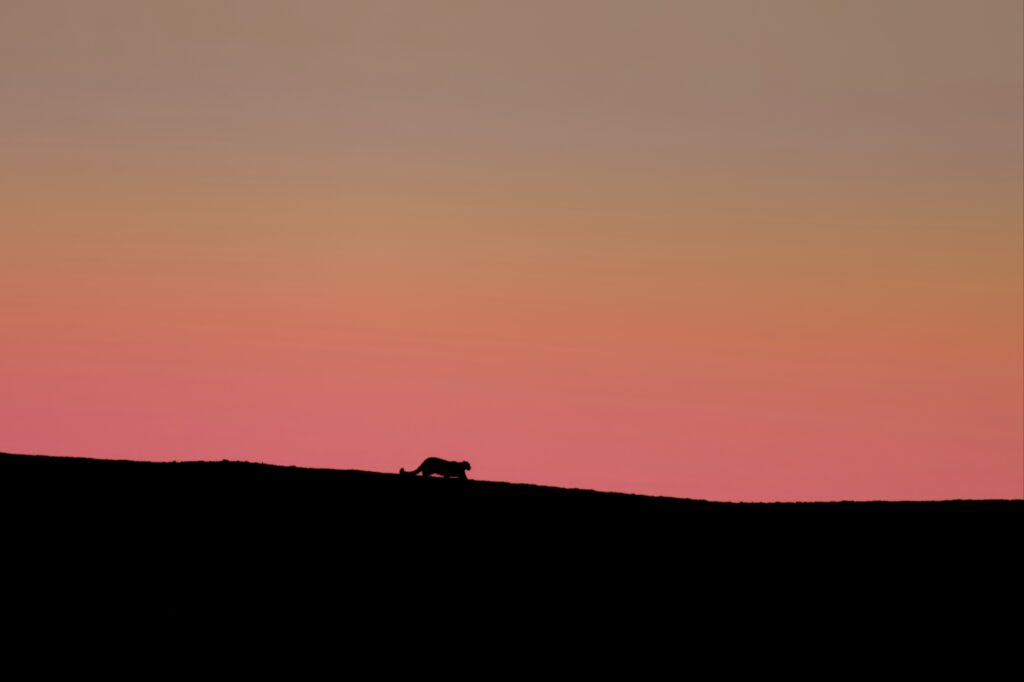
- 18:00–19:30 — Last light; cats often visible silhouetted on ridges
- Evening — Camera trap data downloaded; the next day’s plan set based on fresh sign
Most expeditions split between several base camps inside the chosen range, moving every 2–4 days as fresh tracks dictate. Accommodation is usually a mix of fixed ger camps in the lowlands and mobile cold-weather tents at altitude. Operating temperatures are punishing: −20 to −30 °C is normal, with wind chill considerably lower.
What Are the Realistic Odds of Seeing One?
This is the question every visitor asks and the one most operators dodge. Honest numbers:
- A serious 10–14 day winter expedition in the Altai or Tost typically yields a 30–60 % chance of a confirmed visual sighting through scope or binoculars
- The probability of a photographable sighting (cat in light, within reasonable lens reach) is lower — perhaps 15–30 % on the same trip
- Camera traps catch cats far more reliably; many expeditions return with trail-camera footage even when no live sighting occurred
- Repeat visitors who book back-to-back trips raise their cumulative odds dramatically — many of the well-known snow leopard portfolio photographers have spent three to six full winters in the field
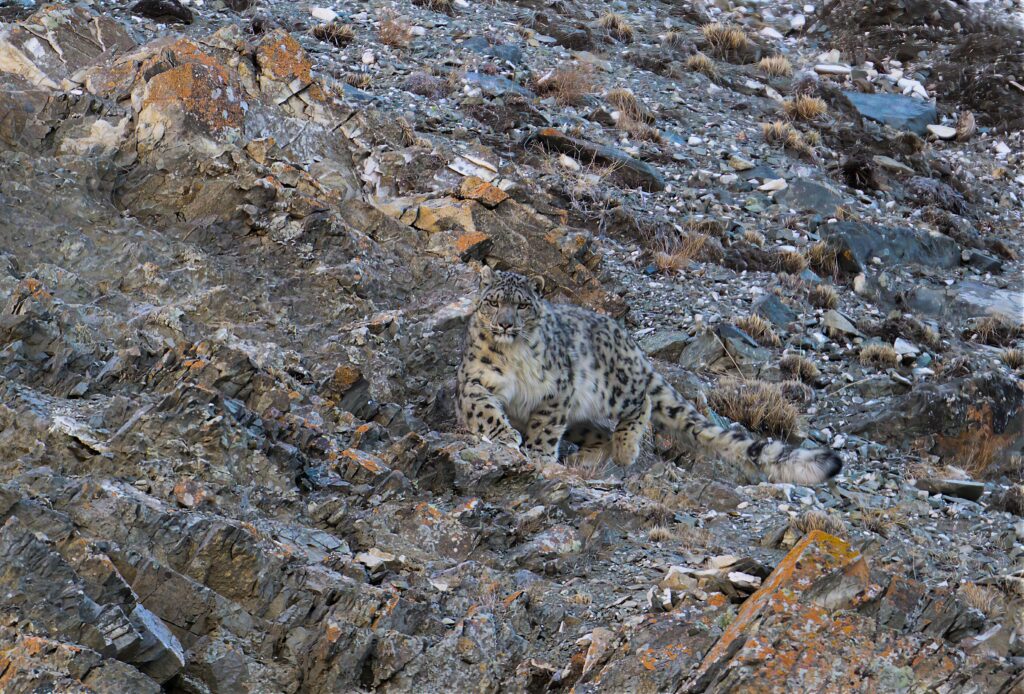
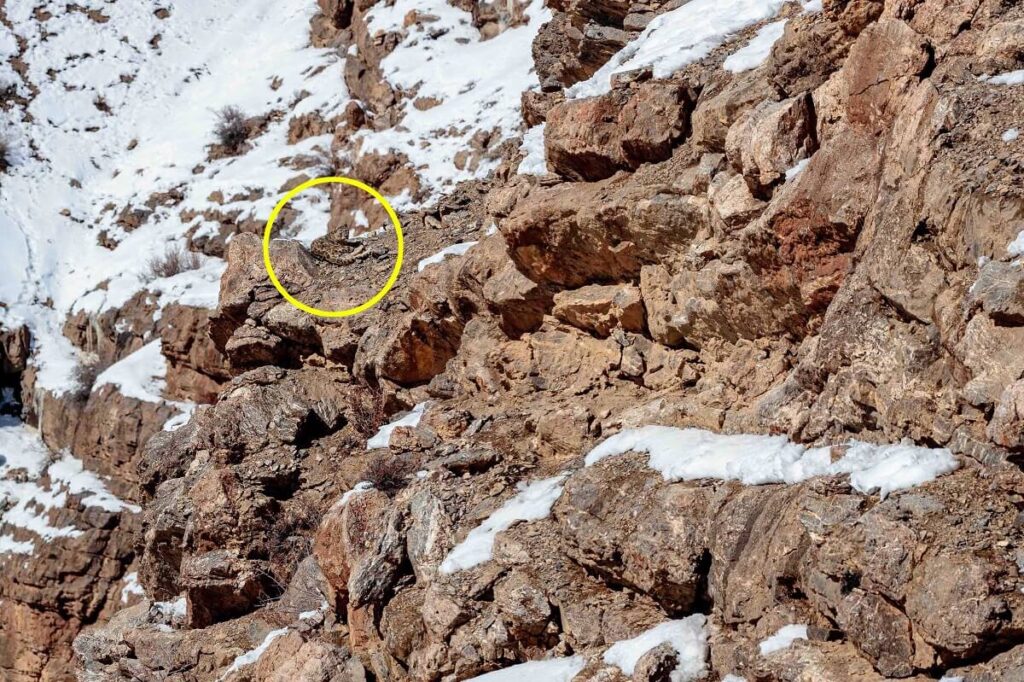
The reason the odds aren’t higher: snow leopards are solitary, hold large territories (100–1,000 km² per cat), and are masters of cryptic colouration. A snow leopard 200 metres away on grey rock is genuinely invisible to an untrained eye until it moves.
This is why expedition operators talk about tracking rather than guaranteeing — and why a respectful visitor goes for the experience of the high-mountain winter, the company of trackers, and the chance, not the certainty, of the cat itself.
How Do Trackers Find Snow Leopards?
Trackers in Mongolia use a layered method that has barely changed for decades, refined with modern tools:
- Pugmarks — Snow leopard pugmarks (~9 cm long, no claw marks) along snow-covered ridges and saddles are the primary working trail
- Scrape marks — Cats clear small scrapes (15–30 cm across) at scent-marking sites; fresh scrapes mean a cat was there within hours
- Scat — Greyish, segmented; deposited at conspicuous spots; analysed for diet and DNA
- Scent stations — Rock overhangs marked with urine; trackers know dozens of these in each working valley
- Ibex behaviour — Alarm calls, sudden flight, and persistent staring at one direction often reveal a hidden cat
- Camera traps — 30–50 motion-sensor cameras per study area capture most cats within a season; trackers know which individuals are around
- Local herder intelligence — Kazakh and Mongolian herders see snow leopards near their winter livestock; their reports drive much of the expedition planning
The best trackers in the Altai and Tost can identify individual cats by pugmark size, gait pattern, and rosette signature in trail-camera images.
Photography Ethics and Rules
Snow leopards are listed as Vulnerable on the IUCN Red List and are protected under both Mongolian law and international convention. Visitor rules are strict and well-enforced:
- No approach inside 200 metres for photography on foot
- No drone flights anywhere inside protected areas without explicit research permits
- No bait and no playback calls to attract cats
- Group size capped in most reserves (typically 4–6 visitors plus trackers)
- Border-zone permits required for travel near international borders in the Altai and parts of South Gobi
- Camera trap placement requires research permit; commercial photographers cannot deploy their own
Beyond the legal frame, the field ethic is conservative. A snow leopard winters at the edge of its energy budget; a chase or harassment can mean the difference between survival and starvation. Reputable operators turn back whenever the cat shows discomfort — flicking tail tip, low-set ears, repeated head-down movement — and brief their clients on this before any field session.
How to Plan Your Snow Leopard Trip
Practical decisions for a first expedition:
- Pick the region first. The Altai is more dramatic terrain and combines well with eagle-hunter culture; the South Gobi has the longest research record and slightly easier road access. Both are excellent.
- Book with a Mongolia-based operator that works with local trackers, not a generic Western adventure company that subcontracts in. Tracker quality is the variable that most affects sighting odds.
- Allow at least 12 days in country — 2 days transit, 10 days actively in the field. Anything shorter wastes the expense.
- Pack for −30 °C operations. Standard cold-weather kit from Western Europe or North America is generally not enough. Layered wool, felt boots, expedition-grade down outerwear.
- Bring a 500–600 mm telephoto if photography matters; scope-and-eye sightings will dominate, but cats can appear close.
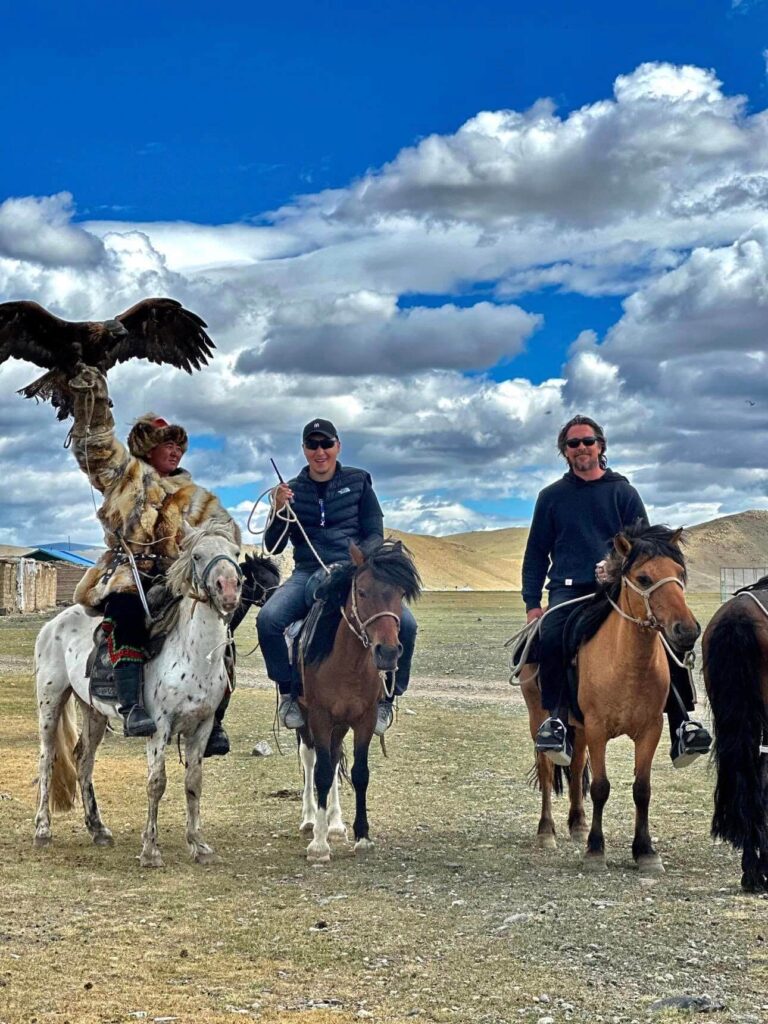
- Combine with culture. Many visitors pair the snow leopard expedition with a few days of Kazakh eagle-hunting hospitality in Ölgii — a natural fit since both are winter-only experiences in the same region.
For a guided structure that includes trackers, ger-camp homestays, and border-zone permits handled in advance, see our Altai Tavan Bogd tour and the Mongolia Altai mountain tour.
Suggested Tours:
Suggested Blogs:
Snow Leopard Photography Gear Guide: What You Actually Need for the Altai
To photograph snow leopards in the Mongolia Altai, you need a weather-sealed camera body, a telephoto lens of at least…Altai Argali, Ibex and Snow Leopard: The Prey-Predator Chain That Holds the Mountain Ecosystem Together
The Altai Mountains snow leopard population depends entirely on a small set of prey species: Altai argali (the world’s largest…Best Months to See Snow Leopards in the Altai: A Seasonal Guide for 2026
The best months to see snow leopards in Mongolia’s Altai Mountains are February through early April. Three biological factors converge…




Can you actually see a snow leopard in Mongolia?
Yes, but it requires patience. A serious 10–14 day winter expedition with experienced local trackers in the Altai or Tost-Tosonbumba reserve typically yields a 30–60 percent chance of a confirmed visual sighting. Many visitors return with no sighting; others see two or three cats in a single trip. The cat is real, present, and trackable — just not guaranteed.
When is the best time to see snow leopards in Mongolia?
Late October through early March, with the prime window from December through February. Snow forces ibex and argali sheep down to narrower valleys, the snow leopards follow, and pugmarks become visible in fresh snow. Within each day, dawn and dusk are the high-probability hours; cats are largely inactive in midday.
Where in Mongolia should I go for a snow leopard sighting?
Two regions dominate: Altai Tavan Bogd National Park in the west (Bayan-Ölgii Province), reached through Ölgii city; and Tost-Tosonbumba Nature Reserve in South Gobi, reached through Dalanzadgad. The Altai has the highest population density, while Tost has the longest-running research presence and a slightly more accessible logistical setup.
How cold is a snow leopard expedition?
Punishingly cold. Operating temperatures from late November through February typically range from −20 to −30 °C, with wind chill noticeably lower at high vantage points. Standard outdoor clothing is rarely sufficient; expedition-grade down outerwear and Mongolian-style felt boots are the practical baseline.
How many snow leopards are left in Mongolia?
Mongolia hosts roughly 950–1,000 snow leopards according to recent national surveys — the world’s second-largest population after China. Globally there are an estimated 4,000–6,500 mature individuals across 12 range countries, and the species is listed as Vulnerable on the IUCN Red List.
Can I photograph a snow leopard from close range?
Generally no. Mongolian regulations and operator field ethics prohibit approach inside roughly 200 metres on foot and ban drones in protected areas without research permits. Most photographers work from spotting scopes and long telephoto lenses (500–600 mm), and any close encounter is the result of a cat choosing to come closer, not the photographer pushing in.