
The Altai Mountains snow leopard population depends entirely on a small set of prey species: Altai argali (the world’s largest wild sheep, IUCN Near Threatened), Siberian ibex (a high-altitude wild goat, IUCN Near Threatened), and marmots, pikas, and hares for smaller meals. When argali or ibex populations decline, snow leopards disappear from that valley within a season or two. This is why snow leopard tourism in Bayan-Ölgii is fundamentally a wildlife-chain story: the cats you photograph exist only because the prey base is intact, and the prey base is intact only because traditional Kazakh and Mongol pastoralism still keeps the alpine meadows healthy. Break any link and the chain collapses.
Key Takeaways
- Altai snow leopards (~1,000 in Mongolia) prey primarily on argali, Siberian ibex, marmots, pikas, and hares
- Argali (Ovis ammon ammon) is the largest wild sheep in the world — males carry 190cm corkscrew horns weighing up to 23kg
- Both argali and Siberian ibex are IUCN Near Threatened, CITES Appendix II
- Wolves, dholes, brown bears, and golden eagles share the predator role with snow leopards
- Snow leopards descend from 2,700-6,000m (summer) to 1,200-2,000m (winter) following prey
- The chain is fragile: lose argali → lose snow leopards → lose entire alpine ecosystem function
The 3-Tier Prey Base of the Altai Snow Leopard
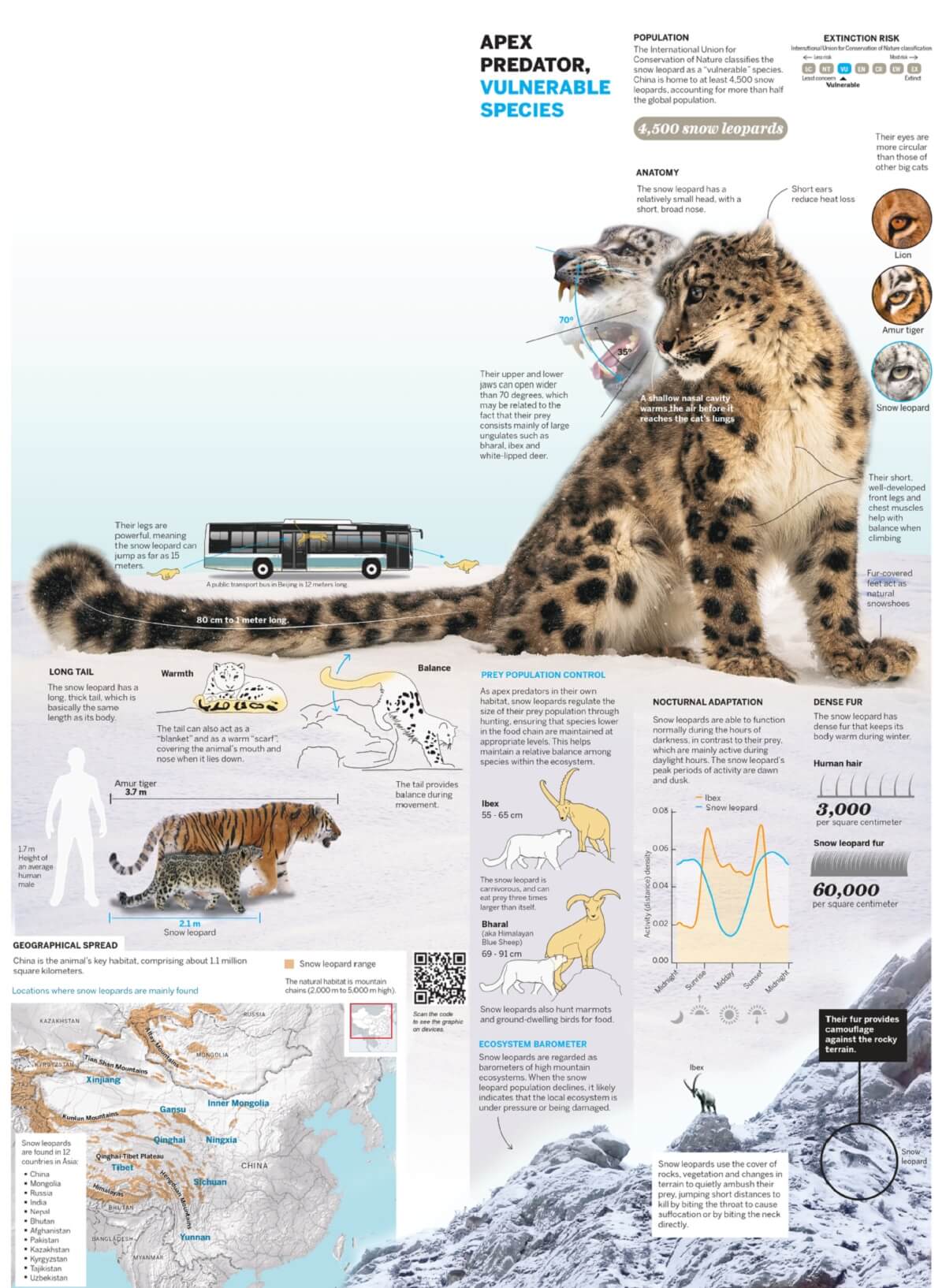
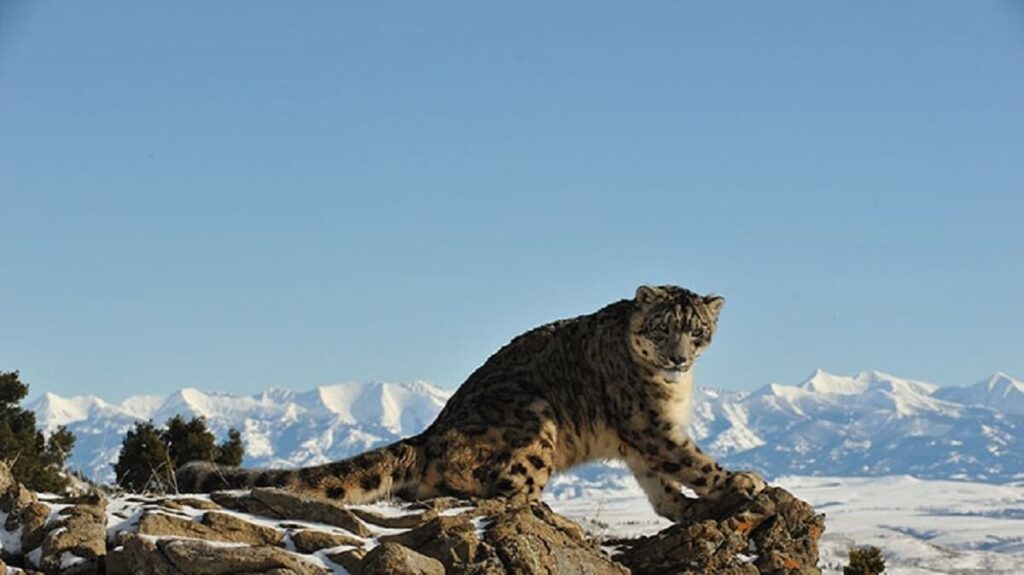
A snow leopard in the Altai is the apex of a narrow food chain. The cat itself sits at the top with global population fewer than 10,000 mature individuals (IUCN Vulnerable). Below it, three tiers of prey support the population:
| Tier | Species | Average prey weight | Hunt frequency |
|---|---|---|---|
| Large prey | Argali, Siberian ibex | 50-180 kg | Once every 8-10 days per cat |
| Medium prey | Marmot, pika, hare | 1-7 kg | Daily during summer |
| Small / opportunistic | Game birds, lizards, juvenile prey | <1 kg | Occasional fillers |
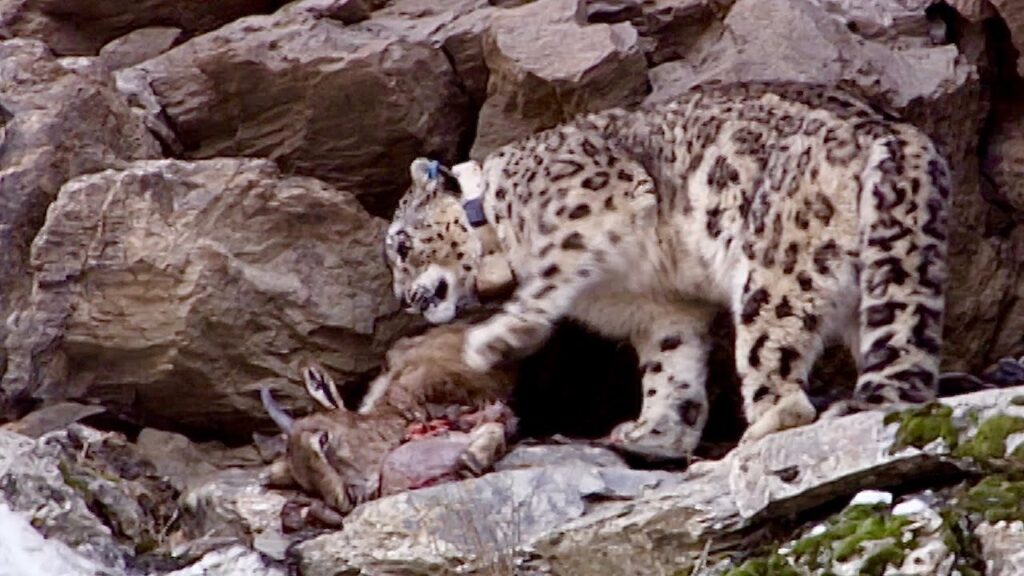
A snow leopard cannot survive on small prey alone — the energy economics don’t work. Each cat needs a successful argali or ibex kill roughly every 8-10 days to maintain body condition. This is why argali and ibex populations are the single most important variable in snow leopard tourism — when wild sheep and goats disappear from a valley, the cats follow within weeks.
This dependency is also why the Altai snow leopard population is concentrated in the high cliff country: that’s where ibex and argali are. Lower foothills with no large prey have no resident cats.
Argali — The Wild Sheep at the Centre
The Altai argali (Ovis ammon ammon) is the world’s largest wild sheep. Males carry the most spectacular horns of any mammal in the region — corkscrew-shaped, sometimes measuring 190 cm (6 ft 3 in) in total length and weighing up to 23 kg (51 lb).
Key facts: – IUCN status: Near Threatened, CITES Appendix II – Habitat range: mountainous areas from 300 to 5,800 m elevation – Subspecies range: “Occurs in the Altai Mountains of western Mongolia; its range extends marginally north into the Gorno-Altai and Tuva republics of Siberian Russia, extreme northeast Kazakhstan, and southwest into Xinjiang, China.” – Predators: “The main predators of argali are Himalayan wolves, which often exploit harsh winter conditions (such as deep snow) to capture the wild sheep. Snow leopards and leopards also prey on argali of any age.”
For snow leopards, argali represent the ideal large prey: enough body mass to feed a single cat for a week, predictable seasonal movements between high pastures and lower wintering grounds, and herd behaviour that creates ambush opportunities at known waterholes and cliff crossings.
The Mongolian government protects argali through hunting quotas, but illegal trophy hunting (driven by international demand for those record-breaking horns) and habitat encroachment by domestic livestock remain ongoing pressures. Travellers visiting Bayan-Ölgii in winter often see argali through binoculars on distant ridgelines — they are visible even when snow leopards are not.
Siberian Ibex — The Cliff Specialist
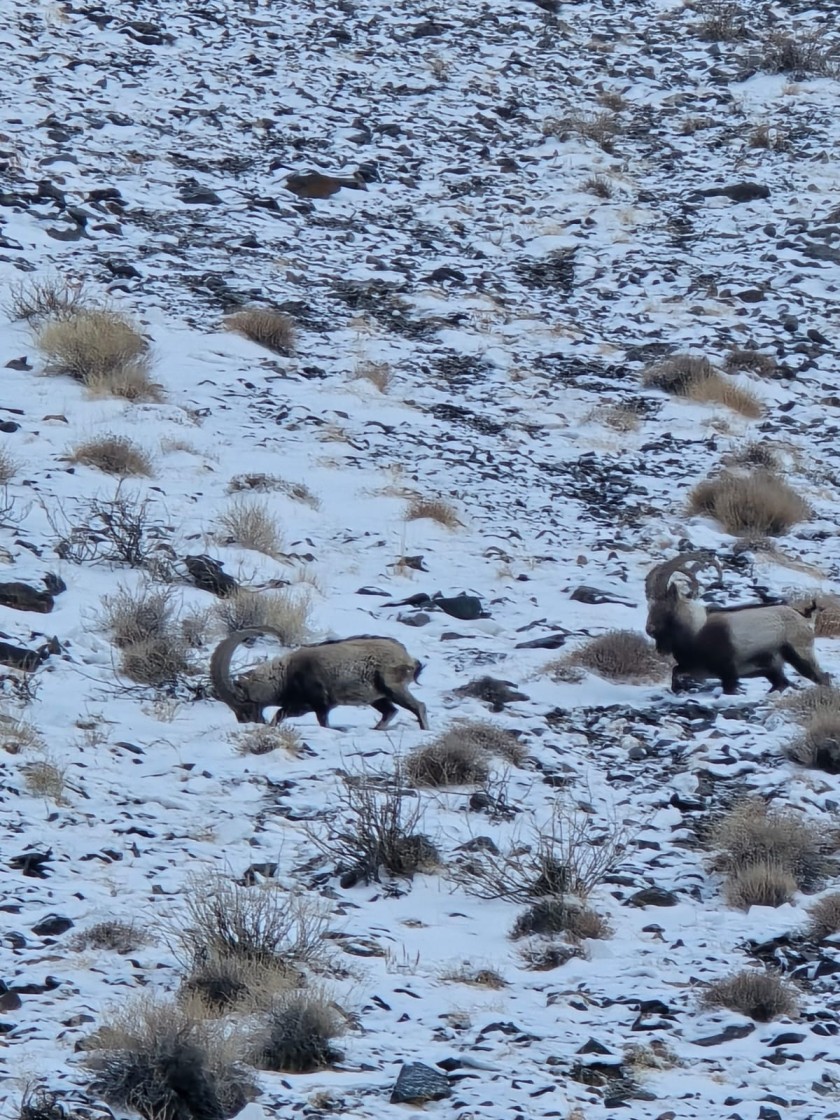
The Siberian ibex (Capra sibirica) is the second pillar of the Altai snow leopard prey base. Where argali prefer rolling alpine meadows, ibex specialise in vertical cliff terrain — the same terrain snow leopards use for ambush.
| Siberian ibex fact | Detail |
|---|---|
| IUCN status | Near Threatened |
| Habitat altitude | 2,000-5,000m in summer, descending to lower slopes in winter |
| Male horn length | typically 115 cm; up to 148 cm in extreme cases |
| Predators | Himalayan wolves, dholes, snow leopards, brown bears; young ibex also taken by lynxes, foxes, and eagles |
| Mongolia subspecies | C. s. hagenbecki (Gobi/Mongolian Ibex) found in western Mongolia |
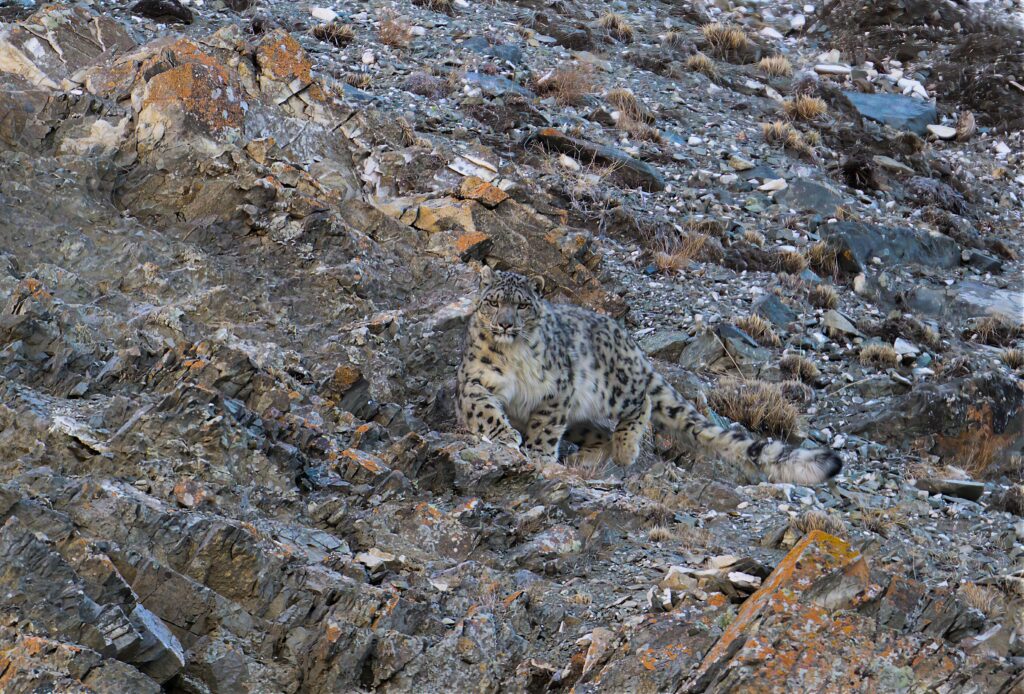
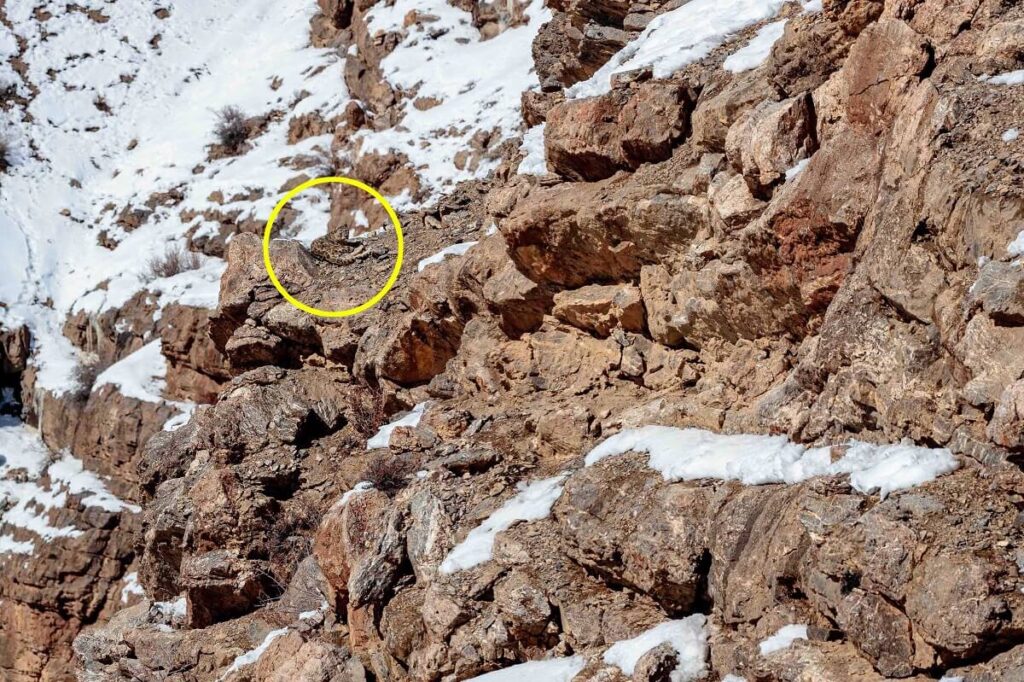
Ibex behaviour is ideal for snow leopard hunting strategy. Both species use the same cliff faces — ibex grazing on tiny ledges of grass between rock outcrops, snow leopards stalking from above using cover. The ibex’s vertical agility (they can climb near-vertical cliffs that no predator can match in pursuit) means snow leopards rely on stealth ambush rather than chase, which is also why they are so hard to spot until the moment of attack.
Like argali, ibex descend in winter — and snow leopards follow them down, which is the biological basis for the February-April snow leopard sighting window.
Marmots, Pikas and Hares — The Small-Prey Backbone
Between large prey kills, snow leopards survive on small mammals. Three species dominate:
- Tarbagan marmot (Marmota sibirica) — Mongolia’s most abundant marmot, hibernates from October to April
- Altai pika (Ochotona alpina) — small rabbit-like mammal active year-round in rocky terrain
- Mountain hare (Lepus timidus) — present in lower subalpine zones
These are the daily-meal species. A snow leopard mother feeding cubs can take 2-3 marmots a day in summer when they are active. In winter when marmots hibernate, the cat depends much more heavily on ibex and argali — which explains why snow leopards descend in winter following their large prey AND need the small prey base to survive in summer.
Pikas in particular are an ecological bellwether. They are extremely sensitive to climate warming (heat stress kills them above ~25°C) and to overgrazing of the alpine zone. Where pika colonies thrive, the broader ecosystem is healthy. Where they vanish, the chain is breaking.
Other Predators Sharing the Chain
Snow leopards are not the only large predators in this system. Three others share the same prey base:
- Himalayan wolf (Canis lupus chanco): the dominant predator on argali, hunting in packs of 5-12 in winter when deep snow slows the wild sheep
- Dhole (Cuon alpinus): a pack-hunting wild dog that takes ibex, juvenile argali, and marmots
- Brown bear (Ursus arctos): opportunistic predator on young ibex and small prey, also a major pika and marmot consumer in summer
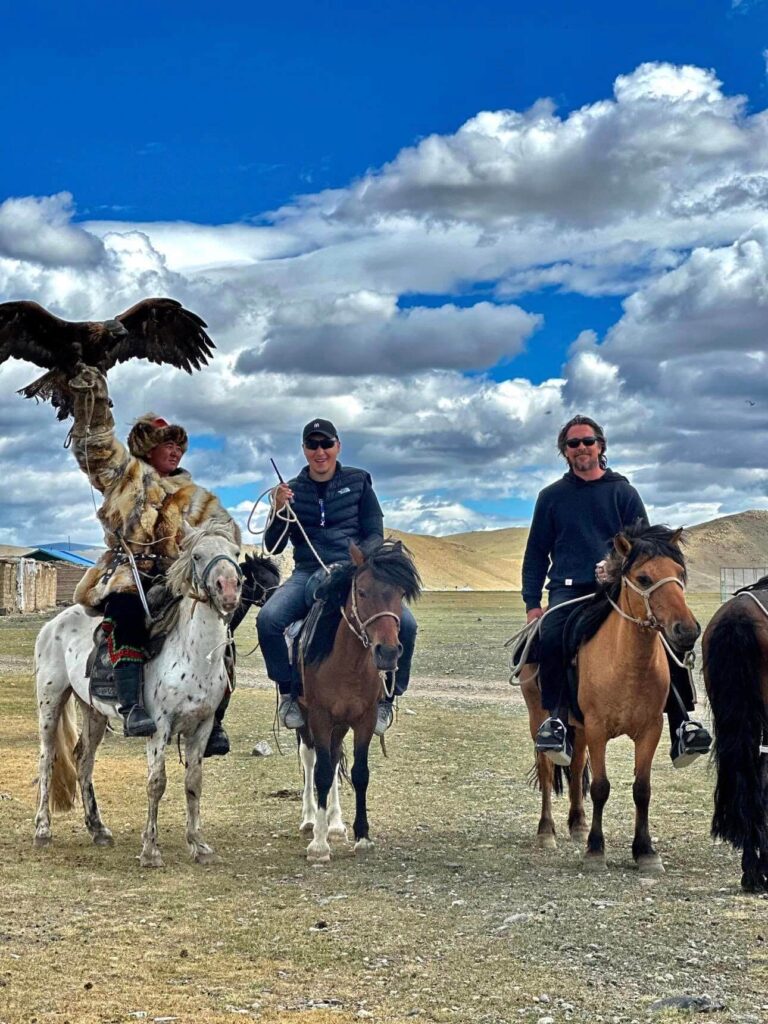
- Golden eagle (Aquila chrysaetos): preys on juvenile ibex, marmots, hares, and pikas — the same eagle Kazakh berkutchi train
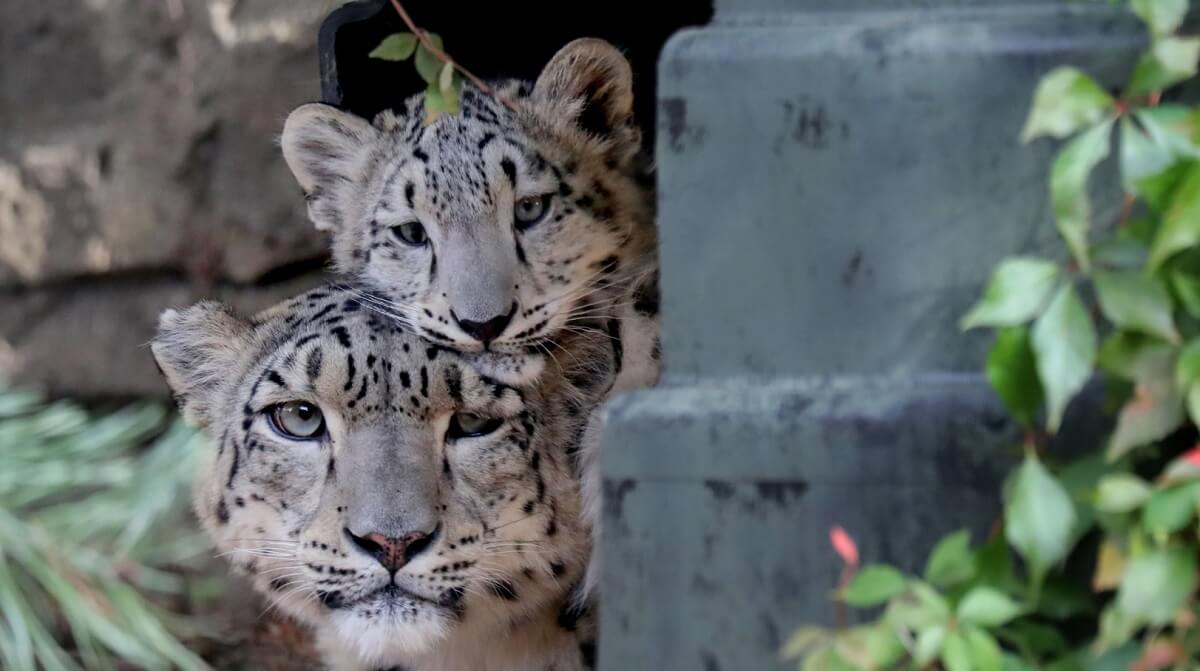
This shared predator base creates competition for the same prey. When prey populations are healthy, all the predators coexist. When prey crash (drought year, livestock disease spillover, illegal hunting), the predators decline together — and snow leopards, with the smallest population and slowest reproductive rate (cubs born April-June, gestation 90-100 days), recover slowest.
For travellers, this means the Mongolia Snow Leopard Photography Tour routinely encounters wolf tracks, dhole calls, and golden eagle activity even when the snow leopards themselves remain hidden. Each predator sighting is part of the same ecosystem story.
What Breaks the Chain — and Why It Matters for Tourism
The Altai prey-predator chain has been stable for thousands of years. In the last fifty it has come under pressure from three main forces:
1. Domestic livestock overgrazing — competition with argali and ibex for alpine pasture, especially during drought years. When wild ungulate numbers drop, snow leopard prey base shrinks. 2. Illegal trophy hunting of argali — international demand for record horns drives poaching that domestic enforcement cannot fully suppress. 3. Climate warming — pika range contraction in particular is documented. Reduced pika base affects all small-prey-dependent predators.
Each pressure individually is manageable. The combination is what threatens the chain.
This is where conservation tourism enters the picture. A guided snow leopard expedition like ours brings cash directly to Kazakh herder families that can otherwise see snow leopards as livestock predators rather than economic assets. When a single tourist visit pays a herder more than a sheep would have lost to predation, the herder becomes a guardian rather than a hunter. The Snow Leopard Trust and similar organisations have documented this dynamic across Central Asia: tourism-funded coexistence keeps the chain intact.
For deeper context on the conservation framework, see our snow leopard conservation in Mongolia overview. For the biology of why snow leopards are so hard to see, snow leopard camouflage explains the evolutionary fit. And for the specific window when all this becomes visible to visitors, best months to see snow leopards covers the seasonal calendar.
Suggested Tours:
Suggested Blogs:
Snow Leopard Photography Gear Guide: What You Actually Need for the Altai
To photograph snow leopards in the Mongolia Altai, you need a weather-sealed camera body, a telephoto lens of at least…Best Months to See Snow Leopards in the Altai: A Seasonal Guide for 2026
The best months to see snow leopards in Mongolia’s Altai Mountains are February through early April. Three biological factors converge…Snow Leopard Conservation in Mongolia: Programs, Protection and How to Help
Snow leopard conservation in Mongolia centres on protecting the country’s estimated 953 cats — the world’s second-largest population — through…



What do snow leopards eat in the Altai Mountains?
Primarily argali (wild sheep), Siberian ibex (wild goat), marmots, pikas, and hares. Large prey kills occur every 8-10 days on average; small-mammal hunting fills the gap between. A snow leopard cannot survive on small prey alone — argali and ibex populations are the most important variable in snow leopard population health.
Are argali endangered?
Argali (Ovis ammon) is classified IUCN Near Threatened and listed on CITES Appendix II. Populations are declining due to illegal trophy hunting, habitat encroachment by domestic livestock, and competition for alpine pasture. The Altai subspecies (Ovis ammon ammon) is found in western Mongolia, southern Russia, northeast Kazakhstan, and Xinjiang.
Why are Siberian ibex important to the Altai ecosystem?
Siberian ibex specialise in vertical cliff terrain — the same terrain snow leopards use for ambush. They are the snow leopard’s primary winter prey and one of two large-prey species (with argali) that the predator depends on. Without ibex, snow leopards could not maintain their high-altitude territories.
What other predators share the snow leopard’s prey base?
Himalayan wolves (the dominant argali predator in winter), dholes (pack-hunting wild dogs), brown bears (opportunistic), and golden eagles (juvenile ibex and small prey). All four compete with snow leopards for the same prey species. When prey populations crash, all four predators decline together.
How does tourism help protect the chain?
Tourism-funded conservation works by changing the herder economics. A Kazakh family that earns income from snow leopard photography visits has an economic reason to protect the cat and its prey base, rather than retaliate when livestock is taken. Programs like Snow Leopard Trust and similar Mongolia-specific initiatives have documented declining herder-snow-leopard conflict in tourism-active valleys.
When can I see argali, ibex, and snow leopards on a tour?
All three are most visible in winter (February to April) when they descend to lower altitudes following the snow line. Argali and ibex are visible through binoculars year-round but more concentrated and lower in winter. Snow leopards are biologically only sighting-realistic in the late winter mating season window. A 12-day winter photography expedition built around this window typically includes all three target species in its observation program.