
To photograph snow leopards in the Mongolia Altai, you need a weather-sealed camera body, a telephoto lens of at least 400mm (600mm preferred), a sturdy tripod, and four or more spare batteries because lithium-ion cells lose 30 to 50 percent of their capacity at the -20°C to -35°C Altai winter temperatures. Snow leopards are typically observed at distances of 100 to 500 metres across glacial valleys, so reach is essential — a 70-200mm lens is too short. Add a polarising filter for snow glare, lens cleaning supplies for dust and condensation, and a beanbag for vehicle-mounted shots. Beyond the camera, the most important gear is what keeps you warm enough to hold the camera steady for hours.
Key Takeaways
- 400-600mm telephoto is the minimum useful focal length for Altai snow leopard distances
- Weather-sealed bodies survive dust, snow, and condensation cycles better than non-sealed
- Bring 4+ batteries — cold drains lithium-ion 30-50% faster than rated capacity
- Olgii winter temps: avg high -10°C, low -25 to -35°C overnight (Köppen subarctic)
- Snow leopards (IUCN Vulnerable, <10K globally) are observed 100-500m away across valleys
- Photographers carry their own gear in carry-on — never check optics through Ulaanbaatar
- Tripod or monopod essential for long-lens stability in cold, windy conditions
The Two Gear Priorities — Reach and Warmth
Snow leopard photography in the Altai is constrained by two physical realities: the cats are far away, and the cold drains everything.
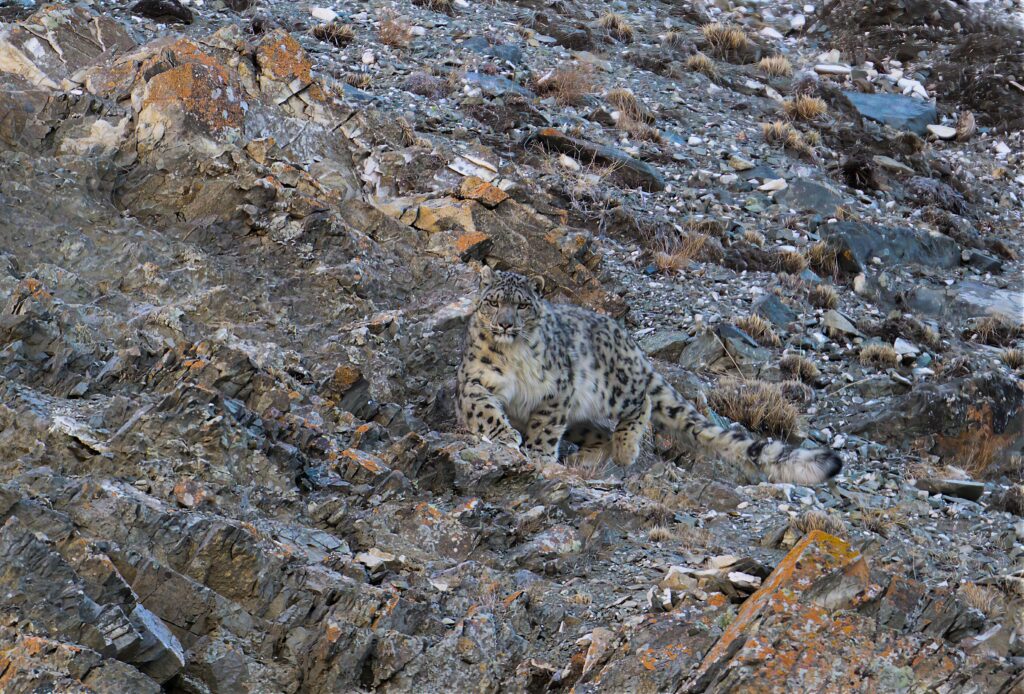
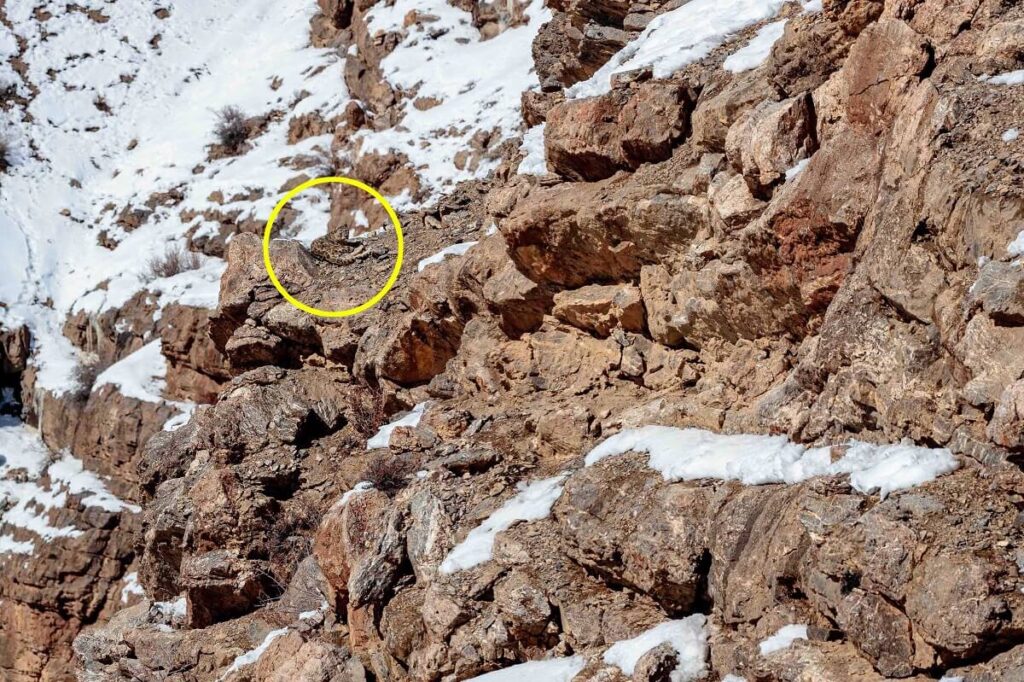
Distance: Snow leopards descend in winter from 2,700-6,000 metres down to 1,200-2,000 metres following their prey. But within that range they remain on cliff faces and ridge lines, observed from across valleys typically 100-500 metres away. This is too far for any standard or even portrait lens. You need genuine telephoto reach — 400mm minimum, 600mm preferred.
Cold: Ölgii, the regional capital of Bayan-Ölgii Province, has a subarctic climate (Köppen BWk) with January mean daily lows of -21.9°C and record lows reaching -40°C. February-March photography conditions are typically -10°C daytime, -25 to -35°C overnight. Lithium-ion batteries lose 30-50% of rated capacity at these temperatures. Electronics that work fine in warmer conditions fail or slow down.
Every gear decision flows from these two constraints. A photographer who packs for 0°C and brings a 200mm lens will not get usable snow leopard images. A photographer who packs for -30°C with a 500mm lens and warm spare batteries will.
Camera Body — What Matters and What Doesn’t
Wildlife photographers obsess over bodies, but for snow leopard work the body matters less than the lens. The non-negotiable features:
| Feature | Why it matters |
|---|---|
| Weather sealing | Dust on the steppe, snow drift, condensation cycles in/out of warm vehicles |
| Fast autofocus with subject tracking | Snow leopards move suddenly; pre-focus rarely works |
| 10+ FPS burst rate | Capture moment-of-action sequences (eagle-on-prey, cat-on-ibex) |
| 24MP+ sensor | Allows cropping when distance is too great for full frame |
| Dual card slots | Backup against card failure in cold (rare but happens) |
What does NOT matter: – Latest model year (an older weather-sealed pro body beats the newest entry-level mirrorless) – 60MP+ resolution (you cannot meaningfully crop further at typical observation distances) – Built-in vertical grip (extra battery weight matters less than spare batteries)
Recent mirrorless bodies (Nikon Z9, Sony a1, Canon R3 generation and equivalents) have improved cold-weather tolerance, but any weather-sealed pro DSLR or mirrorless from the last 5-7 years is sufficient. The Mongolia Snow Leopard Photography Tour has produced publication-quality images on a wide range of older equipment.
If you only own one body, bring it. If you own a second body, bring it as backup — body failures in the field at -25°C are rare but unfixable.
Lens — Minimum Useful Focal Length
This is where gear choices have the biggest impact on results. The honest minimums:
| Focal length | Useful for | Notes |
|---|---|---|
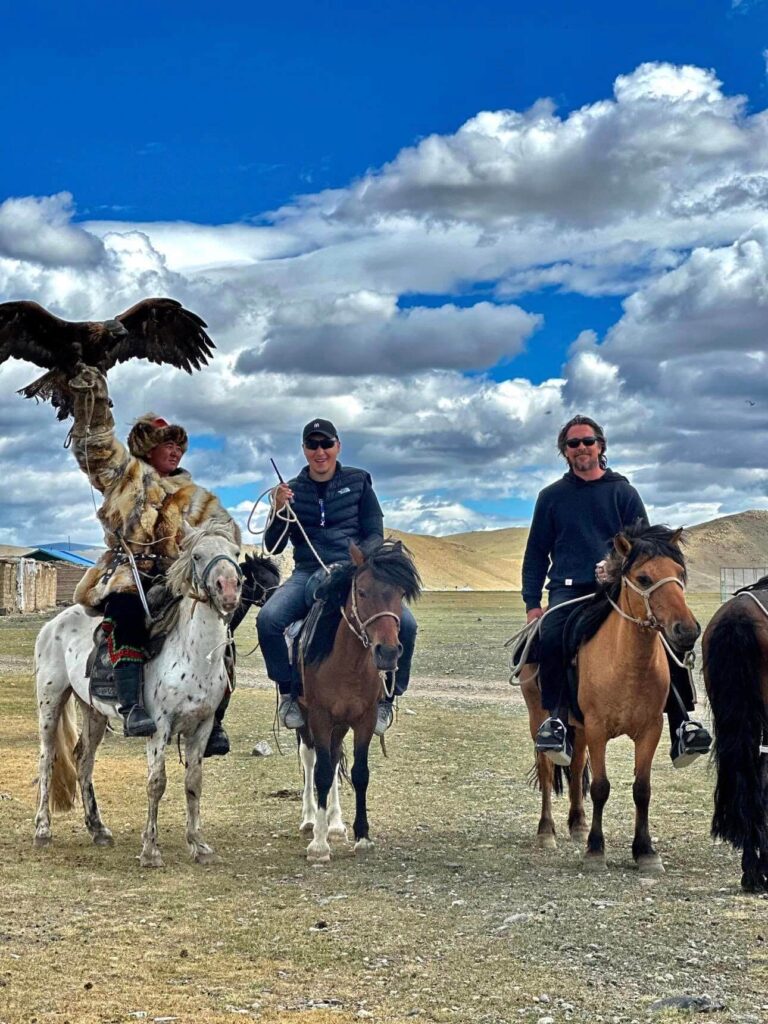
| 70-200mm | Crowd shots, ger camp life, photographer-with-eagle setups | NOT useful for snow leopard. Too short. |
| 100-400mm | Bare minimum for snow leopard if cropping aggressively | Versatile, lightweight, common choice for first-time visitors |
| 150-600mm or 200-600mm | Sweet spot for most photographers | Long enough for typical distances, manageable weight |
| 500mm f/4 or 600mm f/4 prime | Professional reach, low light at dawn/dusk | Heavy, expensive, lets you shoot at distances others can’t |
| 800mm+ | For very distant or shy individuals | Often needs teleconverter on 400mm prime |
A 1.4x teleconverter on a 100-400mm or 200-600mm zoom extends reach to roughly 560mm or 840mm respectively, at the cost of one stop of light. Most pros bring one. A 2.0x teleconverter doubles reach but the image quality penalty is harsher; only useful in good light.
If you can only buy one new lens for this trip, the answer is usually a 150-600mm zoom (Sigma, Tamron, or first-party from your camera brand). It’s the best price-performance for snow leopard distances without committing to a $10,000+ prime.
Cold Weather and Battery Management
This is the single most underestimated part of Mongolia winter photography. The temperature physics:
- Lithium-ion battery capacity drops 30-50% at -20°C compared to rated 20°C performance
- LCD screens slow down below -10°C — preview lag, slower menu response
- Internal grease in zoom rings stiffens below -15°C, making manual zoom harder
- Condensation forms instantly when cold gear moves into warm vehicles
Practical management:
1. Carry 4-6 spare batteries, not 2-3. Cold doubles the count you’d need at home. 2. Rotate batteries inside your jacket pocket — body heat keeps the rotating spare warm, then you swap it into the camera as the cold one fades. 3. A “dead” cold battery often recovers 70%+ of capacity once warmed in your pocket for 30 minutes. Don’t discard fading batteries — rotate them. 4. Never breathe on a viewfinder or lens in the cold — instant frost. 5. Move cold gear into a sealed plastic bag before bringing it into a warm room. Let the bag warm up first, THEN unseal. This stops condensation from forming on internal lens elements. 6. Keep camera and lens in the cold overnight — the worst is a hot-cold cycle. Cars and ger stoves are NOT camera-friendly.
For memory cards: cold-rated SD cards exist (Lexar, SanDisk Extreme Pro) but standard cards usually work fine. Bring more cards than you think — burst shooting at competitions fills 64GB faster than expected.
Tripod, Accessories, and a Beanbag
For long-lens snow leopard work, handholding is rarely viable. The cats hold still and you need sharp shots at slow shutter speeds in low winter light.
Tripod essentials: – Carbon fibre is preferred (lighter, less cold-conductive than aluminium for your hands) – Load capacity 8-10kg minimum (heavy zoom + body + accessories) – Tripod head matters more than the tripod — a quality gimbal head is the standard for tracking moving wildlife with a 500mm+ lens – Spike feet useful for snow and frozen ground; rubber feet for indoor work
Monopod alternative: – Lighter, faster to set up, good for handheld-with-support shots – Less stable than a tripod but easier to manoeuvre in narrow observation points – Many photographers bring both
Beanbag for vehicle shots: – Sometimes you shoot from a 4×4 window — a beanbag draped over the door cushions the lens – Available cheaply; can be DIY-filled with rice or dried beans on arrival – More stable than a window-mount clamp for casual use
Other accessories: – Polarising filter to cut snow glare and increase contrast – Lens hood at all times (protects from dust and lens flare) – Microfibre cloths in multiple zip-lock bags for condensation cleanup – Hand warmers (chemical or rechargeable) for fingers between shots – Memory card wallet organised so you don’t fumble in gloves
Personal Gear That Keeps You Shooting
The best camera in the world won’t help if you’re too cold to hold it steady. Personal gear for the Altai winter:
- Insulated parka rated to -30°C (down or synthetic, 600-800 fill power)
- Thermal base layers (merino wool best — stays warm when damp)
- Insulated waterproof boots rated to -30°C (Sorel, Baffin, similar)
- Three layers of gloves: thin liners (for camera operation), warm midweight (for outside shots), heavy mittens (for downtime). Trigger-finger gloves are a good compromise.
- Balaclava + neck gaiter (face freezes fast in wind)
- Ski goggles (for windy days — sunglasses aren’t enough at -20°C wind)
- Hand warmers + foot warmers (lots — pack 20+ for a 10-day trip)
- SPF50 sunscreen + lip balm with SPF (UV at altitude is intense even in winter)
- Headlamp with red light option (dawn departures, evening returns)
- Power bank 20,000+ mAh for phone/comms during long days
The strategy is layers. You start cold pre-dawn, warm up during morning observation, may overheat slightly during the midday drive, then need full insulation again at dusk. Anything you can’t add or remove without help is a problem.
For travellers planning the full expedition, the 12-day Mongolia Snow Leopard Photography Tour provides a more detailed packing list emailed 30 days before departure, customised to your specific dates. For broader context on what you’ll encounter and when, see our seasonal sighting calendar and the prey-predator chain overview.
Suggested Tours:
Suggested Blogs:
Altai Argali, Ibex and Snow Leopard: The Prey-Predator Chain That Holds the Mountain Ecosystem Together
The Altai Mountains snow leopard population depends entirely on a small set of prey species: Altai argali (the world’s largest…Best Months to See Snow Leopards in the Altai: A Seasonal Guide for 2026
The best months to see snow leopards in Mongolia’s Altai Mountains are February through early April. Three biological factors converge…Snow Leopard Conservation in Mongolia: Programs, Protection and How to Help
Snow leopard conservation in Mongolia centres on protecting the country’s estimated 953 cats — the world’s second-largest population — through…




What’s the minimum focal length needed for snow leopard photography?
400mm is the practical minimum. 600mm is the sweet spot. Snow leopards in the Altai are typically observed at 100-500m distances across valleys, so a 70-200mm or 100-400mm at the wide end will produce small, distant subjects in the frame. A 150-600mm or 200-600mm zoom is the most common single-lens choice for first-time visitors.
Do I need a weather-sealed camera body?
Strongly recommended. The Altai winter combines dust, snow, condensation cycles, and -30°C temperatures. Non-sealed bodies CAN survive but you’ll spend more time worrying about your gear than shooting. Any weather-sealed pro DSLR or mirrorless from the last 5-7 years is sufficient.
How many batteries should I bring?
Four to six spares minimum. Lithium-ion batteries lose 30-50% of rated capacity at -20 to -30°C, so a battery that gives 800 shots at home may only give 400 in the Altai. Rotate batteries between camera and inside-jacket pocket — body heat keeps spares warm and revives partially-drained batteries.
Should I bring a tripod or monopod?
A tripod with a gimbal head is the standard for long-lens snow leopard work. The cats are stationary for long periods and you need sharp images at low shutter speeds in winter light. A monopod is a useful complement for handheld-with-support shots when you need to move quickly. Many photographers bring both.
What about drone photography?
Drones are increasingly restricted in Mongolia, especially in protected areas like Altai Tavan Bogd National Park. Check current Mongolian airspace rules in advance — most snow leopard photography tours do not include drone use because the noise disturbs the cats and other wildlife.
Can I rent gear in Mongolia?
Limited rental options exist in Ulaanbaatar for basic camera bodies and short telephotos. Specialist 500mm+ wildlife lenses are not generally available for rent in Mongolia. Plan to bring your own gear or arrange rental through your home country before departure.
What carry-on luggage rules apply for camera gear?
For the Ulaanbaatar to Ölgii domestic flight, allowable carry-on is typically 5-7kg depending on the airline. Camera bodies and lenses go in carry-on always — never check expensive optics. A photo backpack designed for cabin compliance (15L-25L) holds a body, 2-3 lenses, batteries, and accessories without exceeding limits.