How does snow leopard camouflage? – Snow leopards, with their stunningly beautiful and ghostly appearance, are among the most fascinating creatures in the animal kingdom.
Found predominantly in the rugged mountain ranges of Central and South Asia, these elusive big cats are a marvel when it comes to camouflage. Their ability to blend into their natural habitat not only showcases their evolutionary brilliance but also plays a crucial role in their survival.
Altai Tours from Mongolia
Let’s create your ideal Mongolian adventure
We offer you MONGOLIA SNOW LEOPARD PHOTOGRAPHY TOUR. Mongolia is the world’s 18th biggest country by territory with only three million people living here. Over 1.5 million square kilometers of land is inhabited by the last nomads and unique wild animals like the red fox, grey wolf, and snow leopards. It will be wonderful 🤩🤩
Why Camouflage is Essential?
🐆 Want to experience this in person? Join our 6-Day Altai Tavan Bogd Tour with local Kazakh guides — small groups, authentic experience, 5.0 stars on TripAdvisor.
For snow leopards, effective camouflage is vital. These animals are primarily solitary and operate in some of the harshest environments on earth.
Snow leopard habitats are often sparse and rocky, with extreme temperatures and limited vegetation. In such settings, stealth is key for hunting prey and avoiding larger predators or conflicts with other leopards.
The Perfect Palette
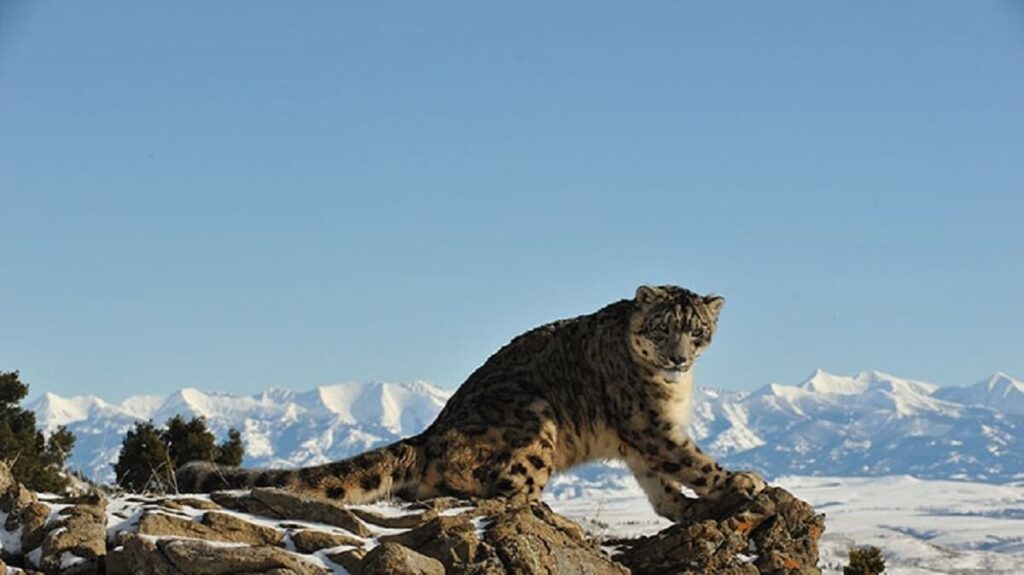
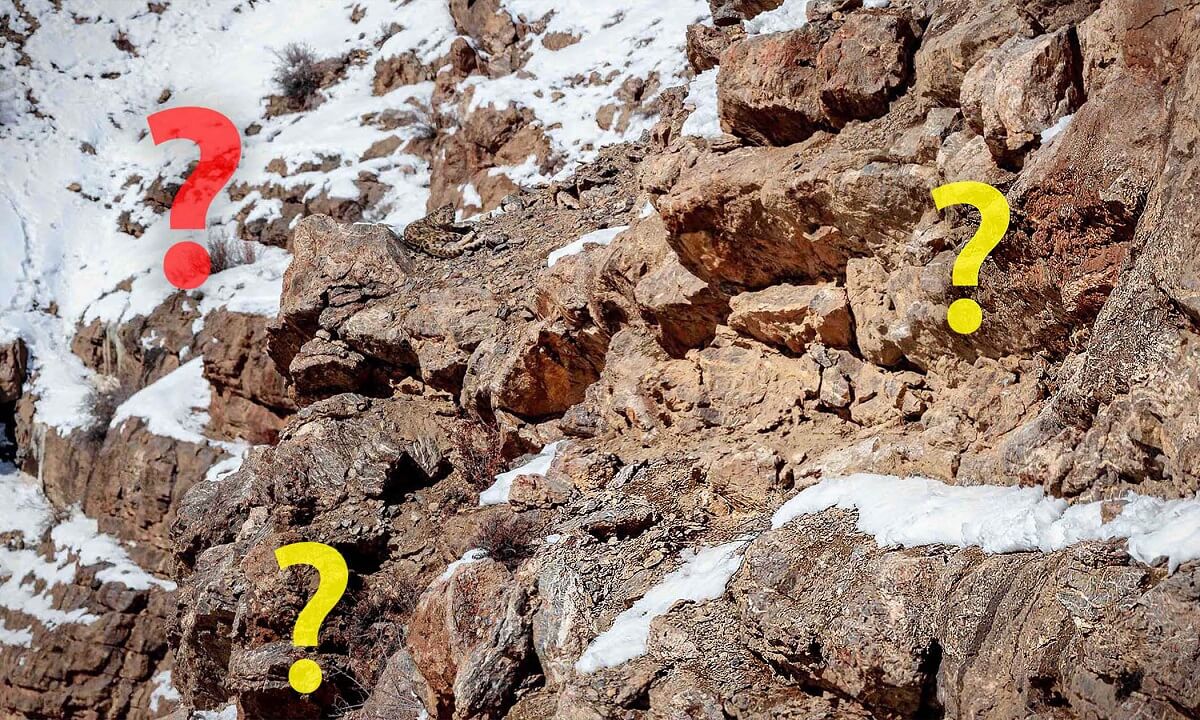
The snow leopard’s fur is perfectly adapted to its environment. The base color of their coat varies from smoky gray to yellowish tan, with white undersides, which mirrors the colors of the rocky mountainous terrain they inhabit.
This natural coloration allows them to lie down and virtually disappear into the landscape, giving them the upper hand whether they are stalking prey or eluding human presence.
Pattern and Texture
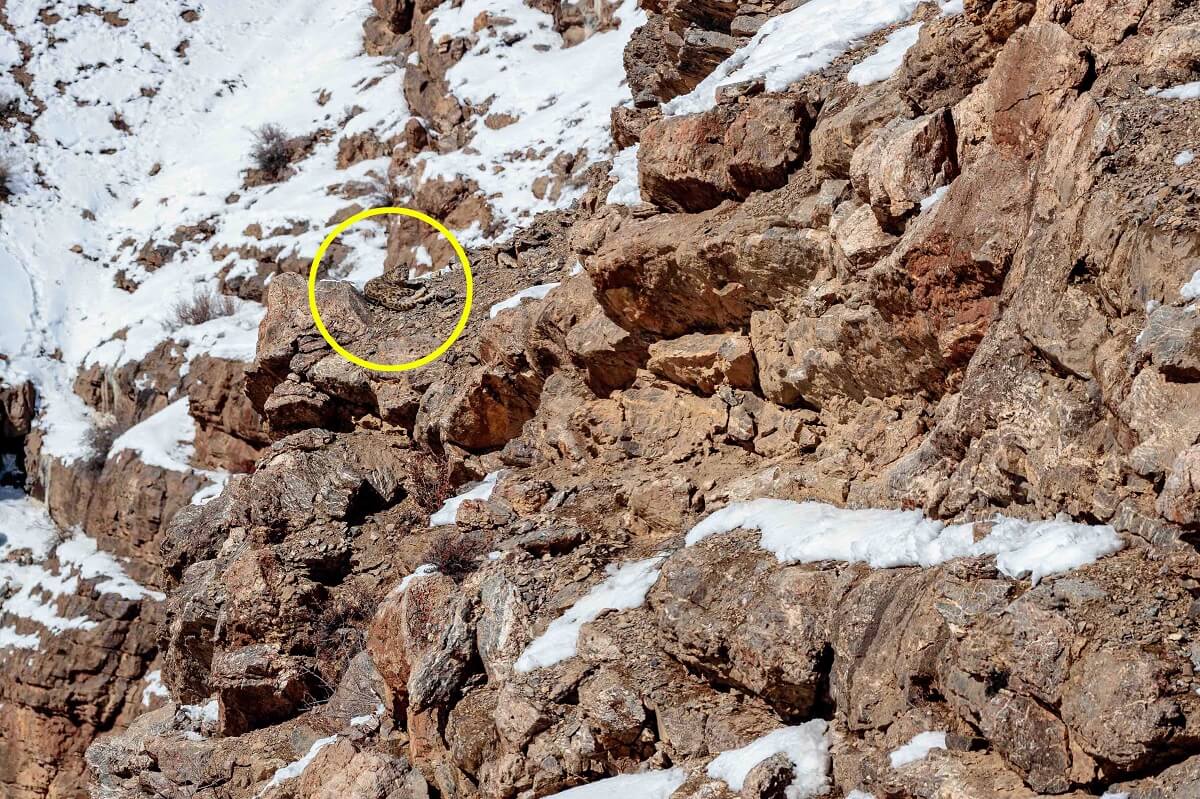
Beyond the color, the pattern of the snow leopard’s fur plays a significant role in its camouflage strategy. Their bodies are covered with black rosettes and spots, which are effective in breaking up their outline.
This pattern mimics the shadows commonly found on rocky terrains, making it difficult for both prey and predator to detect them at a distance.
Altai Tours from Mongolia
Let’s create your ideal Mongolian adventure
The fur itself is thick and long, particularly during the winter months, which adds an extra layer of blending, as it resembles the texture of the snowy and rugged mountain backdrop.
The thickness of the fur also helps to obscure the physical contours of the snow leopard, aiding further in camouflage.
Behavioral Adaptations
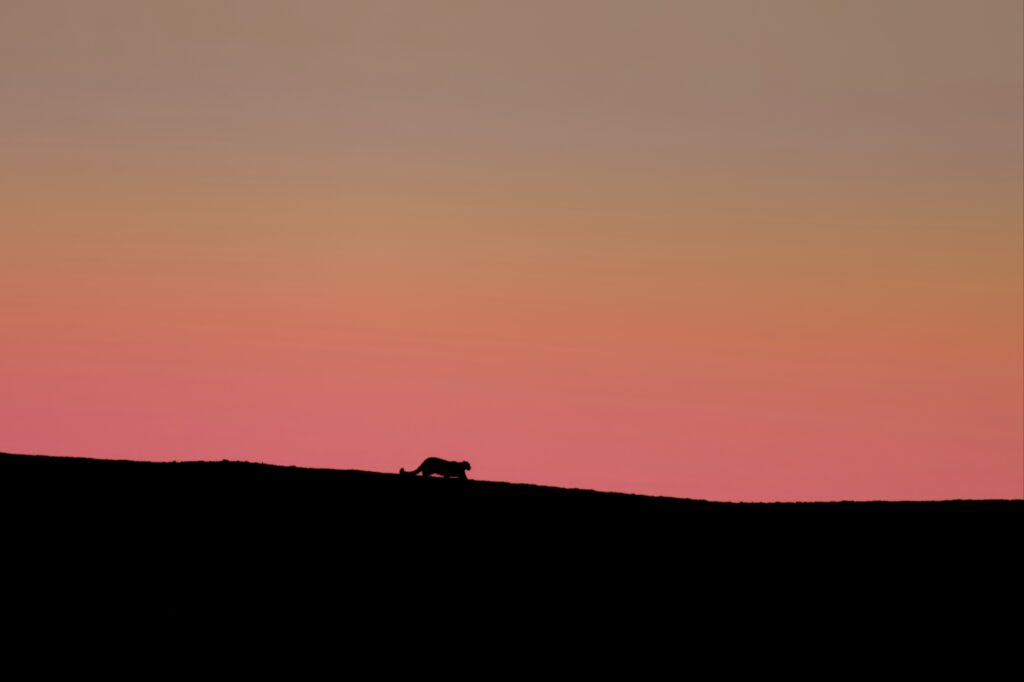
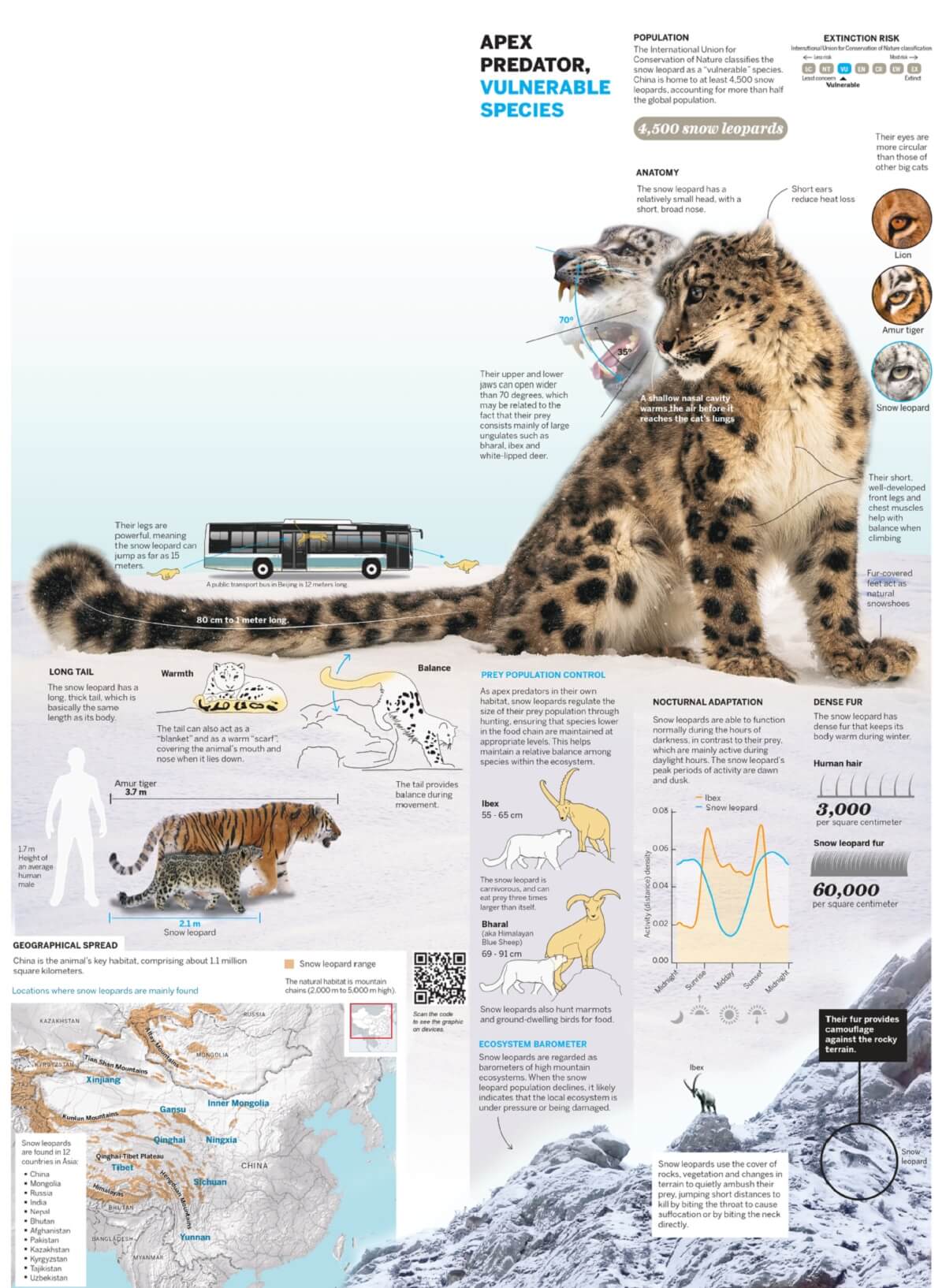
Snow leopards also exhibit behaviors that enhance their ability to stay hidden. They are predominantly active during dawn and dusk, times when the light is dim, casting shadows and creating a natural cloak.
Their movement patterns are incredibly stealthy and deliberate, helping them to maintain a low profile.
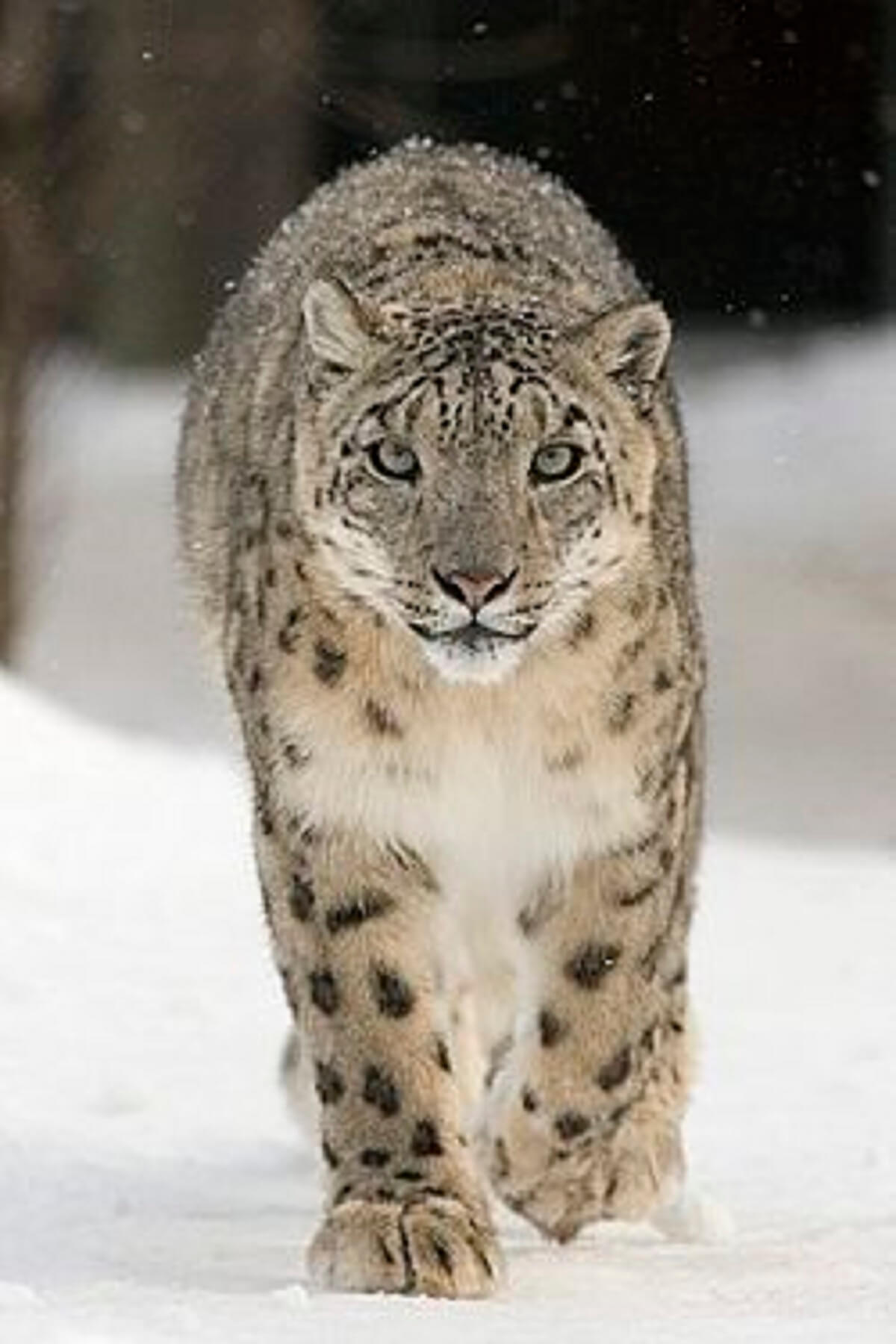
The Impact of Camouflage on Snow Leopard Behavior
The effectiveness of their camouflage has shaped the behavioral patterns of snow leopards. They tend to choose routes and resting spots that maximize their ability to remain concealed.
This has significant implications for their territorial behavior, mating practices, and even the care of their young.
The snow leopard’s reliance on camouflage is a compelling example of adaptation and survival in the animal kingdom.
By merging seamlessly with their environment, they not only ensure their survival but also maintain the delicate balance of their mountain ecosystems.
This ability to disappear into the landscape is what makes the snow leopard not just a master of disguise, but also a symbol of the wild, untamed and mysterious nature of our planet’s most remote regions.
FAQ
The Scientific Discovery and Naming of the Snow Leopard
The snow leopard was first scientifically described by German naturalist Johann Christian Daniel von Schreber in 1777 in his work Die Säugethiere in Abbildungen nach der Natur mit Beschreibungen
The scientific name Panthera uncia derives from the Old French word once, originally used for the European lynx, which shares similar coloring but has vastly different physiology and range
The English name “ounce” is still occasionally used and stems from this same Old French etymology, showing how early naturalists categorized big cats based on visual similarities
In native languages across its range, the snow leopard is known by names reflecting its mountainous habitat: “irves” in Mongolian (ирвэс), “bars” or “barys” in Kazakh (барыс), “ilbirs” in Kyrgyz, “barfānī chītā” in Hindi/Urdu (برفانی چیتا, meaning “snowy leopard”), and “him tendua” in Sanskrit/Hindi (हिम तेन्दुआ, meaning “snowy leopard”)
Rock Leopard: Why Snow Isn’t Their Primary Habitat
Despite the common name, snow leopards spend most of their time in rocky terrain rather than snow-covered areas; conservation ecologists suggest “Rock Leopard” would be more accurate
The few historical sightings that gave rise to the “snow leopard” name likely occurred when the cats were crossing snow fields, but their primary habitat consists of grey, beige, and yellowish rocky outcrops dotted with sparse, straw-colored bushes
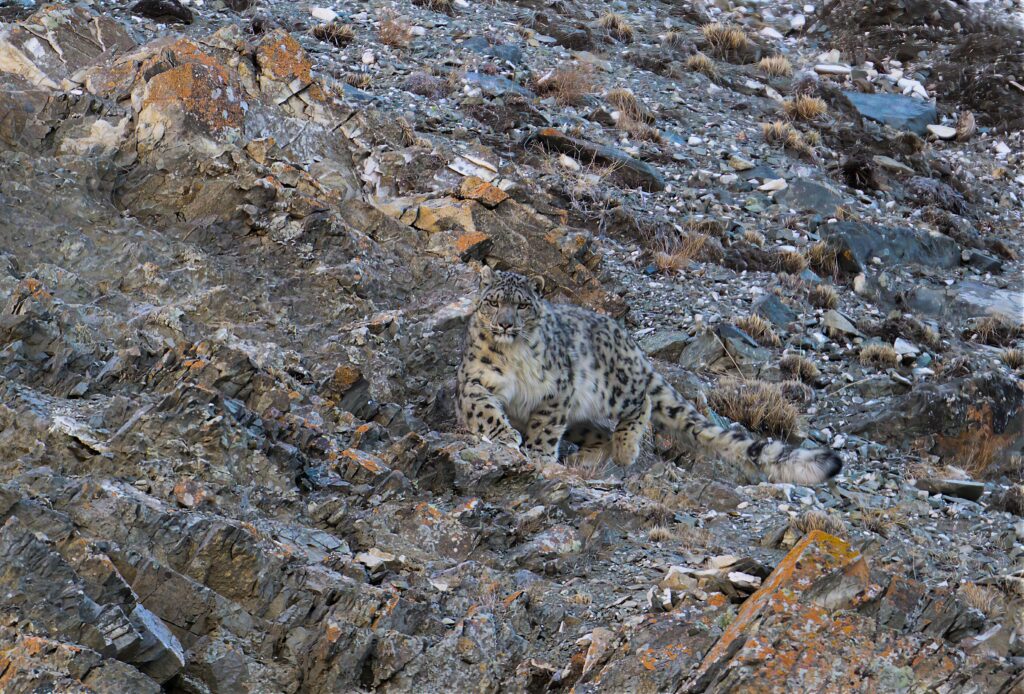
Against snow, snow leopards are relatively easy to spot due to their grey and tan coloring, but against rocky terrain they become “all but invisible even to a trained observer” — which is where their camouflage truly excels
This rock-based camouflage is evolutionarily optimized for the cat’s primary hunting grounds: the rocky slopes and cliff faces where their prey (wild sheep and goats) live year-round
Ambush Hunting Strategy: How Camouflage Enables Stalking
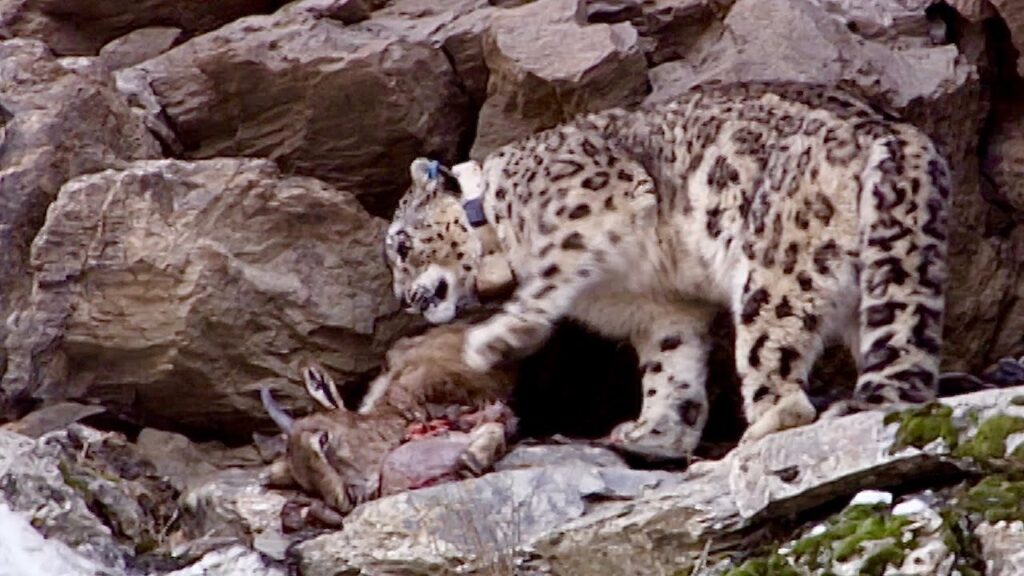
Snow leopards are ambush predators that rely on stalking and surprise attacks rather than sustained chases; they typically sneak within close range before launching a powerful burst to pounce on prey
Unlike wolves that chase and wear down prey over long distances, snow leopards don’t usually hunt over extended pursuits — their mountainous habitat is too difficult to navigate for long-distance running
Their primary prey — bharal (blue sheep), ibex, and other wild mountain goats — are nimble, quick, and adapted to steep terrain, making the element of surprise the cat’s most effective weapon
The snow leopard’s thick, grey-white fur with dark spots and rosettes provides the natural camouflage essential for closing distance undetected across rocky slopes before the final explosive attack
“Ghost of the Mountain”: Cultural Mystique and Elusiveness
The snow leopard has earned the nickname “Ghost of the Mountain” due to its exceptional camouflage ability, shy temperament, and extremely low population density that makes encounters naturally rare
This mystique inspired writer Peter Matthiessen’s famous line from The Snow Leopard (1978): “Have you seen the snow leopard? No. Isn’t that wonderful?” — celebrating the rarity and privilege of sighting these elusive cats
Snow leopards occur at densities as low as 0.5 to 10 individuals per 100 square kilometers across their range, making them one of the most sparsely distributed big cats on Earth
Even wildlife researchers using camera traps and radio collars often go months or years without direct visual encounters, underscoring how effective their camouflage and secretive behavior are in their natural habitat
Interactive Challenge: Can You Spot the Camouflaged Leopard?
Conservation photographers have captured remarkable images showing how effectively snow leopards disappear into rocky landscapes — these “spot the leopard” challenges demonstrate the practical effectiveness of their camouflage
In photographs from Mongolia’s Tost Mountains, snow leopards positioned on rocky slopes become nearly invisible to the untrained eye, even when located in the center of the frame
When photographed near groups of unsuspecting bharal (blue sheep), camouflaged snow leopards can be mere meters away without alerting their prey — demonstrating real-world hunting effectiveness
How does a snow leopard camouflage?
Snow leopards use their pale, smoky-gray fur covered with rosette patterns to blend into rocky mountain terrain. This natural coloration makes them exceptionally difficult to spot in their alpine environment, where snow, stone, and shadow dominate the landscape.
How do leopards camouflage?
Leopards rely on their distinctive spotted coats for camouflage. The rosette pattern helps them blend into tree canopies, forest shadows, and tall grasses. This allows them to remain hidden while stalking prey and protects their kills from other predators and scavengers.
What are the key adaptations of a snow leopard?
Snow leopards are uniquely adapted to survive in harsh, high-altitude environments:
• Thick fur for insulation against extreme cold
• Wide, fur-covered paws that act like natural snowshoes
• Long tail for balance and warmth
• Short, rounded ears that reduce heat loss
• Powerful hind legs enabling long-distance leaps
These adaptations make them exceptional mountain predators.
What animal is considered the master of camouflage?
The Mimic Octopus is widely regarded as one of the most advanced camouflage experts in the animal kingdom. It can change its color, shape, and movement to imitate other marine species, helping it avoid predators.
Which big cat has the best camouflage?
Tigers possess one of the most effective camouflage systems among big cats. Although their orange coats appear bright to humans, many prey animals perceive them as blending into forest environments, making tigers surprisingly difficult to detect.
What are five interesting facts about snow leopards?
Snow leopards are among the most fascinating big cats:
• They cannot roar like lions or tigers
• Their paws function as natural snowshoes
• They are highly skilled climbers and jumpers
• They live in high-altitude mountain regions
• They are more closely related to tigers than to common leopards
Do snow leopards change color?
Snow leopards do not actively change color like chameleons, but their fur appears lighter in winter and slightly darker in summer. Seasonal variations help improve camouflage against snow-covered and rocky landscapes.
What are the four basic types of camouflage?
Scientists generally classify camouflage into four main types:
• Concealing coloration
• Disruptive coloration
• Disguise
• Mimicry
Each strategy helps animals avoid detection in different ways.
What are five important adaptations of a leopard?
Leopards have evolved numerous traits that make them efficient predators:
• Muscular, agile body structure
• Exceptional speed and stealth
• Powerful jaws and sharp teeth
• Strong climbing ability
• Camouflage through rosette-patterned fur
How does a snow leopard protect itself?
Snow leopards rely on a combination of camouflage, agility, and physical adaptations. Their long tail helps maintain balance on steep terrain and can wrap around their body for warmth during rest in cold conditions.
What are five survival advantages of leopards?
Leopards possess several traits that enhance their survival:
• Nocturnal hunting behavior
• Excellent stealth and speed
• Strong territorial instincts
• Superior climbing skills
• Highly adaptable diet
Why is the snow leopard called “Ghost of the Mountain”?
The snow leopard earned the nickname “Ghost of the Mountain” due to its exceptional camouflage that allows it to virtually disappear into rocky terrain, combined with its extremely shy nature and low population density. These cats are so elusive that even trained wildlife researchers and conservationists can spend months in snow leopard territory without a single sighting. Their grey-white fur with dark rosettes blends seamlessly with the rocky, shadowy mountain slopes they inhabit, making them nearly invisible even when positioned in plain sight. This mystique surrounding their elusiveness inspired Peter Matthiessen’s famous line: “Have you seen the snow leopard? No. Isn’t that wonderful?” — celebrating the rarity and privilege of witnessing these remarkable predators in the wild.
Are snow leopards easier to spot in snow or on rocks?
Contrary to what their name suggests, snow leopards are actually much easier to spot against white snow than on rocky terrain. Their grey, beige, and tan coloring with dark rosettes stands out against pure snow backgrounds, which is why the few historical sightings that named the species likely occurred when cats were crossing snowfields. However, against the grey, beige, and yellowish rocks that make up their primary habitat — often dotted with sparse, straw-colored bushes — snow leopards become “all but invisible even to a trained observer,” according to conservation ecologists. This rock-based camouflage is where their coat pattern truly excels, as they spend most of their time hunting on rocky slopes rather than snow-covered areas. Some experts have suggested “Rock Leopard” would actually be a more accurate name.
What is the scientific name for the snow leopard and what does it mean?
The snow leopard’s scientific name is Panthera uncia. The species name “uncia” — as well as the occasionally used English name “ounce” — derives from the Old French word once, which was originally used for the European lynx. Early naturalists applied this name because both species share similar coloring patterns, though they have very different physiology and geographical ranges. The snow leopard was first scientifically described by German naturalist Johann Christian Daniel von Schreber in his 1777 publication Die Säugethiere in Abbildungen nach der Natur mit Beschreibungen (The Mammals in Illustrations from Nature with Descriptions). In native languages across its 12-country range, the snow leopard is known by various names, most of which reference its mountainous habitat or snowy environment, such as “irves” in Mongolian, “bars” in Kazakh, and “barfānī chītā” (snowy leopard) in Hindi and Urdu.
How do snow leopards hunt using their camouflage?
Snow leopards are ambush predators that rely heavily on their camouflage to stalk prey at close range before launching a surprise attack. Unlike wolves that chase and wear down prey over long distances, snow leopards don’t typically hunt over extended pursuits. Instead, they use their natural camouflage to sneak within striking distance undetected, then explode forward with a powerful burst to pounce on their target. This hunting strategy is necessary because their prey — bharal (blue sheep), ibex, and other wild mountain goats — are extremely nimble and quick in the difficult mountain terrain. The steep slopes and cliff faces make long-distance chasing ineffective, so the element of surprise enabled by camouflage becomes the cat’s most critical weapon. Their thick grey-white fur with dark spots and rosettes allows them to blend seamlessly into rocky backgrounds, getting within meters of prey before striking.
How rare are snow leopard sightings in the wild?
Snow leopard sightings in the wild are extremely rare due to three factors: their exceptional camouflage, naturally shy and elusive behavior, and very low population density. Snow leopards occur at densities as low as 0.5 to 10 individuals per 100 square kilometers across their range — one of the most sparse distributions of any big cat species. Even wildlife researchers conducting long-term studies using camera traps and GPS collars often go months or years without direct visual encounters. When sightings do occur, observers must be in exactly the right place at the right time, and even then, the cats’ ability to blend into rocky terrain means they can remain undetected just meters away. This extraordinary rarity is part of what makes snow leopards so captivating and has earned them their “Ghost of the Mountain” nickname in conservation circles.
SUGGESTED TOURS:
Related content:
Snow Leopard Photography Gear Guide: What You Actually Need for the Altai
To photograph snow leopards in the Mongolia Altai, you need a weather-sealed camera body, a telephoto lens of at least…Altai Argali, Ibex and Snow Leopard: The Prey-Predator Chain That Holds the Mountain Ecosystem Together
The Altai Mountains snow leopard population depends entirely on a small set of prey species: Altai argali (the world’s largest…Best Months to See Snow Leopards in the Altai: A Seasonal Guide for 2026
The best months to see snow leopards in Mongolia’s Altai Mountains are February through early April. Three biological factors converge…