Can You Own A Pet Eagle?: Legality & Ethics : In the realm of extraordinary animals, few can match the grandeur and mystique of a eagle. These majestic birds of prey have captivated the human imagination for centuries with their regal demeanor and awe-inspiring presence.
That is why there are many who wish to own pet eagle? But is it feasible to have that thought, let’s look at it.
We offer you GOLDEN EAGLE FESTIVAL PHOTOGRAPHY TOUR. Come and enjoy the stunning landscape that is covered with ancient mountains, rivers, and Mongolian history. Join us to watch a great festival with truly great hunters! 🤩🤩
Altai Tours from Mongolia
Let’s create your ideal Mongolian adventure
Legality of owning a pet eagle
🦅 Want to experience this in person? Join our 8-Day Golden Eagle Festival Photography Tour with local Kazakh guides — small groups, authentic experience, 5.0 stars on TripAdvisor.
From the legal point of view, no, you can’t keep eagles as pets. And frankly, you shouldn’t even consider it, as eagles aren’t like cats or dogs in the sense that you can easily own or domesticate them.
They present unique challenges in terms of care and training due to their wild nature, large size, and specialized dietary and environmental needs.
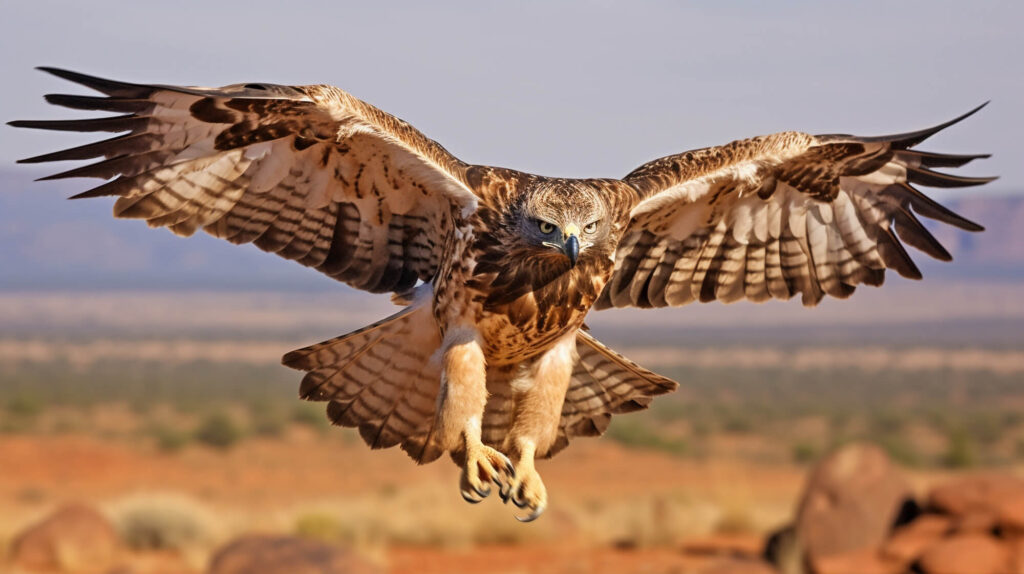
In most countries, possessing an eagle as a pet is prohibited due to legal protections for this species.
For instance, in the United States, wild birds are safeguarded under the Migratory Bird Treaty Act. So if you want to ‘own’ a eagle, there is three possibilities:
- You operate a zoo.
- You manage a rescue shelter or hold the status of a professional rehabber.
- You are recognized as a Master Falconer or eagle hunter in Mongolia.
Becoming a Master Falconer appears to be the most suitable option for most, although it’s important to note that obtaining this license can be quite challenging.
Altai Tours from Mongolia
Let’s create your ideal Mongolian adventure
How to Become a Master Falconer
Becoming a master falconer is a rewarding and challenging journey that involves training and caring for birds of prey, such as falcons, hawks, and eagles.
Falconry is not just a hobby but a serious commitment that requires dedication, time, and adherence to legal regulations.
Typically, the path to becoming a falconer, and eventually obtaining an eagle license, involves a structured progression:
Altai Tours from Mongolia
Let’s create your ideal Mongolian adventure
- Apprenticeship: Initially, one must start as an apprentice, working alongside a recognized sponsor for a period of two years. During this time, the apprentice is usually required to construct a hawk house.
- General Falconer: After completing the two-year apprenticeship, the individual advances to the status of a general falconer. At this stage, they are authorized to keep two raptors, commonly red-tailed hawks or kestrels.
- Master Falconer: With an additional five years of experience, the general falconer can attain the esteemed title of a master falconer.
- Eagle License: Even after achieving master falconer status, one must apply separately for an eagle license.
Once granted an eagle permit, falconers are permitted to house and care for up to three eagles, which can include golden eagles, white-tailed eagles, or Steller’s sea eagles. This detailed progression highlights the rigorous process involved in caring for these majestic birds of prey.

About Mongolian eagle hunter
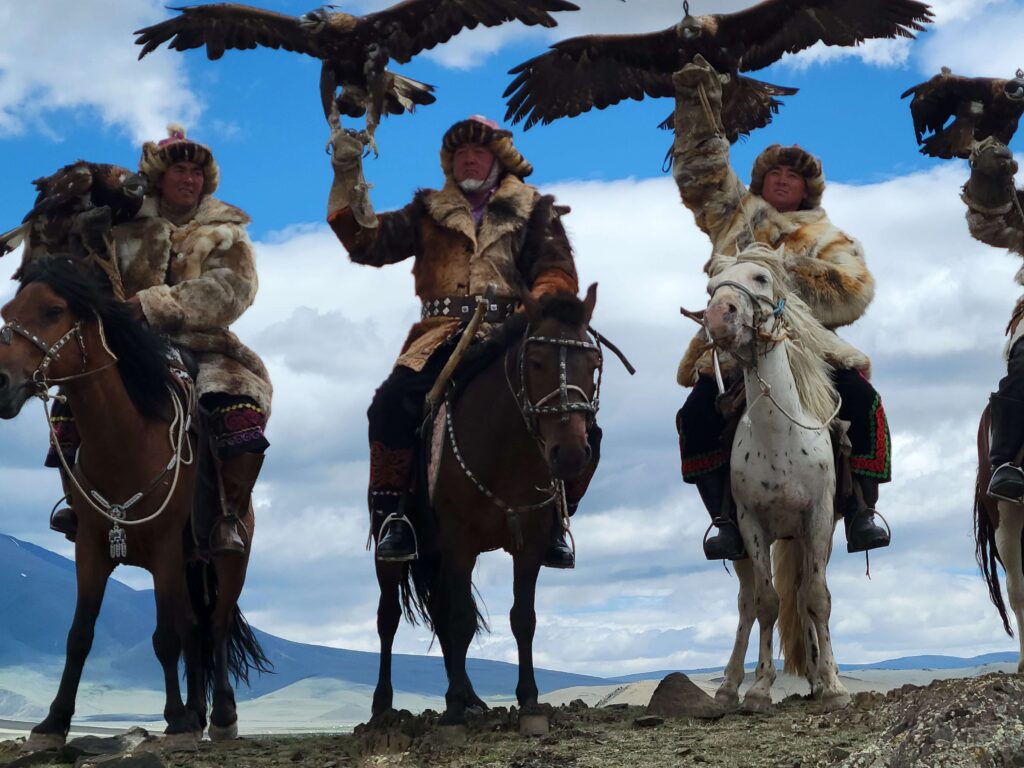
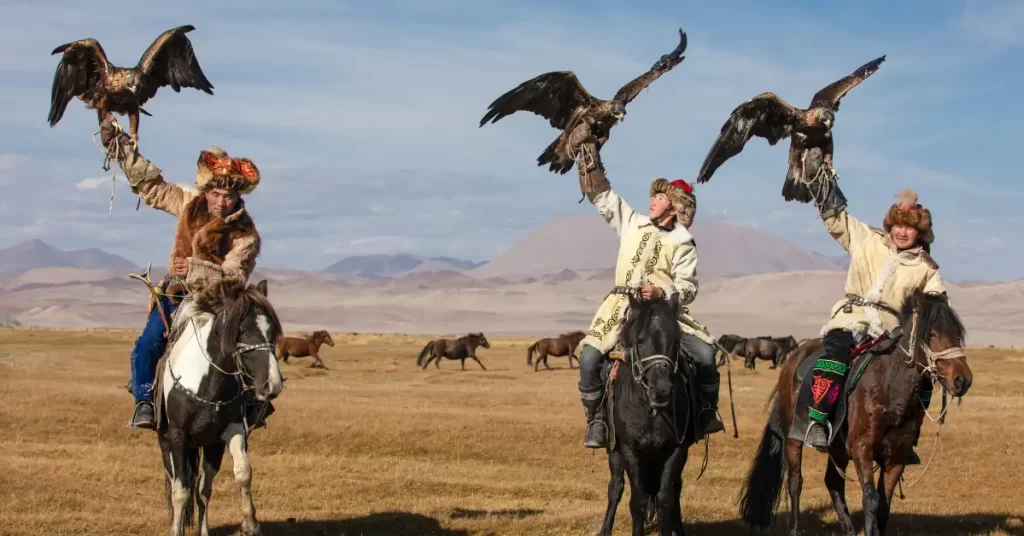
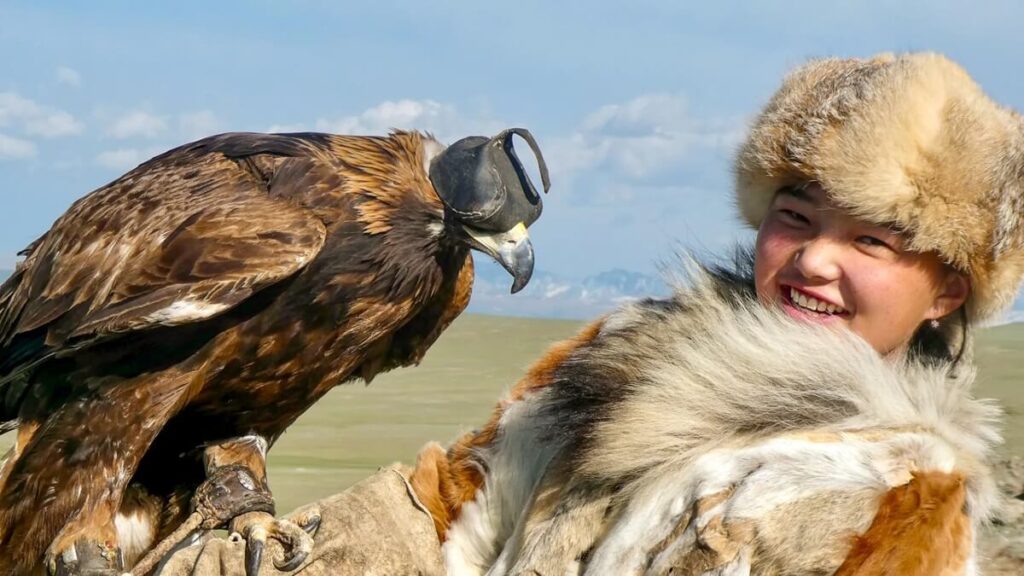
In western Mongolia, particularly among the Kazakh community, the tradition of buckthorn hunting with horses and eagles holds a special place.
This practice is not just a hobby; it’s an ancestral heritage that has been lovingly passed down through generations. From a young age, Kazakh children are introduced to the world of eagle training and scouting.
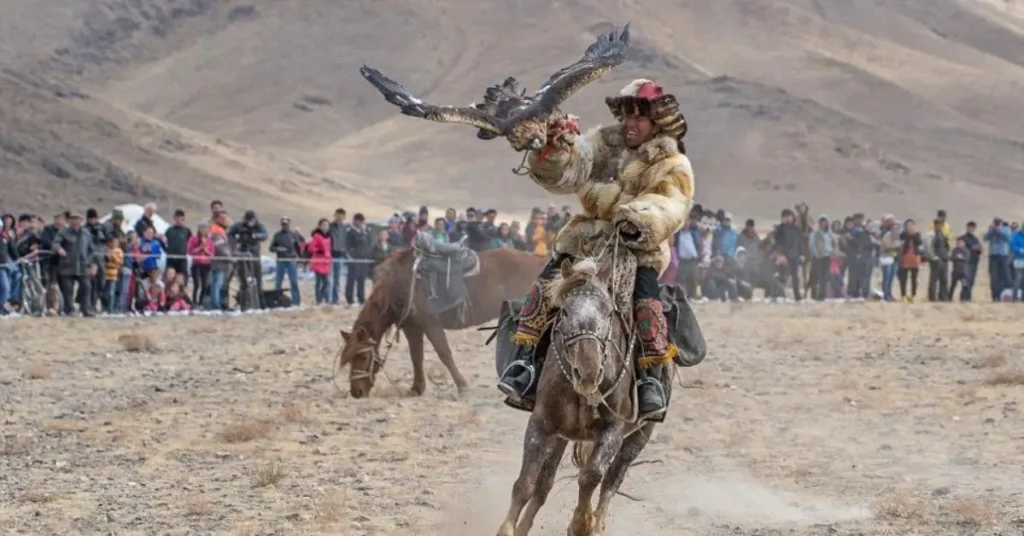
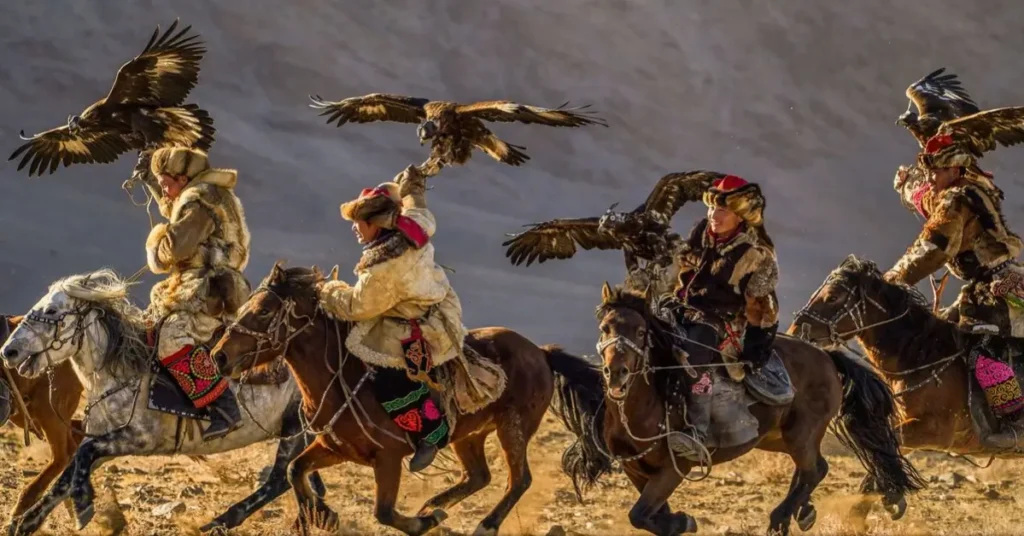
Mongolian Eagle hunting is undeniably a challenging and perilous sport, where the hunters face not only the inherent risk of being attacked by their formidable eagle companions but also the danger of being thrown from their horses during the pursuit.
To excel in this time-honored tradition, the hunters must possess a mastery of both horseback riding and the art of handling their majestic eagles.

In Mongolia, the most prevalent and revered eagle for hunting is the golden eagle. These magnificent birds are native to the region and have adapted perfectly to its harsh climate.
Their strong and majestic presence, along with their adaptability, makes them ideal companions for eagle hunters. Moreover, golden eagles are relatively amenable to training, which is a crucial aspect of the hunting partnership.
The journey of transforming an eagle into a skilled hunter begins when the eagle is just a few months old. The eagle hunter takes the young eagle out on horseback, introducing it gradually to the sights and sounds of the hunting world.
During these formative outings, the eagle learns to associate the rhythmic sound of the horse’s hooves with the exhilarating opportunity to hunt. This gradual conditioning process builds the foundation for a strong bond between the hunter and their eagle.
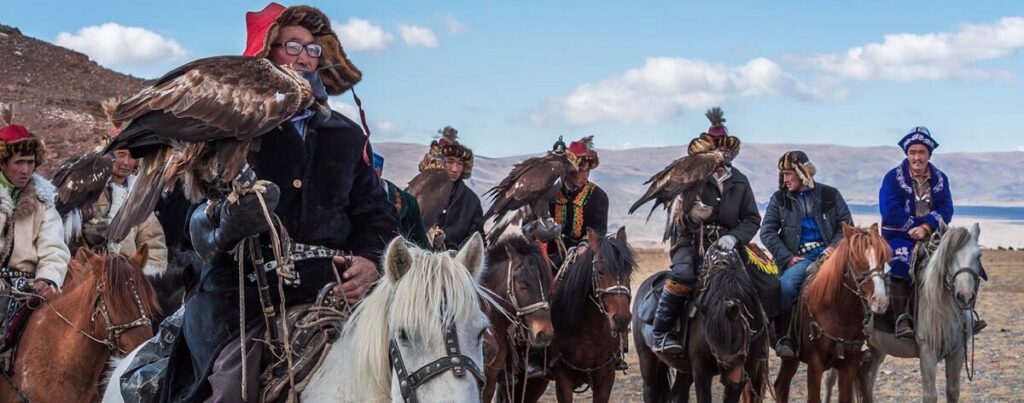
In modern times, eagle hunting has transformed from a necessary survival skill to a captivating sport and a vibrant aspect of Mongolia’s cultural heritage.
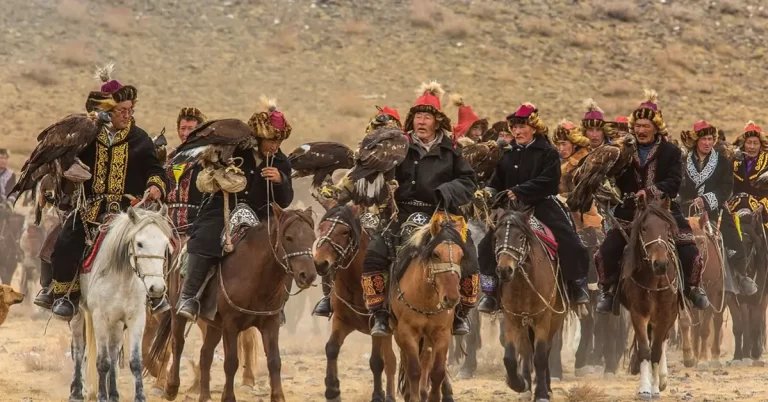
Many eagle hunters eagerly participate in the annual Golden Eagle Festival, a grand event that typically commences in mid-October in Olgii city, Mongolia.
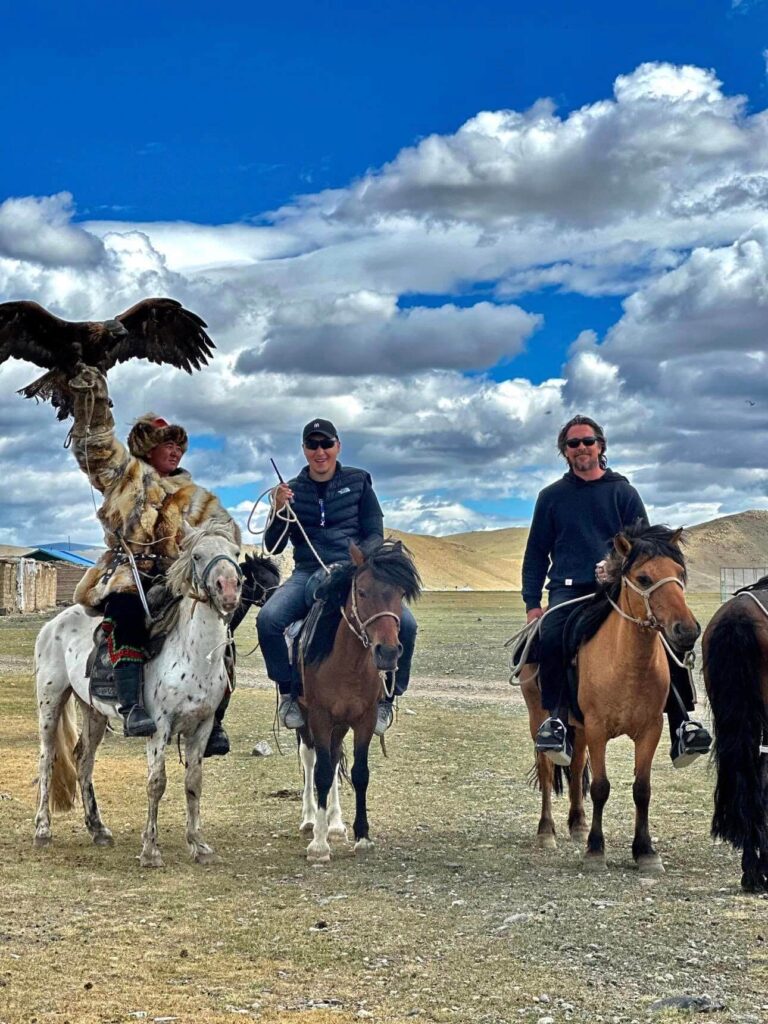
During this spectacle, hunters showcase their incredible talents and compete to demonstrate their eagles’ prowess, as they soar down to capture prey in a thrilling display of precision and teamwork.
The Golden Eagle Festival is undoubtedly a must-see event for those eager to witness the skill, courage, and deep cultural significance of eagle hunting in Mongolia.
It serves as a vibrant reminder of the enduring bond between humans and these majestic birds, a testament to the rich traditions that have been passed down through generations.
FAQ
Eagle Species Classification and Conservation Status
Overview of eagle taxonomy within the Accipitridae family, order Accipitriformes, comprising approximately 60 species worldwide
Breakdown of IUCN Red List status categories for major eagle species: Golden Eagle (Aquila chrysaetos) – Least Concern, Philippine Eagle (Pithecophaga jefferyi) – Critically Endangered, Steller’s Sea Eagle (Haliaeetus pelagicus) – Vulnerable
Explanation of why certain eagle species receive endangered status: habitat loss, persecution, poisoning, and low reproductive rates affecting species like the Spanish Imperial Eagle
CITES Appendix listings: most eagle species fall under Appendix I or II, restricting international trade
Legal Penalties for Illegal Eagle Possession
United States federal penalties under the Bald and Golden Eagle Protection Act: fines up to $100,000 and one year imprisonment for first offense; $250,000 and two years for felony violations
Migratory Bird Treaty Act penalties: criminal fines up to $15,000 and six months imprisonment per violation
Confiscation and rehabilitation costs: illegal possession results in eagle confiscation, and violators may be liable for rehabilitation and care costs
Eagle Biology and Why They Don’t Make Suitable Pets
Physical requirements: Golden Eagles require hunting territories of 20-60 square miles and consume 230-260 grams of meat daily
Behavioral characteristics incompatible with captivity: eagles are apex predators with strong territorial instincts, aggressive during breeding season, and cannot be truly domesticated unlike dogs or cats
Lifespan and long-term commitment: eagles live 20-30 years in the wild, with some captive individuals exceeding 40 years, requiring decades of specialized care
Safety risks: eagles possess grip strength up to 400 psi and talons exceeding 2 inches long, capable of inflicting serious injury
Country-Specific Eagle Ownership Laws
United Kingdom: All wild birds protected under Wildlife and Countryside Act 1981; eagle ownership requires specialized license from Department for Environment, Food & Rural Affairs
Australia: Environment Protection and Biodiversity Conservation Act 1999 prohibits eagle ownership; Wedge-tailed Eagle fully protected with severe penalties for harm or possession
Canada: Migratory Birds Convention Act protects eagles; possession illegal without federal permit from Environment and Climate Change Canada
European Union: EU Birds Directive protects all raptor species; member states prohibit private eagle ownership with narrow exceptions for licensed falconers
Alternatives to Eagle Ownership: Ethical Wildlife Experiences
Licensed falconry centers and educational programs where visitors can observe eagles under expert supervision without ownership
Wildlife rehabilitation volunteer opportunities: organizations like The Raptor Center and The Peregrine Fund accept volunteers to assist with eagle care under professional guidance
Ecotourism experiences: Mongolian eagle hunting festivals, Alaskan Bald Eagle viewing tours, and Scottish Golden Eagle observation hides provide ethical encounters
Wildlife photography and citizen science: programs like eBird and Eagle Watch allow participation in eagle conservation without captivity
Is it legal to own an eagle in the United States?
No. In the United States, it is illegal for private individuals to own bald or golden eagles. These birds are protected under federal law, including the Bald and Golden Eagle Protection Act and the Migratory Bird Treaty Act. Only licensed institutions such as zoos, wildlife centers, or permitted organizations may legally possess eagles.
Is it illegal to own an eagle feather in the US?
Yes. Possessing eagle feathers without proper authorization is federally prohibited. Eagle feathers are strictly protected, and unauthorized possession can result in significant penalties. Limited exceptions exist for enrolled members of federally recognized Native American tribes.
Can you purchase eagle feathers legally?
Eagle feathers are not commercially sold. In the United States, authorized tribal members may apply to receive eagle feathers or parts through the National Eagle Repository. This process is regulated by federal wildlife authorities.
Is it illegal to possess eagle feathers in Canada?
Yes. Eagles are protected under Canadian law. Collecting or possessing eagle feathers without a permit is illegal, even if the feather was found naturally.
Can eagles be petted?
No. Eagles are wild birds of prey and do not tolerate human handling. Attempting to touch or pet an eagle can cause stress to the bird and may be dangerous.
Do eagles like being touched?
Generally, no. Raptors are highly sensitive wild animals. Physical contact is typically stressful for them and should only occur when handled by trained professionals for conservation or rehabilitation purposes.
Are eagles friendly toward humans?
Eagles are not naturally social with humans. They are cautious, territorial, and prefer to keep their distance. While they may tolerate trained handlers in controlled environments, they remain wild animals.
Can eagles be domesticated or tamed?
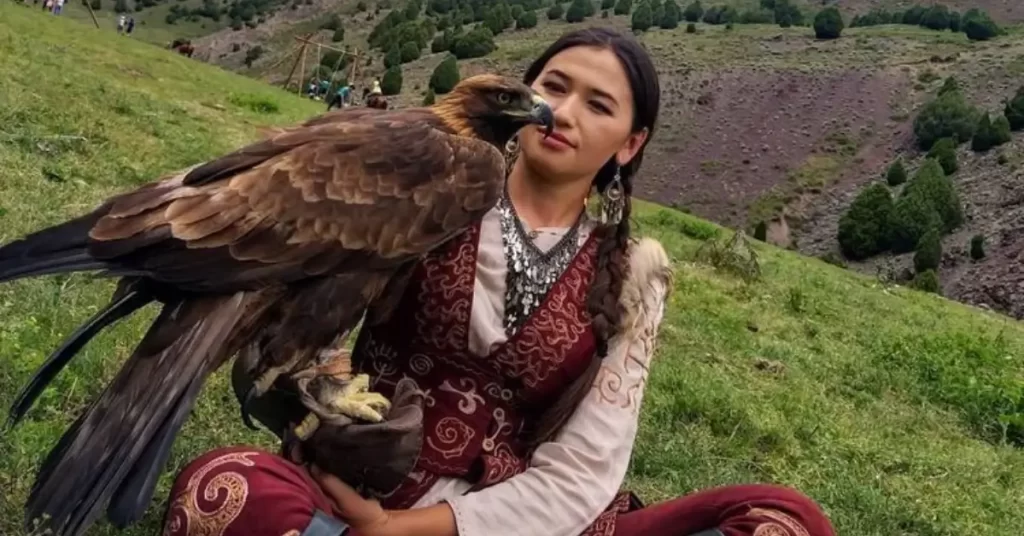
Eagles cannot be truly domesticated like pets. However, in traditional falconry cultures, trained eagles can develop working relationships with handlers. Even then, they remain wild animals requiring expert care, patience, and respect.
Can an eagle pick up a 20-pound dog?
No. Eagles are powerful hunters, but their lifting capacity is limited. Most eagles can only carry relatively small prey. Claims of eagles carrying large dogs are typically exaggerated.
Could an eagle pick up a human?
No. Eagles do not have the physical ability to lift and carry humans.
What is considered the most dangerous bird to humans?
The cassowary is often regarded as one of the most dangerous birds. It possesses powerful legs and sharp claws capable of causing serious injury if threatened.
What is the fine for possessing an eagle without a permit in the United States?
Under the Bald and Golden Eagle Protection Act, individuals caught possessing eagles without proper permits face criminal penalties of up to $100,000 in fines and one year of imprisonment for a first offense. Felony violations can result in fines up to $250,000 and two years imprisonment. Additionally, the Migratory Bird Treaty Act imposes separate penalties of up to $15,000 and six months imprisonment. These penalties apply per eagle and per violation, meaning possessing multiple eagles or eagle parts compounds the charges. State laws may add additional fines and penalties on top of federal consequences.
Are any eagle species legal to own as pets anywhere in the world?
No country permits true “pet” ownership of eagles in the traditional sense. However, several nations allow licensed falconers to work with eagles under strict regulations. In Mongolia and Kazakhstan, traditional eagle hunters (berkutchi) maintain cultural exemptions to hunt with Golden Eagles, but this requires demonstrated heritage skills and government permits. In the United States, only Master Falconers—after years of apprenticeship and testing—may apply for permits to practice falconry with Golden Eagles, which is considered a hunting sport, not pet ownership. The United Arab Emirates and some Middle Eastern countries permit falconry with licensed facilities, but eagles remain classified as working hunting birds, not companion animals. All cases require extensive documentation, facility inspections, and proof of expertise.
How long does it take to become qualified to work with eagles through falconry?
In the United States, becoming qualified to work with eagles requires a minimum of 7 years of falconry experience. Aspiring falconers must first complete a 2-year apprenticeship under a licensed sponsor while passing a written exam and facility inspection to become a Novice falconer (limited to red-tailed hawks or kestrels). After two years, they advance to General falconer status for an additional 5 years, gaining experience with various raptor species. Only after reaching Master Falconer status—requiring 7+ years total experience—may individuals apply for permits to practice falconry with Golden Eagles. This does not include Bald Eagles, which require separate federal permits rarely granted outside rehabilitation contexts. Each step requires facility inspections, continued education, and adherence to state and federal regulations.
What happens to illegally kept eagles when they are confiscated?
When authorities confiscate illegally possessed eagles, the birds are immediately transferred to federally licensed wildlife rehabilitation facilities or raptor centers for assessment. Veterinarians evaluate the eagle’s physical condition, checking for injuries, malnutrition, or imprinting issues caused by improper captivity. Eagles deemed releasable undergo rehabilitation and conditioning before release into suitable wild habitat. Birds too habituated to humans or suffering permanent injuries preventing survival in the wild become permanent residents of educational facilities, zoos, or breeding programs. The U.S. Fish and Wildlife Service maintains a network of facilities qualified to receive confiscated eagles. Violators may be required to pay restitution covering veterinary care, rehabilitation costs, and long-term housing, which can exceed $10,000 per bird. Confiscated eagle parts (feathers, talons) are transferred to the National Eagle Repository for distribution to Native American tribal members for religious purposes.
Can Native Americans legally own eagle feathers and parts?
Yes, enrolled members of federally recognized Native American tribes may legally possess eagle feathers and parts for religious and cultural purposes under exemptions to the Bald and Golden Eagle Protection Act. Tribal members apply to the National Eagle Repository in Colorado, which distributes eagles and eagle parts from birds that died of natural causes, accidents, or were confiscated from illegal possession. Processing times can extend 3-4 years due to high demand and limited supply. Possession is restricted to enrolled tribal members with documentation, and feathers cannot be sold or transferred to non-tribal members. This exemption recognizes the sacred role of eagles in Native American spiritual practices while maintaining overall species protection. Non-tribal members, regardless of spiritual beliefs or practices, are not eligible for these exemptions and face full penalties for possession.
SUGGESTED TOURS:
Related Blogs:
Golden Eagle Photography: How to Shoot Wild Eagles, Hunters and the Festival
Golden eagle photography rewards preparation more than luck. For birds in flight, start at 1/2500s, f/6.3, auto-ISO capped at 3200,…Eagle Festival Packing List 2026: What to Wear in Olgii’s October Cold
The Mongolia Eagle Festival in Bayan-Ölgii runs in late September and early October at elevation 1,710 metres, where October average…Sagsai vs Golden Eagle Festival 2026: Which Mongolia Eagle Festival Should You Attend?
Mongolia hosts two distinct Kazakh eagle festivals each autumn in Bayan-Ölgii Province, the country’s western Kazakh-majority region. The Sagsai Golden…