
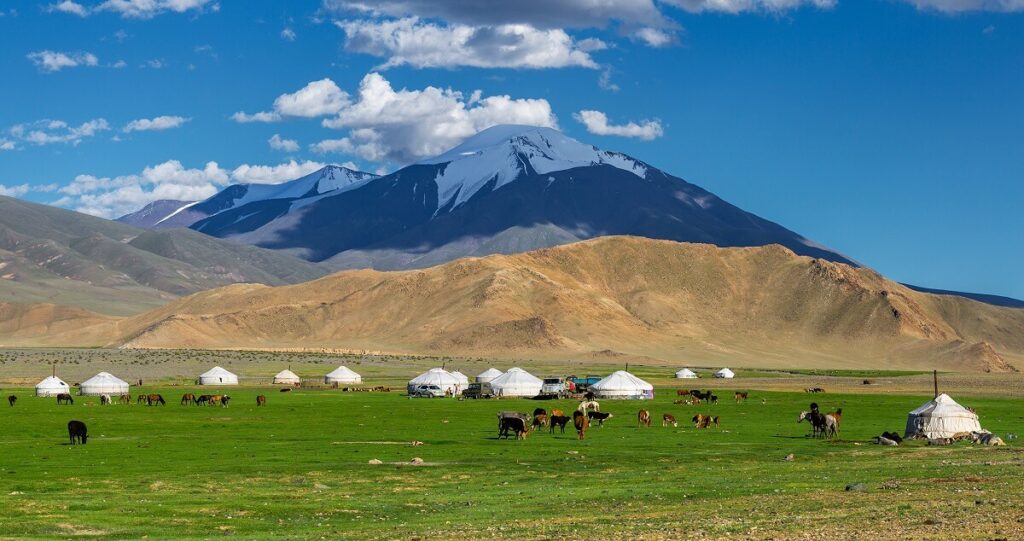
A Mongolian ger is a portable, round tent covered and insulated with felt, used as a dwelling by nomadic groups across Inner Asia. The frame has expanding wooden lattice walls, a door frame, straight roof poles, and a crown supported by one or more central columns. Held together with ropes or ribbons, it takes between 30 minutes and 3 hours to set up or take down, so a herding family can move it to new pasture.
Key Takeaways
- Meaning: “Ger” is the Mongolic word for the dwelling and also means “home” in a broad sense.
- Ger vs Yurt: A Mongolian ger has straight roof poles and one or more central columns (bagana); other yurts have bent roof poles and are self-supporting.
- Key Parts: The lattice walls (khana), straight roof poles (uni), crown compression ring (toono), central columns (bagana), and wooden door (khaalga).
- Internal Layout: The door always faces south, the master’s seat is on the north side opposite the door (khoimor), the west side is for men, and the east side is for women.
- Core Etiquette: Do not step on the threshold, accept offered food and drink, and follow your host’s lead on seating and customs.
- Altai Regional Difference: In western Mongolia’s Bayan-Ölgii province, Kazakh families live in yurts called kiız üi (“felt house”) with bent roof poles and a crown called a shangyrak.
What Is a Mongolian Ger?
The Mongolian ger is a portable, round tent covered and insulated with felt, used as a dwelling by nomadic groups across Inner Asia. In the Mongolic languages, the word ger means both the dwelling itself and “home” in a broader sense. A large share of Mongolians still live in gers, even in Ulaanbaatar, and about 40% of Mongolia’s people still live a traditional nomadic life. In the time of the Mongol Empire, women built and packed the ger, and Mongolian weddings traditionally include handing a new ger to the couple.
The frame consists of expanding wooden lattice wall sections, a door frame, straight roof poles, and a crown (compression ring) supported by one or more central columns. The frame is held together with ropes or ribbons. The felt insulation is made from the wool of the family’s sheep. Depending on what is available, it is covered with canvas and/or sun covers.
These covers provide insulation in winter and can be changed to keep the yurt cool in summer. Because herders must move their herds to fresh pasture throughout the year, mobility is essential. A ger takes between 30 minutes and 3 hours to set up or take down, and its parts are carried on camels or yaks.
In 2013, UNESCO added the “Traditional craftsmanship of the Mongol Ger and its associated customs” to its Intangible Cultural Heritage lists, one of several entries for Mongolian culture. In 2014, UNESCO also listed the traditional knowledge and skills of making Kyrgyz and Kazakh yurts, an entry that now also covers Karakalpak yurts. For travelers seeking to understand Mongolian nomadic life, the ger is the foundation of family culture.
—
Ger vs Yurt: Is There a Difference?
International travelers often ask whether a ger and a yurt are the same structure. A yurt (from the Turkic languages) or ger (from the Mongolic languages) is a portable, round tent covered and insulated with felt, used as a dwelling by several nomadic groups of Inner Asia. While travelers often use the words interchangeably, the Mongolian ger has specific design elements that differ from other yurts across the region.
The primary structural difference lies in the roof poles and central support. A Mongolian ger has straight roof poles and one or more columns supporting the crown. Other yurts have bent roof poles and are self-supporting, with a tension band at the top of the wall rather than central support posts.
Cultural names and details also vary. The Kazakh name for the dwelling is kiız üi, meaning “felt house.” The crown is called toono in Mongolian and shangyrak in Kazakh. In old Kazakh families, the shangyrak was kept when the yurt was rebuilt and passed from father to son. In Mongolia, the toono took the shape of the Buddhist dharma wheel (khorlo toono).
In western Mongolia, particularly throughout the Altai Mountains of Bayan-Ölgii province, you will see the Kazakh style of yurt used by local herding families. Across central, northern, southern, and eastern Mongolia, the traditional Mongolian ger dominates.
| Feature | Mongolian Ger | Kazakh Yurt (Kiız Üi) |
|---|---|---|
| Roof Poles | Straight | Bent |
| Central Columns | One or more central columns (bagana) | Self-supporting (no central columns) |
| Crown Name | Toono | Shangyrak |
| Common Region | Most of Mongolia | Bayan-Ölgii province (western Mongolia) |
| Language Term | Ger (Mongolian for “home”) | Kiız üi (Kazakh for “felt house”) |
—
What Are the Parts of a Ger?
The components of a Mongolian ger fit together as an interlocking frame. Each piece has a specific Mongolian name, role, and position within the dwelling.
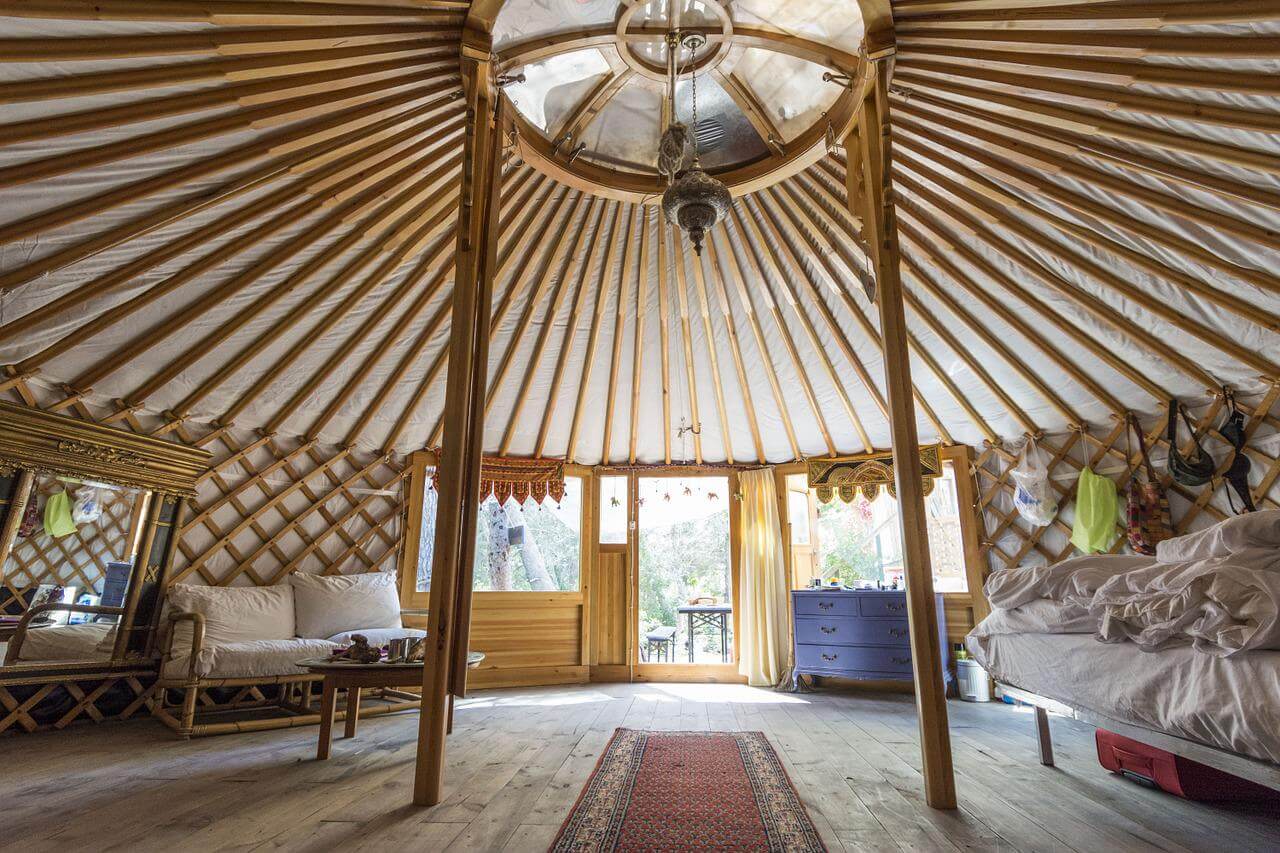
The wall frame is formed by expanding wooden lattice wall sections called khana. These sections expand during assembly and fold down compactly for seasonal moves.
Above the walls sits the toono, the round crown compression ring. It holds the upper ends of the roof poles, allows smoke from the stove chimney to escape, lets in light, and serves as a sundial. In Mongolia, the toono took the shape of the Buddhist dharma wheel (khorlo toono). In a Mongolian ger, the crown is supported by one or more central columns called bagana.
Running between the top of the khana and the toono are the uni, straight wooden roof poles. A wooden door frame and wooden front door, known as the khaalga, completes the wooden skeleton. The frame is held together with ropes or ribbons.
| Mongolian Name | Part | What It Does |
|---|---|---|
| Khana | Lattice wall sections | Expanding wooden lattice wall sections that form the round frame |
| Uni | Roof poles | Straight roof poles connecting the wall sections to the crown |
| Toono | Crown (compression ring) | Central roof ring holding roof poles, venting stove smoke, and acting as a sundial |
| Bagana | Central columns | One or more central columns supporting the crown |
| Khaalga | Wooden door | Wooden front door and frame, always facing south |
Once the frame is tied together, it is covered with felt from the family’s own sheep, then with canvas or sun covers on top.
—
What Does the Inside of a Ger Look Like?
The interior layout of a ger mirrors family roles and spiritual concepts, and each direction matters.
By tradition, the door always faces south. Herders also read the time of day from the sun’s position in the crown, using it as a sundial.
In the center of the room stands the stove, and its chimney goes out through the vent in the crown. With several layers of coverings and a wooden front door, a ger stays warm in sub-zero winters and cool in hot summers.
The interior space is arranged according to long-standing traditions:
- The West Side: The west side is the men’s side.
- The East Side: The east side is the women’s side, where most of the cooking is done.
- The Khoimor (The north side, opposite the door): The master’s seat is on the north side opposite the door.
This layout was observed by travelers such as William of Rubruck in Karakorum during the 13th century, and this spatial arrangement continues among Mongols today.
—
What Are the Rules of Ger Etiquette?
Visiting a nomadic family gives travelers an opportunity to experience rural traditions firsthand. Knowing basic customs shows respect for your hosts and their home.
Nomadic tradition includes clear customs:
- Do not step on the threshold: Stepping on a ger’s threshold is a traditional taboo, and avoiding the threshold continues among Mongols today. Always step completely over the wooden door frame when entering or leaving.
- Accept food and drink: Hospitality is traditionally taken for granted in nomadic life. Historically, travelers arriving at a rural camp were offered food, drink, and shelter. When visiting a family, accept the food and drink you are offered.
Other customs differ between families—ask your guide and follow your host’s lead, for example where to sit, how to move around the central columns, or how to accept items.
—
How Do Kazakh Families in the Altai Live in Their Yurts?
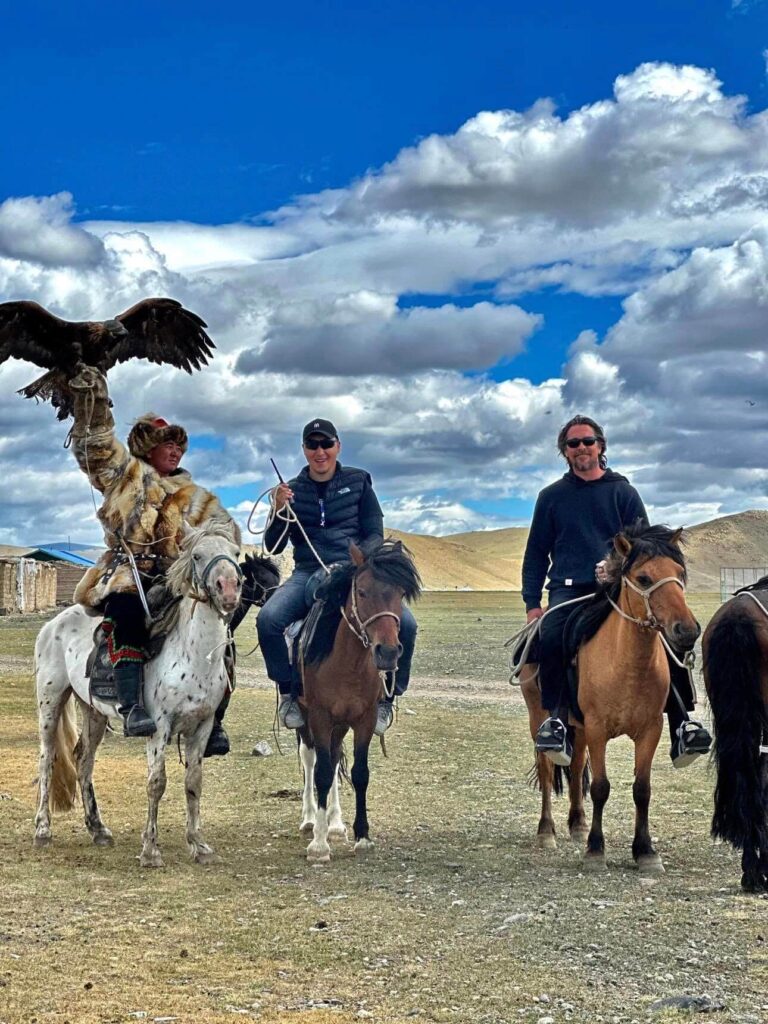
In western Mongolia, nomadic life reflects distinct cultural traditions. Bayan-Ölgii is Mongolia’s westernmost province, located in the Altai Mountains, and is the only Kazakh-majority province in the country (about 93% Kazakh). An estimated 80% of the world’s eagle hunters live there, and the Golden Eagle Festival is held in Ölgii every October. Kazakh families here live in yurts known in Kazakh as kiız üi (“felt house”).
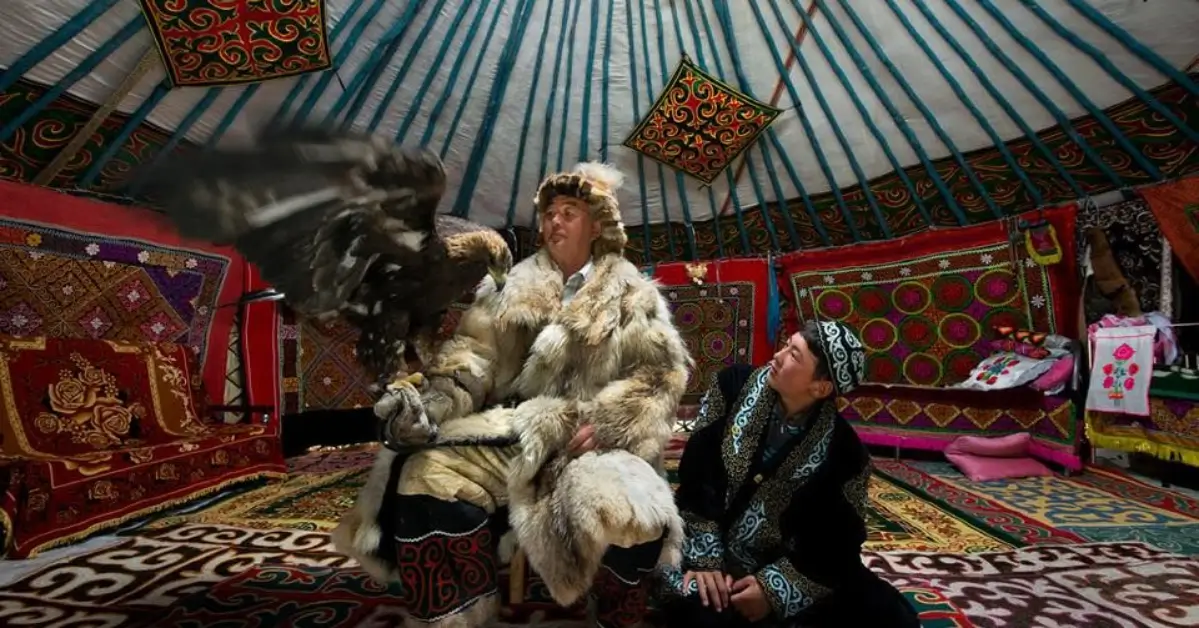
Inside a Kazakh kiız üi, the room is self-supporting without central columns. The interior is dressed in felt and embroidery. Kazakhs make syrmak, stitched, colorful felt floor and wall coverings. Women also make tush kyiz (Kazakh tus kiiz), which are large embroidered wall hangings made to mark a son’s or daughter’s marriage. These hangings feature flowers, plants, animals, and stylized horns, and are hung in the yurt over the couple’s bed. In old Kazakh families, the shangyrak was kept when the yurt was rebuilt and passed from father to son.
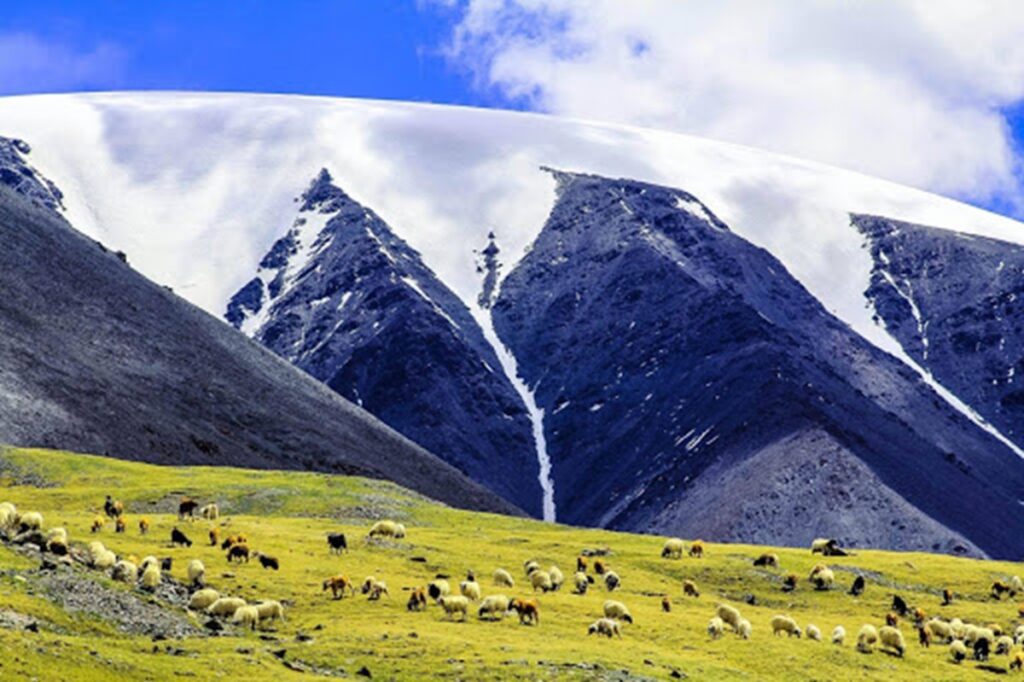
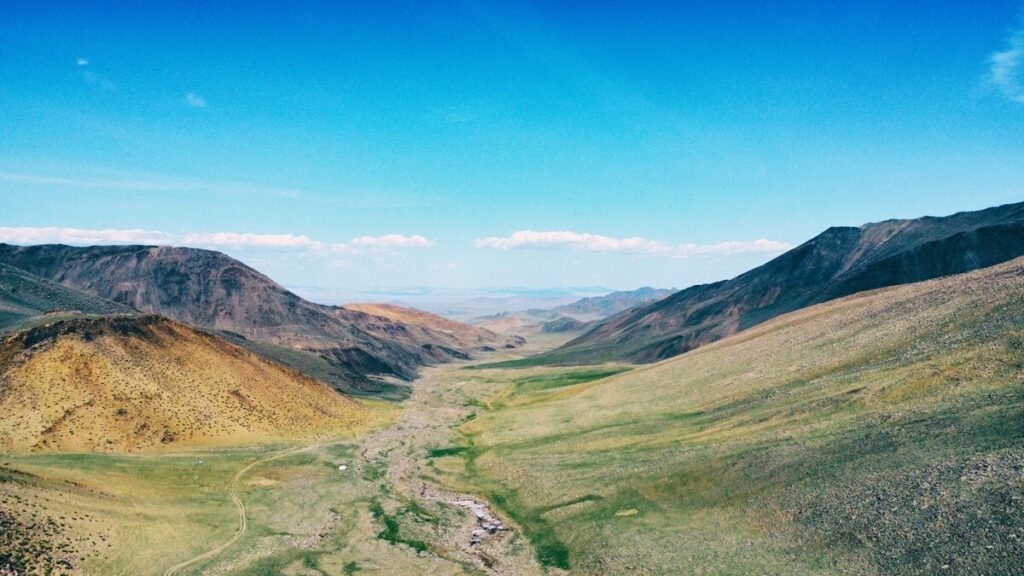
Near the mountains, herders move their herds uphill in summer and downhill in winter to access pasture throughout the seasons.
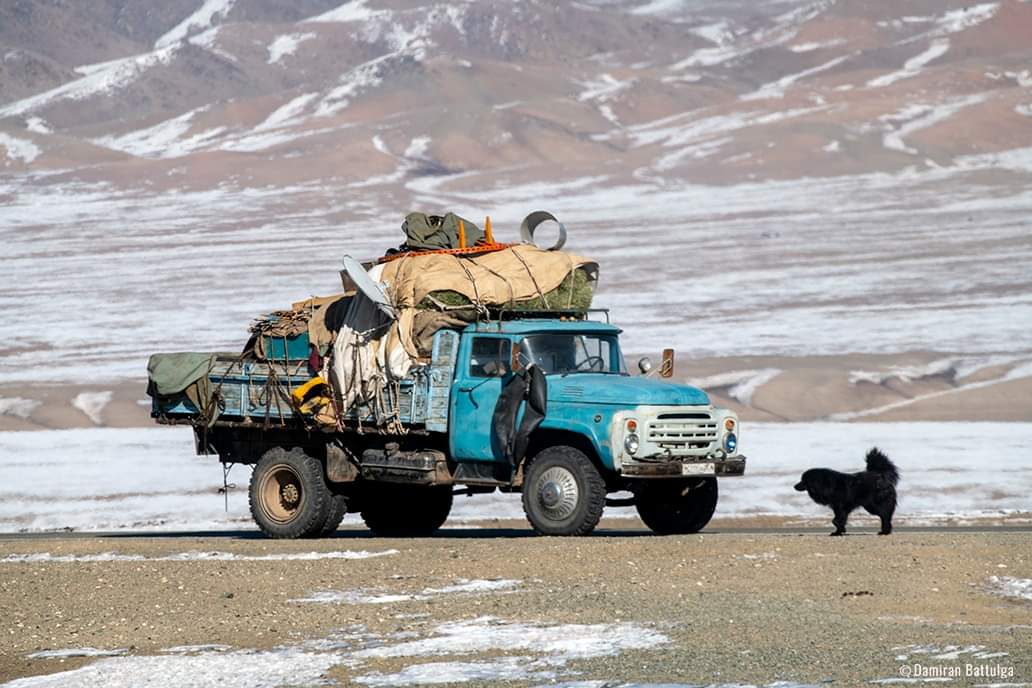
When the family moves, the yurt comes down and its parts are carried on camels or yaks. On our migration tour, you help the family pack the ger and load the camels. Learning about Altai Mountains nomadic life shows how these portable dwellings support seasonal pastoral migration.
—
Where Can You Stay in a Ger in Mongolia?
Travelers exploring Mongolia can choose between tourist ger camps and authentic family homestays. Both offer an opportunity to sleep in a traditional round dwelling.
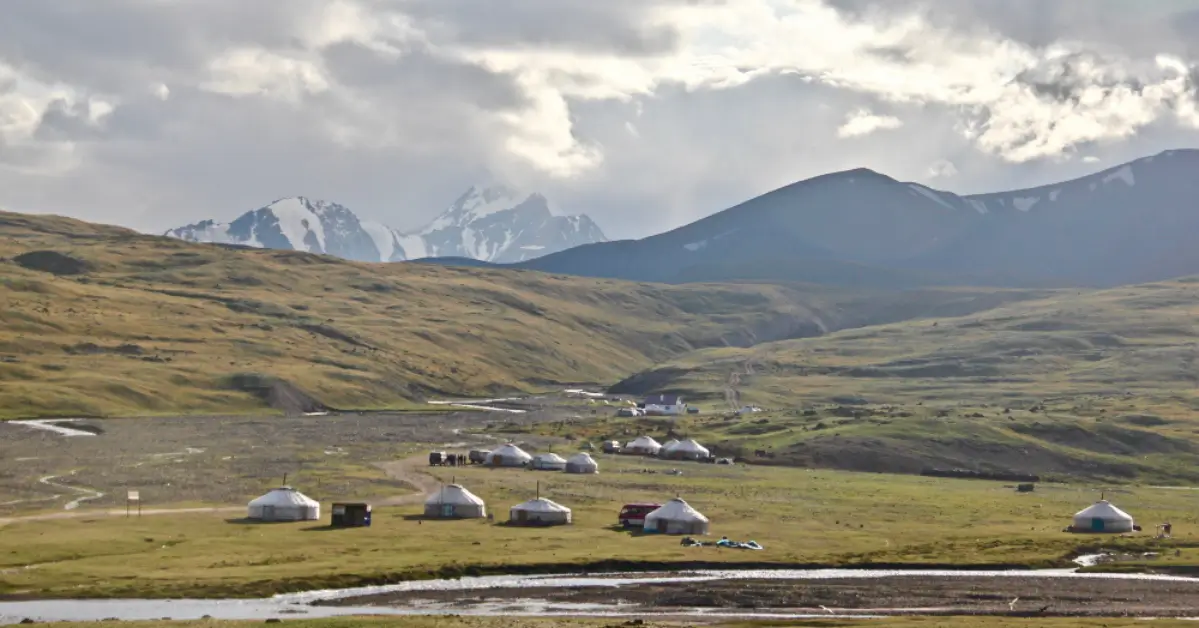
Tourist ger camps in Mongolia operate as outdoor lodges made of guest gers. What each camp offers differs depending on location and route, providing an accessible way to experience ger living across the country.
Staying directly with a nomadic family offers personal insight into pastoral culture. In Bayan-Ölgii, Discover Altai arranges an 8-day eagle hunter homestay with Kazakh families. For those who want to experience a seasonal camp move, our 11-day nomad migration tour runs in early-to-mid June. On this journey, you help the family pack the ger and load camels, travel by horse, camel, or 4×4, and stay in the family ger at each new camp.
—
Suggested Blogs:
Mongolia Lakes: The Great Lakes, the Altai Lakes and Which Ones to Visit
A guide to Mongolia lakes: Khuvsgul, Uvs and the Great Lakes Depression, White Lake, the Eight Lakes, and the Altai…Ulgii Weather: A Month-by-Month Guide to Bayan-Ölgii’s Climate
Ölgii (Ulgii) sits at about 1,700 m in a dry valley of the Altai, with a cold semi-arid continental climate…Altai Mountains: Russia vs Mongolia. Which Side Should You Visit?
The Altai Mountains span Russia, Mongolia, China and Kazakhstan. The Russian Altai has green forested valleys, rivers, Belukha (4,506 m,…

Which way does a ger door face?
The door always faces south, and the rest of the layout follows from it: the master’s seat on the north side, the men’s side to the west and the women’s side to the east.
Is a ger warm in winter?
Yes. A ger stays cool in hot summers and warm in sub-zero winters, with several layers of coverings, a wooden front door, a vent at the center, and a chimney for a stove.
How long does it take to put up a ger?
Yurts take between 30 minutes and 3 hours to set up or take down.
Is “ger” the same as “yurt”?
“Yurt” comes from Turkic languages and describes portable round felt dwellings across Inner Asia. “Ger” comes from Mongolic languages and refers specifically to the Mongolian dwelling, which features straight roof poles and one or more central columns.
What is the toono?
The toono is the crown compression ring holding the roof poles. The stove chimney passes through it, it lets in light, and herders use the sun’s position in it as a sundial.
Can tourists sleep in a family ger?
Yes. Guided homestays allow travelers to stay with local herding families, such as Kazakh eagle hunters in Bayan-Ölgii, sharing their yurt and learning about nomadic life.