
Mongolia is one of the richest places on Earth for dinosaur fossils. The rocks of the Gobi Desert, laid down roughly 70 to 85 million years ago in the Late Cretaceous, have produced the first recognized dinosaur eggs, Velociraptor, the tyrannosaur Tarbosaurus, and the famous “Fighting Dinosaurs” locked in combat. Travelers can visit the most famous site, Bayanzag (the Flaming Cliffs), on a standard Gobi tour, and see real skeletons in Ulaanbaatar. What you cannot do is take fossils home: they belong to Mongolia, and the country has spent years bringing smuggled skeletons back.
Key Takeaways
- Late Cretaceous treasure: Most Mongolian dinosaurs come from the Gobi’s red sandstones, around 70 to 85 million years old.
- World-famous finds: The first scientifically recognized dinosaur eggs, Velociraptor and the Fighting Dinosaurs were all found in the Mongolian Gobi.
- You can visit: Bayanzag, the Flaming Cliffs, is on most South Gobi itineraries. Remote sites like Nemegt need a full expedition.
- Fossils are protected: Removing fossils from Mongolia is illegal. Several smuggled skeletons, including Tarbosaurus specimens, have been returned from abroad.
- Look, don’t collect: If you see a bone or eggshell fragment on the ground, photograph it and leave it where it is.
Why Mongolia Is So Rich in Dinosaurs
In the Late Cretaceous, the area that is now the Gobi was a land of dunes, seasonal rivers and oases. Sandstorms and collapsing dunes buried animals quickly, sometimes alive, and preserved them in remarkable detail. Today the Gobi’s dry climate, thin vegetation and constant wind erosion keep exposing new bones at the surface. There is little soil or forest to hide them, which makes Mongolia one of the best places in the world to find complete skeletons.
Three rock formations matter most to paleontologists:
| Formation | Famous site | Known for |
|---|---|---|
| Djadokhta | Bayanzag (Flaming Cliffs), Tugrugiin Shiree | Protoceratops, Velociraptor, Oviraptor, dinosaur eggs and nests, the Fighting Dinosaurs |
| Barun Goyot | Khermeen Tsav and other South Gobi sites | Small dinosaurs, lizards and early mammals |
| Nemegt | Nemegt Basin | Tarbosaurus, Deinocheirus, Therizinosaurus and large sauropods |
The Flaming Cliffs and the First Dinosaur Eggs
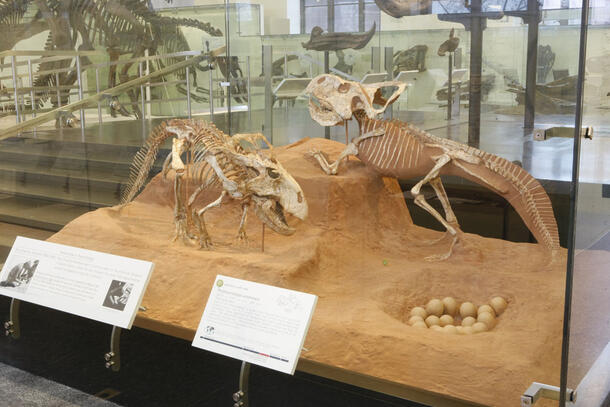
In the 1920s, the American Museum of Natural History sent the Central Asiatic Expeditions, led by Roy Chapman Andrews, into the Gobi in search of human ancestors. They found dinosaurs instead. In 1923, at the red sandstone cliffs Andrews named the Flaming Cliffs, the team found the first nests of dinosaur eggs recognized by science, along with Protoceratops and, in 1924, the first described Velociraptor.
The eggs were long assumed to belong to Protoceratops. Decades later, an embryo found inside a similar egg showed that many of them belonged to Oviraptor, a feathered dinosaur first thought to be an egg thief and now known to have been brooding its own nest.

Bayanzag is now one of the main stops on any Gobi trip. The cliffs glow red and orange in the late afternoon, and there is a small area of saxaul shrubs nearby. Read our guides to Bayanzag, the Flaming Cliffs and the must-see places of the Gobi.
Famous Mongolian Dinosaurs
- Tarbosaurus bataar: a close Asian relative of Tyrannosaurus rex, up to around 10 m long, and the top predator of the Nemegt ecosystem.
- Velociraptor mongoliensis: a turkey-sized, feathered predator, much smaller than the film version, with a sickle-shaped claw on each foot.
- Protoceratops: a sheep-sized plant-eater with a bony frill, so common at Bayanzag that it is sometimes called the “sheep of the Cretaceous”.
- Oviraptor and its relatives: beaked, feathered dinosaurs found sitting on their nests.
- Deinocheirus: known for decades only from a pair of enormous arms; complete skeletons found in the 2000s revealed a strange, humpbacked, duck-billed giant.
- Therizinosaurus: a plant-eater with claws up to about a meter long.
The Fighting Dinosaurs
In 1971, a Polish-Mongolian expedition at Tugrugiin Shiree found a Velociraptor and a Protoceratops locked together: the Velociraptor’s claw in the Protoceratops’s neck, the Protoceratops biting the Velociraptor’s arm. They were likely buried by a collapsing dune or sandstorm mid-fight. The specimen is one of Mongolia’s national treasures.
Dinosaur Footprints and New Discoveries
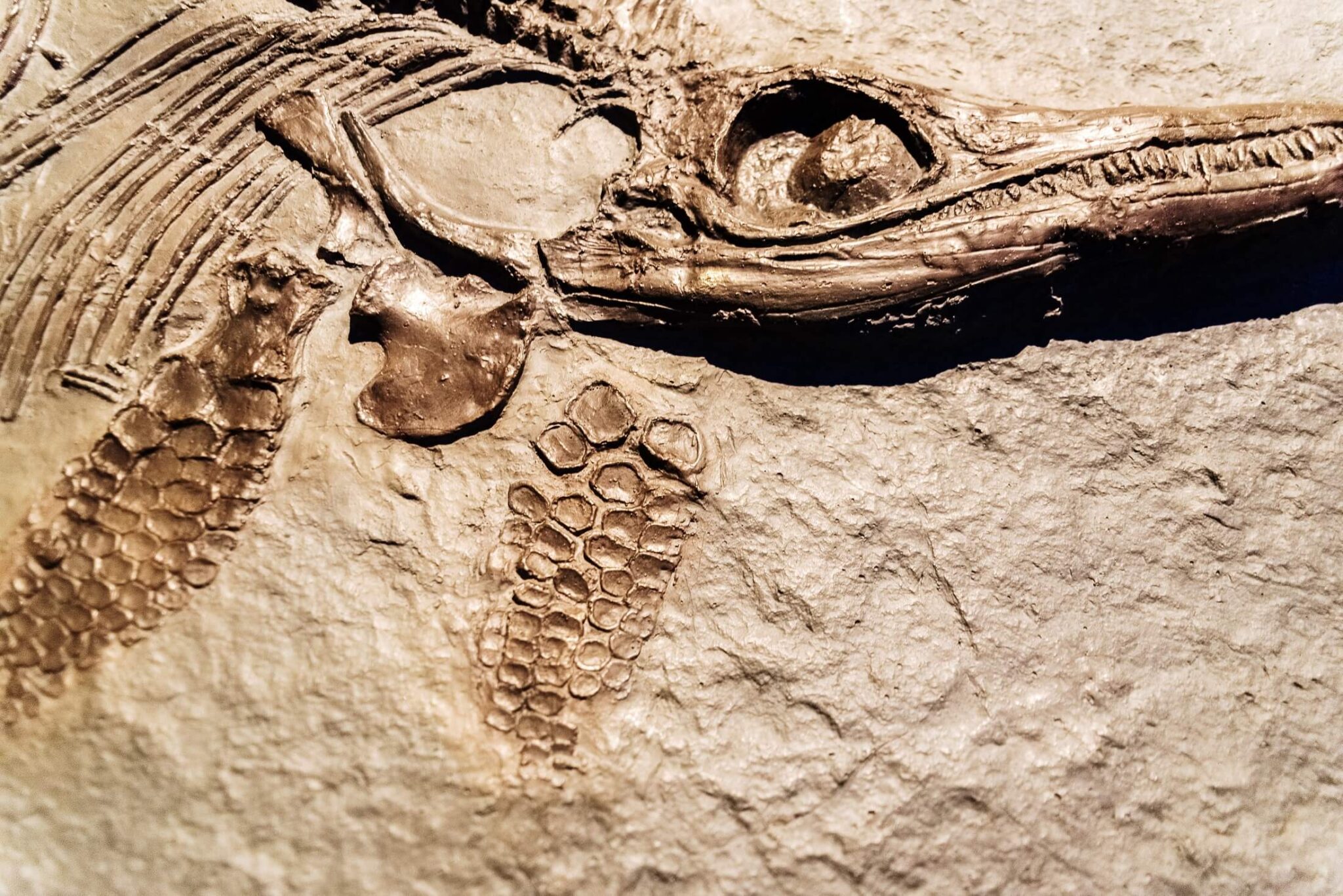
Mongolia keeps producing new finds every year. Footprint sites have been found in several parts of the Gobi, including large sauropod tracks, some more than a meter across, reported by a Japanese-Mongolian team in 2016. Footprints are important because they show how dinosaurs moved and lived together, not just what their bones looked like.
Most active dig sites are remote, unmarked and protected. They are not open to casual visitors, and paleontological teams need permits from the Mongolian authorities to work there.
Smuggled Fossils and Repatriation
The fame of Mongolian dinosaurs has a dark side. For years, poachers dug up skeletons and smuggled them abroad for private collectors. The best-known case was a Tarbosaurus skeleton auctioned in New York in 2012 for more than a million dollars. After the Mongolian government objected, US authorities seized it and returned it in 2013.
Since then, Mongolia has recovered dozens of fossils from several countries. In 2017, South Korea returned a group of smuggled specimens including a Tarbosaurus skull. In June 2026, a Tarbosaurus skeleton that had been taken out of the country in 2006 and seized in France was handed back in Ulaanbaatar, with plans to study it and eventually display it at the National Museum of Natural History.
The lesson for travelers is simple: Mongolian law protects fossils, and taking even a small fragment out of the country is illegal. Buying “fossils” from street sellers is a bad idea for the same reason.
Where to See Dinosaurs in Mongolia
In Ulaanbaatar
Ulaanbaatar has the country’s main dinosaur displays, including Tarbosaurus and Mongolia’s famous specimens. The collection has moved between buildings in recent years, as the Natural History Museum and the Central Museum of Mongolian Dinosaurs were merged and a new museum building was developed. Check the current location and opening hours before you go, and avoid the Tsagaan Sar and Naadam holidays, when museums may close.
In the Gobi
- Bayanzag (Flaming Cliffs): the easiest site to visit, about 100 km northwest of Dalanzadgad. You can walk the cliff edges and see the landscape where the first eggs were found.
- Dalanzadgad: the South Gobi provincial centre has a local museum with fossil exhibits.
- Nemegt and Khermeen Tsav: spectacular, but very remote. They need a well-equipped vehicle, an experienced driver and several extra days.
Our 13-day Gobi & Central Mongolia tour includes Bayanzag along with the Khongor sand dunes and Yolyn Am, and the Gobi & Western Mongolia tour combines the Gobi with the Altai Mountains. Read about the area’s living animals in Gobi Desert wildlife.
Tips for Dinosaur Lovers Visiting the Gobi
- Go in late afternoon: the Flaming Cliffs are at their most colorful in low evening light.
- Stay on paths near the edges: the sandstone crumbles easily, both for your safety and to protect the site.
- Leave everything in place: if you spot a bone or an eggshell fragment, photograph it and tell your guide.
- Bring kids: Bayanzag is a highlight for children. See Mongolia for kids.
- Combine with the dunes: most itineraries pair Bayanzag with a camel ride; see camel riding in the Gobi.
Want a Gobi trip built around fossil sites? Our tailor-made tours can add extra time at Bayanzag or a longer route toward Nemegt. Contact Discover Altai to plan it.
Suggested Blogs:
Taimen Fishing in Mongolia: Season, Rules, Cost and Where to Go
Taimen fishing in Mongolia: best season, catch-and-release law, permits via licensed outfitters, trip prices, gear and fishing in the Altai…Tsagaan Sar 2027: Dates, Traditions and What Visitors Should Know
Tsagaan Sar 2027 starts around February 7. Mongolian Lunar New Year traditions, food, greetings and etiquette, and why the Kazakh…Mongolia Festivals 2027: A Month-by-Month Calendar for Travelers
Mongolia festivals 2027 by month: Tsagaan Sar, ice and camel festivals, Nauryz, Naadam (July 11-15) and the Altai eagle festivals.






Why are there so many dinosaurs in Mongolia?
The Gobi’s Late Cretaceous rocks preserved animals buried quickly by sand, and today’s dry climate and wind erosion keep exposing bones at the surface without soil or forest to hide them.
Where were the first dinosaur eggs found?
The first dinosaur egg nests recognized by science were found in 1923 at Bayanzag, the Flaming Cliffs, in the South Gobi, by the Central Asiatic Expeditions led by Roy Chapman Andrews.
Did Velociraptor live in Mongolia?
Yes. Velociraptor mongoliensis was first described in 1924 from fossils found at the Flaming Cliffs. It was about the size of a turkey and had feathers.
Can you visit dinosaur sites in Mongolia?
Yes. Bayanzag is visited on most South Gobi tours. More remote sites such as Nemegt need a full expedition, and active dig sites are protected and not open to casual visitors.
Can I take a fossil home from Mongolia?
No. Mongolian law protects fossils, and exporting them is illegal. Mongolia has recovered many smuggled specimens from abroad, including Tarbosaurus skeletons.
Where can I see dinosaur skeletons in Ulaanbaatar?
Ulaanbaatar has the national dinosaur collection, including Tarbosaurus. The displays have moved between buildings in recent years, so check the current museum location and hours before visiting.