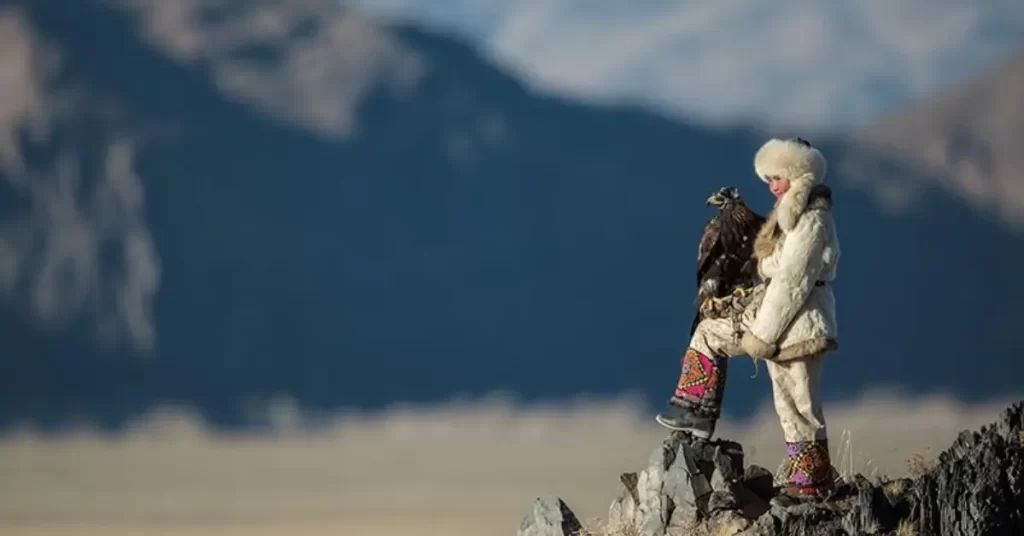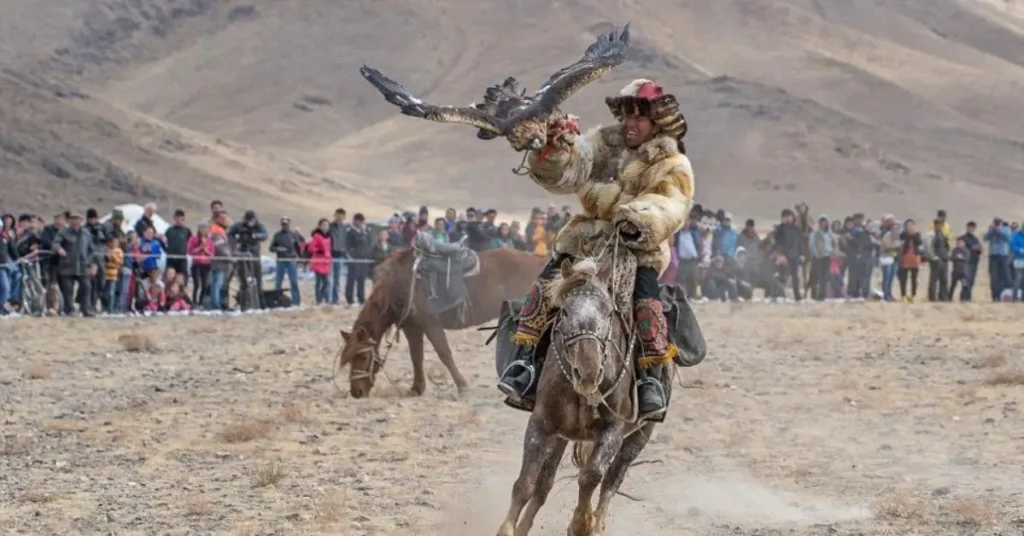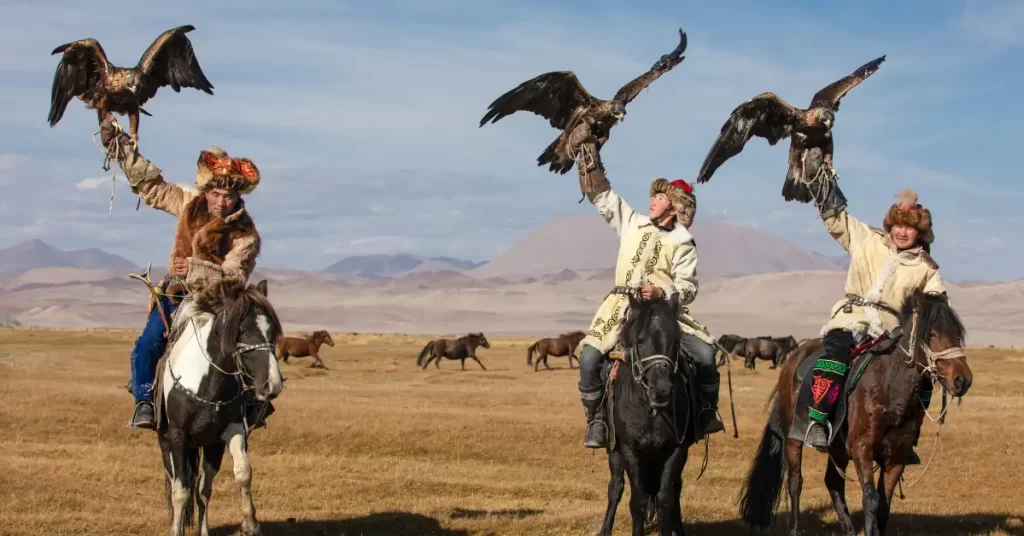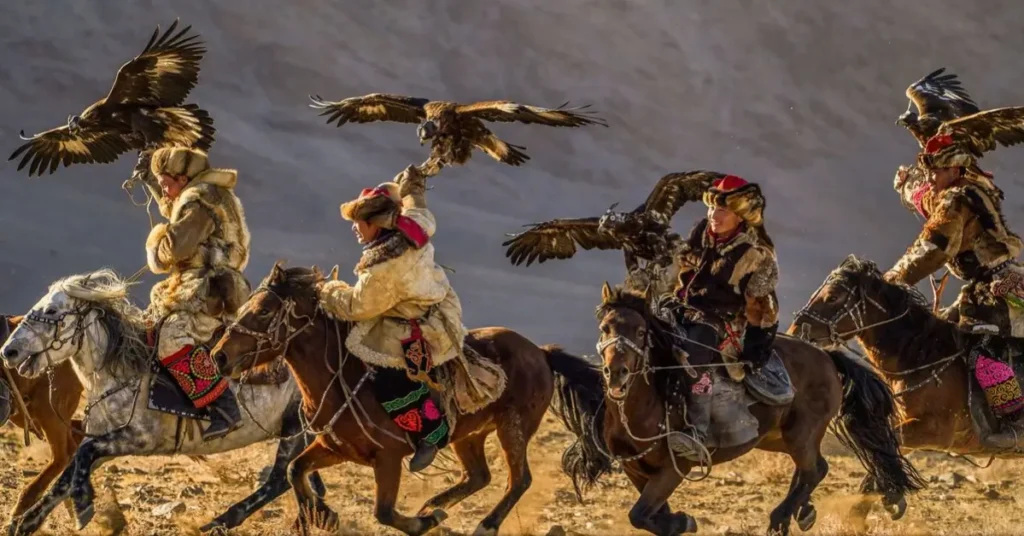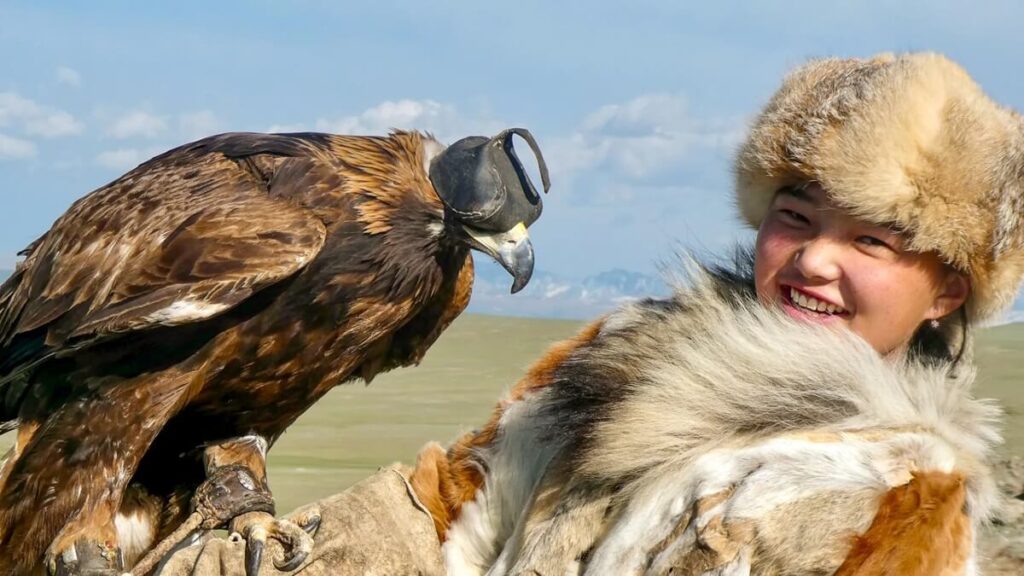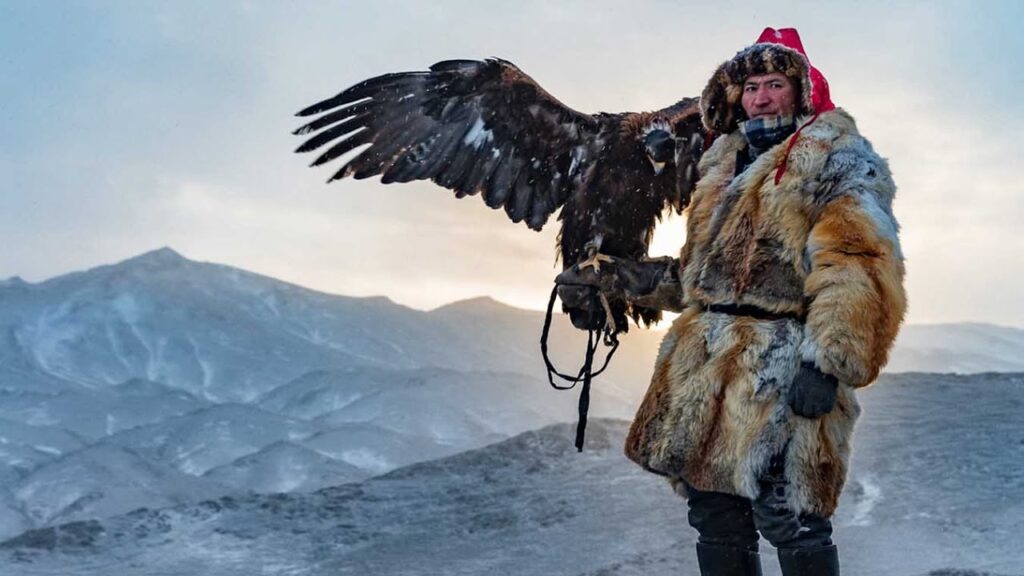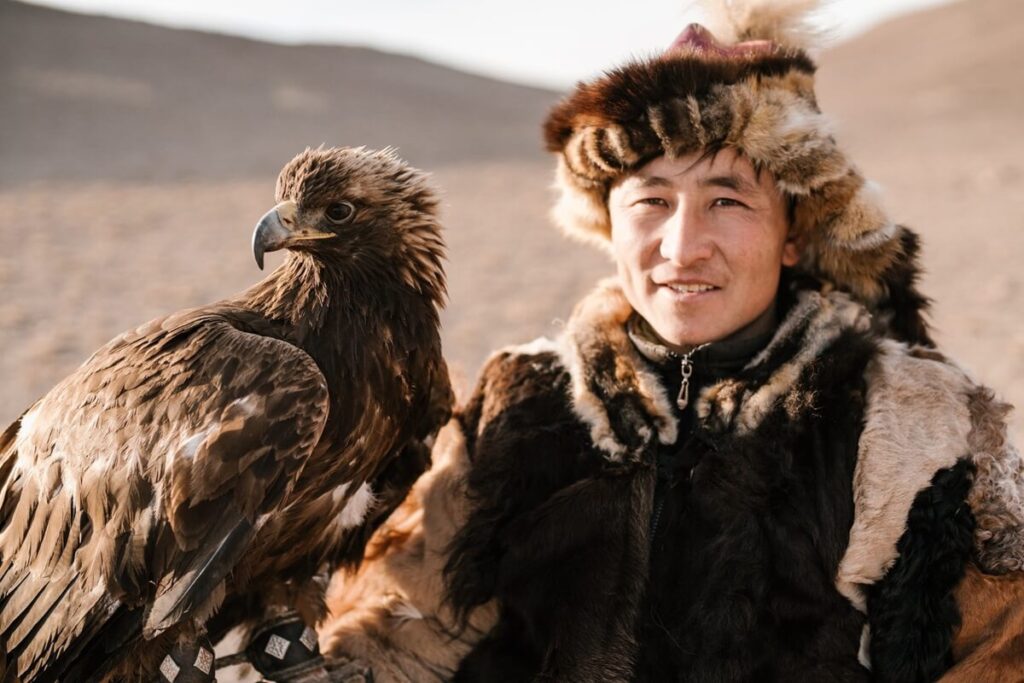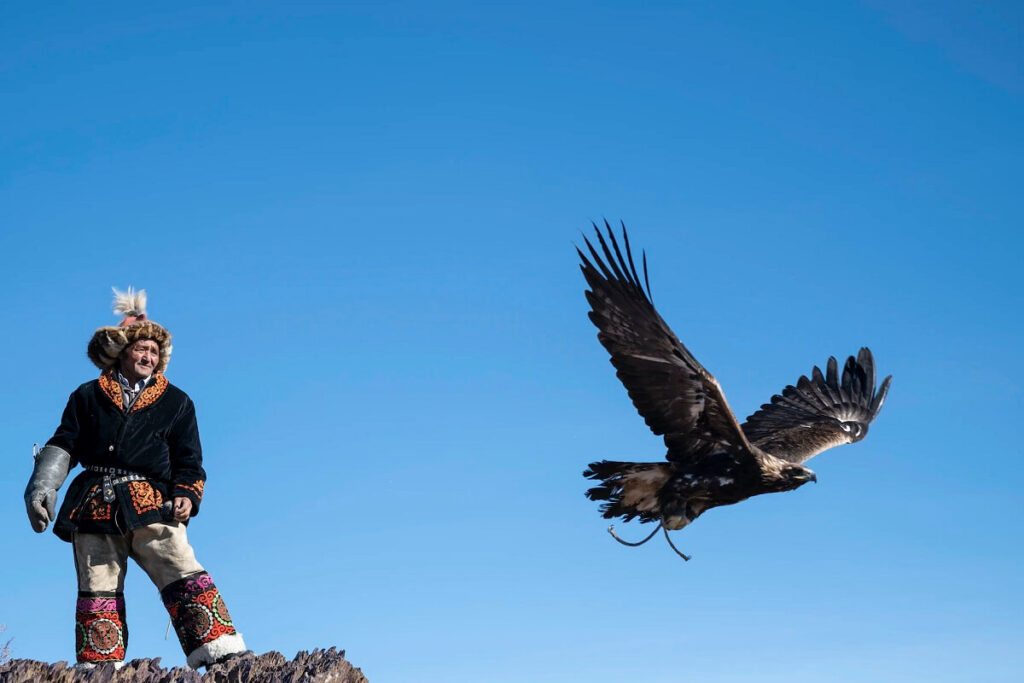
Kazakh clothing: A Rich Heritage Reflecting the Life on the Steppe – Kazakh clothing – The traditional dress of Kazakhs is a reflection of their rich heritage and unique way of life on the steppe. The clothes are practical, comfortable to wear, and made from natural materials that protect from the cold weather.
They also denote the social status of the person wearing them. While poorer people traditionally wore clothes made from animal skins, the rich could afford to make theirs from more luxurious materials such as silk or velvet.
Altai Tours from Mongolia
Let’s create your ideal Mongolian adventure
We offer you ALTAI EAGLE FESTIVAL. The Altai Eagle Festival 2025 or the Smaller Eagle Festival will take place in the traditional village of Sagsai. Eagle Hunters will be exhibiting the traditional Kazakh arts of eagle hunting and participating in a number of traditional nomadic horse games, camel races, and archery competitions. Come and enjoy 🤩🤩
WHAT TRADITIONAL KAZAKH CLOTHING CONSISTS OF
🦅 Want to experience this in person? Join our 8-Day Kazakh Eagle Hunter Homestay Tour with local Kazakh guides — small groups, authentic experience, 5.0 stars on TripAdvisor.
It depends on the region where the Kazakhs live. In the north, for example, people wear fur coats to protect themselves from the cold winters. In the south, on the other hand, kaftans are more commonly worn.
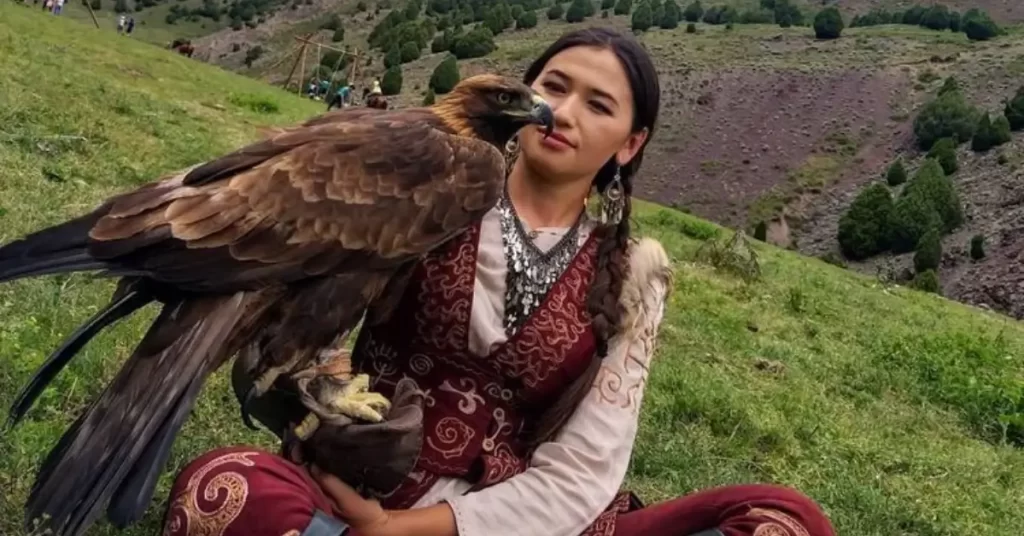
Kazakh women usually wear brightly colored dresses with embroidery and intricate designs. They also wear a lot of jewelry, including necklaces, earrings, and bracelets.
Altai Tours from Mongolia
Let’s create your ideal Mongolian adventure
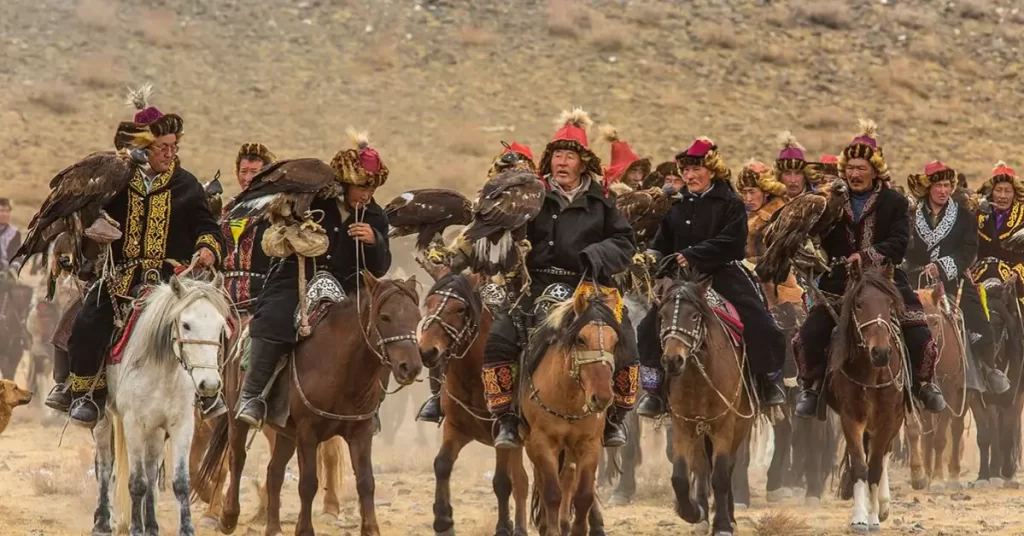
Men traditionally wear dark-colored clothing. The most common piece of clothing for men is the shapan, which is a long robe that goes down to the feet. Another important item of clothing is the kolpak, a type of hat that protects from the sun and the cold.

Depending on the season, people would wear different types of shoes. In summer, they wore light boots made from thin leather to keep cool. But in winter, when it was colder, they wore high boots made from rough leather to protect themselves from the cold weather.
Women’s shoes were usually green or red and embroidered with silk thread. They also had small patterned plaques as decorations.
KAZAKH NATIONAL CLOTHES: WOMEN’S
Traditional Kazakh clothing included a long dress or shirt, pants, hat, and perhaps a vest or robe. In the winter, fur coats were worn to protect against the harsh Kazakh temperatures. The color that women wore also depended on their age and social standing.
Young females frequently sported red. However, after turning 30 years old it was deemed indecent to wear this hue. By contrast, middle-aged and elderly ladies generally preferred blue and black dresses as they got older and jewelry lessened.
Altai Tours from Mongolia
Let’s create your ideal Mongolian adventure
In earlier times, it was widely believed that eagle owl feathers had the power to protect young girls from evil. up to a woman’s thirtieth birthday, It wasn’t appropriate for any other clothing colors besides red and being limited to wearing less jewelry as they age.

KAZAKH TRADITIONAL CLOTHING: MEN’S
The shapan robe was thought to be one of the most essential articles of clothing for Kazakh men, as it revealed their social standing. Shapans could be of various thicknesses and hues and worn over a shirt and pants.
Plainer shapan with dark colors was thought of normal, and they might be made from a variety of materials and beautifully multi-colored. Ceremonial shapan, for example, were black or blue but also featured gold embroidery. Such ceremonial costumes Were intended to be worn by people who have demonstrated their worth to society.

WHAT DIFFERENT MATERIALS ARE USED TO MAKE KAZAKH TRADITIONAL CLOTHING?
Kazakhs often use white wool and consider wool from the neck of a sheep valuable. The hair of the Bactrian camel is also used for more luxurious clothing. An undercoat, collected after the camel has molted, it is considered particularly valuable.
Imported cotton, silk, and woolen fabrics were used by Kazakh nomads. The feudal nobility used imported fabrics to make their clothing; less-affluent Kazakhs wore more easily accessible materials, such as furs, leather, and homemade wool. Fabrics were home-spun on a primitive, horizontal loom.

CONCLUSION
Kazakh traditional dress is reflective of the nomadic lifestyle and the harsh conditions of the Kazakh steppe. It is a rich heritage that is still evident in Kazakh culture today. From brightly colored dresses to fur coats, the clothing of the Kazakh people is both practical and beautiful.
FAQ
HISTORICAL ORIGINS OF THE KAZAKH PEOPLE
The Kazakh ethnic identity emerged in the 15th century from an amalgamation of Turkic tribes who migrated to Transoxiana around the 8th century and Mongol groups who arrived during the 13th-century conquests.
Around 1465, approximately 200,000 separatist Uzbeks under leaders Karay and Jani Beg broke away from Uzbek khan Abū’l-Khayr’s rule, settling in Mughulistān between the Chu and Talas rivers where they became known as “Kazakh” (meaning “independent” or “vagabond”) Uzbeks.
The unified Kazakh khanate of the 15th-16th centuries eventually fragmented into three zhuz (hordes): the Great Horde in the southeast, the Middle Horde in the north-central region, and the Little Horde in the west, each developing distinct regional clothing variations.
Between 1731-1742, all three hordes submitted to Russian protection against Dzungar raids, beginning a process of Russification that threatened traditional clothing practices until the mid-19th century when Russia fully annexed Kazakh territories.
TRADITIONAL KAZAKH NOMADIC LIFESTYLE AND ITS INFLUENCE ON CLOTHING
Kazakhs historically lived as nomadic shepherds moving seasonally across the Central Asian steppe, requiring clothing that was durable, warm, and suitable for horseback riding across vast distances in harsh climates.
The portable yurt (dome-shaped felt tent) served as the primary dwelling and influenced textile production, as women manufactured felt and woven textiles within these mobile homes, creating the materials later fashioned into garments.
Hospitality customs deeply embedded in Kazakh culture required specific dress codes when receiving guests, with hosts donning their finest chapan coats and embroidered garments to honor visitors as a sign of respect.
Traditional sports like kokpar (horseback competition involving up to 1,000 riders) necessitated practical riding attire, influencing the development of sturdy leather boots, wide trousers, and belted coats that allowed freedom of movement.
THE ROLE OF ISLAM AND SPIRITUAL BELIEFS IN KAZAKH DRESS
Kazakhs adopted Sunni Islam during the sixteenth century, which introduced modesty requirements that influenced clothing design, particularly for women’s garments which incorporated head coverings and longer hemlines.
Pre-Islamic animistic beliefs and ancestor worship traditions persisted alongside Islamic practice, reflected in protective amulets (tumar) sewn into clothing and symbolic embroidery patterns meant to ward off evil spirits.
Wedding and funeral ceremonies require specific traditional dress that blends Islamic customs with pre-Islamic Turkic and Mongol traditions, demonstrating the syncretic nature of Kazakh cultural identity.
SOVIET PERIOD AND POST-INDEPENDENCE: CHANGES IN TRADITIONAL DRESS
The Russian Civil War and subsequent Soviet policies resulted in approximately half the Kazakh population being killed or fleeing to China and Mongolia, disrupting traditional craftsmanship transmission and causing loss of regional clothing variations.
Following Kazakhstan’s independence in 1991, a cultural revival movement emerged with Kazakhs actively reclaiming ethnic identity, leading to renewed interest in traditional clothing for festivals, weddings, and national celebrations.
Today, there is significant wealth disparity within Kazakhstan affecting clothing access: affluent Kazakhs commission custom-made traditional garments with expensive materials for special occasions, while many cannot afford authentic traditional dress, opting for mass-produced replicas.
KAZAKH COMMUNITIES IN MONGOLIA’S ALTAI REGION
The Kazakhs of Mongolia’s Bayan-Ölgii Province (western Mongolia/Altai region) represent descendants of those who fled during the 1920s-1930s Soviet persecution, maintaining particularly conservative traditional clothing practices compared to Kazakhstan Kazakhs.
What is Kazakhstan’s traditional clothing?
Traditional Kazakh clothing reflects nomadic life and the harsh steppe climate. The most iconic garment is the chapan (or shapan), a long, loose robe worn by both men and women. It is usually made from thick fabric, lined with wool or cotton, and comes in dark or solid colors. The chapan symbolizes respect, hospitality, and status.
What did steppe nomads traditionally wear?
Steppe nomads usually wore several practical layers of clothing:
An undershirt
A caftan or robe
Pants suitable for horseback riding
A warm hat
A decorated belt for carrying tools or weapons
Their clothes were designed for mobility, warmth, and survival in extreme weather.
What should tourists wear in Kazakhstan?
Clothing depends on the season:
Spring & Autumn: Layered clothing, fleece, and a waterproof/windproof jacket
Summer: Light clothes, but bring a jacket for mountains
Winter: Very warm clothing, including jumpers and thermal sleepwear, since hotel heating may vary
Layering is the best strategy in Kazakhstan.
What is the largest gathering of people wearing traditional Kazakh clothing?
The largest recorded gathering included 5,000 people wearing traditional Kazakh clothing.
It took place on March 22 in Aktau, Mangystau region, to celebrate Nauryz, the Kazakh New Year.
What makes Kazakh culture unique?
Kazakh culture is a blend of:
Ancient Tengrian nomadic traditions
Islamic influences
European cultural elements
This mix is seen in Kazakh music, clothing, jewelry, festivals, and oral storytelling traditions.
What are traditional clothes generally called?
Traditional clothing is often referred to as:
Folk costume
Traditional dress
Ethnic attire
National costume
They express a people’s cultural, historical, and national identity.
What is the “3-3-3 rule” in clothing?
The 3-3-3 rule is a modern wardrobe concept:
3 tops
3 bottoms
3 pairs of shoes
All items must mix and match, creating a simple capsule wardrobe.
What were steppe traditions like?
Steppe societies valued strength, independence, and survival skills. Young warriors were highly respected. These traditions were shaped by constant movement, herding life, and the need for resilience in harsh environments.
What defines a steppe region?
A steppe is:
A dry, grassy plain
Found in temperate climates
Semi-arid, receiving 25–50 cm of rainfall per year
Characterized by cold winters and warm summers
The Kazakh steppe is one of the largest in the world.
Are clothes expensive in Kazakhstan?
Yes. Basic clothing and shoes in Kazakhstan are often more expensive compared to neighboring countries due to imports and limited local production.
How did the Kazakh people originate and develop their distinct culture?
The Kazakh people emerged as a distinct ethnic group in the 15th century from a blend of Turkic tribes who migrated to Central Asia around the 8th century and Mongol groups arriving during the 13th-century Mongol conquests. Around 1465, separatist groups under leaders Karay and Jani Beg broke away from Uzbek khan rule and settled between the Chu and Talas rivers, becoming known as “Kazakh,” meaning “independent” or “vagabond”. This mixed heritage explains the rich textile traditions in Kazakh clothing, which combines Turkic embroidery techniques with Mongol practical designs suited for nomadic steppe life. The unified Kazakh khanate later divided into three regional hordes (Great, Middle, and Little), each developing distinct clothing variations that persist today.
What religion do Kazakh people practice and how does it affect their traditional clothing?
Kazakhs predominantly practice Sunni Islam, which they adopted during the sixteenth century, though their religious practices blend Islamic beliefs with earlier animistic traditions, ancestor worship, and shamanic rituals. Islamic modesty requirements influenced traditional clothing design, particularly women’s garments which incorporate head coverings and modest silhouettes. However, pre-Islamic spiritual beliefs remain visible in clothing through protective amulets (tumar) sewn into garments and embroidery patterns featuring natural and zoomorphic symbols meant to ward off evil spirits. This syncretic blend makes Kazakh traditional dress uniquely layered with both Islamic modesty principles and ancient Turkic-Mongol spiritual symbolism, distinguishing it from Arab or Persian Islamic clothing traditions.
SUGGESTED TOURS:
Suggested Tours:
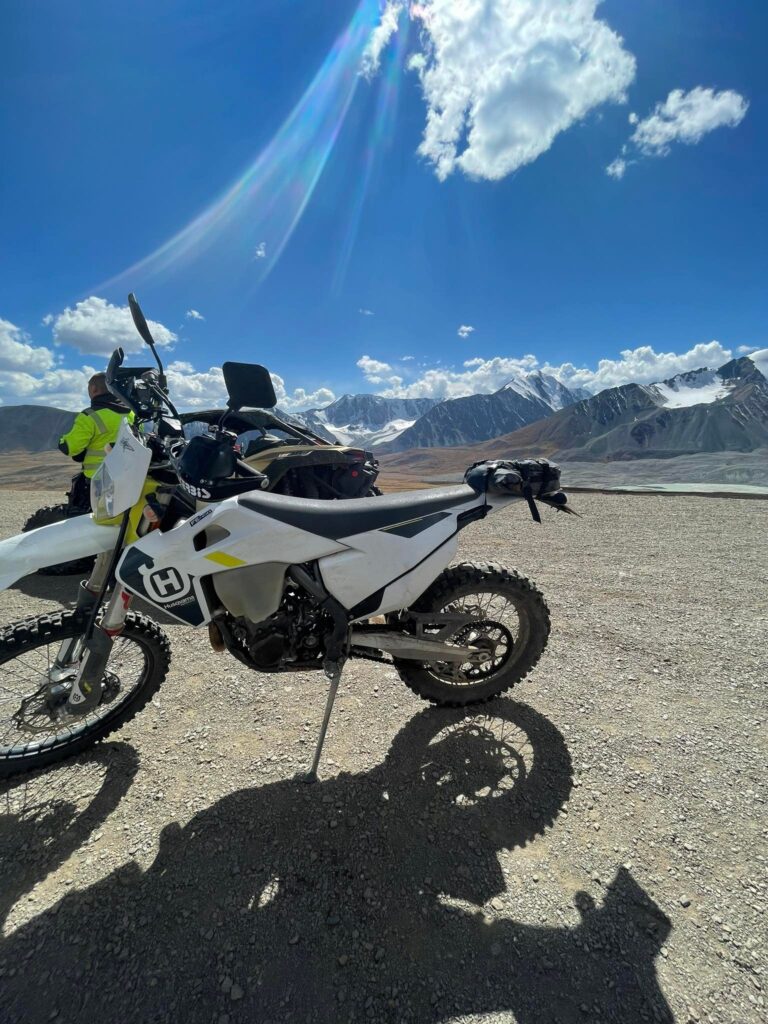
MONGOLIA MOTORCYCLE TOUR IN ALTAI
Unleash your adventure spirit, explore Mongolia on your own terms MONGOLIA MOTORCYCLE TOUR IN ALTAI MOUNTAINS ⭐⭐⭐⭐⭐ 5.0 · 63…Mongolian Nomadic Life Tour – Discover the Spirit of Mongolia
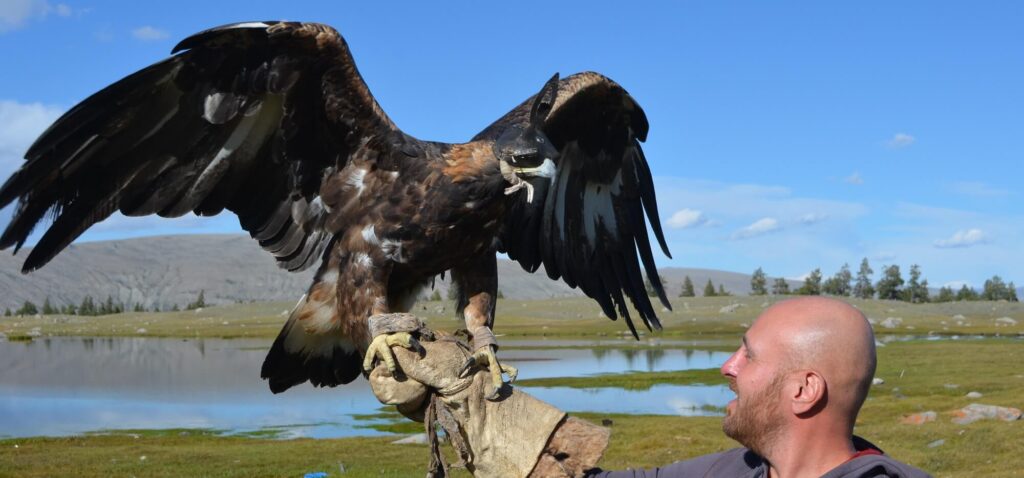
Unleash your adventure spirit, explore Mongolia on your own terms MONGOLIA NOMADS MIGRATION TOUR MONGOLIA NOMADS MIGRATION TOUR 10 DAYS…MONGOLIAN NOMAD MIGRATION TOUR
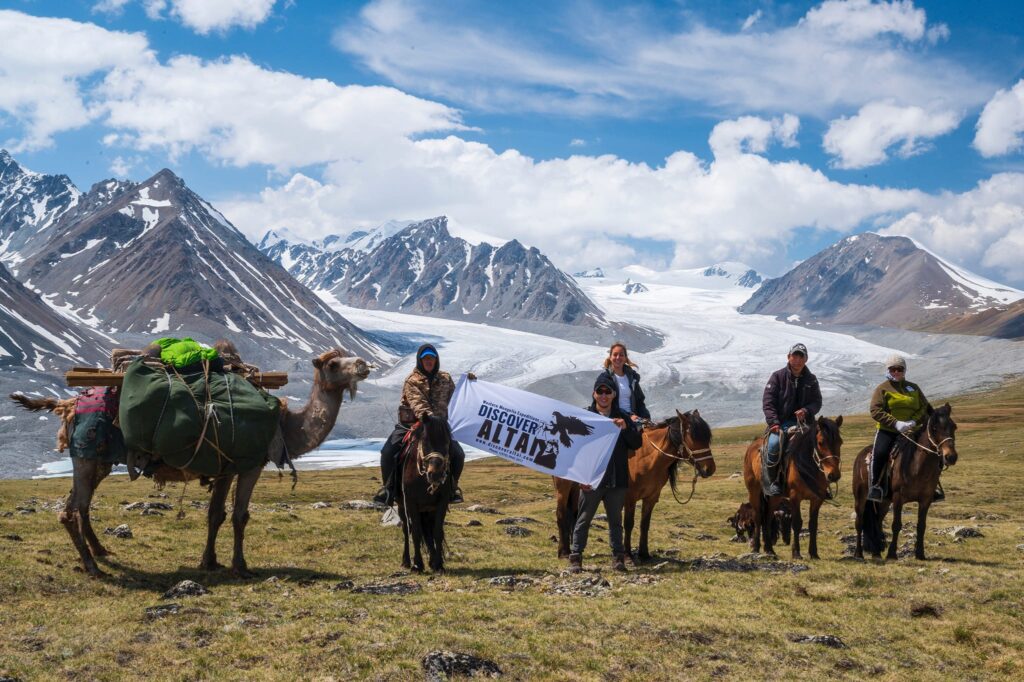
Unleash your adventure spirit, explore Mongolia on your own terms Mongolian Nomad Migration tour ⭐⭐⭐⭐⭐ 5.0 · 63 reviews on…
Related Blogs:
Eagle Festival Packing List 2026: What to Wear in Olgii’s October Cold
The Mongolia Eagle Festival in Bayan-Ölgii runs in late September and early October at elevation 1,710 metres, where October average…Sagsai vs Golden Eagle Festival 2026: Which Mongolia Eagle Festival Should You Attend?
Mongolia hosts two distinct Kazakh eagle festivals each autumn in Bayan-Ölgii Province, the country’s western Kazakh-majority region. The Sagsai Golden…Burkitchi Apprenticeship: How a Kazakh Boy or Girl Becomes an Eagle Hunter
Becoming a Kazakh burkitchi (eagle hunter) is a years-long family apprenticeship, not a course or a profession one applies for…