
The best months to see snow leopards in Mongolia’s Altai Mountains are February through early April. Three biological factors converge in this window: snow leopards descend from their summer altitude of 2,700-6,000m down to 1,200-2,000m where humans can actually reach them; mating season triggers more daylight movement, vocalisation, and territorial marking; and the snow makes the cats visible against the rocks. Outside February-April, snow leopards retreat to remote high cliffs above the tree line where sightings are nearly impossible. Photography expeditions in Bayan-Ölgii are timed to this window for a reason.
Key Takeaways
- February to early April is the prime window for sighting snow leopards in the Altai
- Snow leopards descend from 2,700-6,000m (summer) to 1,200-2,000m (winter) — a critical altitude shift
- Late winter mating season makes cats far more visible: marking, calling, daylight movement
- Cubs are born April-June; mothers may stay near den making March-April encounters more likely
- Global population is fewer than 10,000 mature individuals — IUCN Vulnerable, CITES Appendix I
- Mongolia is one of the most accessible snow leopard countries due to its open landscape and Kazakh tracker network
The Biology of When Snow Leopards Are Visible
Snow leopard sighting is not a matter of luck — it’s a matter of biology and altitude. The species has clear seasonal patterns that determine when humans can realistically encounter them.
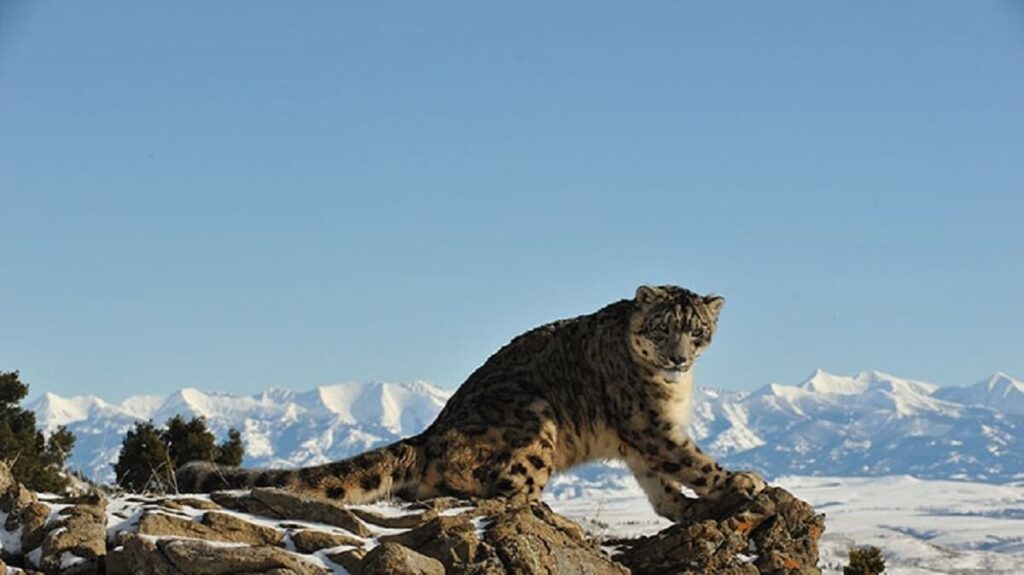
The Wikipedia overview of Panthera uncia documents the altitudinal migration directly: “In summer, it usually lives above the tree line on alpine meadows…at elevations of 2,700 to 6,000 m (8,900 to 19,700 ft). In winter, it descends to elevations around 1,200 to 2,000 m (3,900 to 6,600 ft).”
This single data point explains everything about snow leopard tourism: – Summer: snow leopards are 3,000-4,000 metres above the trails most photographers can reach. You will not see them. – Winter: they descend into valleys and lower mountain passes — the same elevations where Kazakh herder camps are located, where photography hides can be set up, and where 4×4 vehicles can reach.
The timing of this descent is what makes February-April the prime window.
Month-by-Month Snow Leopard Sighting Calendar
Each month in the year has different probabilities for actually seeing a snow leopard in the Altai:
| Month | Probability | Why |
|---|---|---|
| January | Moderate-high | Cats descended, mating begins late January in some territories, very cold (−25°C+) |
| February | Highest | Peak mating season, maximum daylight movement, vocalisation, snow contrast |
| March | High | Mating continues, late-pregnancy females hunt aggressively, snow still good |
| Early April | High | Females approaching birth, last good snow contrast before melt |
| Late April | Moderate | Cubs born late April (start of season), snow melts, cats begin upward migration |
| May | Low | Cats moving up to summer altitude, dense vegetation reduces visibility |
| June-September | Very low | Cats at 2,700-6,000m, above human-accessible terrain |
| October | Low | Cats begin descending but distributed widely |
| November-December | Moderate | Cats in winter range, but very cold and short daylight |
The window narrows further when you account for daylight and weather: – December-January: only ~9 hours of usable daylight, often heavy snow blocking access – February-March: 10-11 hours of daylight, stable cold, dry snow ← the sweet spot – April: longer daylight but unpredictable spring weather
This is why most professional snow leopard photography expeditions worldwide schedule their Mongolia departures in mid-February to mid-March.
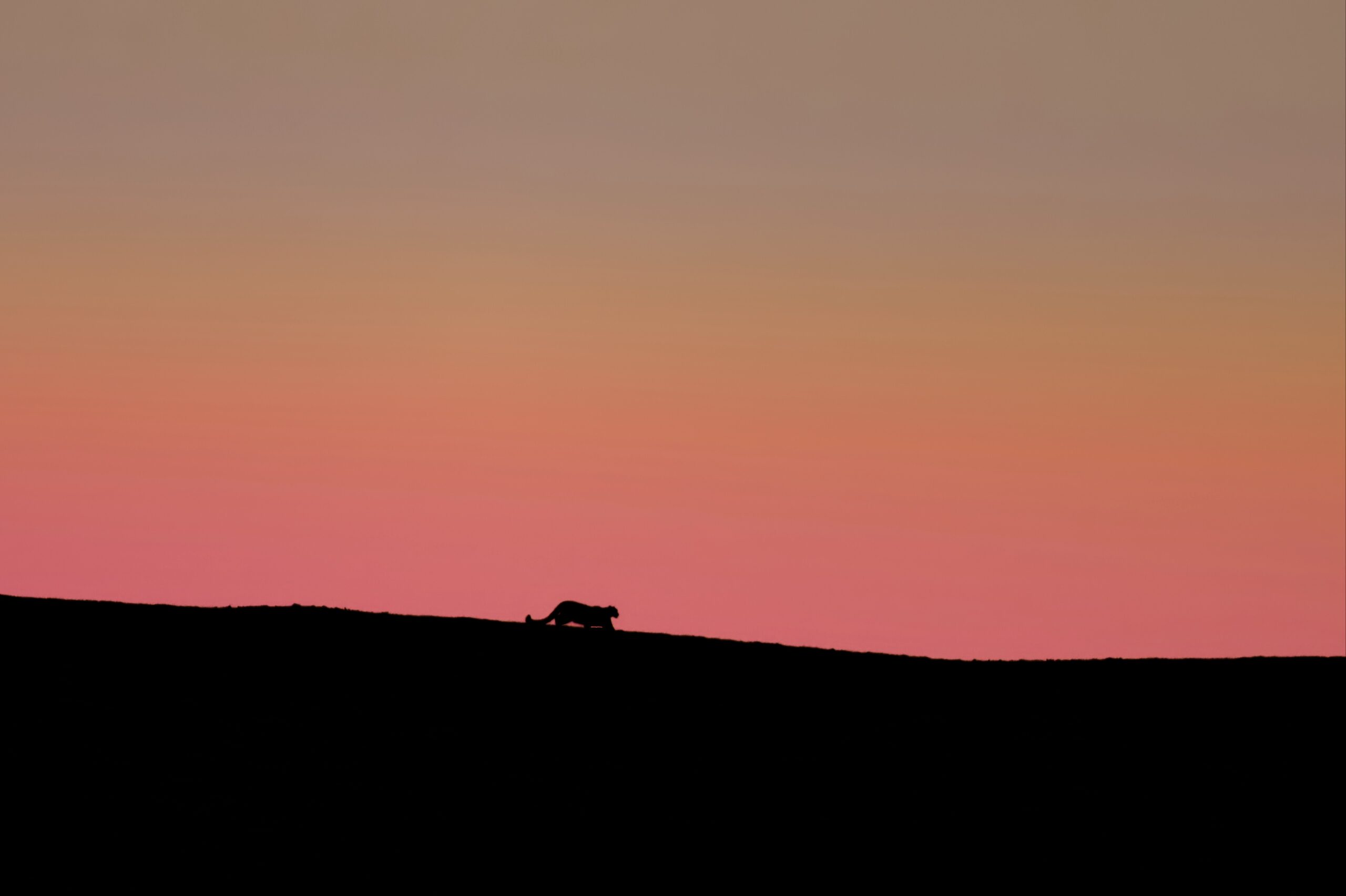
Why February to April Works — Three Converging Factors
1. Altitude descent (the most important factor)
In summer, snow leopards live at 2,700-6,000 metres on alpine meadows above the tree line. These altitudes are not accessible to most photographers — they require multi-day climbs to even reach the lower bands of snow leopard summer territory.
In winter, the cats descend to 1,200-2,000 metres following their prey (ibex, blue sheep, argali, marmots). At these elevations a 4×4 vehicle plus a 1-2 hour walk can reach known snow leopard territory. The Kazakh herder camps in Bayan-Ölgii sit in this exact altitude band — the cats are literally moving through pasture country.
2. Mating season behaviour
Snow leopards mate in late winter. The Wikipedia overview notes: “They usually mate in late winter, marked by a noticeable increase in marking and calling.” What this means in practice: – Males roam wider territories looking for females – Both sexes scent-mark more frequently (visible spray sites for trackers) – Vocalisation increases (long-distance calls audible across valleys) – Daytime movement increases (most encounters happen in daylight, not night)
A snow leopard you might never see in summer because it’s silent and high becomes a snow leopard you can locate in late winter because it’s calling, marking, and moving in daylight.
3. Snow contrast for spotting
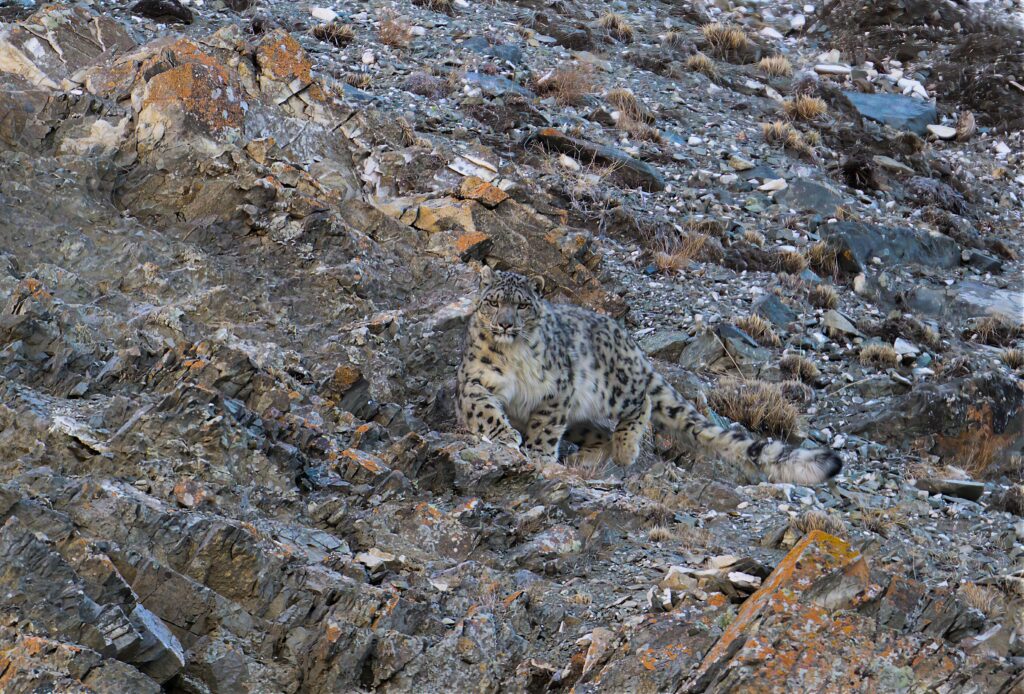
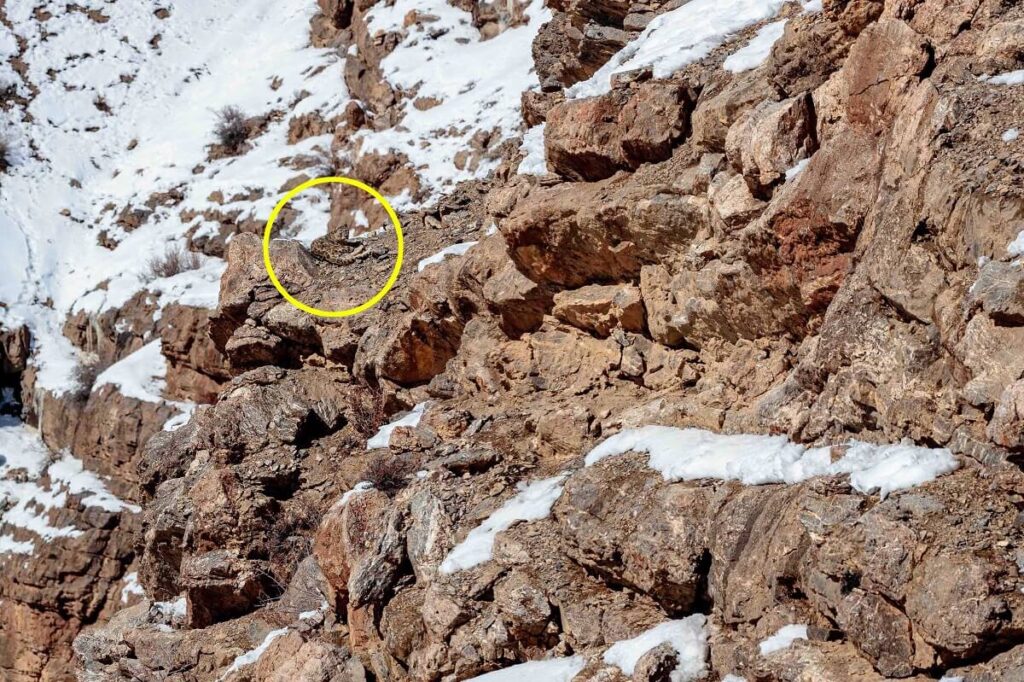
A snow leopard’s coat evolved to disappear against grey rocks in summer. Against snow, the spotted pattern stands out more clearly. Local Kazakh trackers spot the cats from kilometres away using spotting scopes — this is impossible in summer when the cats blend with bare rock and short grass.
The combination — cats are lower, they’re moving, and they’re more visible — is what makes February to April the prime window.
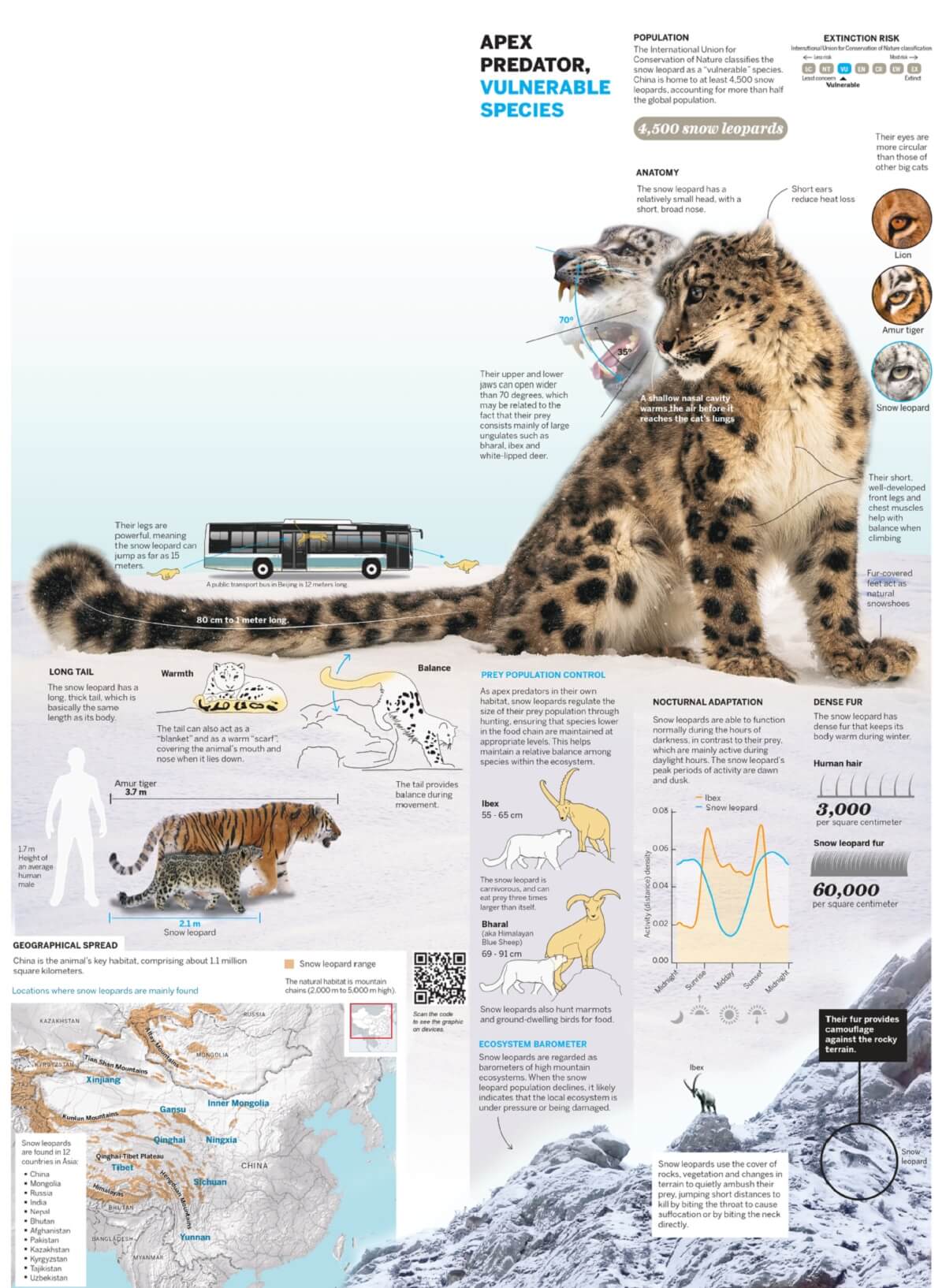
Why Summer Doesn’t Work — The Altitude Problem
Tour operators occasionally market summer snow leopard “sightings” — these are almost always opportunistic encounters, not planned tour outcomes. The biology rules them out as a primary plan:
- Summer altitude: 2,700-6,000m on alpine meadows above the tree line
- Vegetation: dense alpine grass, bushes, and rock provides camouflage
- Cat behaviour: cats hunt mostly at dawn/dusk, sleep in shade through midday
- Cubs: April-June births mean females are at remote dens, not roaming
- No mating signals: silence, no marking, no calling — invisible to trackers
Summer travellers to Bayan-Ölgii will see Mongolia’s spectacular Altai landscapes, eagle hunters, and possibly Pallas’s cats and ibex — but realistic snow leopard probability is near zero. If snow leopards are your primary goal, you must travel in late winter.
The Role of Weather, Daylight, and Prey Movement
Even within the February-April window, conditions vary:
Temperatures: Daytime in Bayan-Ölgii winter typically −10°C to −20°C. Night drops to −25°C to −35°C. Camera batteries lose 30-50% capacity at these temperatures. Bring 4+ batteries and rotate them inside your jacket.
Daylight: – Early February: ~10 hours usable (sunrise 8 AM, sunset 6 PM) – Late February: ~11 hours – Mid-March: ~12 hours (equinox) – Early April: ~13 hours
More daylight = more spotting time per day = higher cumulative probability of an encounter over a week-long expedition.
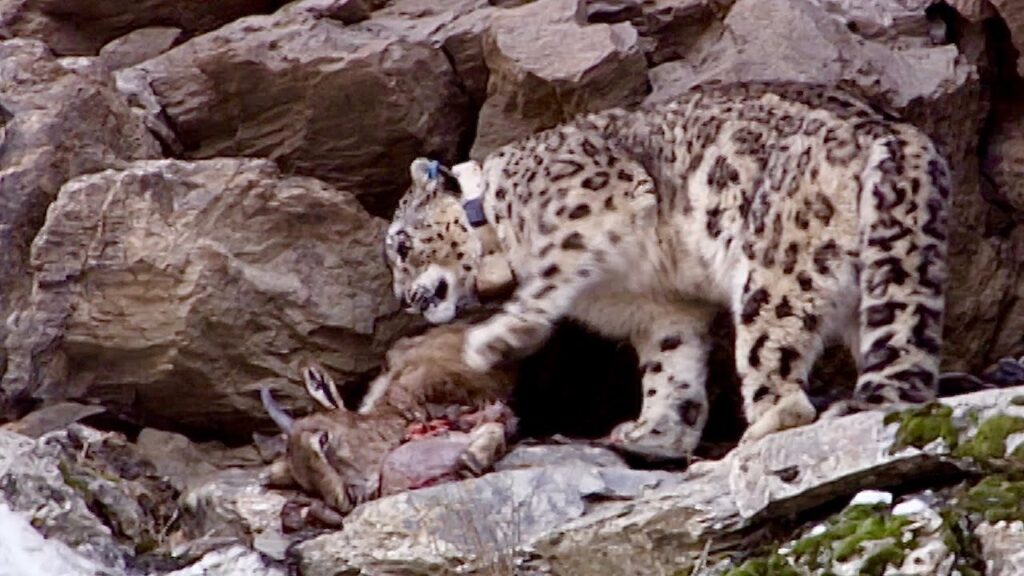
Prey movement: Snow leopards follow ibex, blue sheep (argali), marmots, and pikas. These prey species concentrate in winter at lower-altitude rocky terrain where dry grass remains exposed under snow. Where the prey is, the cats are.
Planning Around the Window — When to Book
The 8-week February-April window is short, photography expeditions cap groups at 4-8 travellers, and demand from international wildlife photographers is intense. Practical advice:
- Book by August for the following February departure (6 months ahead)
- Confirm your gear list by November (some specialty cold-weather gear has 8-12 week order times)
- Apply for Mongolia visa if required (allow 4-6 weeks)
- Book domestic flight Ulaanbaatar to Ölgii as soon as your tour dates are confirmed
- Consider arriving 1-2 days early to acclimatise before driving to snow leopard country
Our 12-day Mongolia Snow Leopard Photography Tour is built around this window, with scheduled February departures and small groups (max 5+ PAX). If you cannot travel in February-April, the Eagle Hunters Adventure offers winter eagle hunting access year-round in Bayan-Ölgii without the snow leopard timing constraint.
For broader context on conservation and what your visit means, see our overview on snow leopard conservation in Mongolia and snow leopard sighting probabilities.
Suggested Tours:
Suggested Blogs:
Snow Leopard Photography Gear Guide: What You Actually Need for the Altai
To photograph snow leopards in the Mongolia Altai, you need a weather-sealed camera body, a telephoto lens of at least…Altai Argali, Ibex and Snow Leopard: The Prey-Predator Chain That Holds the Mountain Ecosystem Together
The Altai Mountains snow leopard population depends entirely on a small set of prey species: Altai argali (the world’s largest…Snow Leopard Conservation in Mongolia: Programs, Protection and How to Help
Snow leopard conservation in Mongolia centres on protecting the country’s estimated 953 cats — the world’s second-largest population — through…





When is the best month to see snow leopards in Mongolia?
February is statistically the best month: snow leopards have descended to lower altitudes (1,200-2,000m), mating season is at its peak with maximum daylight movement and vocalisation, and snow contrast makes the cats visible to spotters. March and early April are also excellent. May through January offers much lower sighting probability.
Can I see snow leopards in summer?
Realistically no. In summer snow leopards live at 2,700-6,000m on alpine meadows above the tree line, where they’re inaccessible to most photographers. They hunt at dawn and dusk, blend with rock and short vegetation, and don’t vocalise much. Summer travellers occasionally have lucky encounters but it’s not a plannable outcome.
How likely am I to see a snow leopard on a winter expedition?
Sightings are never guaranteed — global population is fewer than 10,000 mature individuals (IUCN Vulnerable). What is reliable: travelling with experienced Kazakh trackers in known territory during the February-April window, you have realistic probability of one or more observations across an 8-10 day expedition. Many recent groups have had multiple sightings; some have had one; rare groups have none.
Why do snow leopards descend in winter?
They follow their prey. Ibex, blue sheep (argali), marmots, and pikas concentrate in winter at lower-altitude rocky terrain where dry grass remains exposed beneath snow. Snow leopards descend to 1,200-2,000m to stay near the prey. In summer, when prey moves up to alpine pastures, the cats follow them up to 2,700-6,000m.
What altitude do you reach on a snow leopard photography tour?
Most observation points are between 2,000m and 3,200m — moderate altitude. The cats themselves move between roughly 1,500m and 3,500m in winter, so observation points are positioned at the upper end of likely cat altitude with a clear view down. Mild altitude effects (mild headache, fatigue) affect roughly 20% of trekkers but resolve with rest. Severe altitude sickness is rare below 4,000m.
How many snow leopards are left in the wild?
Fewer than 10,000 mature individuals globally, classified IUCN Vulnerable and CITES Appendix I. The species is expected to decline by approximately 10% by 2040 due to habitat loss, prey decline, and human-wildlife conflict. Mongolia hosts roughly 1,000 snow leopards — one of the largest national populations.