
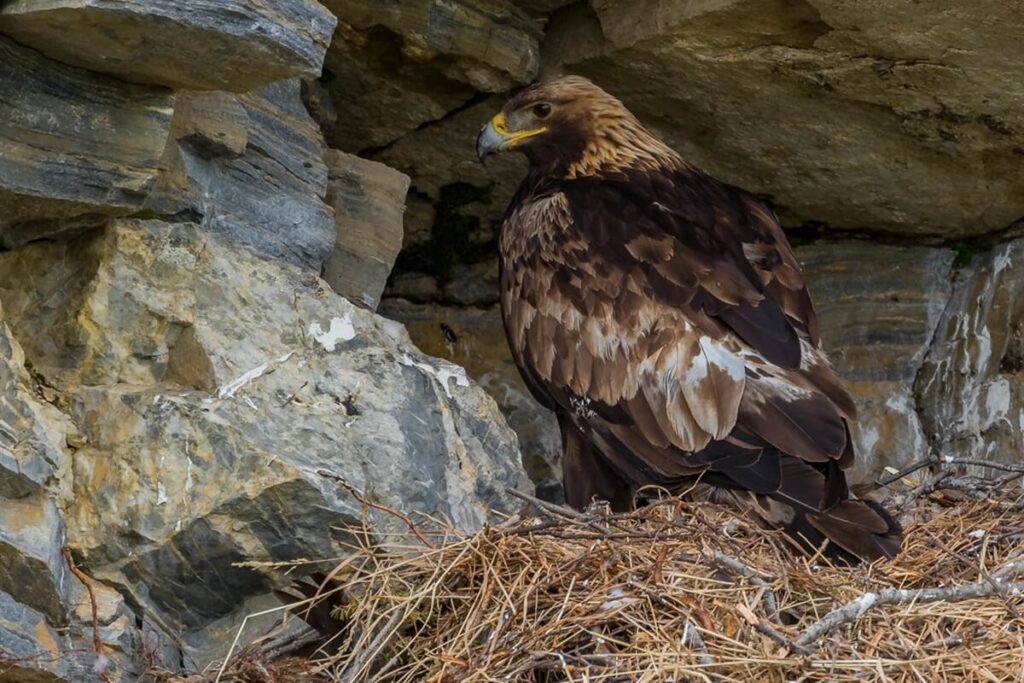
Golden eagle hunting prey – The golden eagle (Aquila chrysaetos) is one of the most formidable predators in the avian world, revered for its power, speed, and hunting prowess.
Found across the Northern Hemisphere, these raptors have adapted to a variety of environments, from the tundra to mountainous regions. Their hunting techniques are a blend of precision, agility, and sheer power, making them apex predators in their habitats.
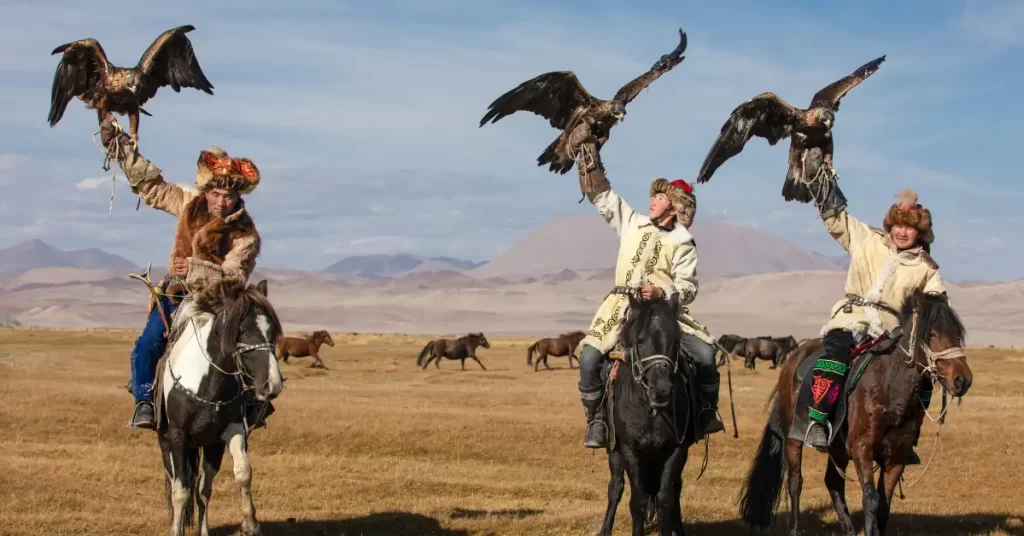
We offer you GOLDEN EAGLE FESTIVAL PHOTOGRAPHY TOUR. Come and enjoy the stunning landscape that is covered with ancient mountains, rivers, and Mongolian history. Join us to watch a great festival with truly great hunters! 🤩🤩
Anatomy of a Hunter
🦅 Want to experience this in person? Join our Live with golden eagle hunters (8-day homestay) with local Kazakh guides — small groups, authentic experience, 5.0 stars on TripAdvisor.
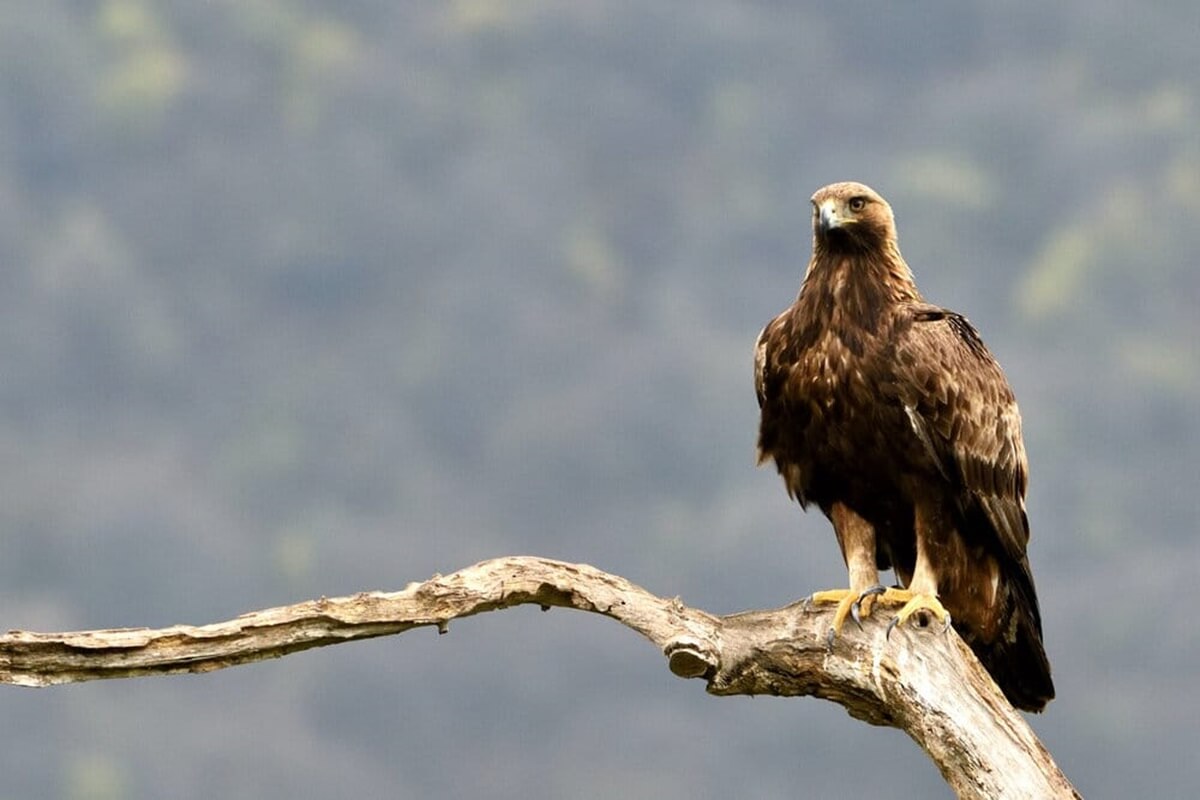
The golden eagle is a marvel of evolutionary design. With a wingspan reaching up to 2.3 meters (7.5 feet) and weighing between 3 to 6.5 kilograms (7 to 14 pounds), they are built for power and speed.
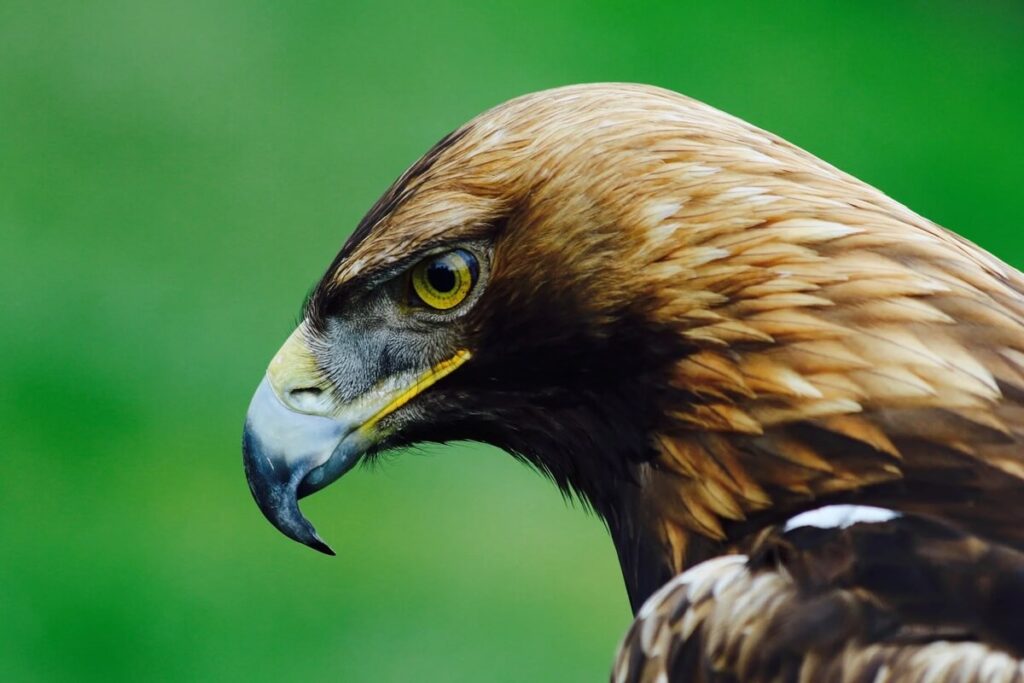
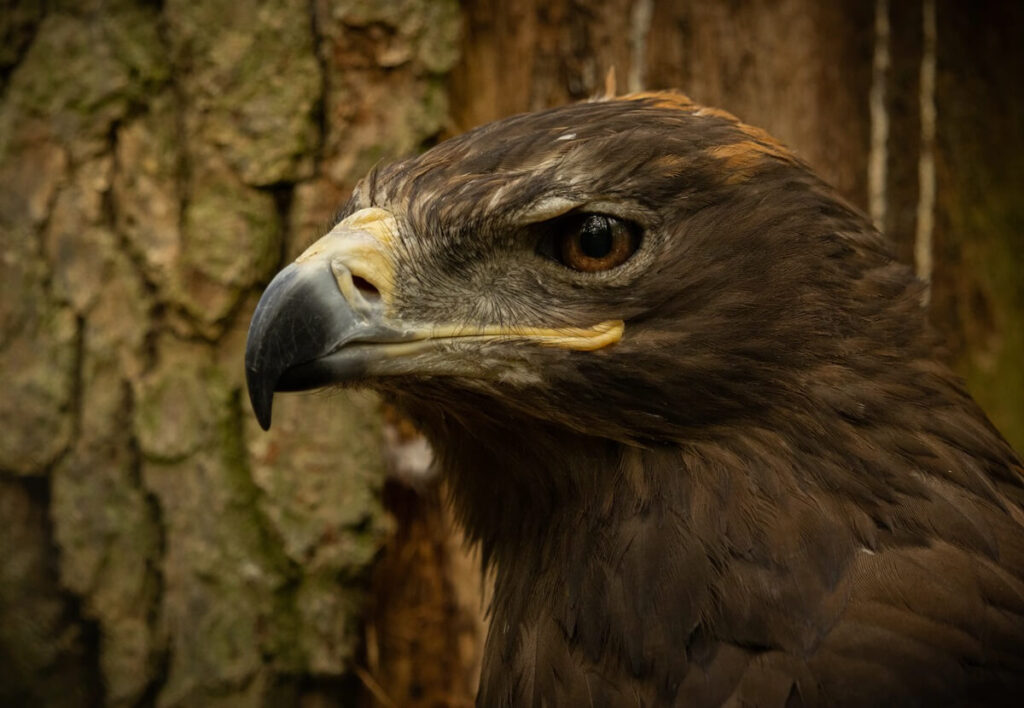
Their talons are incredibly strong, capable of exerting a pressure of up to 15 times that of a human hand, and their sharp, curved beaks are perfect for tearing into flesh.
Their eyesight is perhaps their most astonishing feature. Golden eagles can spot prey from over two miles away, thanks to a concentration of light-detecting cells in their retinas, which gives them a resolution five times better than that of a human.
This extraordinary vision allows them to locate and track small prey even when soaring at high altitudes.

The Hunt
Golden eagles are opportunistic hunters, and their diet includes a variety of mammals, birds, and occasionally reptiles.
Their preferred prey, however, tends to be medium-sized mammals like rabbits, hares, and ground squirrels. In some regions, they are also known to hunt larger prey, such as foxes, young deer, and even other birds of prey.
The hunting process begins with the eagle soaring high in the sky, using its keen eyesight to scan the ground below for movement. Once prey is spotted, the eagle engages in a rapid, steep dive, known as a stoop.
This dive can reach speeds of up to 200 kilometers per hour (124 miles per hour), making it one of the fastest birds of prey.
During the stoop, the golden eagle tucks in its wings to reduce drag and increase speed, using its tail as a rudder to steer.
As it approaches its target, the eagle extends its talons, ready to strike with devastating force. The element of surprise is crucial; the prey often doesn’t realize it’s being hunted until it’s too late.

Capturing and Subduing Prey
The moment of impact is both swift and violent. The eagle’s powerful talons pierce the prey’s body, often delivering a fatal blow instantly. If the prey is still alive, the eagle will use its beak to administer a killing bite, usually to the head or neck.
In some cases, particularly with larger prey, the golden eagle may not kill its target immediately. Instead, it uses its talons to secure the prey and then begins to eat it alive.
This might seem brutal, but it’s a testament to the eagle’s efficiency as a predator—ensuring it expends as little energy as possible in the hunt.
Once the prey is subdued, the eagle may either consume it on the spot or carry it away to a secluded location.
Golden eagles are known to cache their food, hiding it in a safe place to eat later. This behavior is particularly useful in harsh environments where food may be scarce.
Adaptations and Cultural Significance
Golden eagles are highly adaptable, able to hunt in a variety of terrains, from open plains to dense forests and mountainous regions. Their ability to take down prey larger than themselves has made them a symbol of power and endurance in many cultures.
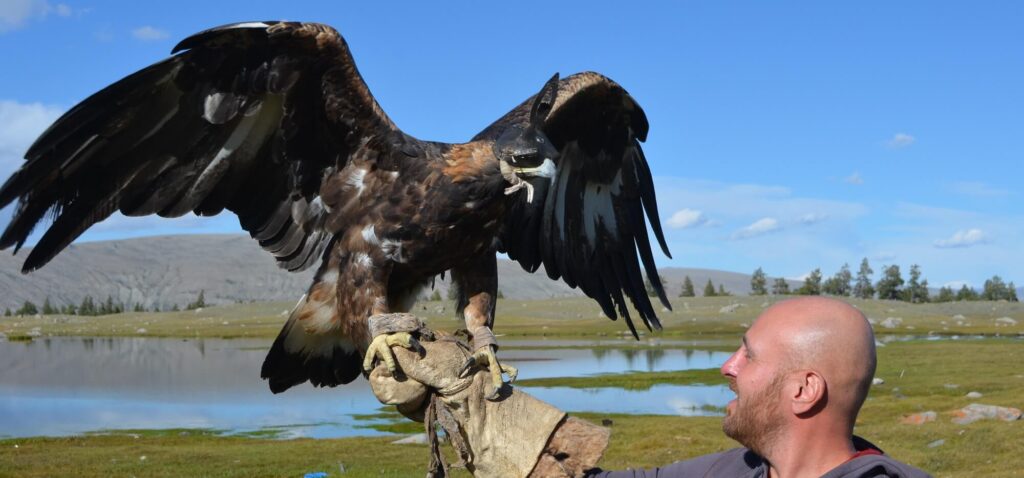
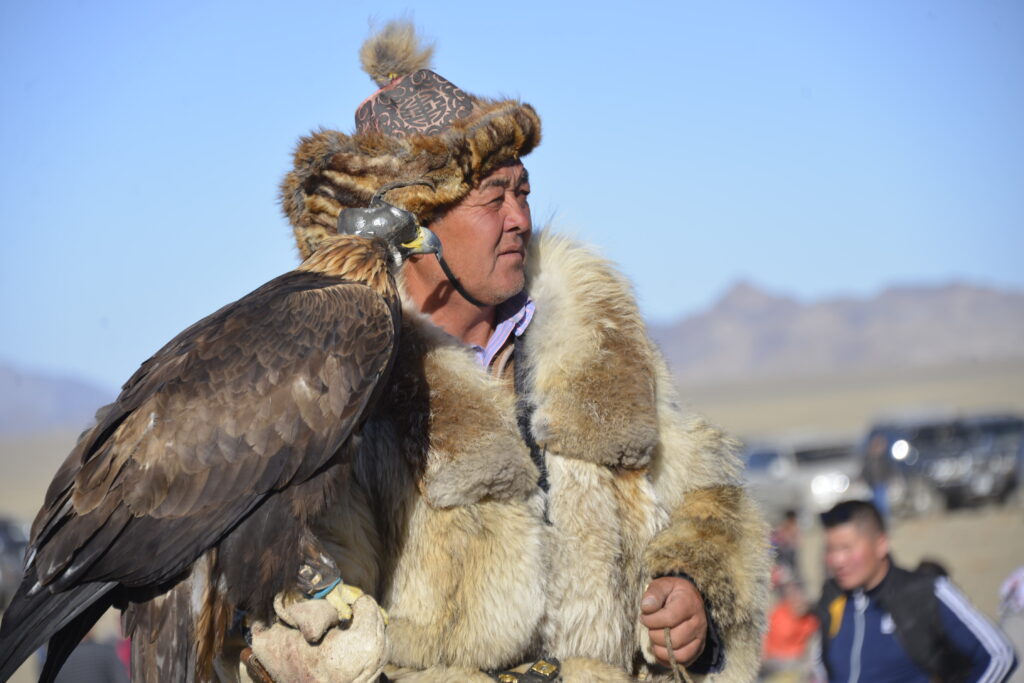
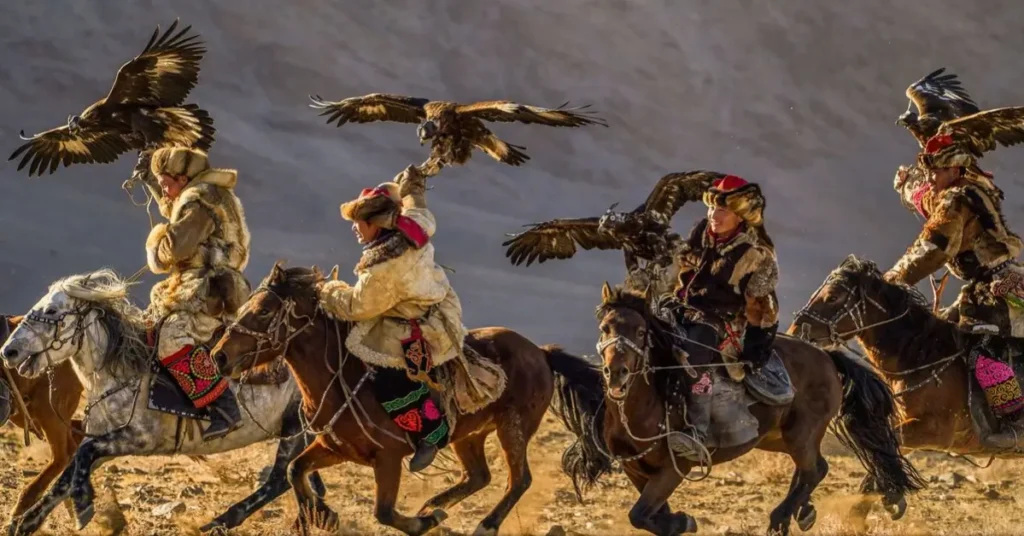
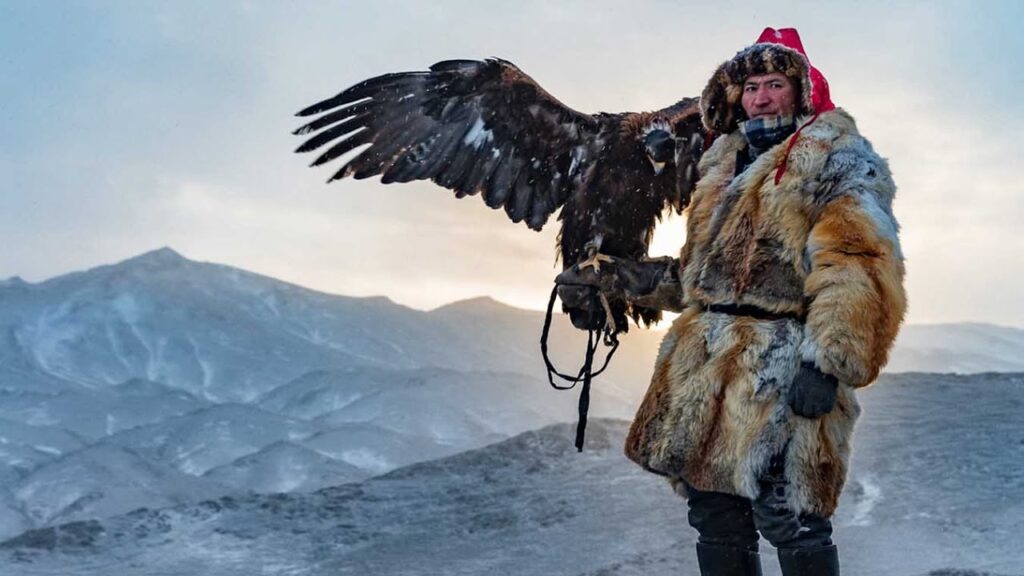
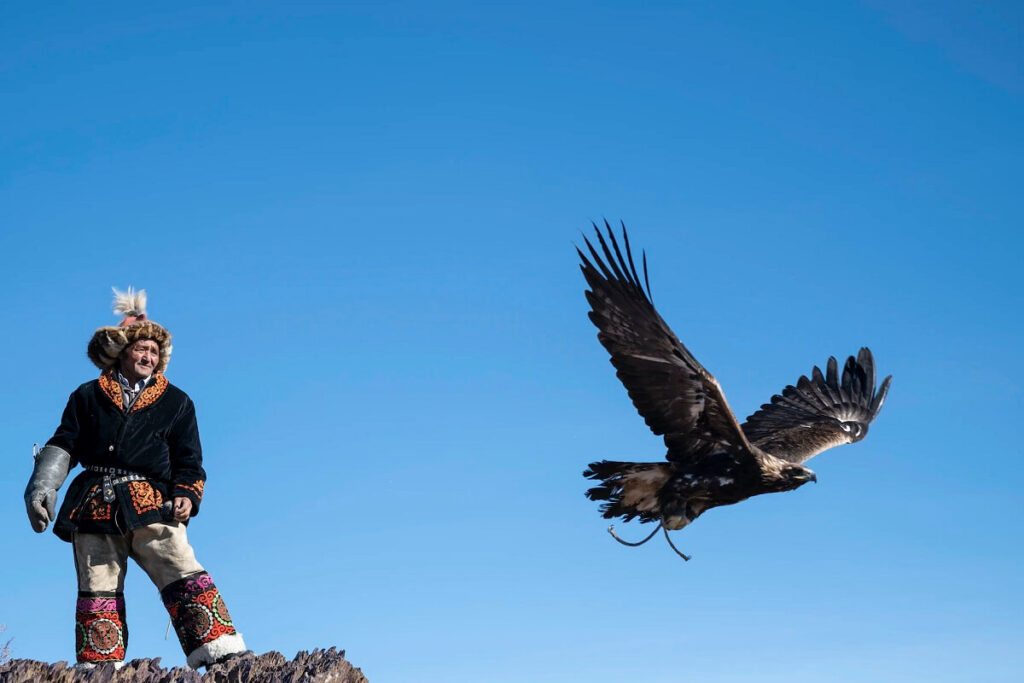
In Mongolia and Kazakhstan, for instance, golden eagle mongolian have been used in falconry for centuries. The practice, known as eagle hunting or falconry, involves training eagles to hunt foxes and other animals, a tradition passed down through generations.

The golden eagle’s hunting prowess is a fascinating blend of anatomical perfection, instinct, and experience.
As apex predators, they play a crucial role in maintaining the balance of their ecosystems. Their hunts are a spectacle of nature’s raw power, showcasing the golden eagle as a master of the skies and a symbol of predatory excellence.
Whether hunting solo or as part of human-assisted falconry, the golden eagle’s skill and dominance in the wild are unmatched, making it one of the most awe-inspiring creatures in the animal kingdom.
Suggested tour:
ALTAI EAGLE FESTIVAL 2026
Unleash your adventure spirit, explore Mongolia on your own terms ALTAI eagle festival tour (Sept 17–18) ⭐⭐⭐⭐⭐ 5.0 · 63…GOLDEN EAGLE FESTIVAL TOUR (2026)
Unleash your adventure spirit, explore Mongolia on your own terms Golden Eagle Festival Mongolia – 8-DayS Photography Tour (2026) By…Mongolia Altai Mountain Tour 2026 — 8 Days: Peak Climb + Culture + Nomadic Stay | $1,700
Unleash your adventure spirit, explore Mongolia on your own terms MONGOLIA ALTAI MOUNTAIN TOUR ⭐⭐⭐⭐⭐ 5.0 · 63 reviews on…




Related content:
Eagle Festival Packing List 2026: What to Wear in Olgii’s October Cold
The Mongolia Eagle Festival in Bayan-Ölgii runs in late September and early October at elevation 1,710 metres, where October average…Sagsai vs Golden Eagle Festival 2026: Which Mongolia Eagle Festival Should You Attend?
Mongolia hosts two distinct Kazakh eagle festivals each autumn in Bayan-Ölgii Province, the country’s western Kazakh-majority region. The Sagsai Golden…Burkitchi Apprenticeship: How a Kazakh Boy or Girl Becomes an Eagle Hunter
Becoming a Kazakh burkitchi (eagle hunter) is a years-long family apprenticeship, not a course or a profession one applies for…











Prey Species by Habitat and Region
Golden eagles hunt over 400 prey species across their range, but primary prey varies dramatically by ecosystem—in Mongolia and Central Asia, tolai hares (Lepus tolai), Himalayan marmots (Marmota himalayana), and corsac foxes (Vulpes corsac) comprise the majority of prey biomass
In North American habitats, golden eagles predominantly hunt black-tailed jackrabbits (Lepus californicus), ground squirrels (Spermophilus species), and marmots, with prey selection showing 72% preference for mammals weighing 0.5-4 kg
European populations target red foxes (Vulpes vulpes), European rabbits (Oryctolagus cuniculus), and marmots in alpine regions, while Scandinavian populations take significant numbers of ptarmigan during winter months when mammalian prey is scarce
Prey size preference correlates with eagle size dimorphism—female golden eagles (averaging 5.5 kg) regularly take prey up to 8 kg including young ungulates, while smaller males (averaging 4 kg) focus on sub-2kg prey items
Hunting Success Rates and Failed Attacks
Golden eagle hunting success rates vary between 20-40% depending on terrain, prey type, and hunting method, with success rates highest (38-42%) when hunting from concealed perches in mountainous terrain
Failed hunts often result from premature prey detection—ground squirrels and marmots that detect eagles at distances greater than 200 meters have an 85% escape success rate by reaching burrows before the eagle can close distance
Prey defense behaviors include: hares executing rapid zigzag patterns that force eagles to break off pursuit after 3-4 direction changes; foxes turning to face eagles with bared teeth (successful defense in 15% of encounters); and marmot colonies using sentinel systems that reduce eagle success by up to 60%
Seasonal Hunting Strategies
Winter hunting in harsh climates like Mongolia forces golden eagles to expand hunting ranges by 40-60%, as marmots and ground squirrels enter hibernation from October-March, shifting eagle diet almost entirely to hares, foxes, and carrion
Spring hunting coincides with juvenile prey emergence—eagles nesting in April-June time breeding cycles to coincide with maximum availability of inexperienced young marmots and rabbits, which have 3x lower escape success rates than adults
Summer thermal hunting: golden eagles exploit rising warm air currents during midday hours to soar at minimal energy cost (0.5-1.2 kcal/minute vs. 4-6 kcal/minute for flapping flight), allowing them to patrol territories up to 200 km² while searching for prey
Autumn hunting intensity increases 35-45% as eagles must build fat reserves before winter and provision late-season nestlings, with documented cases of parent eagles delivering 2-3 prey items daily (compared to 1-2 in summer)
How Kazakh Eagle Hunters Train Golden Eagles
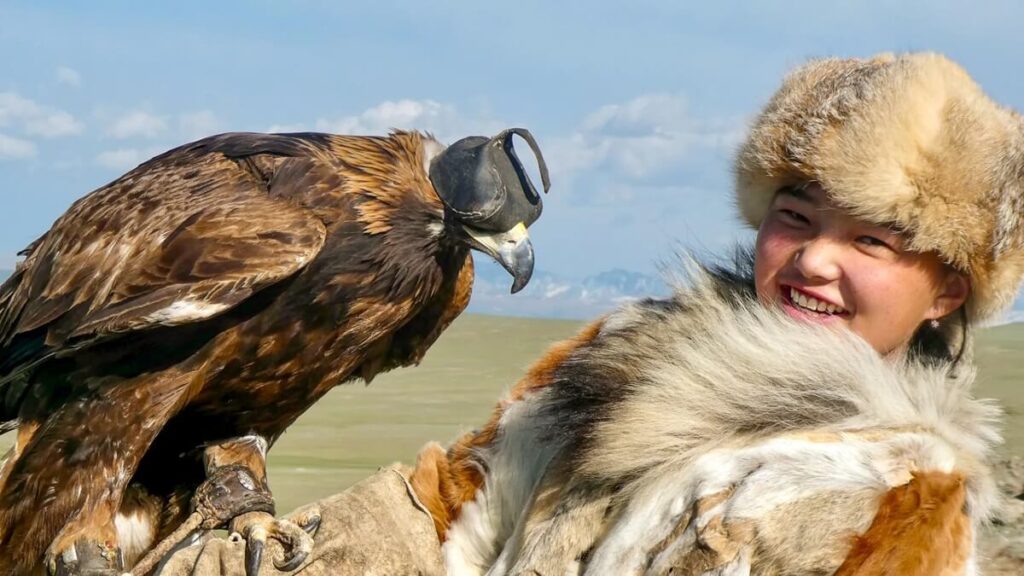
Traditional Kazakh berkutchi (eagle hunters) in Mongolia and Kazakhstan capture wild female golden eagles (preferred for larger size) at age 3-4 years using trap nets baited with live prey, then undergo 3-4 month training periods to hunt cooperatively with humans
Training methodology involves systematic desensitization: eagles are hooded for 2-3 days to bond with handler, then progressively exposed to horses, dogs, and crowds while receiving food rewards, followed by recall training where eagles fly increasing distances (10m to 500m) to handler’s gloved arm for meat rewards
Trained hunting eagles in Altai Mongolia pursue larger prey than wild eagles—primarily red foxes and corsac foxes (2-6 kg), with some trained eagles documented taking young wolves (Canis lupus) up to 15 kg through cooperative hunting with hunter and dogs
After 5-7 years of partnership, traditional practice dictates eagles be released back to wild to breed, maintaining wild population genetics—this sustainable practice is recognized by UNESCO as Intangible Cultural Heritage of Humanity since 2010
Golden Eagles vs Other Predatory Eagles
Golden eagles hunt terrestrial prey almost exclusively (95%+ of diet), contrasting sharply with bald eagles (Haliaeetus leucocephalus) which take 70-90% fish and aquatic birds, reflecting habitat specialization in mountainous vs. coastal environments
Harpy eagles (Harpia harpyja) of South American rainforests are the only raptors comparable in prey-carrying capacity, taking sloths and monkeys up to 7 kg, but hunt exclusively in forest canopy using short-burst acceleration through trees rather than golden eagles’ open-country stooping dives
Wedge-tailed eagles (Aquila audax) of Australia are the closest ecological equivalent, hunting similar-sized mammalian prey (rabbits, wallabies) using comparable techniques, but lack the cold-weather adaptations that allow golden eagles to hunt at elevations above 4,000m in Himalayan regions
Hunting success rate comparisons show golden eagles (20-40%) fall between African martial eagles (Polemaetus bellicosus) at 15-25% when hunting highly alert savanna prey, and Philippine eagles (Pithecophaga jefferyi) at 45-60% when ambush-hunting arboreal mammals in dense forest
—
How much weight can a golden eagle carry while flying?
Golden eagles can typically carry prey weighing up to 50-60% of their own body weight during flight, which translates to approximately 2-3 kg for average-sized females (5-5.5 kg) and 1.5-2 kg for males (3.5-4 kg). While eagles can kill prey larger than they can carry—including foxes up to 8 kg and young deer—they will consume these animals on the ground or transport pieces rather than the whole carcass. The oft-repeated claim that eagles can carry 7-8 kg is not supported by field observations; when attempting to lift excessively heavy prey, eagles experience difficulty gaining altitude and typically abandon the attempt after 10-20 meters.
Do golden eagles hunt in groups or alone?
Golden eagles are predominantly solitary hunters, with over 90% of observed hunts conducted by individual eagles. However, documented cooperative hunting occurs in specific contexts: mated pairs occasionally hunt together for large prey like foxes or young ungulates, with one eagle flushing prey while the second attacks from an alternate angle (documented success rate increase from 25% solo to 45% paired). Juvenile eagles from the same brood sometimes hunt cooperatively for 6-8 months after fledging before dispersing. In Kazakh eagle hunting traditions, human-eagle-dog partnerships create a unique three-way cooperative hunt unknown in wild eagle behavior.
What time of day do golden eagles hunt most actively?
Golden eagles exhibit crepuscular and diurnal hunting patterns, with peak activity occurring in early morning (6-10 AM) and late afternoon (4-7 PM) when prey animals are most active and thermal air currents facilitate energy-efficient soaring. Midday hunting activity drops 40-50% during summer months as extreme heat reduces prey activity and creates unpredictable thermal turbulence. Winter hunting patterns shift toward continuous daytime hunting (9 AM-4 PM) in response to shortened daylight hours and the need to locate scarce prey resources across expanded territories. Eagles rarely hunt during precipitation or high winds (>40 km/h), as these conditions reduce visual acuity and flight control necessary for successful prey capture.
Can golden eagles hunt at night?
Golden eagles are exclusively diurnal hunters and lack the specialized adaptations for nocturnal hunting found in owls, including asymmetrical ear placement for sound-based hunting and rod-rich retinas for low-light vision. Their hunting success depends heavily on exceptional daytime visual acuity (estimated 4-8x human visual resolution) to detect prey movements at distances exceeding 1-2 kilometers, a capability that becomes ineffective in darkness. Eagles consistently return to roost sites 30-45 minutes before sunset and do not leave roosts until after dawn, even when large prey animals are active during twilight hours.
How long can a golden eagle survive without catching prey?
Adult golden eagles have remarkable fasting endurance and can survive 2-3 weeks without food by metabolizing fat reserves and reducing activity levels, though hunting performance begins declining after 4-5 days without successful prey capture. Daily energetic requirements for active hunting eagles range from 450-650 kcal, typically satisfied by one medium-sized rabbit (400-500 kcal) or 2-3 ground squirrels. During harsh winters in Mongolia and Central Asia, eagles supplement hunting with carrion feeding, consuming livestock carcasses and winter-killed ungulates to survive extended periods when live prey is unavailable. —