Mongolia is one of the most challenging countries for vegetarians, especially in the countryside, where herder diets are built on meat and dairy. But vegetarian travel is very possible with planning. Ulaanbaatar has many vegetarian restaurants and well-stocked supermarkets. In rural areas you can rely on dairy, bread, rice, noodles and vegetables like potatoes and carrots. Vegans should book a trip with a cook who prepares separate meals. Tell your operator early and carry backup snacks.
Key Takeaways
- Ulaanbaatar: easy, with many vegetarian and vegan restaurants
- Countryside: meat-heavy, but dairy, bread, rice and vegetables are available
- Vegans: book a supported trip with a cook preparing separate meals
- Useful phrase: “Bi makh iddeggüi” (Mongolian) or “Men et zhemeimin” (Kazakh) means “I don’t eat meat”
- Pack snacks: nuts, dried fruit, energy bars and peanut butter
- Tell your operator early so meals can be planned
Mongolia has a reputation as one of the hardest countries in the world for vegetarians, and in the countryside that reputation is earned. Nomadic diets are built on meat and dairy, because very little grows on the high steppe. But vegetarian travel in Mongolia is absolutely possible with a bit of planning. Here’s how.
Why is Mongolian food so meat-heavy?
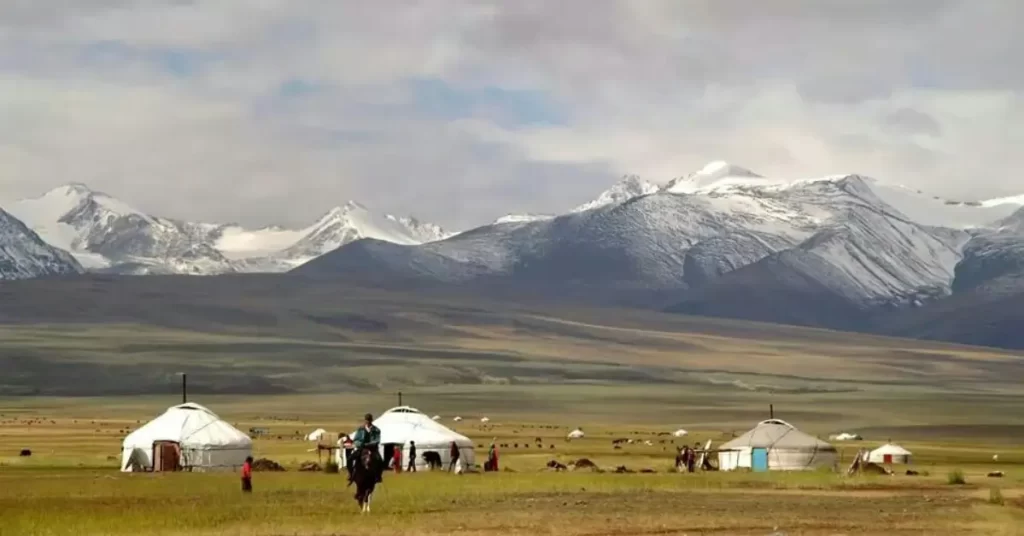
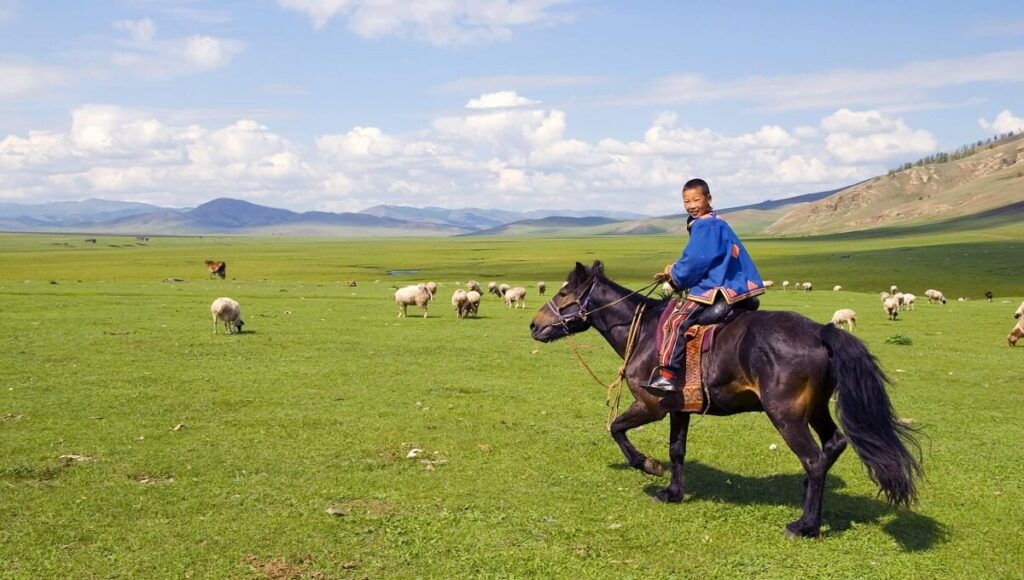
For centuries, Mongolian and Kazakh herders have lived from their animals: sheep, goats, cattle, yaks, horses and camels. Meat (in winter) and dairy (in summer) are the foundation of life, and fresh vegetables were traditionally rare. Today, potatoes, carrots, cabbage and onions are common, but meat is still the centre of almost every meal, especially in the west. Learn more in Kazakh food in Mongolia and Mongolian food.
Eating vegetarian in Ulaanbaatar
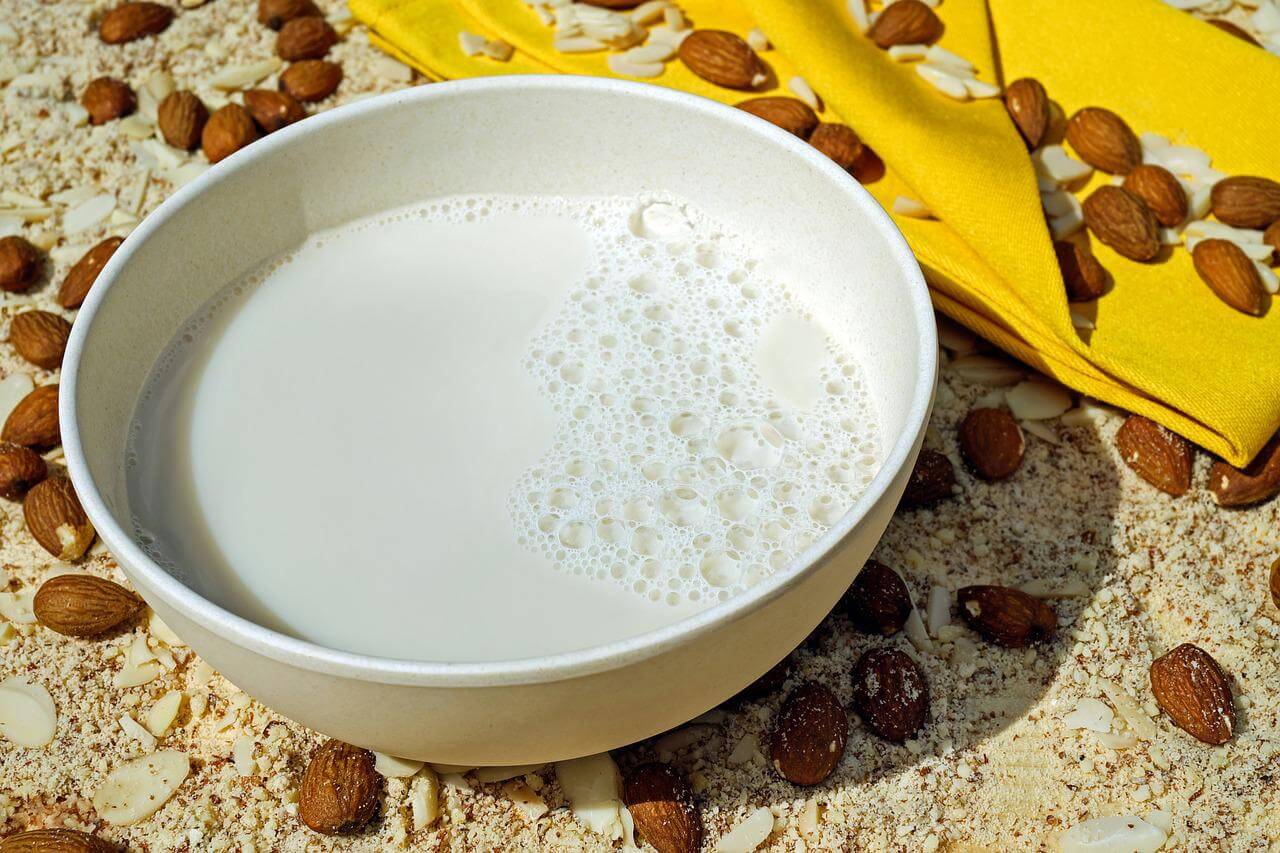
The capital is easy. Ulaanbaatar has a growing number of vegetarian and vegan restaurants, many inspired by Buddhist cuisine, plus Indian, Korean, Italian and international cafés with meat-free options. Supermarkets stock tofu, beans, fresh vegetables, fruit, nuts and imported goods.
Tip: stock up here on snacks you love before flying west.
Eating vegetarian in the countryside
Outside the cities, menus are short and mostly meat-based. But there are good options:
Dairy (summer especially)
- Milk tea: everywhere, always
- Yoghurt (tarag in Mongolian, airan in Kazakh)
- Clotted cream (öröm or kaimak), delicious on bread
- Dried curds (aaruul or kurt), hard, tangy and very traditional
- Fresh cheese and butter
Bread and grains
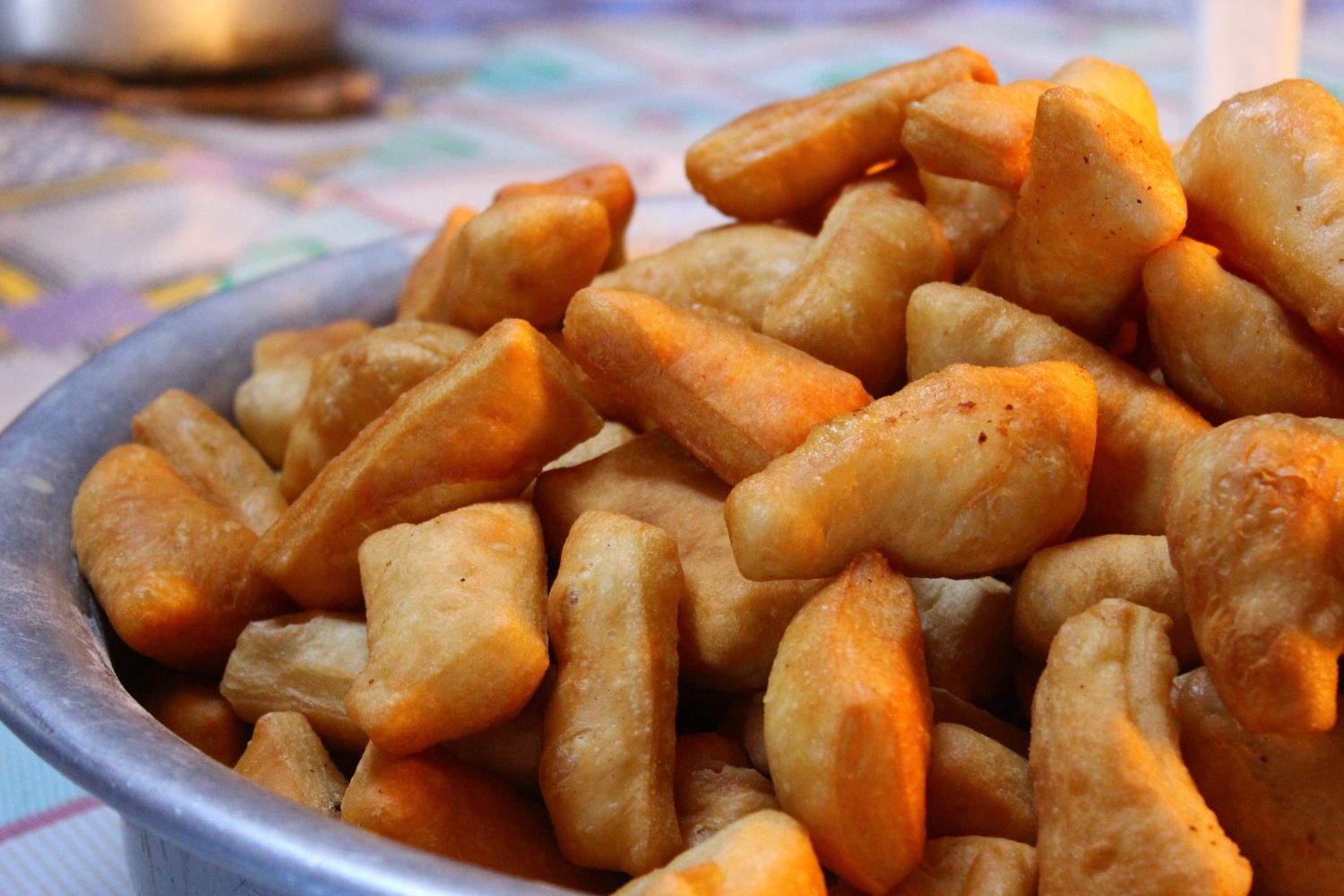
- Bauyrsaq / boortsog: fried dough, served with tea
- Rice, noodles, flatbreads and porridge
Vegetables
Potatoes, carrots, onions, cabbage and turnips are widely available, and fresh vegetables are much more common in summer.
Vegan travellers
Vegan travel in rural Mongolia is very difficult without dedicated catering, because dairy is everywhere and often added to tea, bread and soups. If you are vegan, a private or small-group tour with a cook who prepares your meals separately is strongly recommended.
Useful phrases
| Meaning | Mongolian | Kazakh (western Mongolia) |
|---|---|---|
| I don’t eat meat | Bi makh iddeggüi | Men et zhemeimin |
| No meat, please | Makhgüi | Etsiz |
| Vegetables | Nogoo | Kökönis |
Note that “no meat” is sometimes interpreted as “less meat”, or as no big chunks but with meat broth. Your guide can explain clearly to cooks and host families.
How to plan a vegetarian trip to the Altai
- Tell your tour operator early, when you book and again before departure.
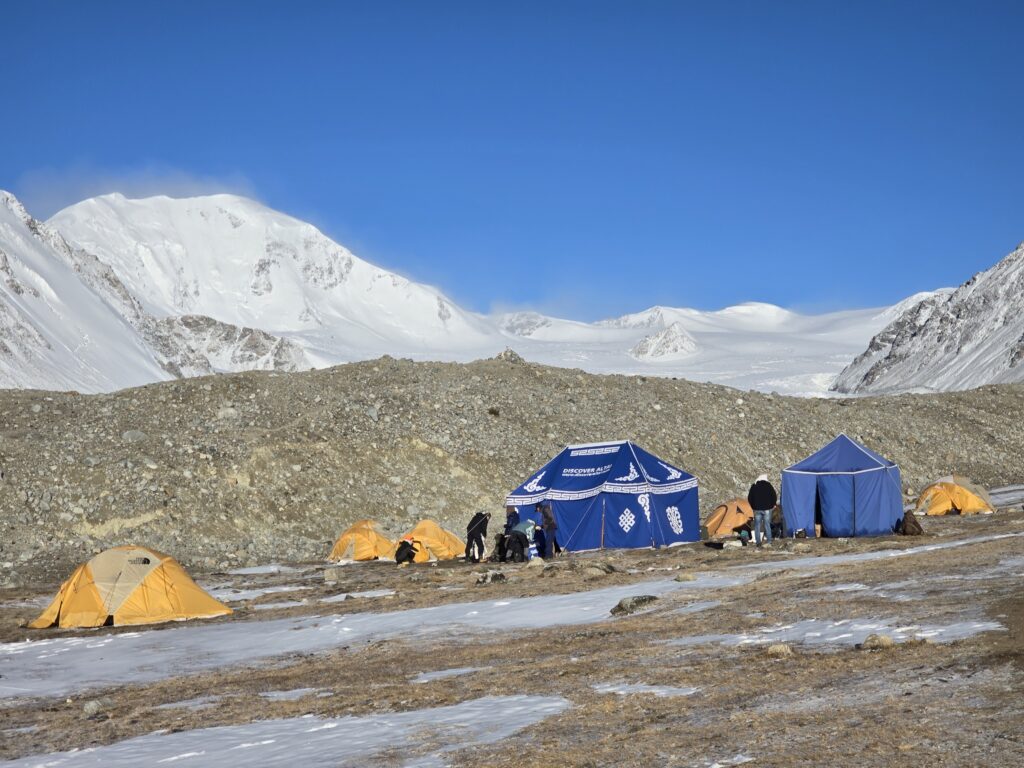
- Choose a trip with a cook. On camping treks, a cook can prepare vegetarian meals such as pasta, rice dishes, vegetable soups, eggs, pancakes and salads.
- Bring backup snacks: nuts, dried fruit, energy bars and peanut butter.
- Bring supplements if you rely on specific proteins or vitamins.
- Be flexible with homestays. Families will happily give you bread, dairy and vegetables, but may not understand vegetarianism. Your guide can help explain it politely.
Etiquette: refusing meat politely
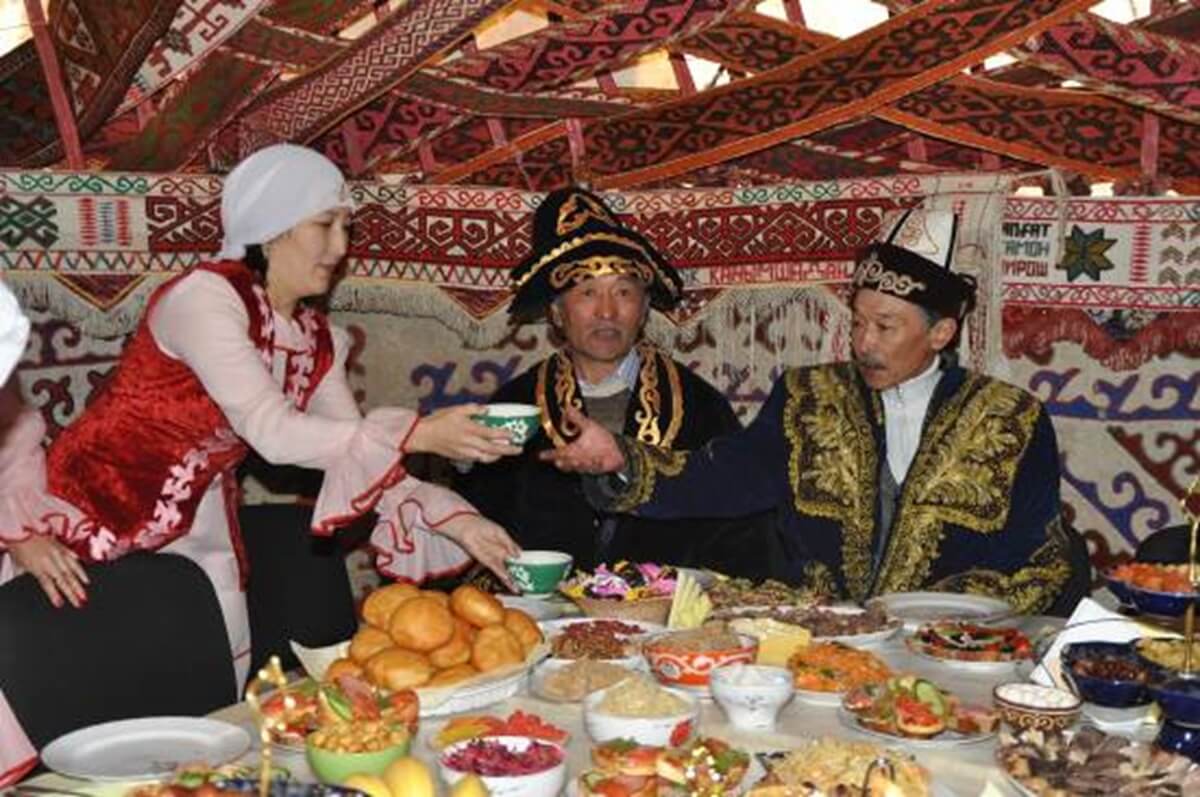
Meat is a sign of hospitality, and offering the best pieces honours a guest. If you don’t eat it, accept the plate respectfully, take bread, dairy or vegetables instead, and let your guide explain. A smile and a sincere rakhmet (thank you) go a long way.
Vegetarian? Tell us your dietary needs when you book, and we will plan your meals with you. See our trekking tour or contact us.
Frequently asked questions
Is it hard to be vegetarian in Mongolia?
In Ulaanbaatar it is easy. In the countryside it is harder, because traditional food is meat-based, but with an operator who plans meals and some backup snacks, vegetarians eat well.
Can vegans travel in rural Mongolia?
It is difficult without dedicated catering, because dairy is added to tea, bread and many dishes. A private or small-group trip with a cook preparing separate vegan meals is the best option.
What vegetarian food can I eat with nomad families?
Bread, fried dough (boortsog or bauyrsaq), yoghurt, cream, dried curds, rice, noodles and vegetables such as potatoes and carrots.
How do I refuse meat politely?
Accept the plate respectfully, take bread, dairy or vegetables instead, and let your guide explain. Offering meat is a sign of hospitality, so a warm thank you matters.
Suggested Tours:
Suggested Blogs:
Ulgii Weather: A Month-by-Month Guide to Bayan-Ölgii’s Climate
Ölgii (Ulgii) sits at about 1,700 m in a dry valley of the Altai, with a cold semi-arid continental climate…Mongolia’s Wild Horses: The Return of the Takhi
Mongolia’s only truly wild horse is the takhi, also called Przewalski’s horse. It went extinct in the wild by the…Altai Mountains: Russia vs Mongolia. Which Side Should You Visit?
The Altai Mountains span Russia, Mongolia, China and Kazakhstan. The Russian Altai has green forested valleys, rivers, Belukha (4,506 m,…