
Kazakh food in Mongolia’s Altai region is built on meat and dairy from four animals — horses, camels, cows, and sheep, known collectively as the tört tülik mal. The national dish is beshbarmak: boiled horse or mutton served over wide flat noodles. Other staples include kazy (horse-meat sausage), baursak (fried dough balls), qurt (dried salted curd), and fermented milk drinks — kymyz from mares and shubat from camels. Meals are served on a dastarkhan (the spread cloth) and always begin with strong milky black tea. For travellers on an eagle hunter homestay, sharing these dishes with a Kazakh family is one of the most memorable parts of the trip.
Key Takeaways
- Kazakh cuisine centres on the tört tülik mal — four kinds of livestock: horse, camel, cow, sheep
- Beshbarmak (boiled meat over flat noodles) is the national dish, eaten by hand
- Kazy is a prized horse-meat sausage, traditionally eaten in spring
- Fermented milk drinks: kymyz (mare’s milk) and shubat (camel’s milk)
- Baursak (fried dough balls) is the everyday bread of the steppe
- Every meal and guest welcome begins with strong black tea with milk
- The dastarkhan — the spread cloth of food — is the centre of Kazakh hospitality
The Foundation — Four Animals, the Tört Tülik Mal
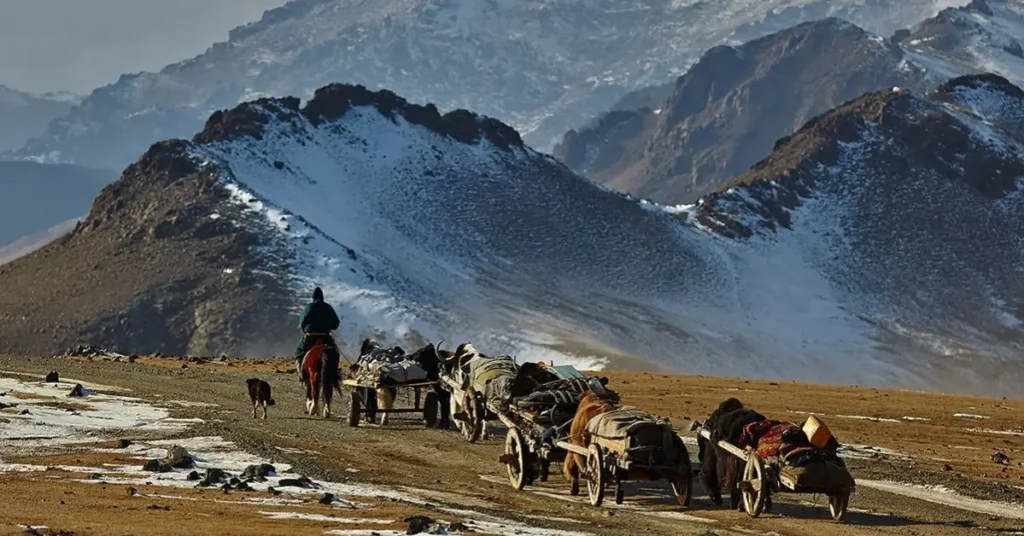
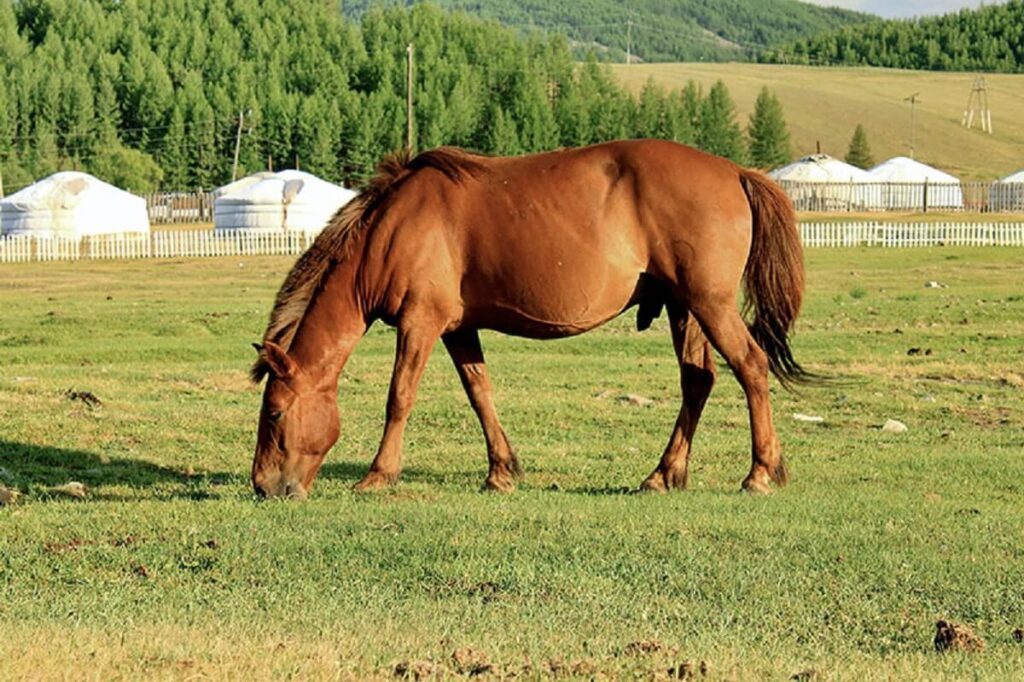
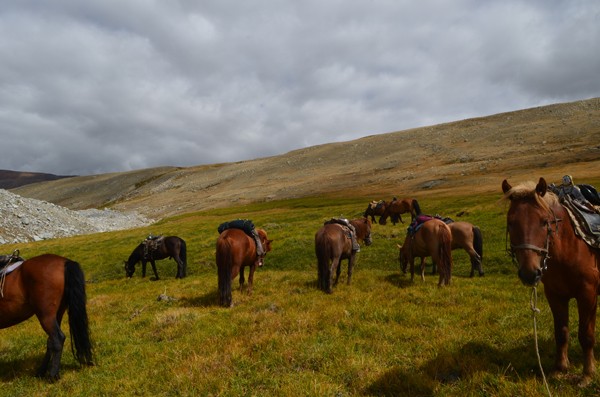
Kazakh cuisine cannot be understood without understanding Kazakh herding. For centuries, Kazakhs were pastoral nomads, and their diet flowed directly from their animals. The majority of Kazakh cuisine is built on the tört tülik mal — “four kinds of cattle,” meaning four kinds of meat-and-milk animal: horses, camels, cows, and sheep.
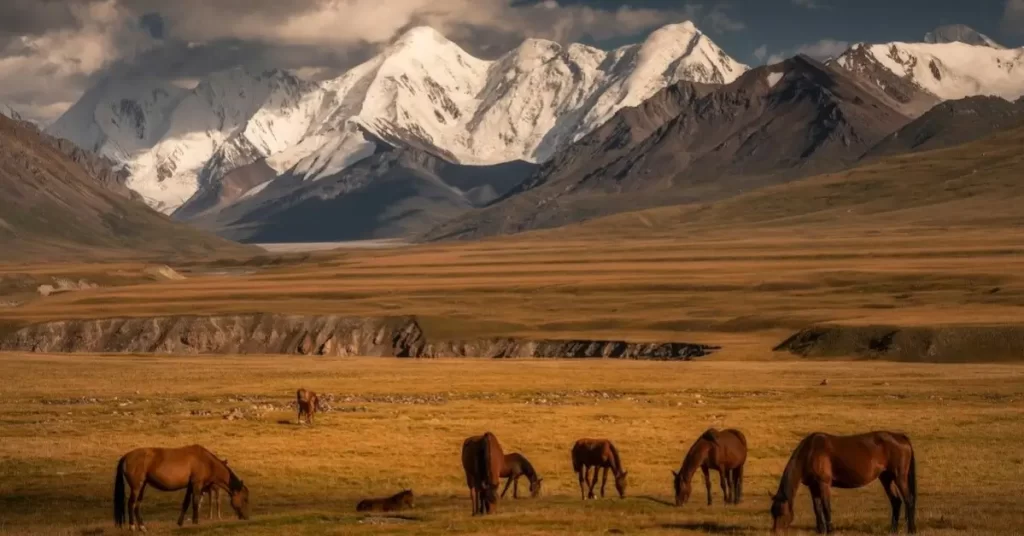
This is the key difference from much of the world’s cuisine. There are very few vegetables in traditional Kazakh food, almost no fish, and historically little grain beyond what could be traded for. The Altai is high, cold, and short-seasoned — you cannot farm it the way you farm a river valley. What the land produces is grass, and what grass produces is livestock. So Kazakh food is, at its core, the most efficient possible conversion of mountain pasture into human nutrition: meat, milk, and the many things you can make from milk.
For a traveller, this means Kazakh meals are protein-rich, hearty, and warming — exactly suited to the climate. It also means that a guest who arrives expecting salad will be surprised. The richness is the point.
Beshbarmak — The National Dish
If you eat one Kazakh dish, it will be beshbarmak. Etqamyr or besbarmaq is “a dish consisting of boiled horse or mutton meat” and is described as “the most popular Kazakh dish and the national dish of Kazakhstan.” It is equally the centrepiece dish of the Kazakh community in Mongolia.
The name beshbarmak means “five fingers” — because the dish is traditionally eaten by hand. The preparation: – Meat (horse or mutton, sometimes both) is boiled slowly until tender – Wide, flat squares of noodle dough are cooked in the meat broth – The meat is sliced and laid over the noodles – The dish is served communally on a large platter, often topped with onion – A bowl of the rich broth (sorpa) is served alongside
Beshbarmak is a celebration dish — it appears at weddings, festivals, when guests arrive, and at any occasion that matters. If a Kazakh family serves you beshbarmak, you are being honoured. The most respected guest is sometimes offered the sheep’s head, a high mark of hospitality (declining politely is acceptable for travellers, but the gesture is significant).
Meat Dishes Beyond Beshbarmak
Beshbarmak is the famous one, but the Kazakh meat repertoire is wide:
| Dish | What it is |
|---|---|
| Kazy (qazı) | A prized horse-meat sausage. Traditionally “eaten in the spring when a cow has a new calf” — a large sausage sometimes served with rice |
| Kuyrdak | A hearty fry-up of offal — liver, heart, kidney, lung — cooked with onion and fat; the dish made right after an animal is slaughtered |
| Sorpa | The rich meat broth, served as soup, especially in cold weather |
| Mutton roasts | Whole-cut sheep meat, boiled or occasionally roasted |
| Shuzhuk | Another sausage type, often beef or horse |
Kazy deserves special mention. Horse meat is highly valued in Kazakh culture — not a poverty food but a delicacy. Kazy, made from horse meat and fat packed into the horse’s own intestine casing, is a festival and honour food, served sliced. Many first-time visitors are hesitant about horse meat; most who try kazy are surprised by how rich and clean-tasting it is.
The four-animal system means you will rarely be served pork (Kazakhs are predominantly Muslim and do not eat it) and almost never chicken in a traditional setting. The meat is horse, mutton, beef, and occasionally camel.
Dairy — The White Food of the Steppe
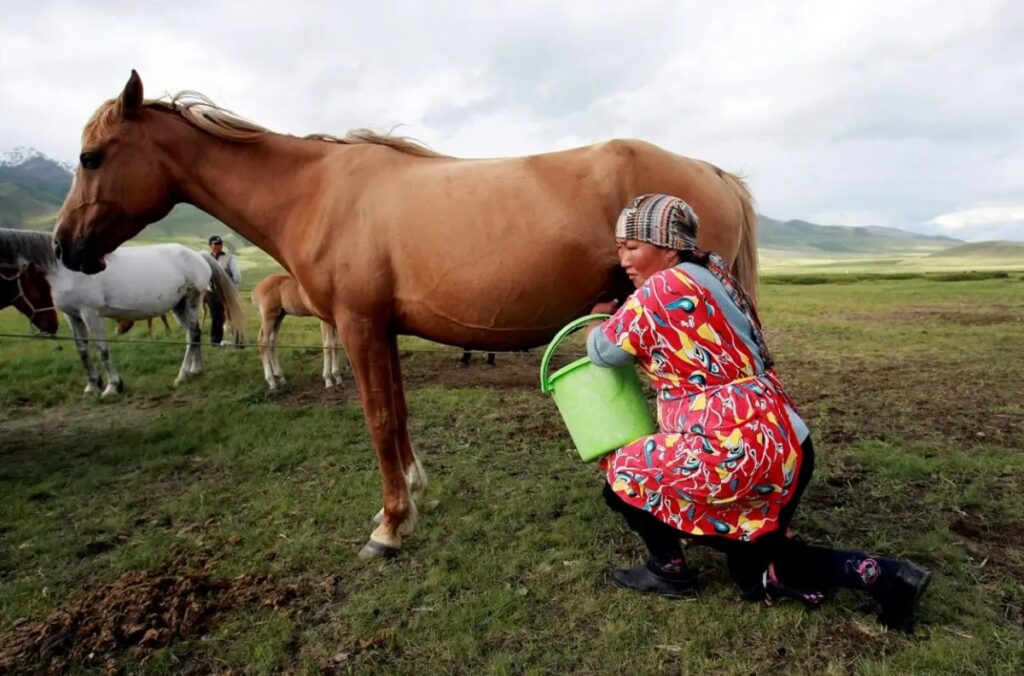
Kazakhs call dairy products “white food” (aq), and white food carries deep cultural value — milk is associated with purity, prosperity, and blessing. The range of dairy products is remarkable given that it all comes from four animals:
- Kymyz (kumis): fermented mare’s milk — slightly fizzy, mildly alcoholic, sour and refreshing. The signature drink of the steppe summer.
- Shubat: fermented camel’s milk — richer and thicker than kymyz, also slightly sour.
- Qurt: “pressed thick sour cream, dried until white and salty” — hard little balls of dried curd that keep for months and travel well. A snack, a soup-thickener, and a survival food.
- Irimshik: a dried curd cheese, sweeter than qurt
- Sary mai: clarified butter
- Kaymak: thick clotted cream, eaten with bread
For a traveller, the fermented milk drinks are the cultural deep end. Kymyz in particular is an acquired taste — sour, slightly effervescent, unlike anything in a Western diet. Trying it offered by a host family is part of the experience; a small taste with appreciation is the right response even if you don’t finish the bowl.
Bread, Tea, and the Dastarkhan
Bread: The everyday bread of the Kazakh steppe is bawyrsaq (baursak) — “made by frying dough balls.” A flat cake called shelpek is made similarly. Baursak is golden, light, slightly chewy, and appears at every meal and every tea service. It is the Kazakh equivalent of bread on the table — always there.
Tea: Tea is not a drink in Kazakh culture so much as a ritual. “Kazakh tea is typically strong black tea with milk or cream.” When you enter a Kazakh home, tea comes immediately — before conversation, before any question of why you have come. The host (usually the woman of the house) pours, and there are customs around how full the cup is poured and how it is refilled. Tea continues throughout a visit, refilled many times.
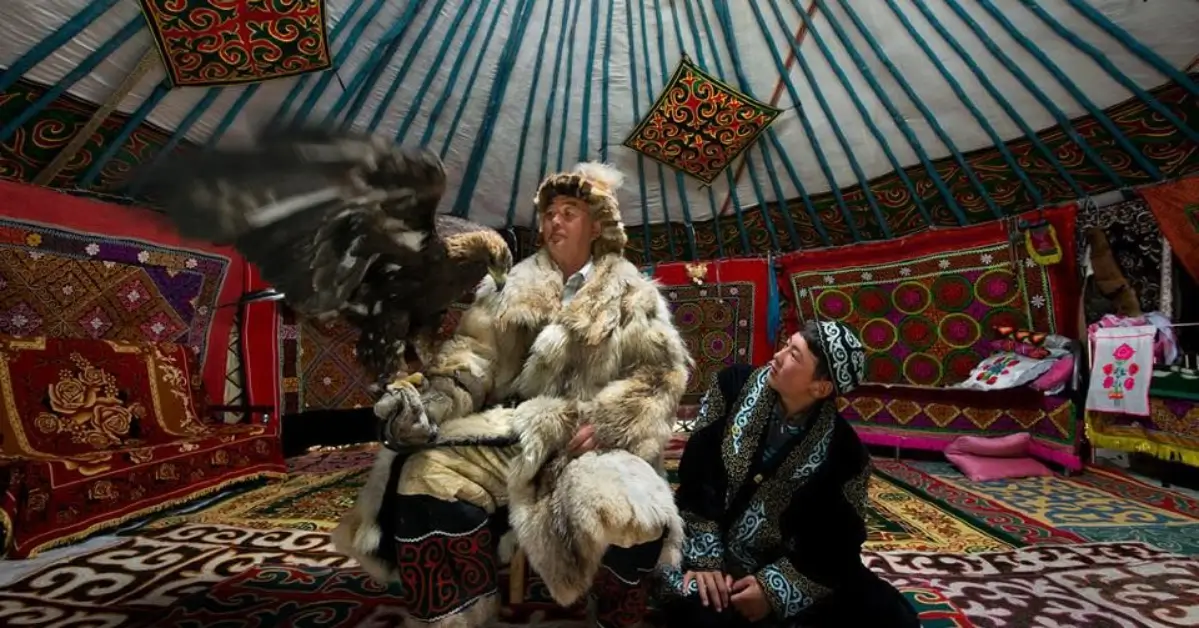
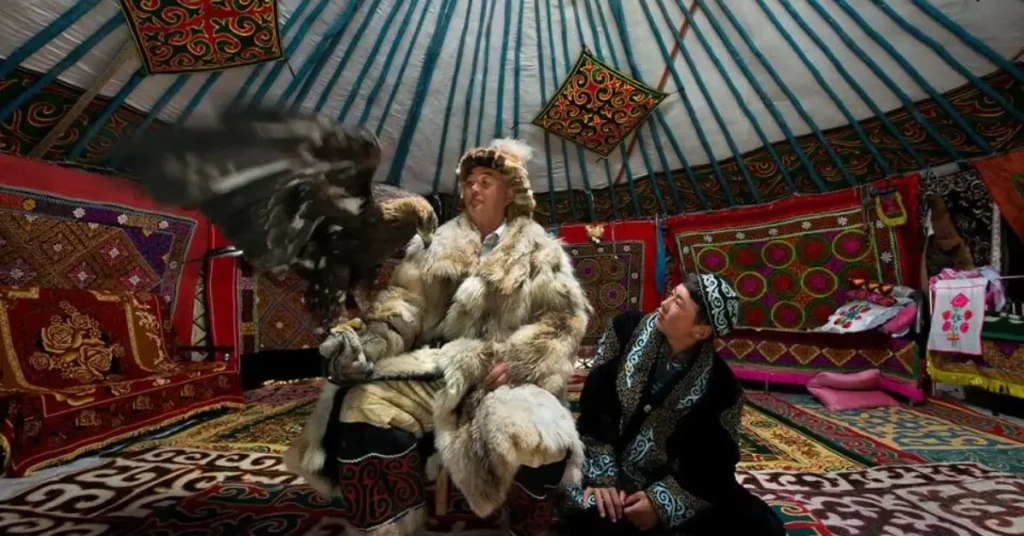
The dastarkhan: The dastarkhan is the spread cloth — and by extension, the entire laid-out meal. When a Kazakh family hosts you, they lay the dastarkhan: baursak, qurt, sweets, dried fruit, sugar, cream, and the central dishes, all arranged together. The dastarkhan is the physical centre of Kazakh hospitality. Sharing food from the dastarkhan with a host family is the moment many travellers describe as the heart of their trip.
What to Expect as a Guest
If you join a Kazakh eagle hunter homestay or a nomadic family stay, food is central to the experience. A few things to know:
- You will be fed generously — accept it. Refusing food is awkward in Kazakh culture. Eat what you can with visible appreciation; you don’t have to finish everything, but engaging with the food matters.
- Tea is constant. Expect many cups. If you’ve truly had enough, placing your hand briefly over the cup or leaving it empty signals you’re done — your guide can show you the local custom.
- Meals are communal. Beshbarmak and other dishes are served on shared platters. Watch your hosts and follow their lead on how to eat.
- The honoured guest may be offered special portions — the sheep’s head, choice cuts. This is a high compliment. Travellers can accept graciously or, with a smile and through your guide, politely defer; the gesture is what counts.
- Vegetarians should plan ahead. Traditional Kazakh food is meat-and-dairy centred. Tell your tour operator in advance — families can prepare alternatives (more dairy, bread, rice, what vegetables are available) but cannot improvise on the spot in a remote camp.
- Try the fermented milk. Kymyz and shubat are cultural experiences. A small respectful taste is part of being a good guest.
Food is how Kazakh families show welcome. A traveller who eats with curiosity and appreciation — who tries the kazy, sips the kymyz, dips baursak in cream, and accepts the third cup of tea — will find the homestay experience opens up far beyond what a guarded eater ever sees.
For travellers who want this experience, our Mongolian Eagle Hunter Tour and Mongolian Nomadic Life Tour both include homestay nights with Kazakh families, where shared meals are part of every day. To understand the wider culture, see our guides to Kazakh vs Mongol nomads and Kazakh clothing and heritage.
Suggested Tours:
Suggested Blogs:
Kazakh Wedding Traditions: The Customs That Still Shape Altai Marriages
A Kazakh wedding in Mongolia’s Altai is not a single event but a sequence of ceremonies stretching over months. It…Kazakh Dombra Music: The Two-String Sound of the Altai Steppe
The dombra is the central instrument of Kazakh folk music — a long-necked, two-string plucked lute that accompanies songs, carries…Naadam in Bayan-Ölgii: How Western Mongolia’s Kazakh Province Celebrates the July Festival
Naadam is Mongolia’s national festival of “the three games of men” — wrestling, horse racing, and archery — held nationally…

What is the national dish of Kazakh culture?
Beshbarmak (besbarmaq) — boiled horse or mutton meat served over wide flat noodles, eaten communally. The name means “five fingers” because it is traditionally eaten by hand. It is the celebration dish served to honoured guests, at weddings, and at festivals, and it is central to the Kazakh community in Mongolia’s Altai just as it is in Kazakhstan.
Do Kazakhs in Mongolia eat horse meat?
Yes. Horse meat is highly valued in Kazakh cuisine — a delicacy, not a poverty food. Kazy, a horse-meat sausage, is a prized festival food. Horse is one of the four traditional animals (tört tülik mal) alongside camel, cow, and sheep. Many first-time visitors are hesitant about horse meat but find it rich and clean-tasting.
What is kymyz?
Kymyz (kumis) is fermented mare’s milk — slightly fizzy, mildly alcoholic, and sour. It is the signature drink of the Kazakh steppe summer. Shubat is the equivalent made from camel’s milk, richer and thicker. Both are cultural staples and offering them to a guest is part of Kazakh hospitality.
What do Kazakh families serve to guests?
When a Kazakh family hosts you, they lay the dastarkhan — the spread cloth with baursak (fried dough), qurt (dried curd), sweets, cream, and central dishes. Strong milky black tea is served immediately on arrival and refilled throughout the visit. For honoured guests, beshbarmak is prepared.
Can vegetarians eat in a Kazakh homestay?
Traditional Kazakh cuisine is meat-and-dairy centred with few vegetables — it grew from a high-altitude pastoral lifestyle. Vegetarians should inform their tour operator well in advance so host families can prepare alternatives (dairy, bread, rice, available vegetables). Improvising vegetarian meals on the spot in a remote camp is not realistic.
Is Kazakh food in Mongolia halal?
Kazakhs are predominantly Sunni Muslim, and traditional Kazakh food follows Islamic dietary practice — no pork, and animals slaughtered according to halal custom. The four traditional meats are horse, mutton, beef, and camel. Travellers will not encounter pork in a traditional Kazakh setting in Bayan-Ölgii.