Golden eagles are among the most powerful birds of prey in the world, and in the remote steppes and mountains of Mongolia and Kazakhstan, they are much more than majestic creatures—they are partners in survival and heritage. The tradition of training a golden eagle has been passed down for centuries among Kazakh nomads of the Altai Mountains, where eagle hunters form extraordinary bonds with their birds. This living legacy, known as eagle hunting in the Altai Mountains, remains one of the most fascinating cultural practices in Central Asia.
In this article, we will explore how Kazakh hunters capture, raise, and training a golden eagles step by step, while also delving into the spiritual connection that makes this tradition possible.

The Cultural Roots of Eagle Hunting
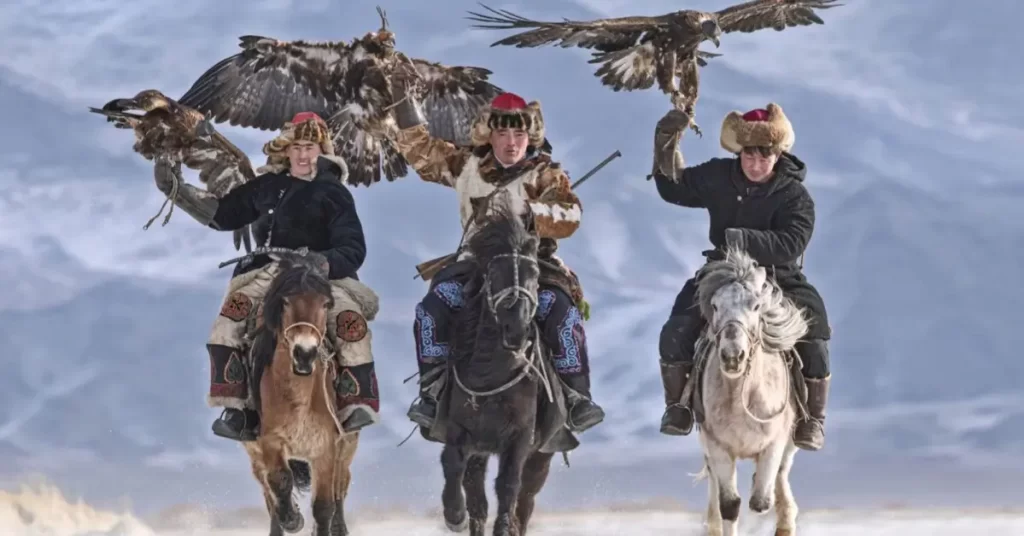
For the Altai Mountains Kazakh hunters, eagle hunting is not merely a sport but a way of life. The tradition dates back more than 2,000 years, believed to have originated with nomadic tribes who depended on trained eagles to hunt foxes, hares, and even wolves for fur and food.
Today, this heritage continues as hunters—called berkutchi—pass down their knowledge from father to son, ensuring that the skill of training a golden eagle is never lost. Each bird represents not just hunting prowess but also a deep cultural identity for the Kazakh people.
Step 1: Capturing or Raising a Golden Eagle
The first step in training a golden eagle begins with acquiring the bird. Traditionally, hunters capture young female eagles from the wild because females are larger, stronger, and more aggressive than males. The ideal age is around 2–4 years, when the bird is strong enough to hunt but still adaptable to training.
Modern hunters sometimes raise eagles from chicks, which creates an even stronger bond. However, capturing from the wild remains the most authentic practice among eagle hunters in the Altai Mountains. Hunters ensure they never over-capture, respecting nature and releasing mature eagles back into the wild after several years of companionship.
Step 2: Building Trust
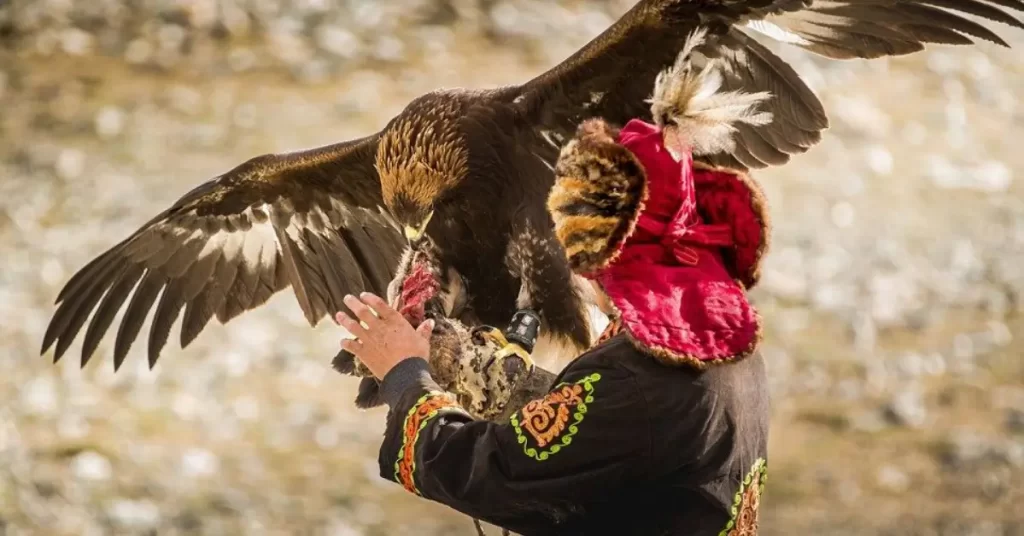
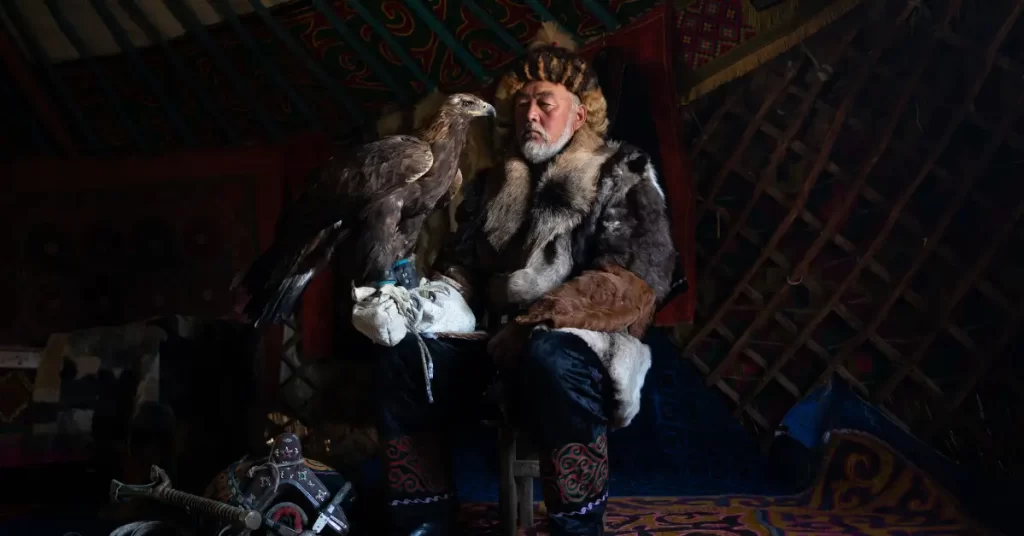
After capturing the eagle, the most crucial stage is building trust between hunter and bird. This stage can take weeks, sometimes months, and requires patience, discipline, and compassion. The eagle is kept close to the hunter—sometimes even sleeping inside the yurt—to grow accustomed to human presence.
Hunters stroke the bird gently, feed it small pieces of meat by hand, and speak softly to it. Gradually, the eagle learns that the hunter is not a threat but a provider. This process is not just about taming; it is about forging the foundation of a partnership that can last for years.
Step 3: Training Through Hunger and Reward
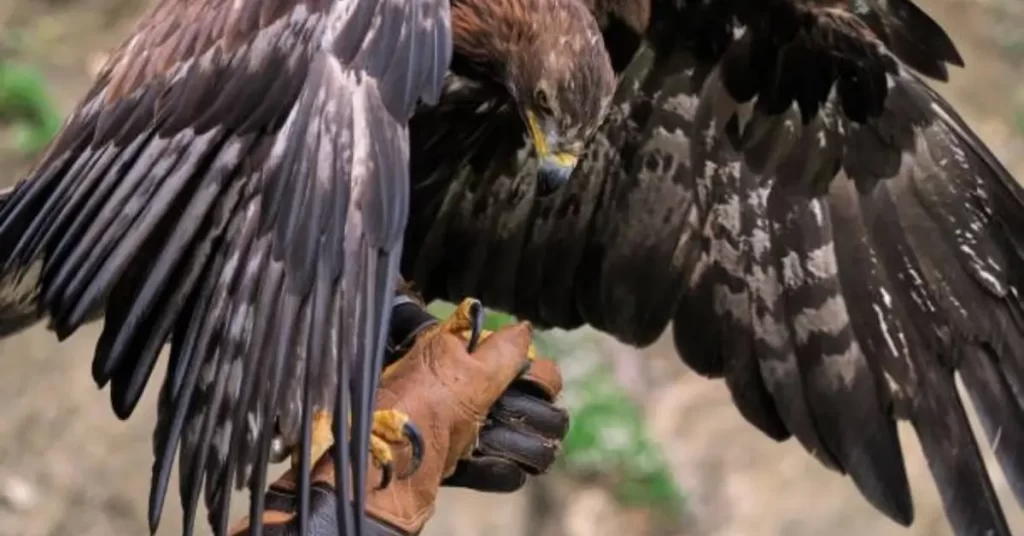
Like most birds of prey, golden eagles are trained using hunger and reward. The hunter carefully controls the bird’s diet, ensuring it is hungry enough to respond but never weak. When the eagle flies back to the hunter’s glove or perches on command, it is rewarded with food.
This training of a golden eagle begins in controlled environments, such as short flights in a yard, and gradually extends into open spaces. Over time, the eagle learns to respond to the hunter’s whistle, leather lure (baldak), or hand gestures.

Step 4: Equipping the Eagle
To hunt effectively, the eagle must be fitted with traditional equipment. Altai Mountains Kazakh hunters use:
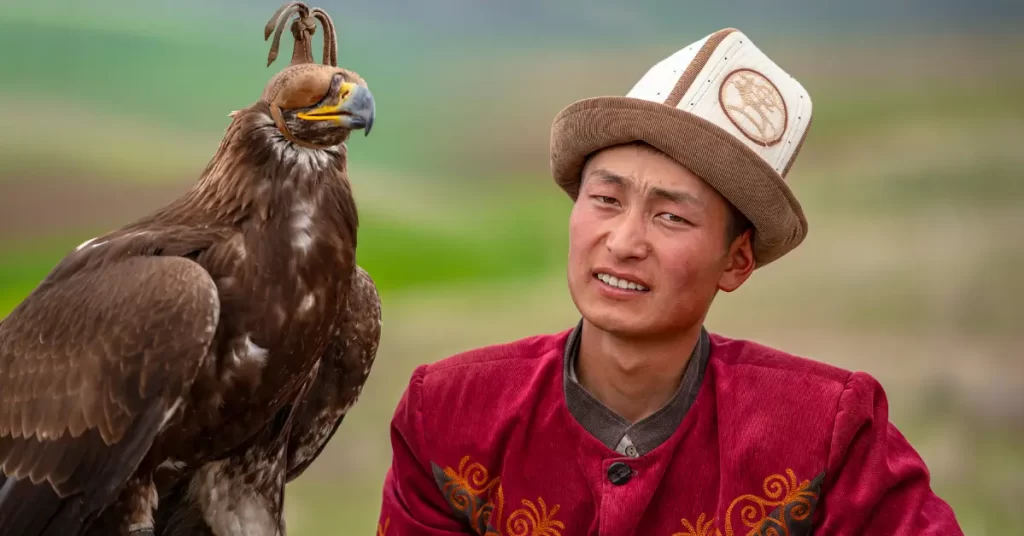
- Tomaga (hood): A leather hood that keeps the bird calm when not hunting.
- Biyalai (glove): A thick leather glove worn by the hunter to protect the arm.
- Jez (jesses): Straps attached to the bird’s legs for control.
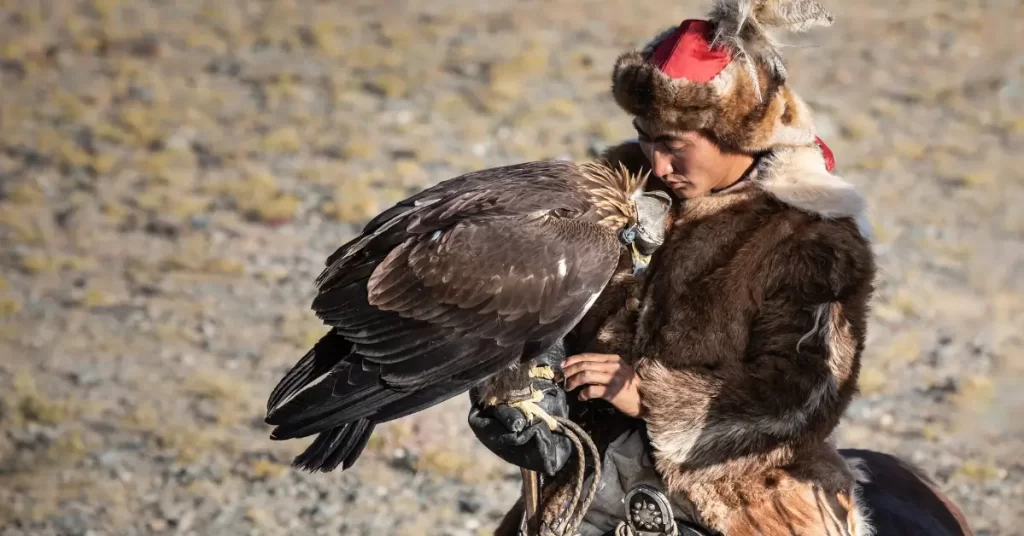
- Baldak (perch): A wooden support carried on horseback for the eagle to rest.
This equipment is often handmade, passed down through generations, and symbolizes the unique bond between hunter and eagle.

Step 5: First Hunts
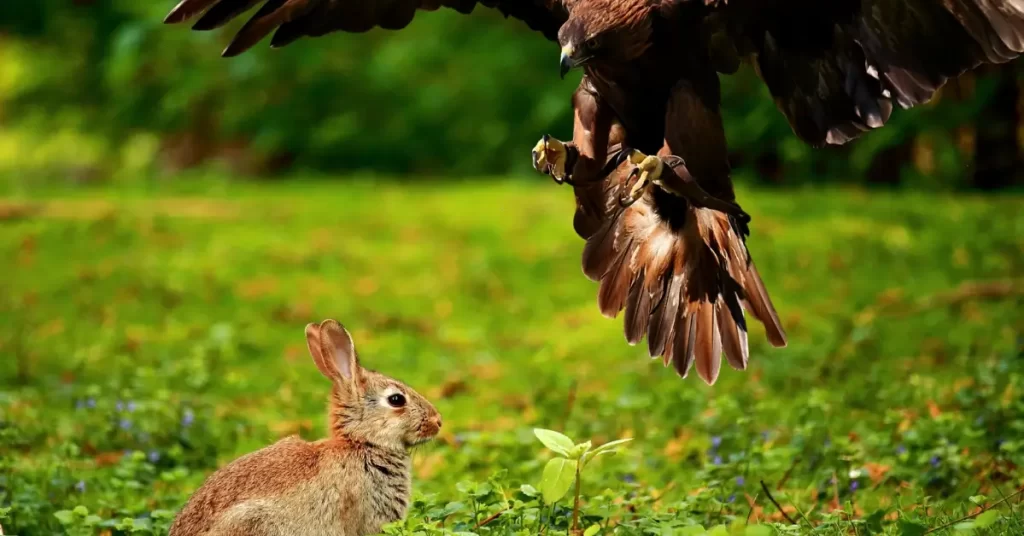
Once the bird is strong, obedient, and accustomed to its equipment, hunters begin the first hunting trials. These hunts usually target small prey like hares or foxes, allowing the eagle to practice its strength, precision, and cooperation.
The first successful kill is a proud moment for both hunter and eagle. It marks the transition from training to partnership, as the eagle proves it can provide for its human companion.
Step 6: Lifelong Bond and Mutual Respect
What makes eagle hunting in the Altai Mountains so extraordinary is not just the technique but the bond. Hunters often describe their eagles as family. They eat, travel, and even rest together. Some hunters whisper to their birds as if they were speaking to a child, while others believe the eagle carries spiritual power and wisdom.
The relationship is built on respect: the hunter never forces the eagle beyond its limits, and after 8–10 years, the eagle is released back into the wild to breed and live freely. This ensures that the tradition is sustainable and that the birds are never exploited.
Step 7: Passing the Knowledge
Among the Kazakhs of the Altai Mountains, teaching the next generation is just as important as training the eagle. Boys as young as 10 begin to assist their fathers, learning how to feed, handle, and care for the birds. By the time they reach adulthood, they are skilled enough to carry on the tradition.
Festivals such as the Golden Eagle Festival in Bayan-Ölgii, Mongolia, provide opportunities for young hunters to showcase their skills, compete, and celebrate their cultural heritage with visitors from around the world.
The Role of the Environment
The rugged Altai Mountains provide the perfect landscape for eagle hunting. With vast open plains, steep ridges, and cold winters, the environment challenges both hunter and eagle, sharpening their skills. Prey like foxes and hares are abundant, ensuring that the tradition remains a practical means of survival even today.
Moreover, the Altai region itself has become a living museum of this heritage, where tourists come not only to witness but also to learn about training a golden eagle and the way of life of eagle hunters.
Why Training a Golden Eagle Matters Today
In an era of modern technology and globalization, one might ask why such ancient practices survive. For Altai Mountains Kazakh hunters, eagle hunting is more than survival—it is identity. Training an eagle connects them to their ancestors, their land, and their community.
Tourism has also given this tradition global recognition, turning the hunters into cultural ambassadors. Visitors from all over the world come to experience the breathtaking partnership between man and bird, ensuring the practice is preserved for generations to come.
Conclusion
The step-by-step process of training a golden eagle is as much about patience and trust as it is about technique. From capturing the bird to building trust, equipping, training, hunting, and eventually releasing, every stage reflects the deep respect between eagle hunters and their birds.
In the Altai Mountains, this tradition continues to thrive, not just as a way of hunting but as a celebration of culture, heritage, and the unbreakable bond between humans and nature. The story of the Altai Mountains Kazakh hunters is a reminder that true partnership with nature requires respect, patience, and balance.
For travelers, witnessing eagle hunting in the Altai Mountains is more than a spectacle—it is an entry into one of the world’s last living traditions, where man and eagle soar together across the endless sky.
If you would like to read more about eagle hunting traditions click below links:
- Golden Eagle Festival: A Celebration of Nomadic Heritage
- Meet the Kazakh Eagle Hunters of the Altai Mountains – Lifestyle and Culture of Eagle Hunter Families
- The Ancient Art of Eagle Hunting in Western Mongolia – History, Traditions, and UNESCO Heritage
- Women and the Future of Eagle Hunting in Mongolia – Rising Role of Young Female eagle Hunters in Keeping Traditions Alive
CLIMB MOUNT KHUITEN MONGOLIA CLIMB
Come and enjoy a unique expedition in the remotely located Altai Mountains CLIMB MOUNT KHUITEN MONGOLIA ⭐⭐⭐⭐⭐ 5.0 · 72…MONGOLIA SNOW LEOPARD PHOTOGRAPHY TOUR
Unleash your adventure spirit, explore Mongolia on your own terms MONGOLIA SNOW LEOPARD PHOTOGRAPHY TOUR ⭐⭐⭐⭐⭐ 5.0 · 72 reviews…Mongolia Altai Mountain Tour 2026 — 8 Days: Peak Climb + Culture + Nomadic Stay | $1,700
Unleash your adventure spirit, explore Mongolia on your own terms MONGOLIA ALTAI MOUNTAIN TOUR ⭐⭐⭐⭐⭐ 5.0 · 72 reviews on…