
The Petroglyphic Complexes of the Mongolian Altai are a UNESCO World Heritage Site inscribed in 2011, located in Bayan-Ölgii Province in far western Mongolia. The rock art spans roughly 12,000 years of human history — the oldest images date to around 11,000 BCE and depict animals long vanished from the region including mammoths, rhinoceros, and ostriches. Later carvings record the gradual change in animal communities and the transition from hunting to a herding-based society. The complexes are one of six UNESCO World Heritage Sites in Mongolia and the only one in the Altai region, making them a natural cultural highlight of any Altai Tavan Bogd trekking trip.
Key Takeaways
- The Petroglyphic Complexes of the Mongolian Altai were inscribed as a UNESCO World Heritage Site in 2011
- Located in Bayan-Ölgii Province, the same region as Altai Tavan Bogd National Park
- The oldest petroglyphs date to roughly 11,000 BCE — about 13,000 years old
- Early images show mammoths, rhinoceros, and ostriches — species no longer found in the region
- Later carvings document the transition from a hunting society to a herding-based one
- One of only six UNESCO World Heritage Sites in Mongolia, and the only one in the Altai
What the Altai Petroglyphs Are
Petroglyphs are images carved, pecked, or scratched into rock surfaces. Across the Mongolian Altai, thousands of these images cover cliff faces, boulders, and rock outcrops — an open-air archive of human life stretching back to the last Ice Age.
The Mongolian Altai petroglyphs are not a single site but a series of complexes scattered across the high valleys of Bayan-Ölgii Province. Together they form one of the most complete records anywhere on Earth of how a human society developed over twelve millennia. The images were made by successive generations of hunters, herders, and nomads who used the same valleys, the same rock faces, and the same visual language across thousands of years.
What makes the Altai complexes exceptional is continuity. Many rock art sites worldwide capture a single culture at a single moment. The Mongolian Altai petroglyphs capture an unbroken sequence — from Ice Age hunters tracking mammoths, through the domestication of animals, to the mounted nomadic herders whose descendants still live in these valleys today.
The UNESCO World Heritage Inscription
The Petroglyphic Complexes of the Mongolian Altai were inscribed on the UNESCO World Heritage List in 2011 as a cultural site. They are located in Bayan-Ölgii Province in western Mongolia.
Mongolia has six UNESCO World Heritage Sites in total:
| Site | Year inscribed | Type |
|---|---|---|
| Uvs Nuur Basin | 2003 | Natural |
| Orkhon Valley Cultural Landscape | 2004 | Cultural |
| Petroglyphic Complexes of the Mongolian Altai | 2011 | Cultural |
| Great Burkhan Khaldun Mountain | 2015 | Cultural |
| Landscapes of Dauria | 2017 | Natural |
| Deer Stone Monuments and Related Bronze Age Sites | 2023 | Cultural |
The petroglyph complexes are the only UNESCO World Heritage Site in the Altai region — every other Mongolian site is in the centre, north, or east of the country. For travellers visiting Bayan-Ölgii for eagle hunting or Altai Tavan Bogd trekking, the petroglyphs are the region’s single internationally recognised heritage landmark.
A 12,000-Year Timeline Carved in Stone
The defining feature of the Mongolian Altai petroglyphs is their age range. The oldest images date to around 11,000 BCE — roughly 13,000 years ago, at the end of the last Ice Age.
The carvings can be loosely grouped into broad eras:
| Era | Approximate date | What the art shows |
|---|---|---|
| Late Ice Age | c. 11,000 BCE | Mammoths, rhinoceros, ostriches — cold-climate megafauna |
| Post-glacial / early Holocene | c. 9,000–5,000 BCE | Changing animal communities as the climate warmed |
| Neolithic / Bronze Age transition | c. 5,000–1,000 BCE | First domesticated animals, the shift to herding |
| Later periods | c. 1,000 BCE onward | Mounted herders, wagons, hunting scenes, daily life |
This sequence is what gives the site its Outstanding Universal Value in UNESCO’s framework. The petroglyphs document, in a single connected landscape, the most important transition in human prehistory: the change from hunting wild animals to herding domesticated ones.
What the Rock Art Actually Shows
The earliest Mongolian Altai petroglyphs depict animals that no longer exist anywhere near the region: mammoths, rhinoceros, and ostriches. Their presence in the rock art is direct evidence that the Altai of 13,000 years ago had a completely different climate and ecosystem — cold steppe-tundra supporting Ice Age megafauna.
As the carvings move forward in time, the imagery changes:
- Hunting scenes: archers, hunting drives, animals being pursued and trapped
- Wild animals: ibex, argali, deer, wolves — many of the same species still found in the Altai today
- Domestication markers: the first appearance of herded animals, corrals, and pens
- Mounted life: horses and riders, wagons, the equipment of nomadic pastoralism
- Daily life: family groups, dwellings, and the rhythms of seasonal movement
For modern visitors, the most striking thing is recognition. The herding scenes carved 3,000 years ago show a way of life almost identical to what Kazakh and Mongol nomads still practise in these valleys — the same animals, the same seasonal migration, the same relationship between people and the high pastures.
Where the Petroglyph Complexes Are
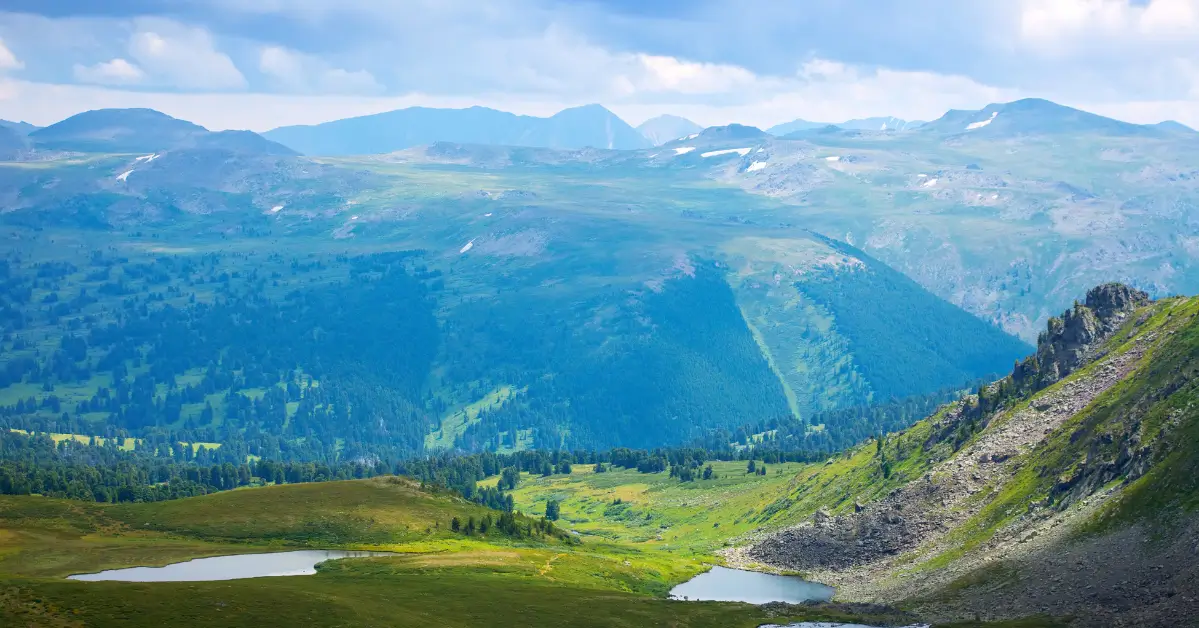
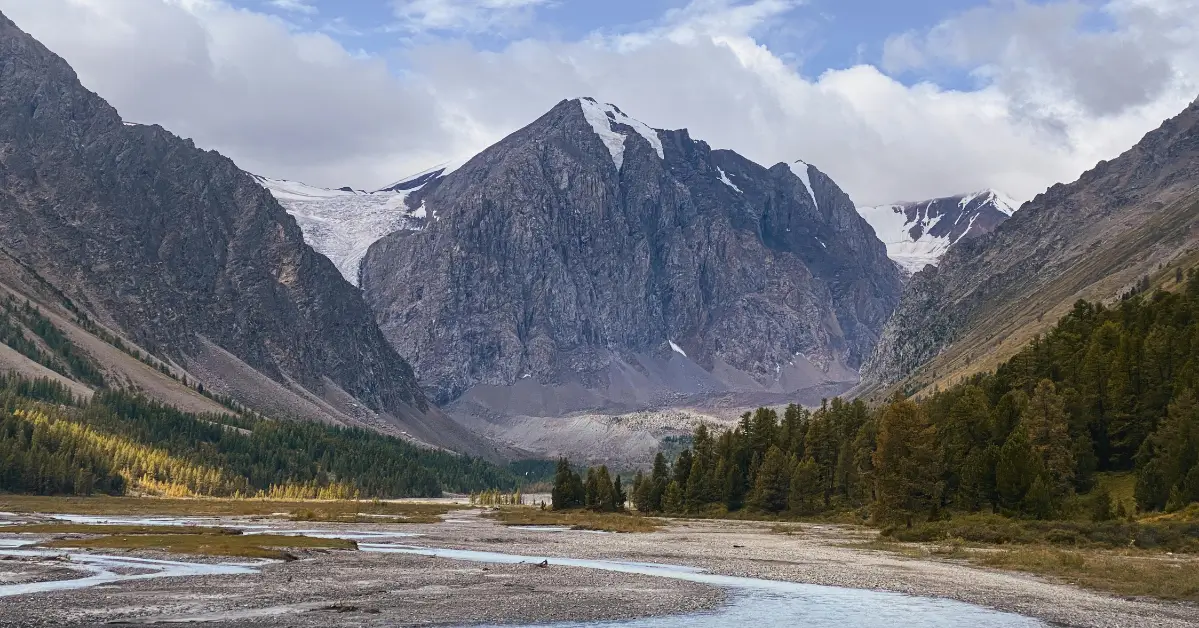
The Petroglyphic Complexes of the Mongolian Altai are distributed across the high valleys of Bayan-Ölgii Province. The inscribed property includes several distinct rock art concentrations in the upland valleys near the Altai Tavan Bogd massif and the surrounding mountain country.
For practical travel planning: – The complexes sit in remote mountain valleys, generally reached by 4×4 plus a short walk – They are in the same geographic region as Altai Tavan Bogd National Park — most petroglyph sites can be combined with a Tavan Bogd trekking itinerary – The nearest town and travel hub is Ölgii, the provincial capital, reached by domestic flight from Ulaanbaatar – There is no large visitor infrastructure — no museum building, no ticket gates. The petroglyphs are in the open landscape, much as they have been for thousands of years
This remoteness is part of the experience. Standing in a high valley with carvings made 12,000 years ago, surrounded by the same mountains, with no crowds and no glass cases, is very different from seeing rock art in a museum.
Visiting the Petroglyphs Responsibly
Open-air rock art is fragile. The Mongolian Altai petroglyphs have survived 13,000 years, but modern visitor pressure can damage them quickly if visitors are careless. Responsible visiting practice:
- Never touch the carvings. Skin oils accelerate weathering of the rock surface.
- Never apply water, chalk, or any substance to “bring out” the images for a photo. This is permanently damaging and is the single worst thing a visitor can do.
- Do not make rubbings or casts. These abrade the surface.
- Stay on existing paths where they exist; avoid climbing on the carved rocks.
- Photograph in raking light — early morning or late afternoon sun reveals the carvings naturally without any need to touch or treat the rock.
- Take only photographs. Removing or chipping rock fragments is both illegal and destroys irreplaceable heritage.
- Travel with a knowledgeable guide who can show you the sites and explain what you are seeing without harming them.
For travellers planning a trip, the petroglyph complexes combine naturally with an Altai Tavan Bogd trekking itinerary. Our 6-Day Best Of Altai Tavan Bogd tour and the 5-Day Altai Tavan Bogd tour both travel through the upland country where the rock art is found, and a local guide can include accessible petroglyph sites in the route. To understand the broader landscape, see our overview of Altai Tavan Bogd trekking routes.
Suggested Tours:
Suggested Blogs:
Self-Guided vs Guided Motorcycle Tour in Mongolia: Which One Actually Fits Your Ride?
For roughly 85% of international riders, a fully-guided Mongolia motorcycle tour is the right format — the supported package costs…Mongolia Motorcycle Packing List 2026: What You Actually Need for the Altai
A 10-day Mongolia motorcycle tour packing list comes down to five layers of gear: serious riding kit (full helmet, armoured…Mongolia Motorcycle Tour Cost in 2026: What You’ll Actually Pay (and What’s Included)
A guided 10-day Mongolia motorcycle tour costs around $3,600 per person in 2026 when booked through a licensed local operator…





When were the Altai petroglyphs added to the UNESCO World Heritage List?
The Petroglyphic Complexes of the Mongolian Altai were inscribed as a UNESCO World Heritage Site in 2011, as a cultural site. They are located in Bayan-Ölgii Province in western Mongolia and are one of six UNESCO World Heritage Sites in the country.
How old are the Mongolian Altai petroglyphs?
The oldest carvings date to around 11,000 BCE — roughly 13,000 years ago, at the end of the last Ice Age. The petroglyphs were made continuously over the following twelve millennia, with later images dating right up to the era of mounted nomadic herding.
What do the Altai petroglyphs depict?
The earliest images show Ice Age animals including mammoths, rhinoceros, and ostriches — species no longer found in the region. Later carvings show hunting scenes, wild animals like ibex and argali, the first domesticated herds, and eventually mounted herders with horses and wagons. Together they record the transition from a hunting society to a herding-based one.
Where exactly are the petroglyph complexes?
They are distributed across the high valleys of Bayan-Ölgii Province in western Mongolia, in the same region as Altai Tavan Bogd National Park. There is no single museum or visitor centre — the carvings are in the open landscape, generally reached by 4×4 vehicle plus a short walk. The nearest travel hub is Ölgii, the provincial capital.
Can I visit the petroglyphs on an Altai Tavan Bogd trip?
Yes. The petroglyph complexes are in the same upland country that Altai Tavan Bogd trekking tours travel through. A local guide can include accessible rock art sites in a Tavan Bogd itinerary. Because the sites are remote and unsigned, a knowledgeable guide is the practical way to find and understand them.
Is it safe to touch or photograph the petroglyphs?
Photographing is fine and encouraged — use early morning or late afternoon raking light to reveal the carvings naturally. Touching is not: skin oils accelerate the weathering of the rock surface. Never apply water, chalk, or any substance to “enhance” the images for a photo — this causes permanent damage. Take only photographs, leave the rock untouched.