
On the Altai Tavan Bogd trek, your drinking water comes from glacier-fed rivers, alpine springs, and mountain streams — all of which must be treated before drinking. Glacial meltwater is cold and abundant but often cloudy with suspended “rock flour” (finely ground rock), which is harmless to drink but should be left to settle before filtering. Springs higher up the valleys give the clearest water. The two real risks are microbial contamination from livestock and wildlife upstream, and stomach upset from drinking water far colder than your body expects. Treat all water by boiling, filtering, or chemical purification, carry a 1.5–2 litre capacity, and let your guide identify the best sources each day.
Key Takeaways
- All trek water comes from glacier rivers, alpine springs, and streams — treat every source
- Glacial meltwater is safe to drink once treated but often cloudy with harmless “rock flour”
- Let cloudy glacial water settle before filtering — sediment clogs filters fast
- Springs in the upper valleys give the clearest, easiest-to-treat water
- Main contamination risk is livestock and wildlife upstream — never assume “remote = clean”
- Carry 1.5–2 litres capacity; refill at every reliable source
- Boiling, filtering, and chemical treatment all work — most trekkers carry two methods
The Three Water Sources in Altai Tavan Bogd
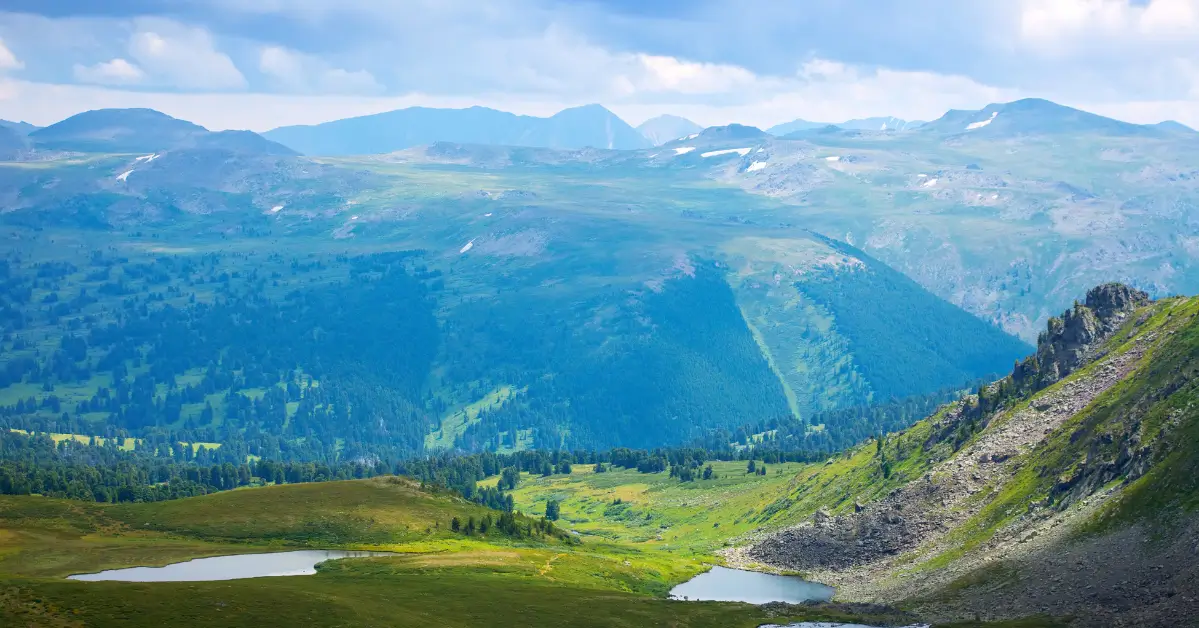
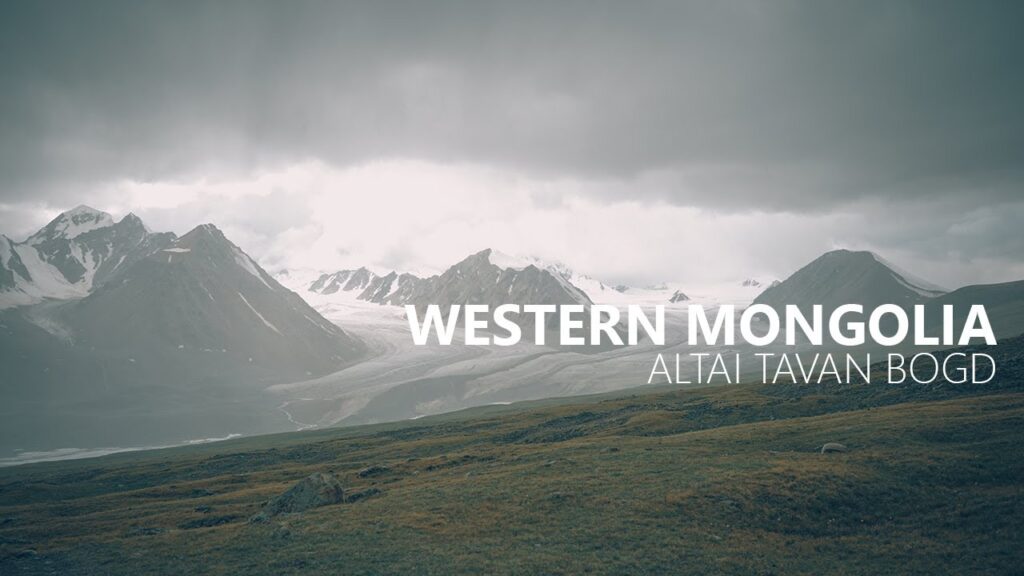
Altai Tavan Bogd National Park is a high-altitude landscape built on glaciers and snowmelt. The park’s Potanin Glacier — Mongolia’s longest — and the Alexandra Glacier feed a network of rivers and streams that you will follow, cross, and drink from for the entire trek. There are three kinds of water source you will encounter:
| Source | Where | Water quality | Notes |
|---|---|---|---|
| Glacier-fed rivers | Valley floors, draining the Potanin and other glaciers | Cold, often cloudy with rock flour | Most abundant; let settle before filtering |
| Alpine springs | Higher valley slopes, where groundwater emerges | Clearest water, naturally filtered through rock | Best source — but smaller flow |
| Mountain streams | Side valleys and snowmelt channels | Variable — clear high up, murkier lower down | Quality depends heavily on what’s upstream |
Your guide and crew know the reliable sources along each day’s route. Camps are almost always positioned near water — the expedition cook needs it for meals and the camp needs it for washing. But the water you scoop into your own bottle during the day’s walking is your responsibility to treat.
Understanding Glacial Meltwater and Rock Flour
The most common water you’ll drink in Altai Tavan Bogd is glacial meltwater, and it has one feature that surprises first-time visitors: it is often cloudy, grey, or milky rather than crystal clear.
This cloudiness is rock flour — extremely fine particles of rock ground up by the glacier as it moves over bedrock. The glacier acts like a giant grinding wheel against the granite and schist beneath it, and the resulting silt washes into the meltwater. Rock flour is what gives many glacial rivers and lakes their distinctive turquoise or grey colour.
Key facts about rock flour: – It is not a health hazard — it is just finely ground stone, not a contaminant – It does clog water filters quickly — sediment blocks the filter membrane – It settles out if you let the water stand — pour cloudy water into a bottle and wait 15–30 minutes, and most of the silt drops to the bottom – Glacial water is also very cold — drinking large volumes of near-freezing water fast can cause stomach cramps
The practical routine: collect glacial water, let it settle, decant the clearer water off the top, then filter or treat that. This protects your filter and gives you better-tasting water.
Why Even Remote Water Needs Treatment
There is a persistent myth that water in remote mountains is automatically safe to drink. In Altai Tavan Bogd, this is false — and the reason is the same thing that makes the region special: it is a living pastoral landscape.
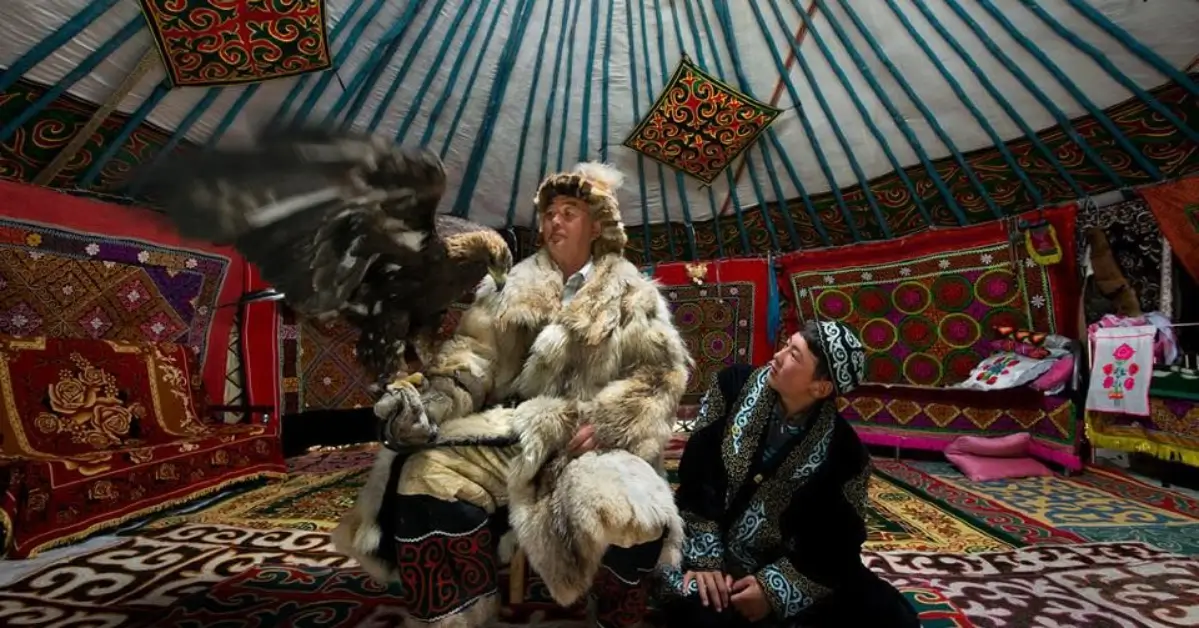
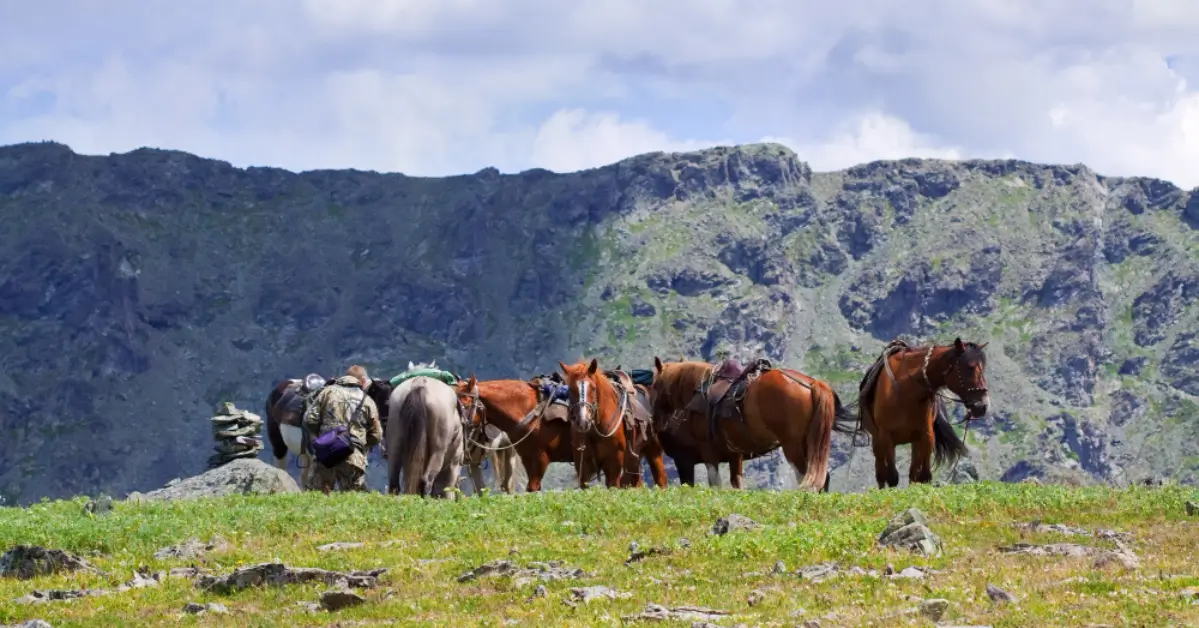
The Altai valleys are summer pasture for Kazakh and Mongol herders. Where you trek, livestock graze: sheep, goats, horses, yaks, and camels. Wild animals — argali, ibex, marmots — also use the same water. Any of these animals upstream of your collection point can introduce microbial contamination: bacteria, protozoa such as Giardia, and other pathogens.
The risk is not visible. Clear, cold, fast-flowing water can still carry Giardia cysts. A stream that looks pristine may have a herder camp or a marmot colony half a kilometre upstream that you cannot see.
The rule is simple and absolute: treat every source, every time. The few seconds it takes to filter or add a purification tablet is nothing compared to days of giardiasis ruining your trek. Even experienced trekkers who “have a strong stomach” should not gamble on untreated water in a grazed landscape.
How to Treat Water on the Trek
Three methods work in Altai Tavan Bogd. Most trekkers carry two — a primary method and a backup.
1. Boiling – The expedition cook boils water for meals and can boil drinking water on request – Bringing water to a rolling boil kills all bacteria, viruses, and protozoa – At altitude water boils at a lower temperature, but a rolling boil is still effective – Downside: needs fuel and time; not practical for refills during the day’s walk
2. Filtering – A pump filter or squeeze filter (Sawyer, Katadyn, MSR) removes bacteria and protozoa – Fast and convenient for on-the-trail refills – Critical for the Altai: let cloudy glacial water settle first — rock flour clogs filters – A filter does NOT remove viruses (rarely a concern in Altai, but worth knowing) – Carry filter cleaning supplies; cold can stiffen filter components
3. Chemical treatment – Purification tablets (chlorine dioxide, iodine) or drops – Lightweight, foolproof, no moving parts to freeze or break – Kills bacteria, viruses, and protozoa (chlorine dioxide; iodine is less reliable against Giardia) – Downside: 30 minutes wait time, slight taste – Excellent backup method — most trekkers carry tablets even if their main method is a filter
UV purifiers (SteriPen-style) also work but depend on batteries, which drain fast in cold — bring spares if this is your method.
The combination most Altai trekkers use: a squeeze filter for daytime refills, plus chlorine dioxide tablets as a backup and for treating water the filter can’t handle (very silty sources).
How Much to Carry and When to Refill
Hydration at altitude matters more than at sea level — the dry air and exertion dehydrate you faster than you notice.
Capacity: Carry 1.5 to 2 litres of capacity. A combination works well — a 1L bottle plus a 1L collapsible bladder, or a 2L bladder. You rarely need to carry more because water sources are frequent.
When to refill: – At camp each morning (treated water for the day’s start) – At every reliable source you pass — top up before you need to, not after you’ve run dry – Before any long dry stretch or pass crossing (your guide will flag these) – The expedition cook fills group water at camp; you handle daytime trail refills
Daily intake: Aim for 3–4 litres of total fluid per day on a trekking day, more in hot weather. This includes water, tea at camp, and soup with meals. Watch the colour of your urine — pale is good, dark means drink more.
Cold-water caution: Glacial meltwater is near freezing. Drinking a litre of it quickly can trigger stomach cramps. Sip steadily rather than gulping, and if possible let collected water warm slightly in your pack before drinking large amounts.
Practical Water Tips for the Altai
A few habits that make water management easier on an Altai Tavan Bogd trek:
- Collect from flowing water, not standing pools. Moving water is fresher; stagnant pools concentrate contamination.
- Collect upstream of any camp, livestock, or trail crossing — never downstream.
- Fill in the morning when glacial rivers run lowest and clearest. Afternoon meltwater peaks bring more silt.
- Keep one bottle “clean” and one “dirty.” Use one bottle only for treated water, one only for collecting untreated — don’t cross-contaminate the mouthpiece.
- Insulate your bottle in cold weather — a bottle left out overnight can freeze; keep it in your sleeping bag on cold nights.
- Carry electrolyte tablets or powder. Treated glacial water is very “empty” — adding electrolytes helps absorption and replaces salts lost to exertion.
- Trust your guide on sources. Local guides know which streams are reliable, which valleys have herder camps upstream, and where the best springs are.
The Altai is one of the better-watered trekking regions in Mongolia — you are rarely far from a source. The challenge is not finding water but treating it consistently. Build the habit on day one and it becomes automatic.
For the full trek context, see our Altai Tavan Bogd trekking routes overview and the Altai Tavan Bogd packing list, which covers water bottles, filters, and the rest of your gear. Our 6-Day Best Of Altai Tavan Bogd tour and 11-Day Mongolia Trekking Tour both include a guide and expedition cook who manage group water safety throughout.
Suggested Tours:
Suggested Blogs:
Self-Guided vs Guided Motorcycle Tour in Mongolia: Which One Actually Fits Your Ride?
For roughly 85% of international riders, a fully-guided Mongolia motorcycle tour is the right format — the supported package costs…Mongolia Motorcycle Packing List 2026: What You Actually Need for the Altai
A 10-day Mongolia motorcycle tour packing list comes down to five layers of gear: serious riding kit (full helmet, armoured…Mongolia Motorcycle Tour Cost in 2026: What You’ll Actually Pay (and What’s Included)
A guided 10-day Mongolia motorcycle tour costs around $3,600 per person in 2026 when booked through a licensed local operator…

Can you drink the water in Altai Tavan Bogd?
Not untreated. All water in Altai Tavan Bogd — even clear, cold, fast-flowing streams — must be treated before drinking, because the valleys are grazed by livestock and used by wildlife that can introduce contamination upstream. Once treated by boiling, filtering, or chemical purification, the water is safe and abundant.
Why is the glacial water cloudy?
The cloudiness is “rock flour” — extremely fine rock particles ground up by the glacier moving over bedrock. It is harmless to drink but clogs water filters quickly. Let cloudy glacial water settle for 15–30 minutes so the silt drops out, then decant and treat the clearer water on top.
What’s the best way to treat water on the trek?
Most trekkers carry two methods: a squeeze or pump filter for fast daytime refills, plus chlorine dioxide tablets as a backup and for very silty water. Boiling (done by the expedition cook) is also fully effective. The key is consistency — treat every source, every time.
How much water should I carry?
Carry 1.5 to 2 litres of capacity — for example a 1L bottle plus a 1L bladder. Water sources are frequent in Altai Tavan Bogd, so you rarely need more. Aim to drink 3–4 litres of total fluid per day on a trekking day, including tea and soup at camp.
Is the glacial water too cold to drink?
Glacial meltwater is near freezing. It is safe to drink once treated, but drinking a large volume quickly can cause stomach cramps. Sip steadily rather than gulping, and let collected water warm slightly in your pack before drinking large amounts.
Does the tour provide drinking water?
The expedition cook boils and provides group water at camp for meals and bottle-filling. During the day’s walking, trail refills from rivers and streams are your responsibility to treat. Your guide identifies the best and safest sources along each day’s route.