
Kazakh and Mongol nomads share the Altai Mountains of western Mongolia but come from two distinct cultures with different languages, religions, and traditions. Kazakhs speak a Turkic language and are predominantly Sunni Muslim; Mongols speak a Mongolic language and follow Tibetan Buddhism with Tengrist shamanic roots. Kazakhs live in canvas-covered yurts while Mongols live in felt-covered gers. Kazakh culture is famous for eagle hunting on horseback; Mongol culture is built around Naadam — wrestling, archery, and horse racing. In Bayan-Ölgii Province (88.7% Kazakh), travellers meet both communities, but the visible cultural texture is overwhelmingly Kazakh.
Key Takeaways
- Kazakhs are Turkic-speaking; Mongols are Mongolic-speaking — two different language families
- Kazakhs are predominantly Sunni Muslim; Mongols follow Tibetan Buddhism (Gelugpa school) with Tengrist shamanism
- Bayan-Ölgii Province is 88.7% ethnic Kazakh — the only Kazakh-majority province in Mongolia
- Approximately 120,999 Kazakhs live in Mongolia (2020 census)
- Eagle hunting is a Kazakh tradition; Naadam (wrestling, archery, horse racing) is the Mongol national festival
- Both nomadic systems are seasonal, but Kazakhs traditionally herded fat-tailed sheep, Bactrian camels, and horses
- Kazakh clan structure is organised into three hordes (jüz); Mongol structure is built around clans like the royal Borjigin
Language — Turkic vs Mongolic
The single most fundamental difference between Kazakh and Mongol nomads is language. They belong to two unrelated language families that have shaped completely different cultural worlds.
Kazakh language is a member of the Turkic language family, related to Uzbek, Kyrgyz, Tatar, Uyghur, Turkmen, Turkish, and Azerbaijani. Kazakh in Mongolia is written in a modified Cyrillic alphabet (similar to the Mongolian official script) but is otherwise mutually intelligible with Kazakh spoken in Kazakhstan.
Mongolian language is the principal member of the Mongolic language family — completely unrelated to Turkic. Other Mongolic languages include Buryat, Kalmyk, and several smaller Inner Asian languages.
In Bayan-Ölgii, most younger Kazakhs are bilingual — fluent in Kazakh at home and in Khalkha Mongolian for school, business, and government affairs. Mongols outside the province generally do not speak Kazakh. This linguistic divide is the basis for the cultural difference: when you say “Kazakh” or “Mongol” you are first naming a language.
Religion — Islam vs Tibetan Buddhism + Tengrism
The second major divide is faith.
Kazakhs are predominantly Sunni Muslim. The Kazakhs of Mongolia continue to identify with their Islamic heritage, with the Hanafi school being most common. The Abu-Bakr Siddiq Central Mosque in Ölgii is the focal point for the Islamic Center of Mongolia. Daily life observances are typically modest: prayer is private, fasting during Ramadan is variable, dietary observance (halal, no pork) is widely followed.
Mongols follow Tibetan Buddhism, primarily of the Gelugpa school, layered onto an older Tengrist shamanic tradition. Tengrism remains visible in modern Mongol practice — sky reverence (Tengri the sky-god), ovoo cairns at mountain passes, and the spiritual significance of natural sites. Buddhist monasteries dating to the 17th century remain active across Mongolia’s heartland, though almost none operate in Bayan-Ölgii (the Kazakh-majority west).
These two religious systems are not in conflict in Mongolia. Each community practices its own traditions; both are constitutionally protected. The visual impact is dramatic — Kazakh family homes often have a small wall niche for the Qur’an and a prayer mat; Mongol family homes often have a small Buddhist altar with deity images and butter lamps.
Dwellings — Yurt vs Ger
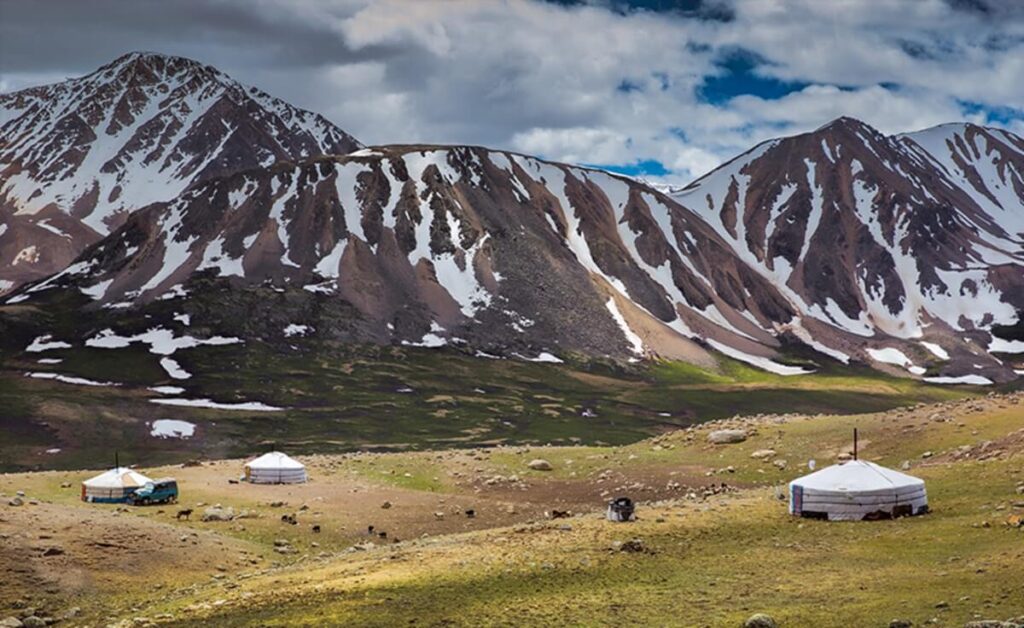
Both groups live in portable round felt and lattice tents that look superficially identical to outside observers. The structures share Inner Asian origins but have evolved different details.
| Feature | Kazakh yurt (kiyiz uy) | Mongol ger |
|---|---|---|
| Roof | Domed, often canvas-covered over felt | Conical / shallow-dome, traditionally white felt |
| Door | Single door, often more ornate | Single door, typically painted blue/orange |
| Interior layout | Family bed area opposite the door; rich tapestry walls | Family bed area same; less decoration, more functional |
| Stove placement | Central, usually wood-burning | Central, often dung-burning |
| Decorative emphasis | Wall textiles (syrmaq), embroidered cushions | Painted wooden frame, religious icons |
| Move time (set-up) | ~3 hours for experienced family | ~2 hours for experienced family |
Kazakhs traditionally used “yurts” — the word itself is the Russian-and-Turkic word for the tent. Mongols use “ger” — the Mongolian word for the same structure. In Mongolia, you’ll hear both words used: “ger” by Mongol speakers, “yurt” by Kazakh speakers or in English-language tourism contexts.
The interior is the most visible cultural difference. A Kazakh yurt is a riot of bright tapestries (syrmaq), embroidered hanging panels, and family photographs. A Mongol ger is more spare — religious shrine, family photos, a few tools, less wall decoration.
Pastoral Animals and Herding Patterns
Both communities are seasonal nomads who move livestock between winter and summer pastures. The animals they keep differ in emphasis:
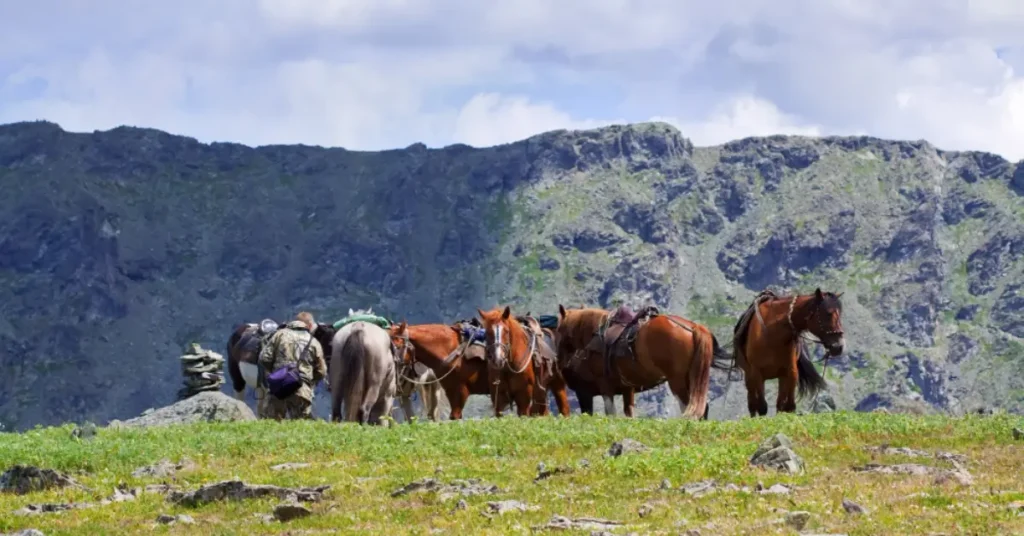
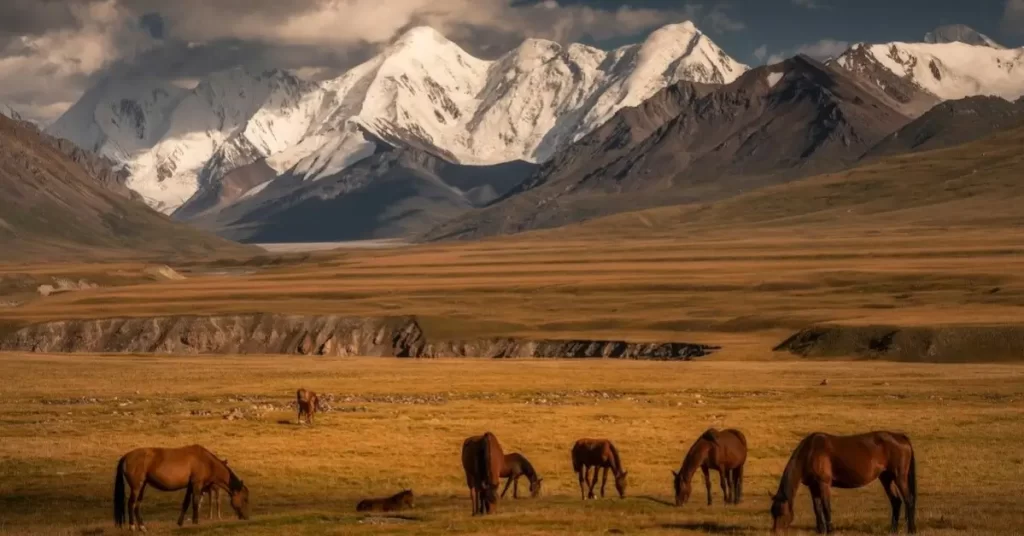
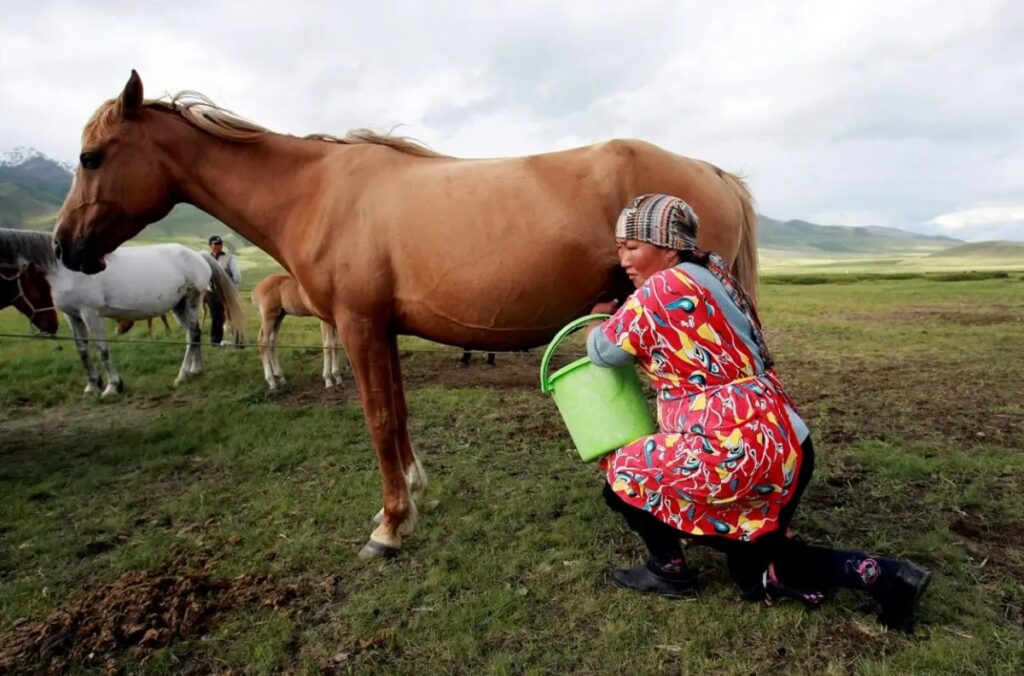
Kazakh herding traditionally focuses on: – Fat-tailed sheep (a distinct Central Asian breed) – Bactrian camels (for transport across long distances and saddle/pack work) – Horses (for daily riding, milking, and meat) – Goats (cashmere production)
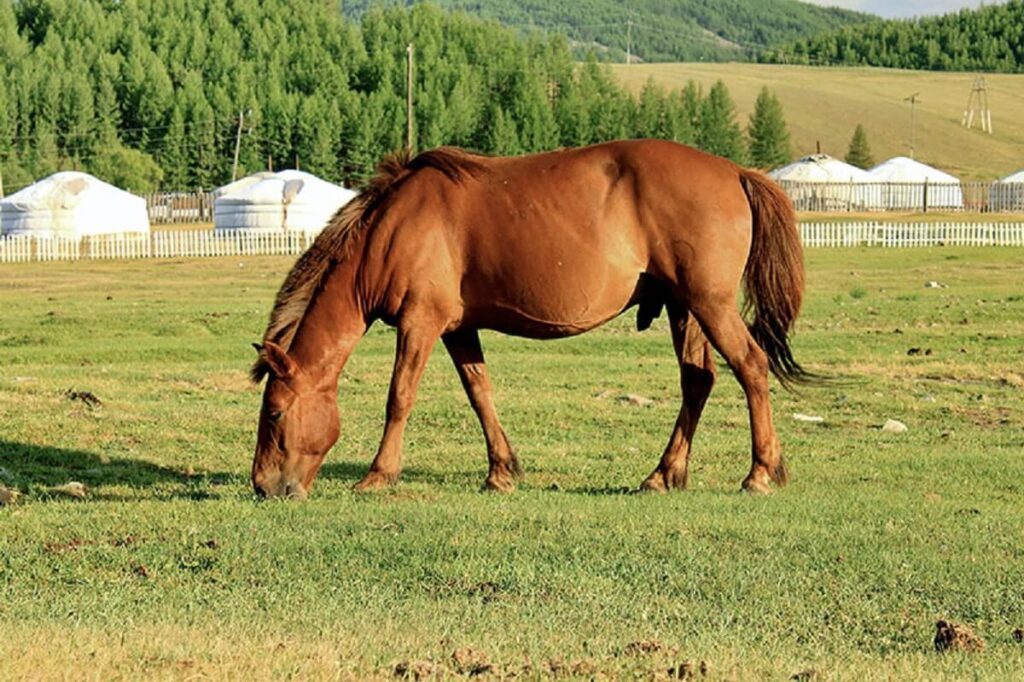
Mongol herding (Khalkha and other groups) focuses on what’s known as “the five snouts” (tavan khoshuu mal): – Horses (cultural centre — racing, milk, transport) – Sheep (meat, wool, felt) – Goats (cashmere) – Cattle / yaks (depending on region — yaks dominant in mountains) – Bactrian camels (less common than for Kazakhs)
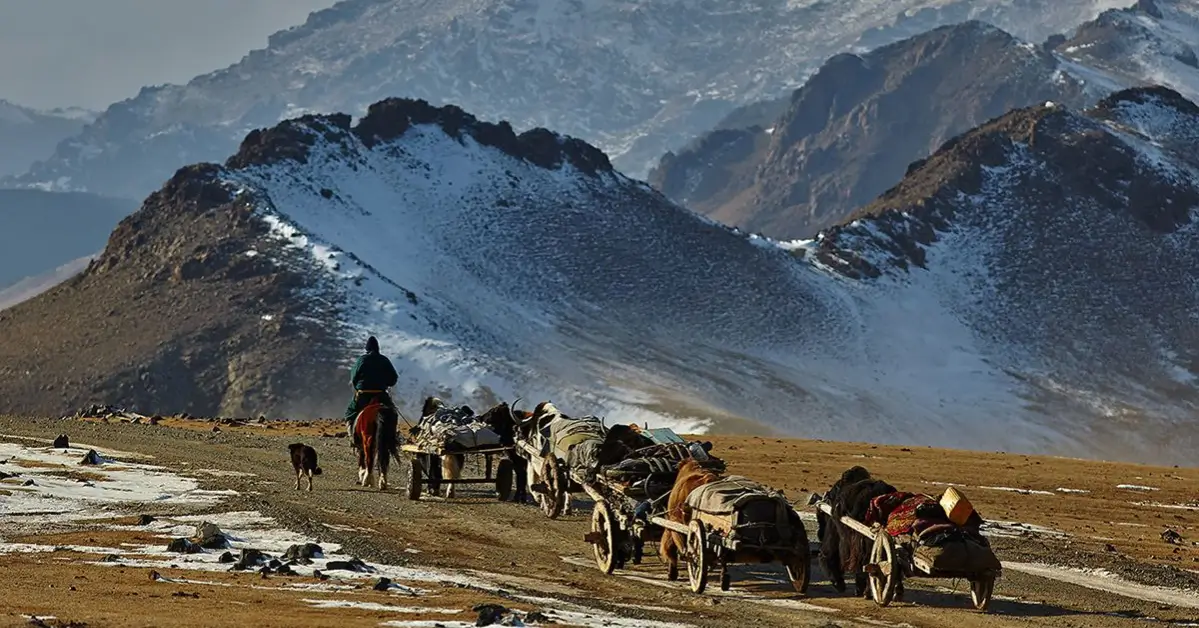
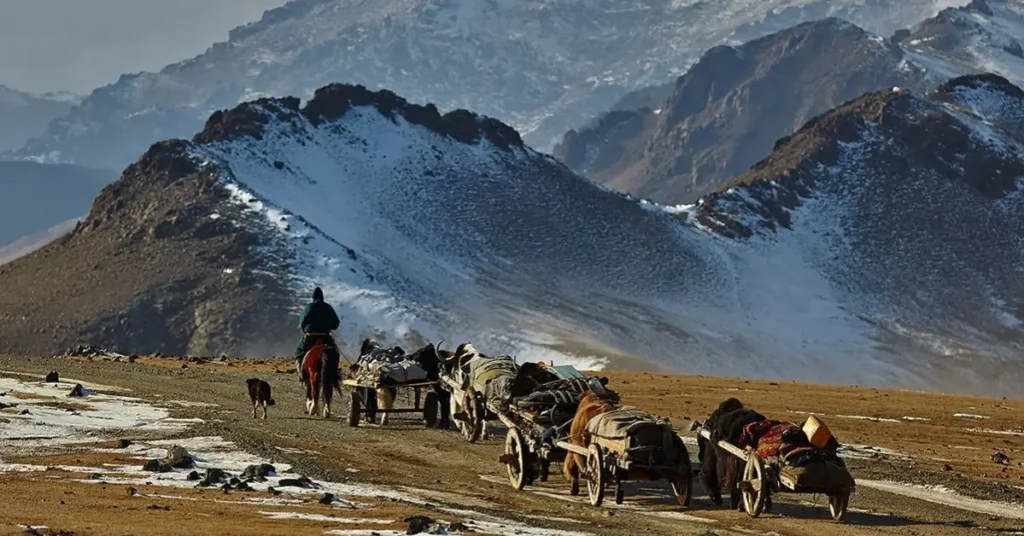
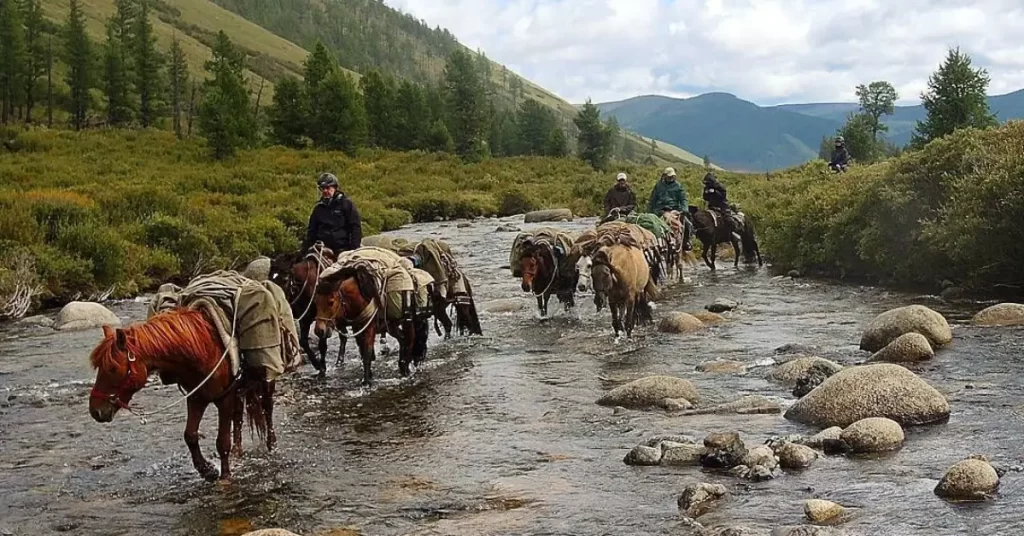
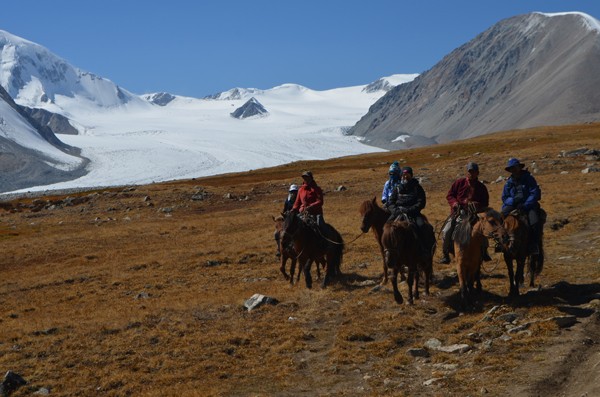
Both groups migrate seasonally — summer pastures at higher altitudes (1,800-2,500m+), winter pastures at lower more sheltered valleys. The timing and routes differ by family, but the basic pattern is identical: follow grass and water across the seasons.
Signature Cultural Practices — Eagle Hunting vs Naadam
This is where the cultural identities are most visible:
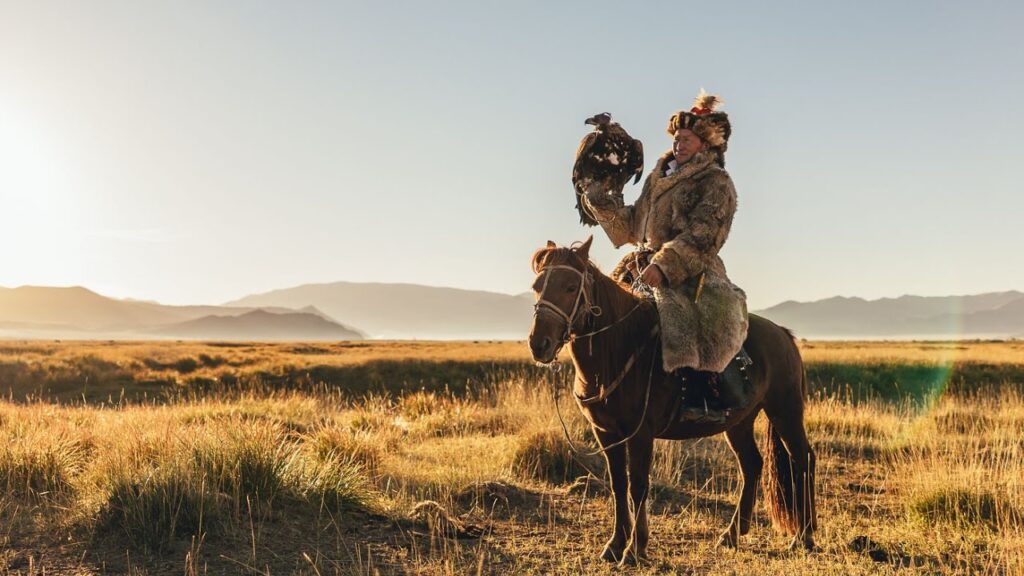
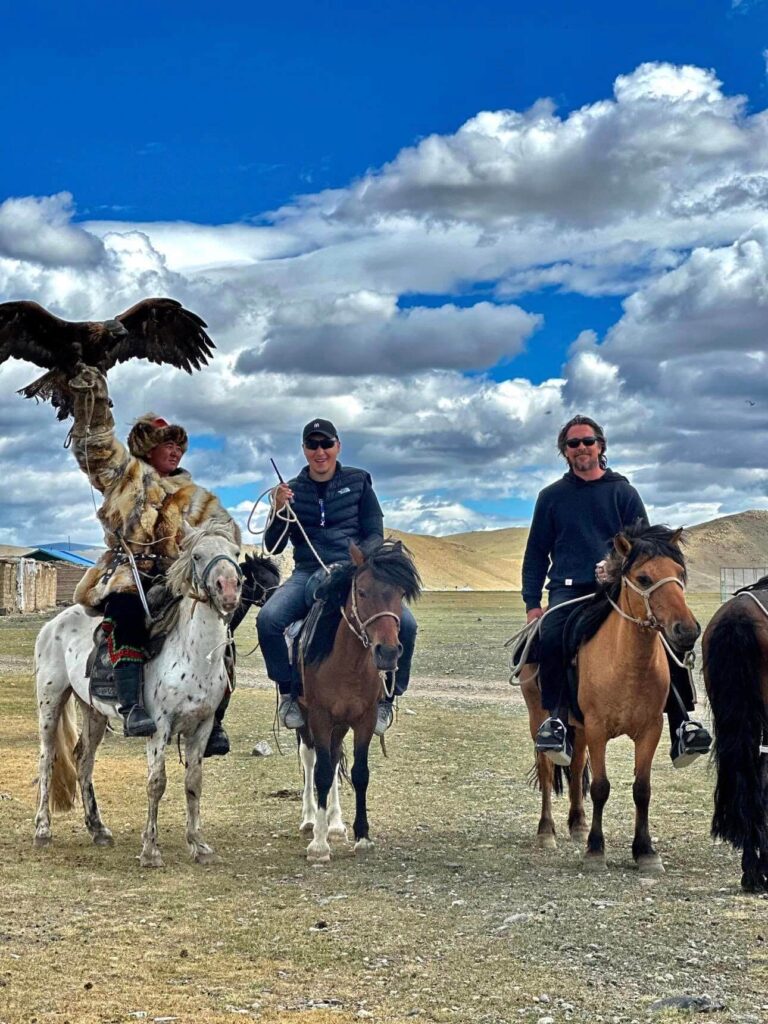
Kazakh signature: Eagle hunting. The Kazakh berkutchi tradition of hunting with trained female golden eagles is the most recognisable cultural marker of Bayan-Ölgii. UNESCO inscribed falconry as Intangible Cultural Heritage in 2010, with Mongolia and Kazakhstan among the participating States Parties. The annual Sagsai Eagle Festival (mid-September) and Ulgii Golden Eagle Festival (October) are the two visible expressions of this practice.
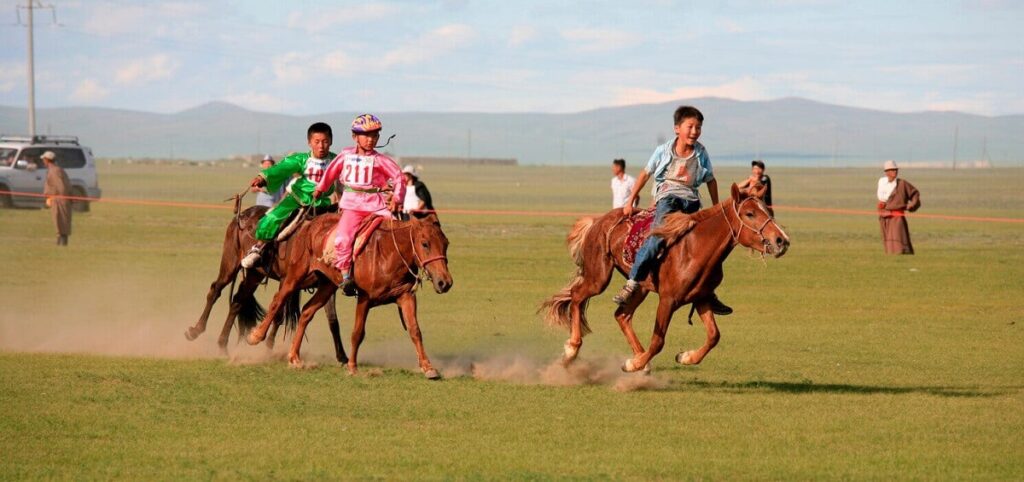
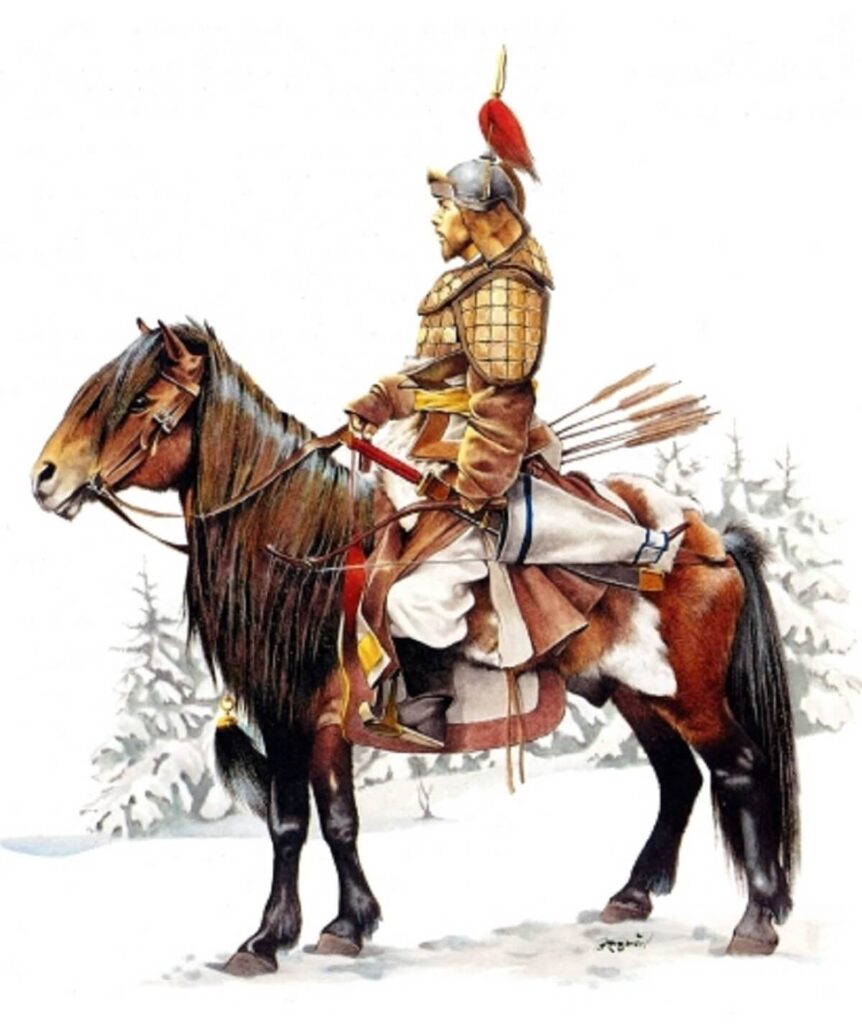
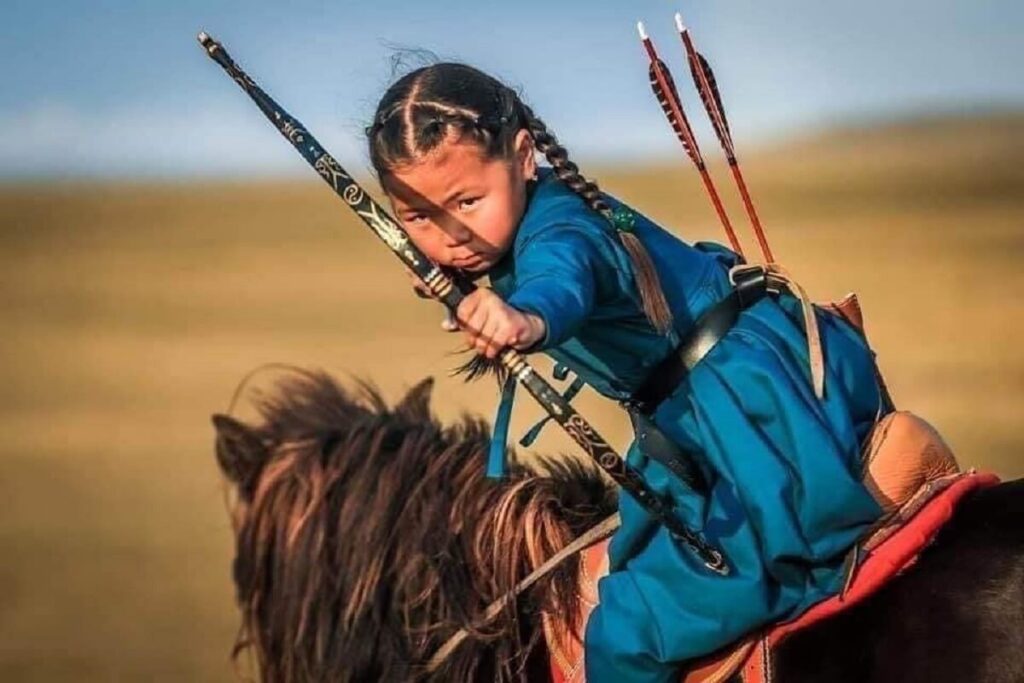
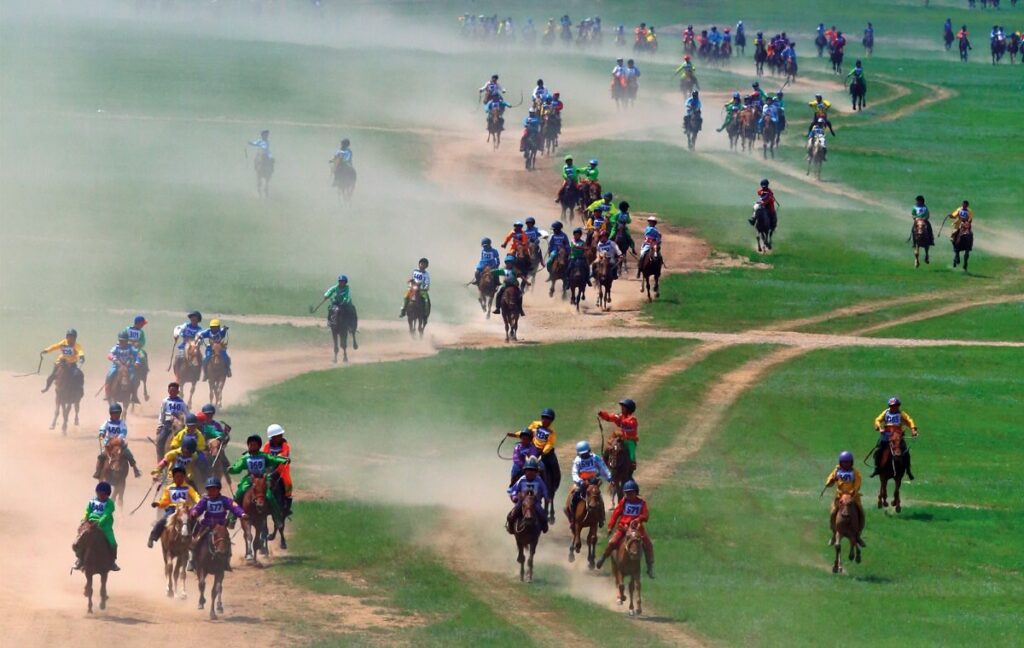
Mongol signature: Naadam. The “three manly games” — wrestling (bökh), horse racing, and archery — make up the Naadam festival held every July across Mongolia. UNESCO inscribed Naadam as Intangible Cultural Heritage in 2010. Wrestling in particular is a national obsession, with bökh champions enjoying celebrity status. Naadam in Bayan-Ölgii does happen (the Kazakh community participates) but is smaller than in Khalkha-majority provinces.
Other signature practices:
| Kazakh | Mongol |
|---|---|
| Eagle hunting | Naadam (wrestling, archery, horse racing) |
| Kokpar (horseback game with goatskin) | Buz kashi variants |
| Dombra (two-stringed instrument) | Morin khuur (horse-head fiddle) |
| Beshbarmak (lamb-and-noodle dish) | Buuz, khuushuur (dumplings) |
| Aitys (improvised poetry contest) | Long-song (urtyn duu) |
| Felt-craft syrmaq tapestries | Felt-craft for ger walls + saddle pads |
Both cultures share Tengrist roots predating Islam and Buddhism, which is why ovoo cairns at mountain passes appear across both communities, even though formal religious practice now differs.
Where You Encounter Each Culture in the Altai
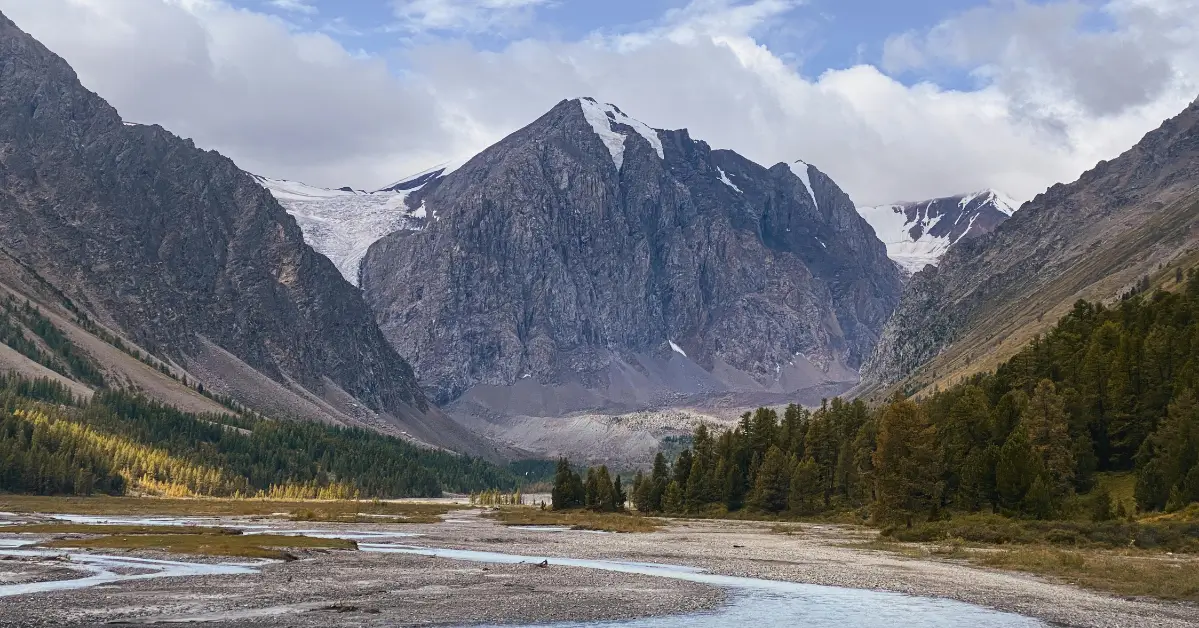
Travellers visiting western Mongolia mostly meet Kazakh families. The numbers explain why:
- Bayan-Ölgii Province: 88.7% Kazakh, total Kazakh population ~120,999 in Mongolia (2020 census).
- Khovd, Uvs, neighbouring provinces: majority Khalkha Mongol or Dörvöd-Mongol with small Kazakh enclaves.
In practice this means: – A 7-day Bayan-Ölgii tour primarily meets Kazakh eagle hunters, Kazakh herders, Kazakh families. Yurts not gers. Kazakh food. Kazakh language outside the cities. – A tour that adds Khovd or further east into central Mongolia begins encountering Mongol families. Different gers, different food (buuz dumplings, suutei tsai milk tea), different religious markers. – A general Mongolia tour starting in Ulaanbaatar with travel through central and northern Mongolia is overwhelmingly Mongol — you may not meet a Kazakh family unless you specifically travel west.
For a focused cultural deep-dive on Kazakh culture, our Mongolian Eagle Hunter Tour places you with active Kazakh berkutchi families for the cultural week. For broader nomadic experience including Mongol communities, the Mongolian Nomadic Life Tour covers a wider geographic range.
What This Means for Visitors
Three practical takeaways for travellers planning a Mongolia trip:
1. Choose by interest. If eagle hunting and Kazakh Sunni Muslim culture appeal — go to Bayan-Ölgii. If Naadam wrestling, Buddhist heritage, and Khalkha Mongol traditions appeal — go to central or eastern Mongolia. A single trip can do both if it’s 14+ days.
2. Language helps. Learning ten phrases of Kazakh (salem, rakhmet) for Bayan-Ölgii or ten phrases of Mongolian (sain bain uu, bayarlalaa) for central Mongolia is appreciated and changes how families respond to you.
3. Eat what they eat. Kazakh beshbarmak (lamb-and-noodles) and Mongol buuz (dumplings) are signature dishes — both involve being seated as a guest of honour. Refusing food in either culture is awkward; eating with appreciation is the right move.
The shared element is hospitality. Both Kazakh and Mongol nomadic traditions place enormous emphasis on welcoming strangers — tea is offered immediately, food follows, and conversation continues for hours. Travellers experiencing genuine nomad hospitality (not a tourist-show version) often cite it as the trip’s most memorable moment.
For further reading, see Kazakh clothing and traditional dress, Mongolian nomadic life in the Altai, and the cultural heritage of Kazakh people.

Suggested Tours:
Suggested Blogs:
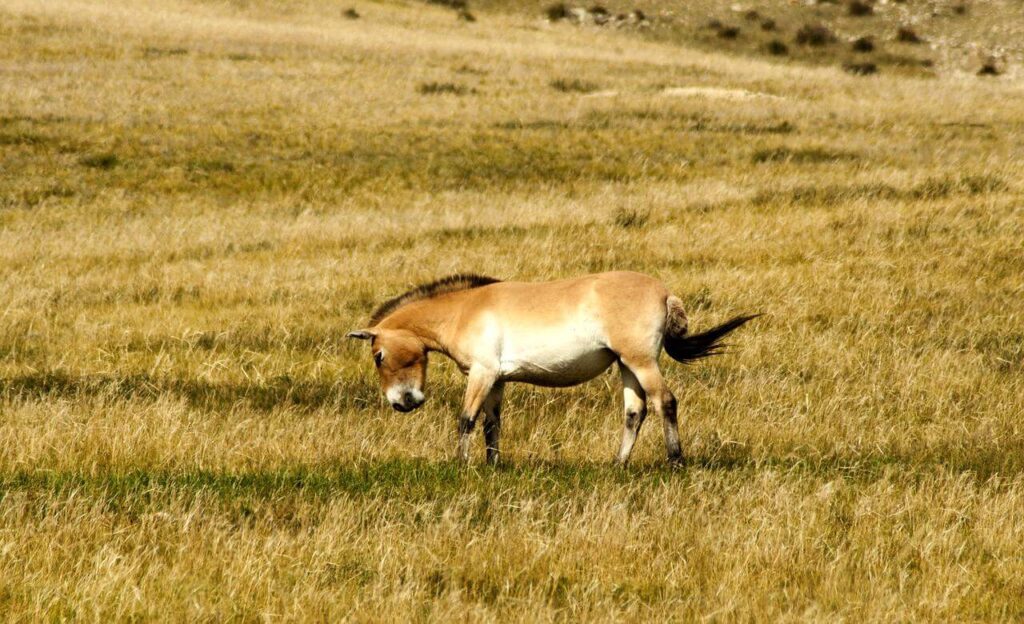
Mongolia’s Wild Horses: The Return of the Takhi
Mongolia’s only truly wild horse is the takhi, also called Przewalski’s horse. It went extinct in the wild by the…Kazakh Wedding Traditions: The Customs That Still Shape Altai Marriages
A Kazakh wedding in Mongolia’s Altai is not a single event but a sequence of ceremonies stretching over months. It…Kazakh Dombra Music: The Two-String Sound of the Altai Steppe
The dombra is the central instrument of Kazakh folk music — a long-necked, two-string plucked lute that accompanies songs, carries…

Are Kazakhs the same as Mongols?
No. Kazakhs and Mongols are two distinct ethnic groups with different languages (Turkic vs Mongolic), different religions (Sunni Islam vs Tibetan Buddhism), different traditions (eagle hunting vs Naadam), and different historical origins. They share the Altai region and similar pastoral nomadic systems but are culturally separate.
How many Kazakhs live in Mongolia?
Approximately 120,999 Kazakhs lived in Mongolia as of the 2020 census, with the vast majority (88.7% of the province) concentrated in Bayan-Ölgii Province in western Mongolia. Smaller Kazakh populations live in neighbouring provinces.
What’s the difference between a yurt and a ger?
Both are portable round tents made of wood frame, felt walls, and canvas covers. “Yurt” is the Russian-Turkic word used by Kazakhs (kiyiz uy in Kazakh); “ger” is the Mongolian word used by Mongols. Structurally they’re nearly identical, but interior decoration differs: Kazakh yurts have richly embroidered wall tapestries (syrmaq), Mongol gers tend to be more sparely decorated with Buddhist religious items.
Do Kazakhs and Mongols speak each other’s languages?
Mostly Kazakhs speak Mongolian (for school, business, government) — Khalkha Mongolian is the official language of Mongolia. Most Mongols don’t speak Kazakh. Younger Kazakhs in Bayan-Ölgii are fluent in both. Cross-language conversation in Bayan-Ölgii usually defaults to Mongolian for Mongol visitors, Kazakh for Kazakh visitors, and Russian or English for foreign travellers.
Why do Kazakhs hunt with eagles but Mongols don’t?
Eagle hunting is specifically a Kazakh tradition (Turkic / Central Asian heritage shared with Kyrgyz and historical Mughal-era falconry). Mongols developed different hunting traditions including hunting with dogs, with bows, and on horseback — but not with eagles. The eagle hunting tradition arrived in modern Mongolia with Kazakh migration from Xinjiang and Kazakhstan in the 19th-20th centuries.
Can I visit both Kazakh and Mongol communities on one trip?
Yes — a 14+ day Mongolia trip can cover both. A typical combined itinerary spends 5-7 days in Bayan-Ölgii (Kazakh eagle hunters + Altai trekking) and 5-7 days in central or northern Mongolia (Mongol nomadic family stays + Naadam if July, Karakorum if September). For a focused Kazakh experience, an 8-day Eagle Hunter Tour works. For a focused Mongol experience, central-region itineraries are better starting points.