
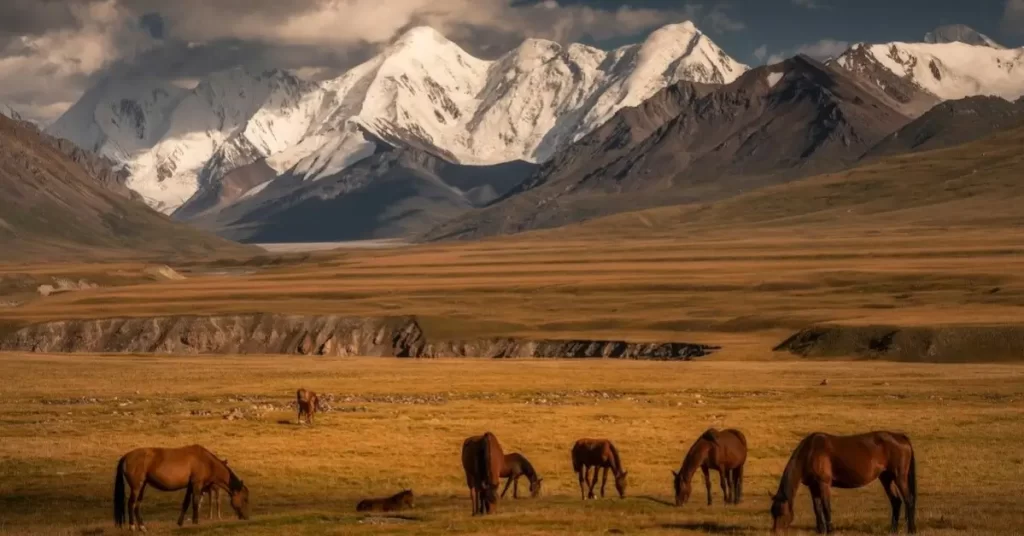
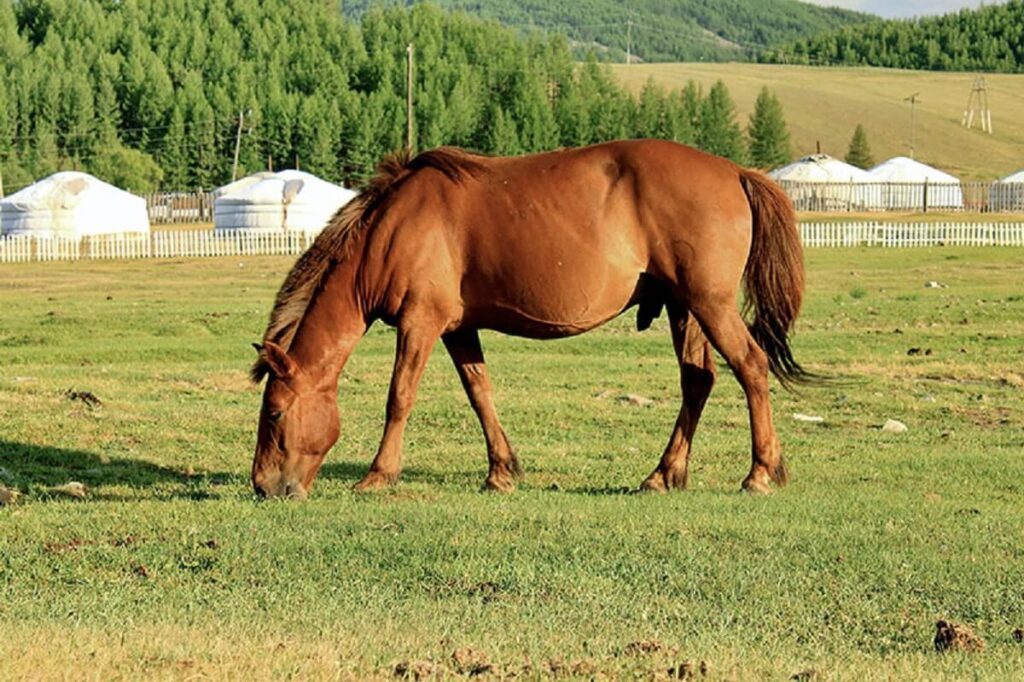
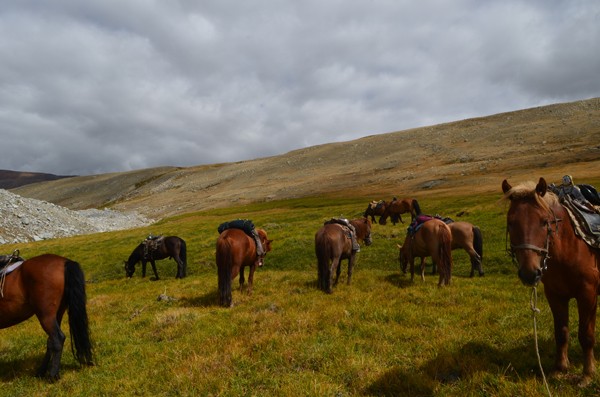
Mongolian horses live on natural pasture year-round — grasses, sedges, wild herbs, and shrubs in summer, and dry standing forage with occasional supplementary hay in winter. Unlike Western horse breeds, they receive no grain, no concentrated feed, and almost no veterinary care. They are turned out year-round in semi-wild herds and find their own food across thousands of hectares of steppe and mountain pasture. This is why the breed is so hardy — three thousand years of natural selection have produced a horse that thrives on what the Mongolian climate freely provides. A working Mongolian horse typically grazes 14–18 hours per day on grass alone.
Key Takeaways
- 100% pasture-based diet — no grain, no concentrated feed, no supplements
- Summer: fresh grasses, sedges, wild herbs, shrubs
- Winter: dry standing forage + occasional supplementary hay during severe storms (zud)
- Grazing time: 14–18 hours per day in summer
- Body condition follows the seasons — fat in autumn, lean by spring
- Mongolia hosts approximately 3.4 million horses fed entirely from natural pasture
Why Is the Mongolian Horse Diet Unique?
In Western horse husbandry, a working horse typically receives a daily ration of grain (oats, barley, or formulated pellets) plus measured hay, plus turnout time on managed pasture. The diet is calculated, supplemented with vitamins, and adjusted to workload.
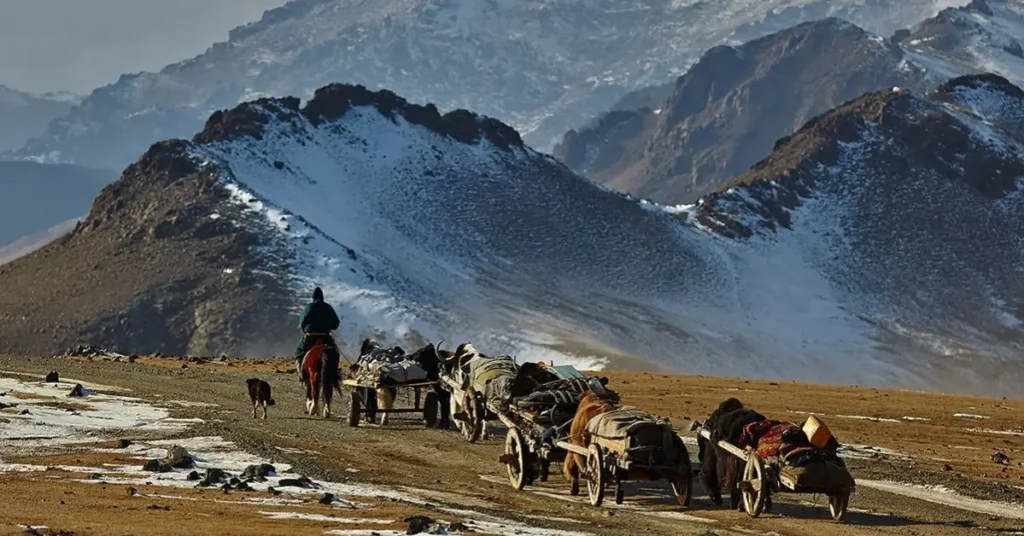
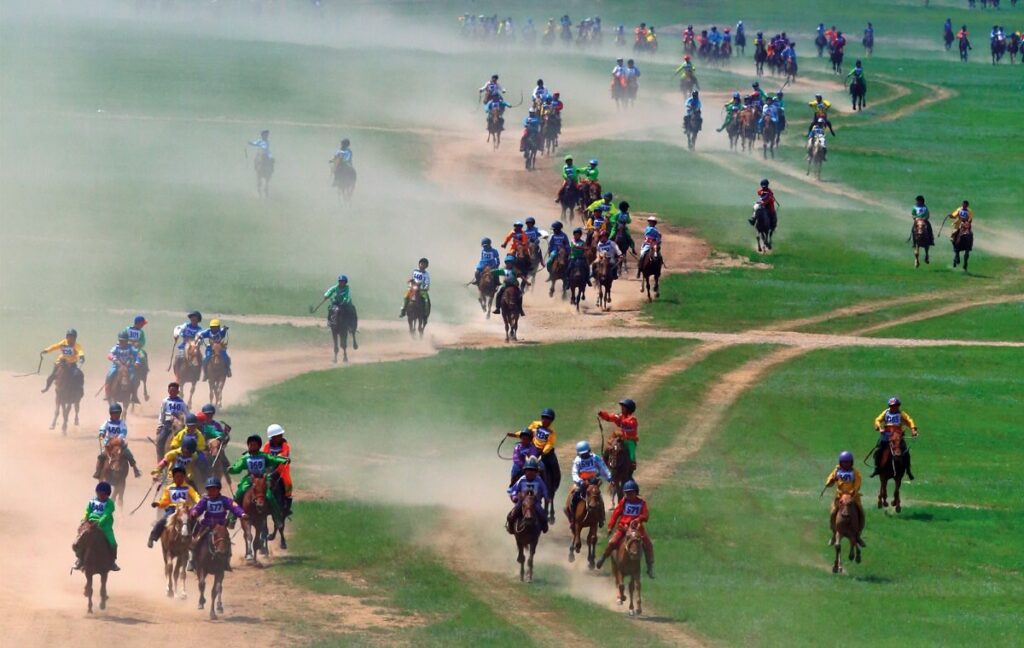
In Mongolia, none of this happens. A working Mongolian horse is turned out into a herd of 50–500 animals on the open steppe and finds its own food. Herders move the herds seasonally between summer pastures at higher elevation and winter pastures in valley shelters, but they don’t feed the horses directly. The horse eats what the land provides.
This works because:
- Mongolian horses evolved here. Three thousand years of natural selection produced a metabolism that thrives on rough forage.
- The land has the right grasses. Mongolia’s steppe grasslands contain a rich mix of nutritious cool-season grasses, sedges, and herbs that meet equine nutritional needs without supplementation.
- The herd structure protects the individual. A horse in a herd of 100 can sleep, escape predators, and find food more efficiently than one alone.
- Winter is short and predictable. A normal Mongolian winter is cold but dry; horses can paw through light snow to reach standing forage.
A Mongolian horse rarely eats grain in its lifetime. Western veterinarians visiting Mongolia for the first time often expect to see protein-deficient or vitamin-deficient horses — and find instead that the herds look fit, healthy, and ready to work.
Summer Diet — The Abundant Months
From late May through early October, Mongolian pasture is at peak nutritional density. The summer diet of a working horse consists primarily of:
| Plant group | Examples | % of diet (approx) |
|---|---|---|
| Cool-season grasses | Stipa krylovii (feather grass), Leymus chinensis | 40–50% |
| Sedges | Carex spp. (especially Carex duriuscula) | 15–25% |
| Wild herbs | Wild onion (Allium spp.), wormwood (Artemisia spp.) | 10–15% |
| Shrubs and woody browse | Caragana spp., wild rose stems | 5–10% |
| Salt-bearing plants | Halophytes near saline lakes | 2–5% |
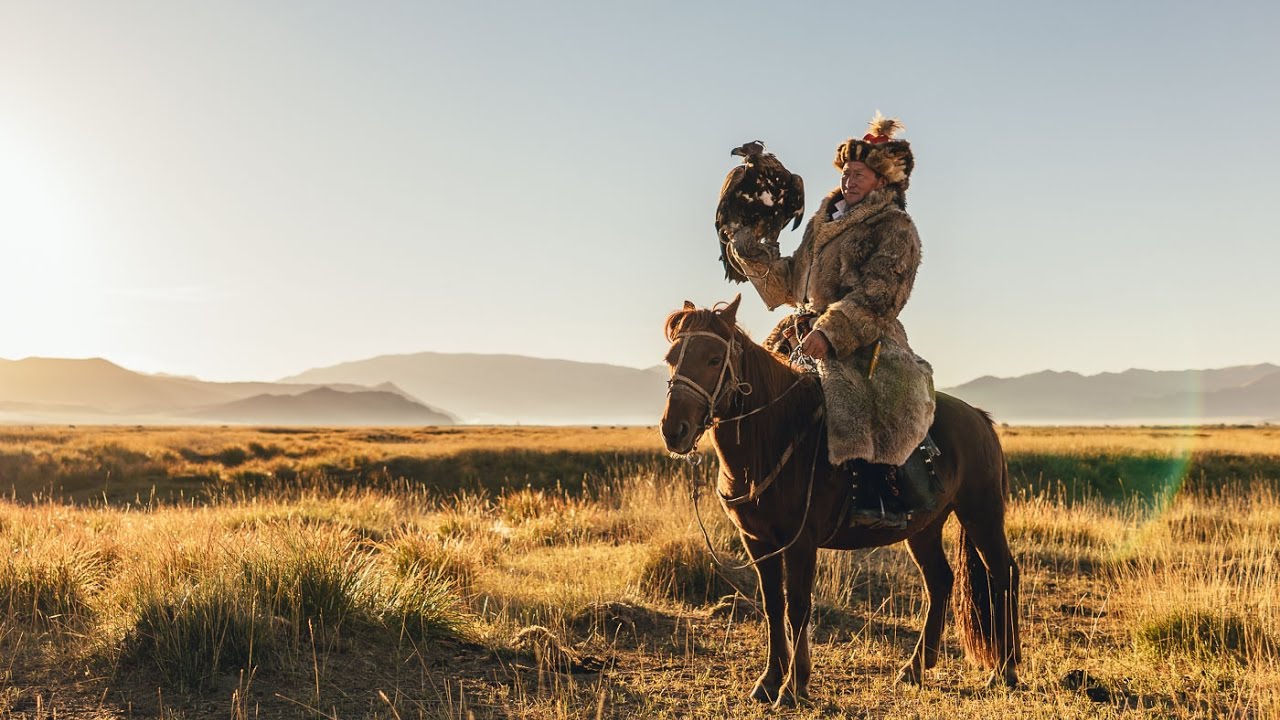
A grazing horse moves slowly across pasture, taking small bites every few seconds and walking a few steps between mouthfuls. Total grazing time is 14–18 hours per day in summer — the horse essentially eats whenever it isn’t sleeping or being ridden.
By late September, horses reach peak body condition with substantial fat reserves on the rump, neck, and ribs. Herders specifically wait for this autumn condition before slaughtering for winter meat — a fat horse provides high-calorie meat that itself helps the herder family survive winter.
Winter Diet — Surviving the Cold Months
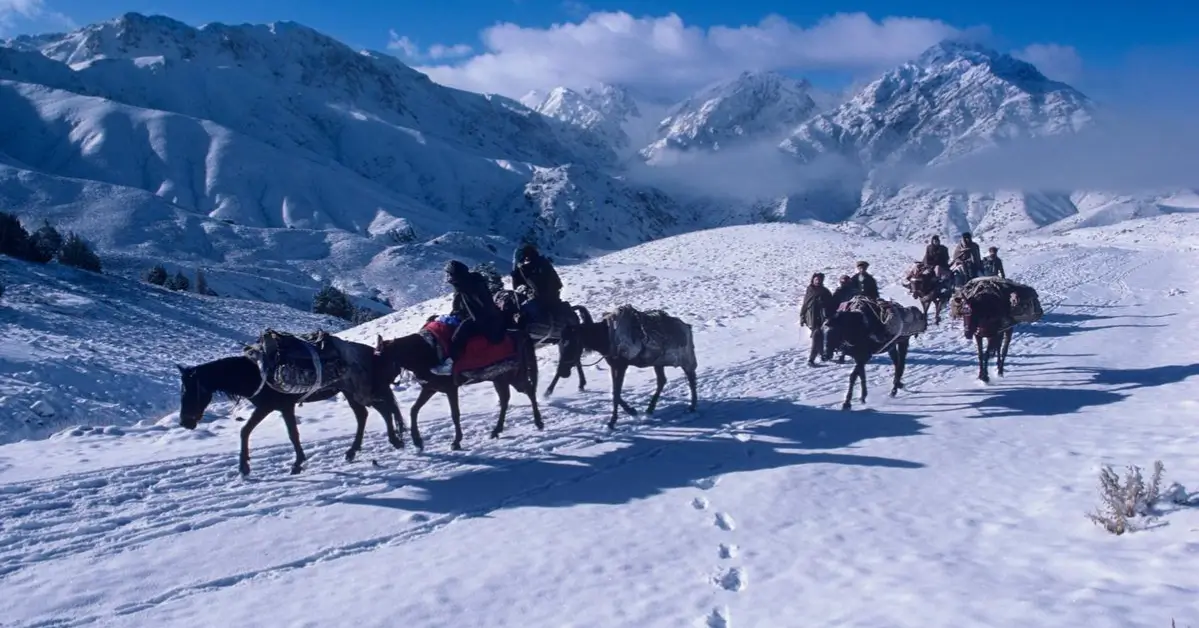
From November through April, the steppe enters its harshest period. Surface snow may cover the grass; daily temperatures regularly drop below −20 °C in much of the country, and below −30 °C in the western Altai.
The horse adapts by:
- Pawing through snow to reach the standing dry grass underneath. Mongolian horses, like other northern breeds, naturally paw with the front hooves to expose forage.
- Eating the dry standing biomass of summer’s grasses — much less nutritious than fresh grass but available in large volume.
- Supplementing with woody browse when grass is hard to reach — willow shoots, caragana stems, and similar.
- Drinking from streams or eating snow for water.
Herders generally do NOT feed hay to working horses. The exception is a zud — an extreme winter weather event (see below) — when herders may put out hay reserves to keep the herd alive.
A horse loses 10–20% of body weight during winter. The autumn fat is steadily metabolised through the cold months, and by April most working horses are visibly leaner than in October. This is normal and expected. Spring brings the new grass, and within 6–8 weeks of green-up the horse is back to working condition.
The Role of Airag (Fermented Mare’s Milk)
While not strictly part of the horse’s diet, airag — the lightly alcoholic fermented mare’s milk that is Mongolia’s national drink — is the single biggest economic output of the horse herd in summer.
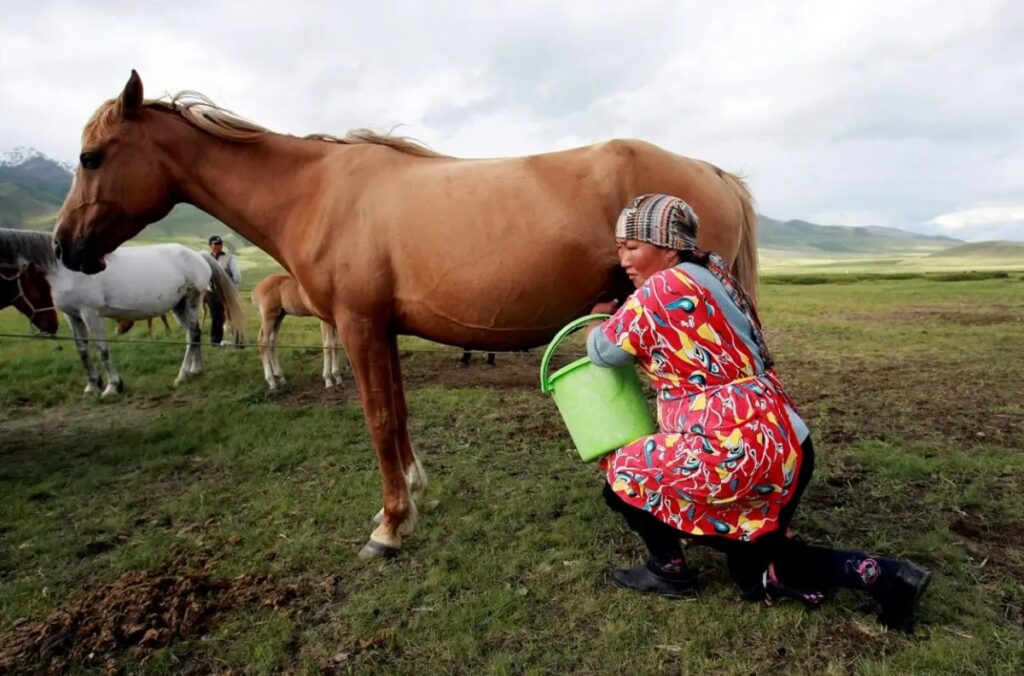
A typical Mongolian household produces 20–30 litres of airag per day during peak summer milking, requiring multiple lactating mares. Mares are milked 4–6 times per day at intervals of 2–3 hours, with each milking yielding roughly 0.5–1 litre. The foal nurses between milkings, so the system shares the milk between human and animal use.
Airag has three functions in the Mongolian diet: – A staple summer beverage (often replacing water in some households) – A source of vitamins, probiotics, and protein in a heat-resistant form – A culturally significant offering at Naadam Festival, family gatherings, and shamanic rituals
The mare’s diet directly shapes the airag. A mare grazing on rich Khentii or Khangai pasture produces sweeter, fuller airag than one on the dry steppe — herders are extremely particular about which pastures their dairy mares use.
Why No Grain, No Supplements?
Western visitors are often surprised that Mongolian horses receive no concentrated feed. The reasons are genetic, environmental, and economic:
Genetic. Mongolian horses descend from a population that has not been selectively bred for racing speed, draft power, or any other use that would require concentrated nutrition. They are dual-purpose herd animals — meat, milk, transport — bred for hardiness, not performance.
Environmental. Mongolia’s grasslands provide a chemically complete diet for an evolved horse. Cool-season grasses + sedges + herbs supply protein, fibre, vitamins, and trace minerals in the right proportions.
Economic. A herder family with 50–200 horses cannot afford to grain-feed them — the cost would exceed the entire economic value of the herd. Pasture-based husbandry is the only viable model at this scale.
Health. A grain-fed horse on Mongolian pasture would actually be at higher risk of laminitis, colic, and ulcers than a pasture-only horse. The traditional diet works because it matches the horse’s evolved digestive tract.
The Zud Problem — When Winter Goes Wrong
A normal Mongolian winter is harsh but manageable. Once every 5–10 years, however, an extreme weather event called a zud kills hundreds of thousands of livestock — including working horses.
A zud takes several forms: – White zud — heavy snowfall buries the grass and horses cannot paw through to reach forage – Black zud — drought through autumn means no standing grass for winter, then severe cold – Iron zud — a melt-then-freeze cycle creates an ice cap on the snow that horses cannot break through – Combined zud — drought + heavy winter snow, the worst case
The 2009–2010 zud killed an estimated 8.5 million livestock nationwide. The 2023–2024 zud killed approximately 7 million. During these events, herders rush to put out their hay reserves, and the government issues emergency feed support — but losses are inevitable.
For working trekking horses in Bayan-Ölgii and the Altai Tavan Bogd region, herders typically maintain 60–90 days of hay reserves specifically as zud insurance. A foreign-tour-operator herd is more carefully managed than a typical pastoral herd, with hay supplementation triggered earlier than in pure subsistence pastoralism.
What This Means for Trekking with Mongolian Horses
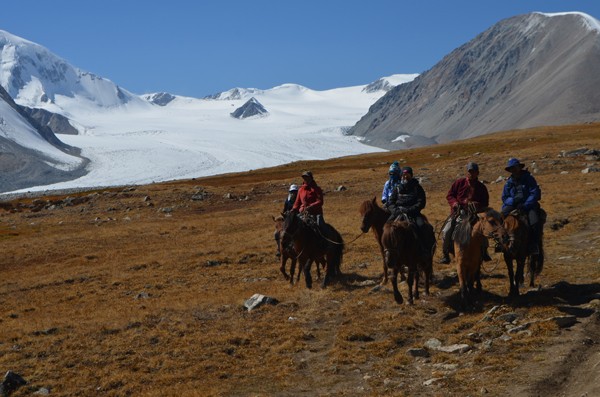
For travellers joining a multi-day horse trek, the diet has practical implications:
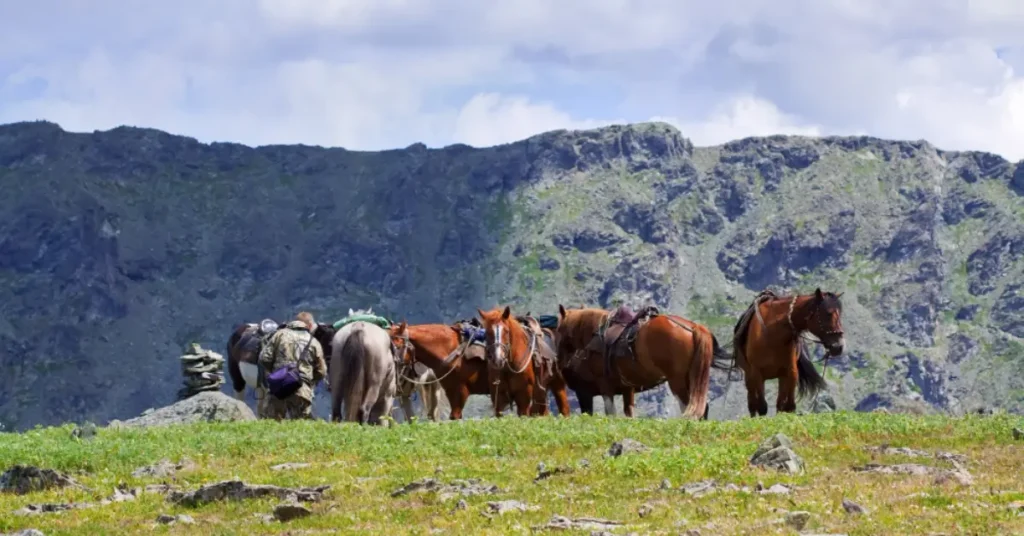
Your horse will graze whenever you stop. When the trekking group breaks for lunch, the horses are unsaddled or loosened and turned out to graze immediately. They eat for the full 60–90 minutes. The herder grazes them at every camp stop and during longer breaks.
Camp choice is dictated by grazing. A good campsite must have grass within easy walking distance of the tents. The herder will route the trek to find pasture, sometimes adjusting day distances based on grass quality.
Don’t feed your horse anything else. Bread, fruit, granola bars — all contraband. Mongolian horses have never eaten these foods and may colic. The only exception: salt licks, which herders sometimes provide.
Expect leaner horses in spring (May–June) and fatter horses in late summer (August–September). A “thin” Mongolian horse in May is not malnourished — it has just spent six months on dry winter forage and is recovering on the new spring grass.
For multi-day trekking experiences, see our Altai Tavan Bogd 5-day climb, 6-day Best Of trek, or 8-day Mongolia Altai Mountain Tour — all use carefully maintained working herds with appropriate hay reserves for shoulder-season trips.
Suggested Tours:
Suggested Blogs:
Kazakh Wedding Traditions: The Customs That Still Shape Altai Marriages
A Kazakh wedding in Mongolia’s Altai is not a single event but a sequence of ceremonies stretching over months. It…Kazakh Dombra Music: The Two-String Sound of the Altai Steppe
The dombra is the central instrument of Kazakh folk music — a long-necked, two-string plucked lute that accompanies songs, carries…Naadam in Bayan-Ölgii: How Western Mongolia’s Kazakh Province Celebrates the July Festival
Naadam is Mongolia’s national festival of “the three games of men” — wrestling, horse racing, and archery — held nationally…

What do Mongolian horses eat?
Mongolian horses live on natural pasture year-round — fresh grasses, sedges, wild herbs, and shrubs in summer, and dry standing forage plus occasional supplementary hay in winter. They receive no grain, no concentrated feed, and no vitamin supplements. The diet works because the horse evolved on this exact landscape over thousands of years.
Are Mongolian horses fed grain?
No. Almost no Mongolian working horse receives grain in its lifetime. The traditional husbandry model is 100% pasture-based — horses are turned out year-round in semi-wild herds and find their own food on the open steppe. Western-style grain feeding would actually risk laminitis, colic, and ulcers in horses adapted to natural forage.
How many hours per day do Mongolian horses graze?
A working Mongolian horse grazes 14–18 hours per day in summer, when forage is abundant. The horse eats almost continuously when not sleeping, riding, or being milked. In winter, the grazing time is similar but on much lower-quality dry standing forage, supplemented occasionally with hay during severe weather.
How do Mongolian horses survive winter without supplementary feed?
They paw through snow to reach standing dry grass, eat woody browse from caragana and willow, and metabolise the fat reserves built up in autumn. A working horse loses 10–20% of body weight over winter — this is normal and expected. Spring grass restores condition within 6–8 weeks of green-up.
What is a zud and how does it affect horses?
A zud is an extreme winter weather event in Mongolia that prevents livestock from accessing pasture — heavy snow burying grass, melt-freeze ice caps, or drought followed by severe cold. The 2009–2010 zud killed an estimated 8.5 million livestock; the 2023–2024 zud killed about 7 million. Herders maintain 60–90 days of hay reserves specifically as zud insurance.
Can I feed treats to a Mongolian horse on a trek?
No. Bread, fruit, sugar, granola bars, and other Western foods are unfamiliar to Mongolian horses and may cause colic. The only acceptable supplement is the salt lick that some herders provide. Trust the herders’ judgement on what their horses can and cannot eat.