
Mongolian traditional clothing centers on the deel, a long, loose robe cut in one piece with its sleeves, closed on the wearer’s right and tied with a sash. It is worn with gutal, leather boots with slightly upturned toes. Herders outside the big towns still wear the deel every day, while in the cities it comes out mostly for older people and for holidays such as Naadam and Tsagaan Sar.
Key Takeaways
- The core garment is the deel: A long, loose robe with a high collar that reaches below the knee and always fastens on the wearer’s right.
- The sash makes a pocket: The space above the sash between the two flaps works as a big pocket for a bowl, a cup or a snuff box.
- Boots for riding: Gutal leather boots have slightly upturned toes and are used for horseback riding and wrestling.
- Still worn daily: Countryside herders wear practical deels every day for work, while urban residents wear silk deels during major national holidays.
- Regional contrasts: Western Mongolia’s Bayan-Ölgii province is around 93% Kazakh, meaning travelers there primarily see Kazakh garments rather than Mongolian deels.
What Is a Deel?
The deel (дээл in Mongolian, дэгэл in Buryat) is the traditional garment of the Mongols, worn on workdays and special days alike. It is a long, loose gown cut in one piece with the sleeves, with a high collar and a wide overlap at the front. It usually reaches below the knee and fans out at the bottom.
Deels are made of cotton, wool, silk or brocade. Everyday deels use wool, cotton and other cheaper fabrics; deels for weddings and holidays have a silk outer layer. The most common colors are blue, olive and burgundy, but you will see many others. In Mongolia the word deel also covers other long coats: a fur coat is a nekhii deel, and there are leather and cashmere deels too.
The way a deel closes is its most recognizable feature. The right flap goes against the body and the left flap covers it, so a Mongolian deel always closes on the wearer’s right. It is held by five or six clasps: one below the armpit, three at the shoulder and one or two at the neckline. Traditionally there are five.
Sashes, Boots and Hats
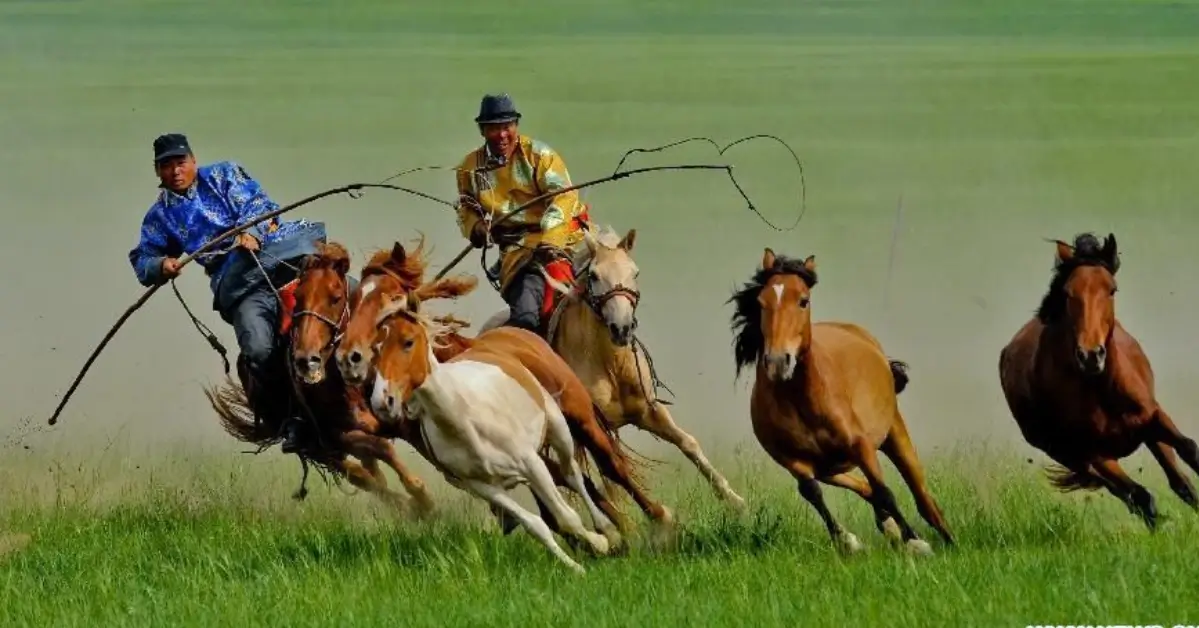
A deel is traditionally worn with a large sash, usually of silk; leather belts with big, ornate buckles are more common today. The space between the flaps above the belt becomes a large pocket. Men sometimes carry a silver bowl or cup, or a snuff box, in it.
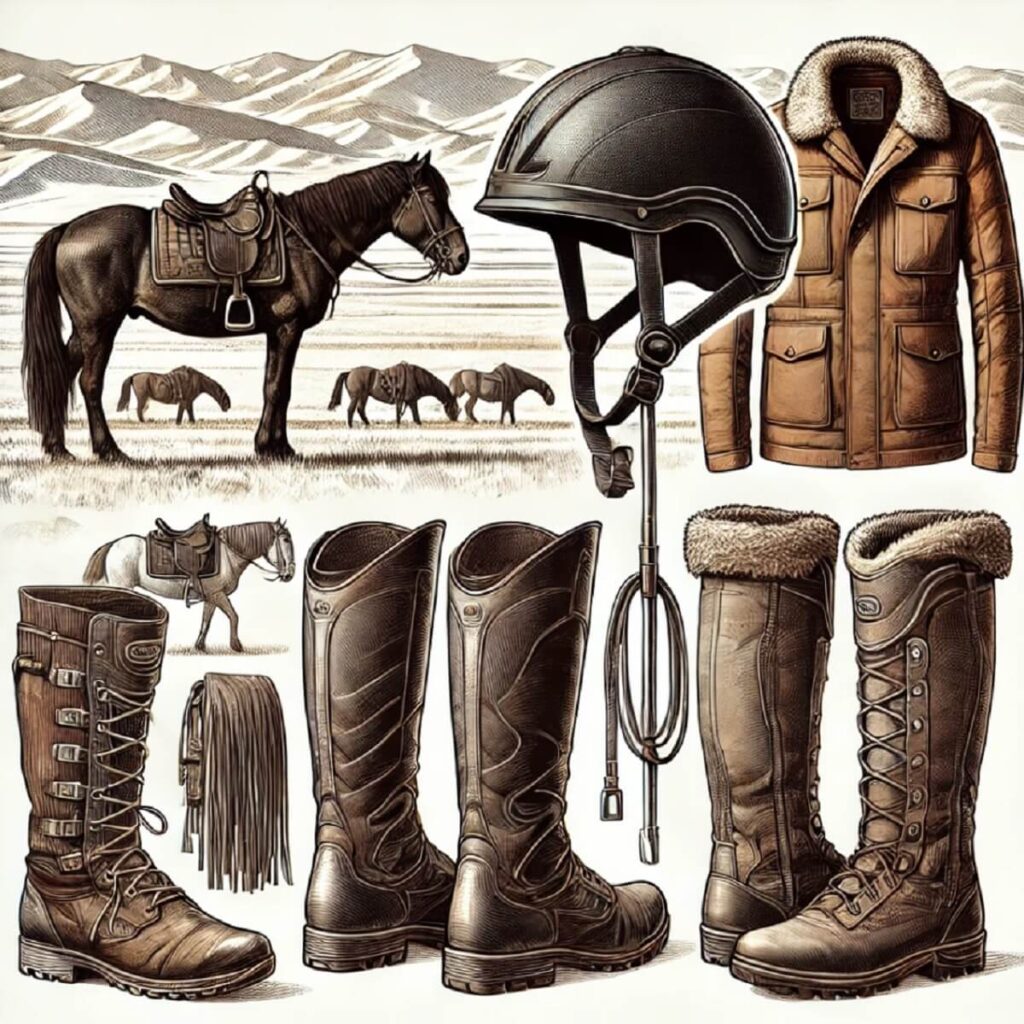
The traditional boots are gutal: leather boots with slightly upturned toes, leather ornaments and tops cut unevenly. They are worn for horseback riding and for wrestling, and Mongols still wear them today. Wikipedia notes that the style came to Mongolia from Tibet in the 17th century.
Hats differ from region to region and from group to group, and our sources say little about their names, so we won’t guess. Before the revolution, nobles wore smart hats with silk waistcoats, and in the time of the empire the tall bogtag headdress was worn only by married women of very high rank. When you visit a family, ask your host about their hat and what it means to them.

Men’s, Women’s and Regional Deels
Men’s and women’s deels use the same materials and the same basic outline. Women often wear theirs more snug, while men’s deels may have bigger pockets, a looser fit and wider sleeves.
Designs also differ between ethnic groups and tribes, mostly in the upper chest opening: the Khalkha deel has a rounded opening edge, while the Buryat deel’s is square. Each ethnic group in Mongolia has its own design, told apart by cut, color and trimming. The Dukha (Tsaatan) reindeer herders of northern Mongolia wear wide deels and hats like those of the Khalkha.
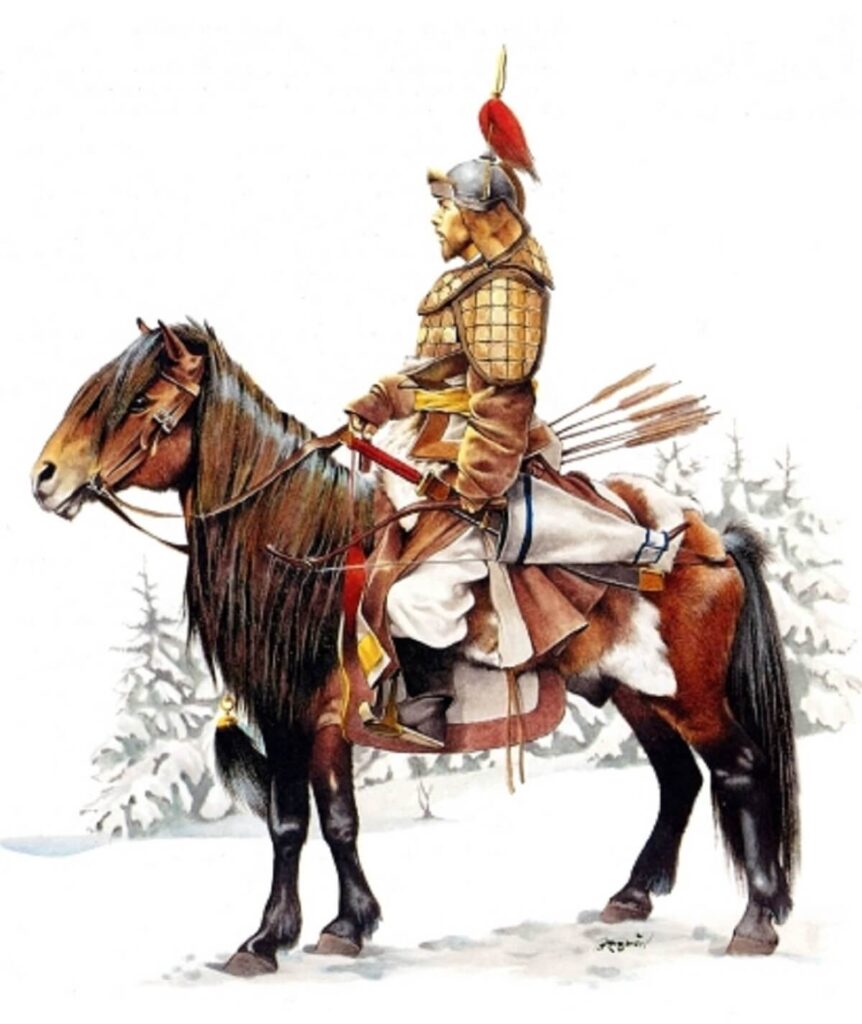
Before the revolution, every social group dressed in its own way. Herders wore plain deels in summer and winter, lamas wore yellow deels with a cape called a khimj, and nobles wore smart hats and silk waistcoats. Deels from the time of the empire had more open necklines, no collar and simple overlaps, much like the deels lamas wear today. Modern deels often have decoratively cut overflaps, small round necklines and sometimes a Mandarin collar.
When Do Mongolians Wear Traditional Clothes?
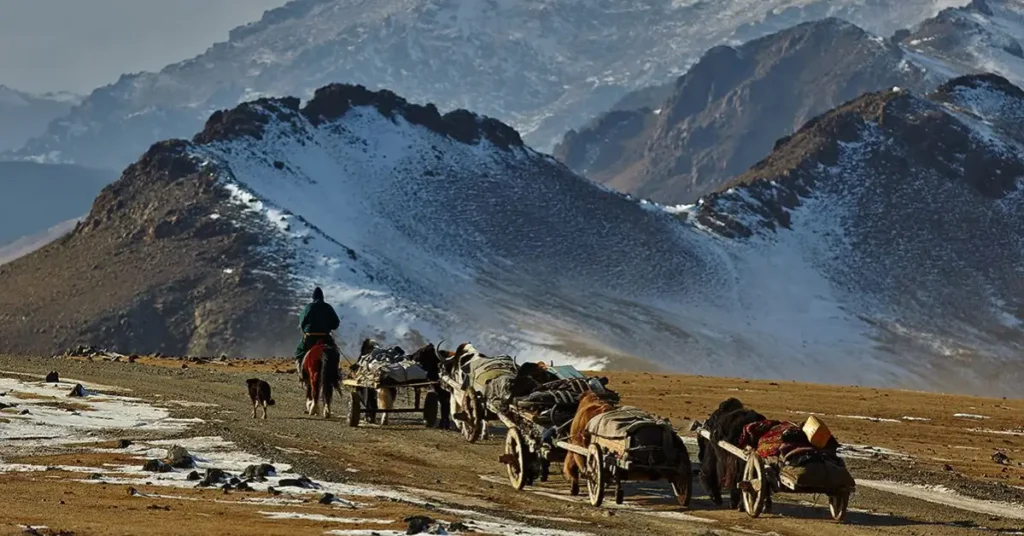
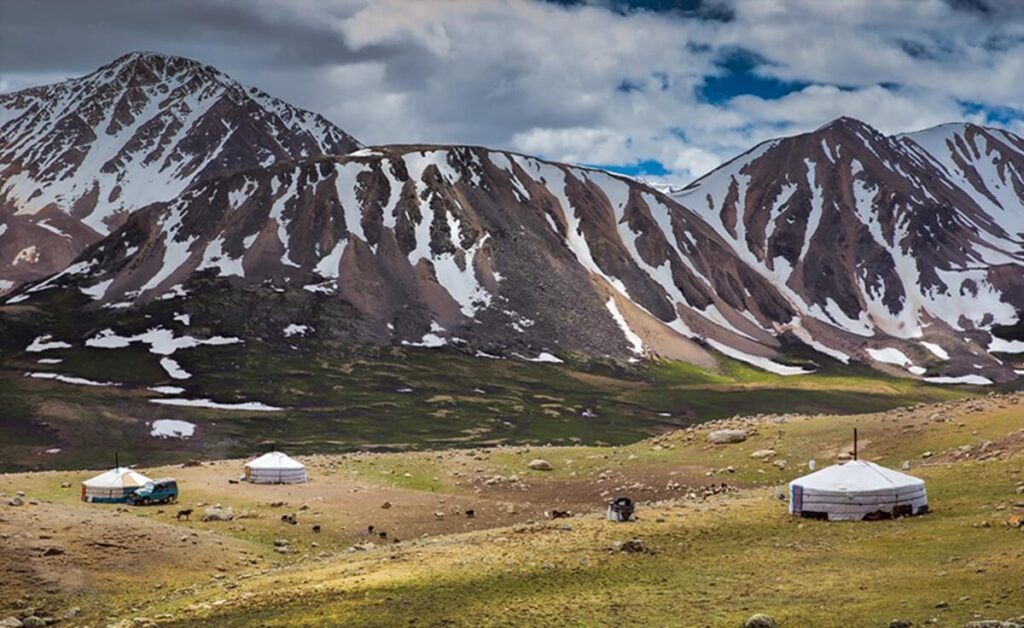
Outside the big towns, the deel is still everyday clothing, especially for herders. Mongolian dress has changed little since the time of the empire because it suits life on the steppe and the daily work of herding. You will see it in the countryside and around the Mongolian ger; for the wider picture, read our guide to Mongolian nomadic life.
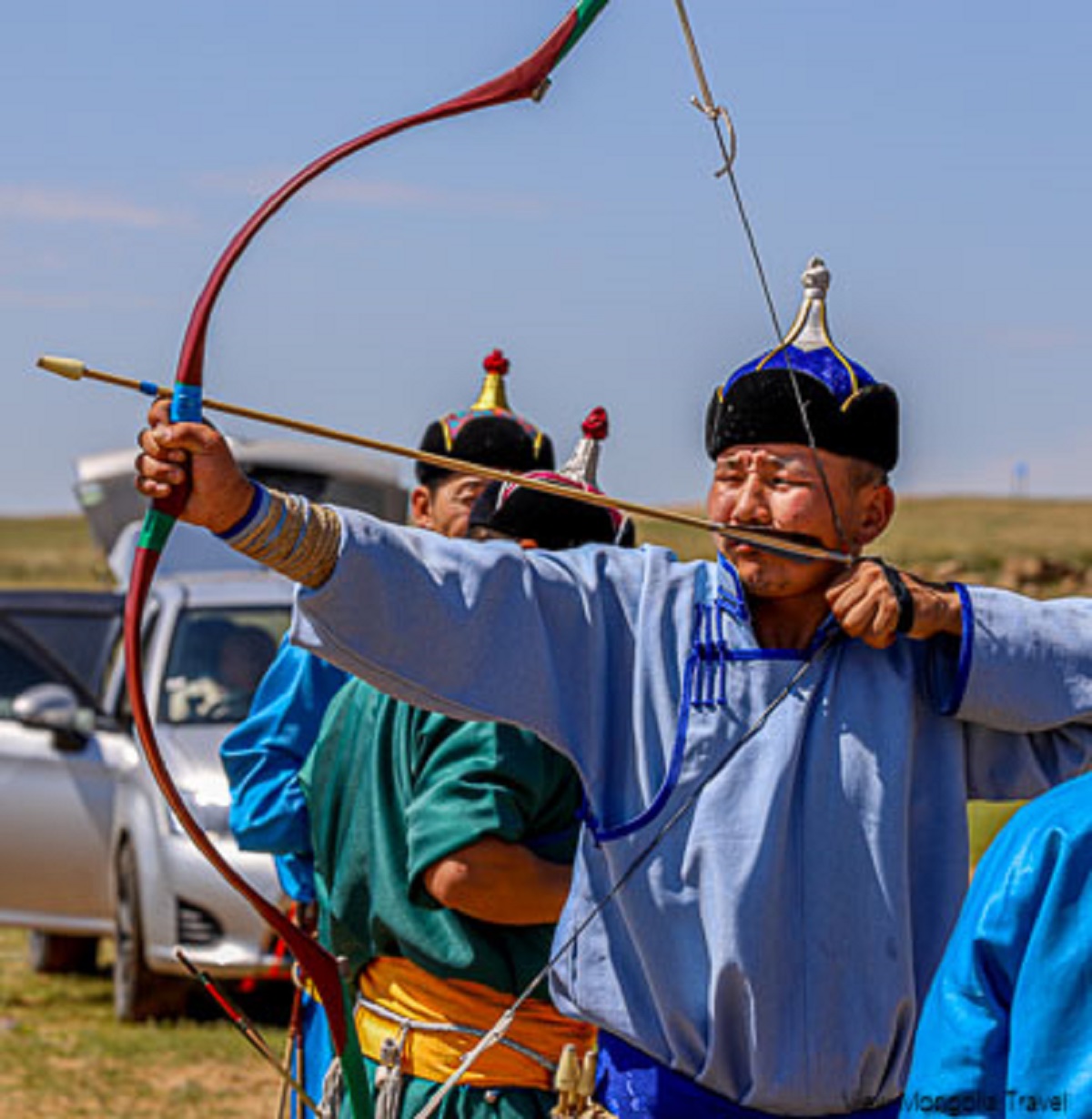
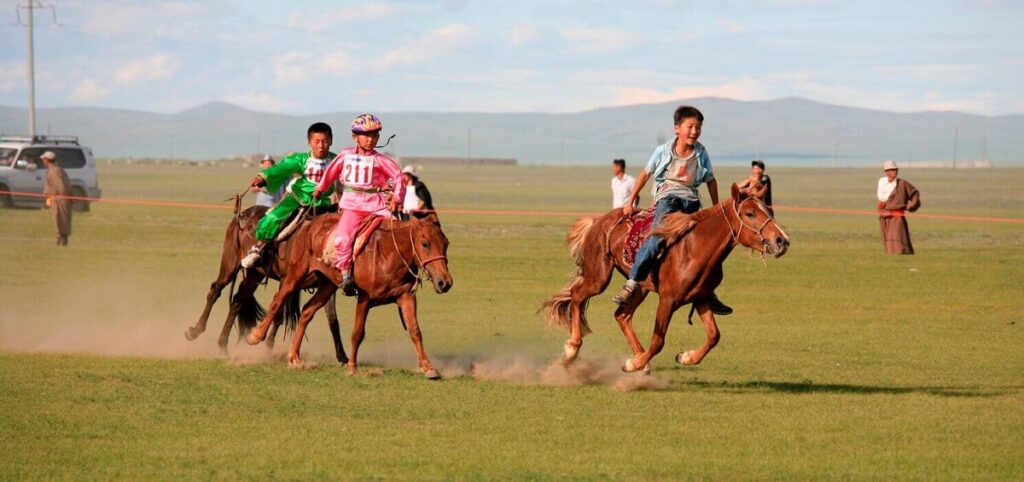
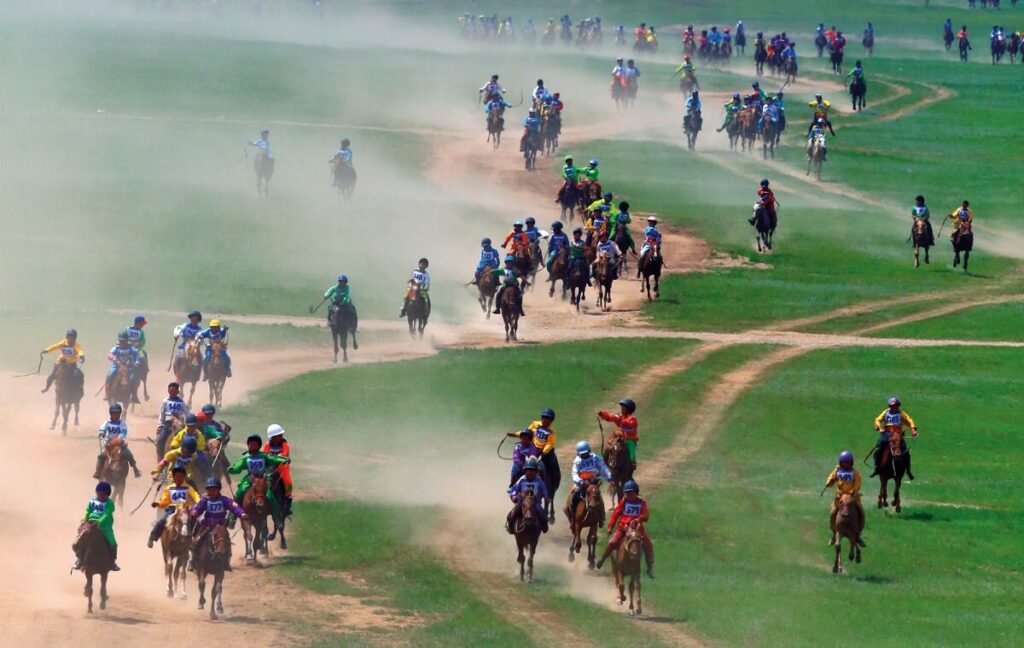
In the cities, the deel is mostly worn by older people and on festive occasions. The biggest is Naadam, the midsummer festival of wrestling, horse racing and archery known as “the three games of men”, on UNESCO’s Intangible Cultural Heritage list since 2010.
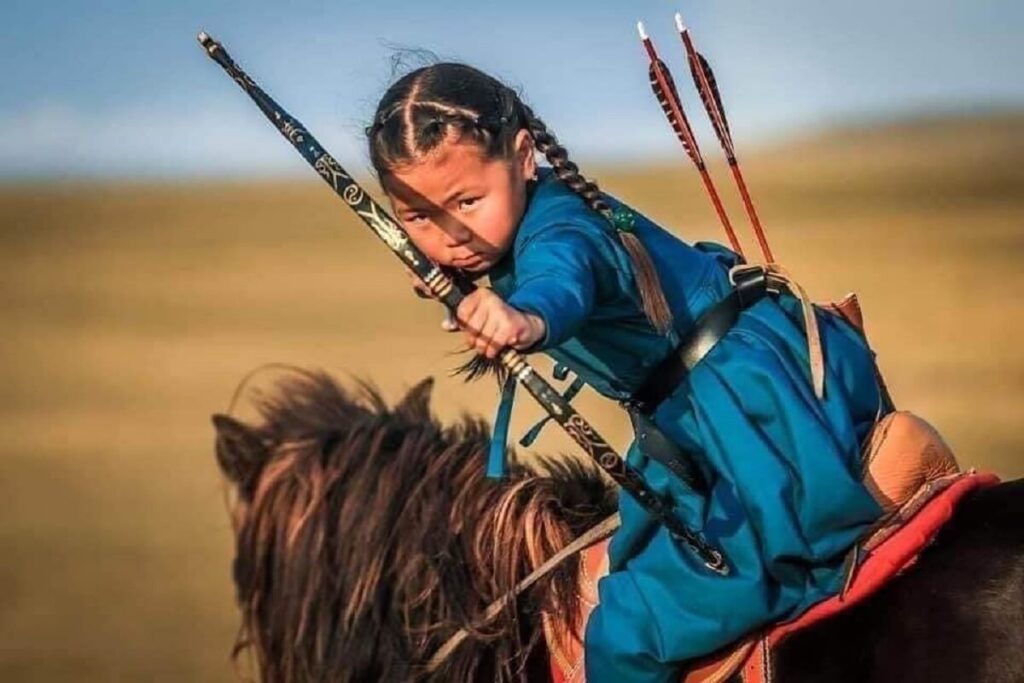
Archers at Naadam traditionally compete in the deel. They wear a leather bracer up to the elbow on the arm that holds the bow, so the deel’s cuff doesn’t catch the string. Read more in our guide to Mongolian horseback archery.
Wrestlers, however, do not compete in a deel. The Mongolian wrestling uniform consists of two specialized garments worn with heavy gutal boots:
- Zodog: A tight, collarless, short-sleeved red or blue jacket, tied at the back, with the front cut away so the chest is bare.
- Shuudag: Small, tight red or blue briefs that let the wrestler move freely and give the opponent nothing to grab.
The other big occasion is Tsagaan Sar, the Lunar New Year or “White Moon”, on the first three days of the first lunar month. Families gather at the home of the eldest, and many people wear full traditional dress. To greet their elders they perform the zolgokh greeting, holding them by the elbows, usually with a blue silk scarf called a khadag in their hands.
Mongolian vs Kazakh Traditional Dress
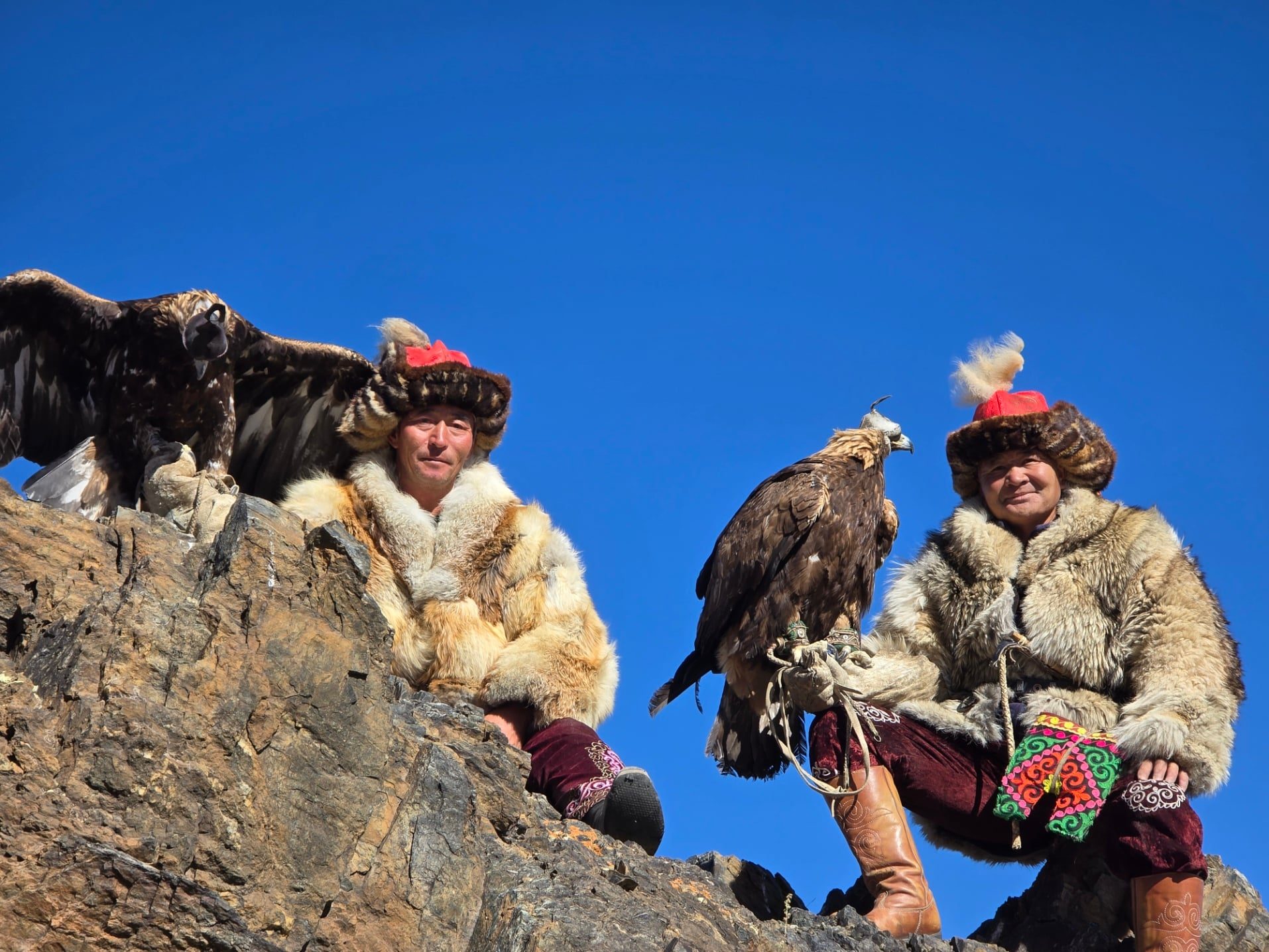
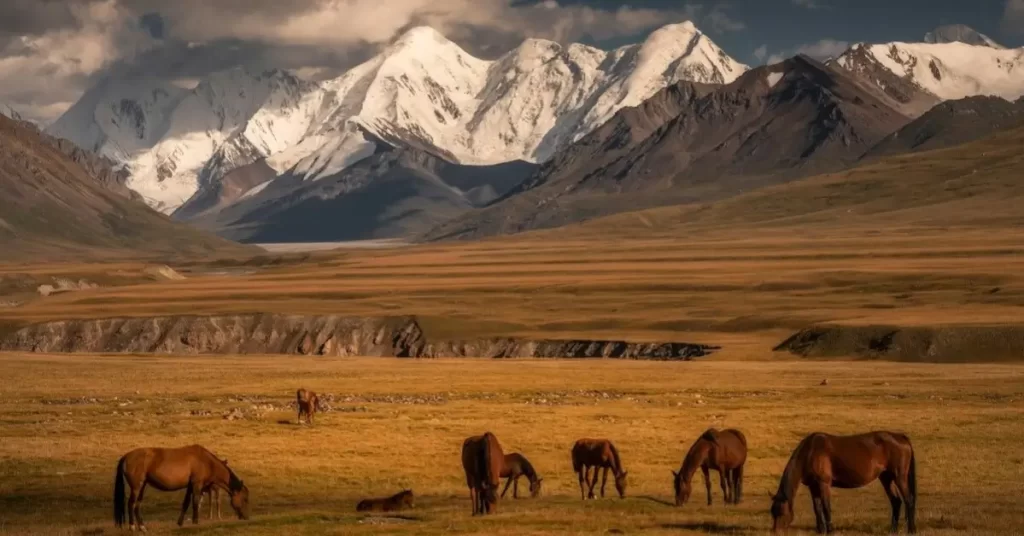
Many travelers to western Mongolia expect to see deels everywhere. But Bayan-Ölgii, Mongolia’s westernmost province, is about 93% Kazakh, so the traditional dress you see in this part of the Altai Mountains is Kazakh.
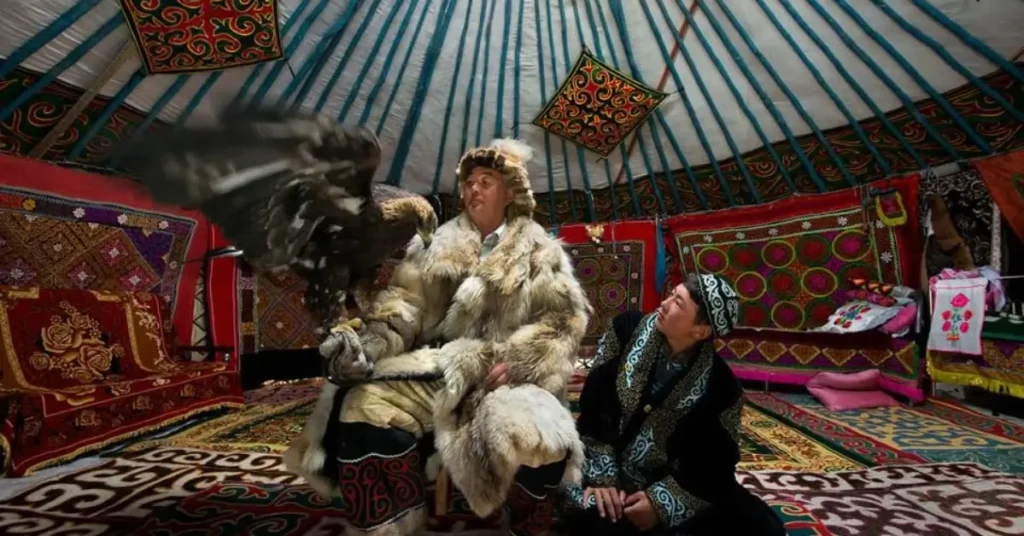
Kazakh clothing is made of fabric, skin, felt and fur, including sheep’s wool, camel hair and fox fur. Both peoples dress for cold winters on horseback, but the robes, coats and hats are different. For the full Kazakh wardrobe, read our guide to Kazakh clothing.
The table below outlines the primary differences between Mongolian and Kazakh traditional dress:
| Item | Mongolian Traditional Dress | Kazakh Traditional Dress |
|---|---|---|
| Main robe | Deel (long, high collar, one-piece cut) | Chapan (long, loose robe worn by men and women) |
| Closure and belt | Right flap under, left over, closed on the wearer’s right; silk sash or leather belt | Loose robes belted with leather or cloth |
| Winter coat | Fur deel (nekhii deel) | Kupe (usually fox fur) or ton (sheepskin or fur) |
| Men’s hats | Vary by region and group | Borik (round, fur-trimmed), tymaq (fur hat over the ears), taqiya (light embroidered cap) |
| Special headwear | Bogtag (historic, for married women of very high rank) | Saukele (tall bridal headdress), kimeshek (white headdress worn after a first child) |
| Where seen in Mongolia | Most of the country | Bayan-Ölgii province in the west |
Herders in much of Mongolia still wear the deel every day, while Kazakh traditional clothing today is mostly worn for holidays and special occasions.
Where Can You See Mongolian Traditional Clothing?
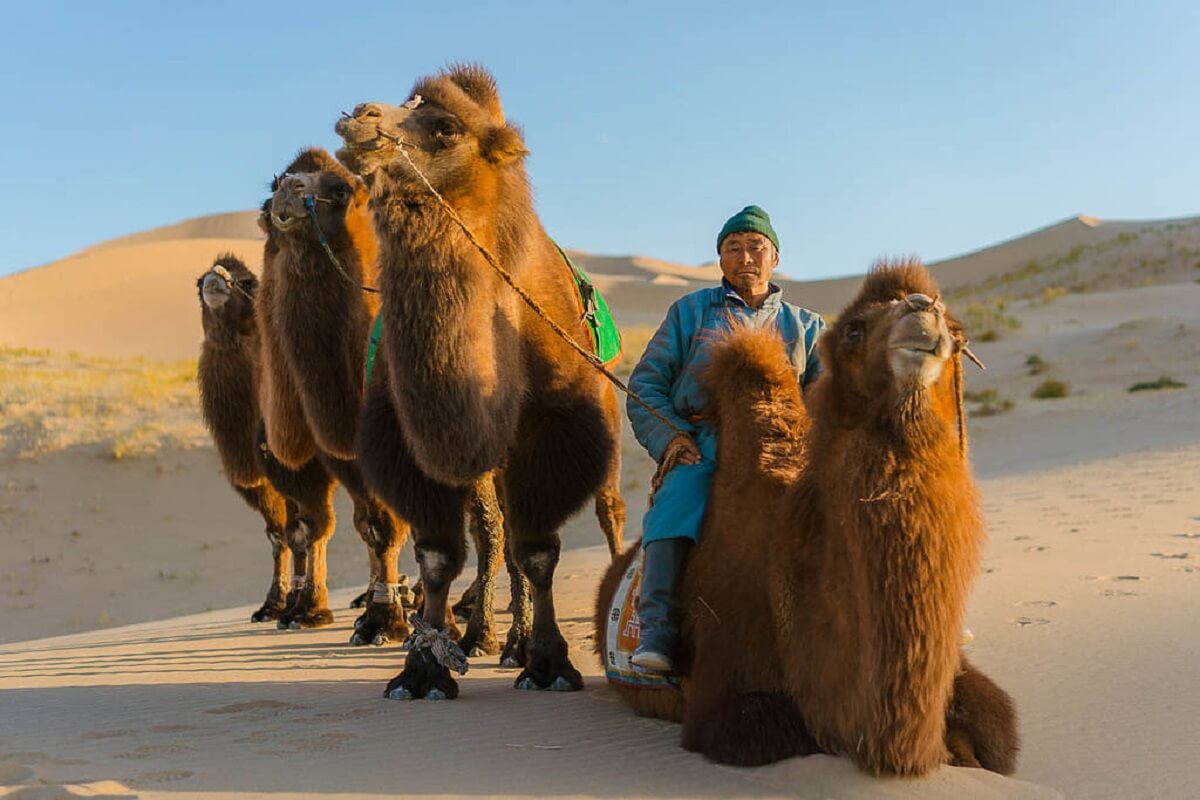
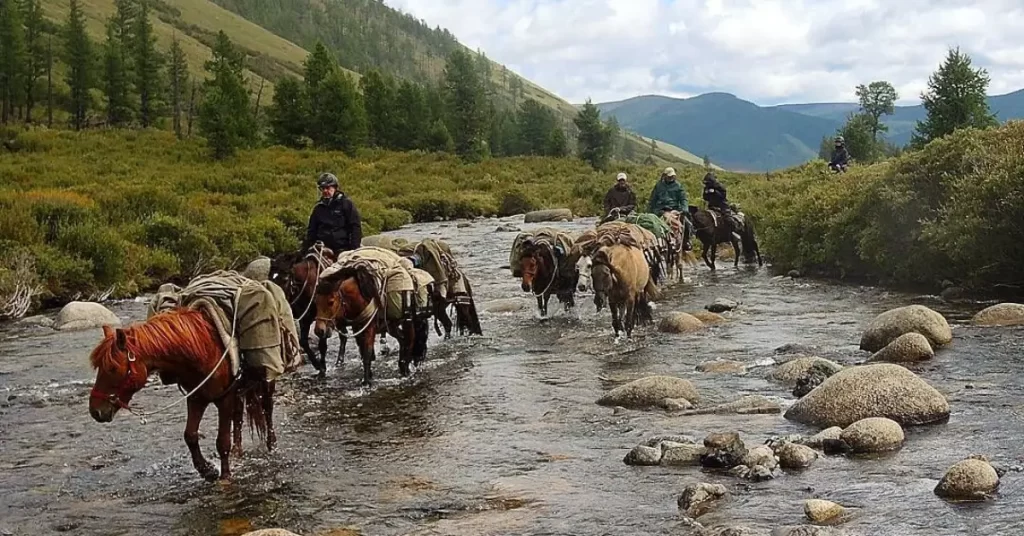
To see the deel in daily life, travel through central and southern Mongolia, where herding families live. Our 13-day Gobi & Central Mongolia tour (from $2,400, groups of 2 to 10) visits Kharkhorin and includes a camel ride and a night with a camel herder family at the Khongor sand dunes.
Festivals are the other way to see traditional dress: Naadam in midsummer, with its archers in deels and wrestlers in zodog and shuudag, and Tsagaan Sar, the Lunar New Year, when many families dress in full traditional clothing.
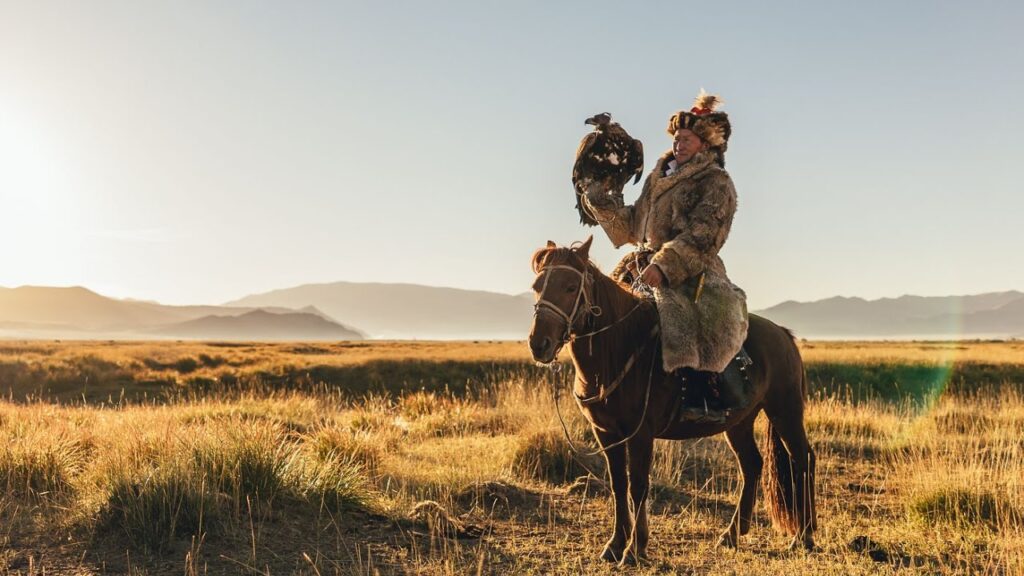
If you head west to the Altai Mountains, expect Kazakh dress instead. Our 8-day eagle hunter homestay places you with Kazakh eagle hunter families in Bayan-Ölgii.
Whenever you encounter herders or festival attendees wearing traditional attire, observe basic etiquette. Most people are proud of their heritage and happy to share it, but you should always greet your hosts and ask permission before taking close-up portraits.
Suggested Blogs:
Mongolia’s Wild Horses: The Return of the Takhi
Mongolia’s only truly wild horse is the takhi, also called Przewalski’s horse. It went extinct in the wild by the…Kazakh Wedding Traditions: The Customs That Still Shape Altai Marriages
A Kazakh wedding in Mongolia’s Altai is not a single event but a sequence of ceremonies stretching over months. It…Kazakh Dombra Music: The Two-String Sound of the Altai Steppe
The dombra is the central instrument of Kazakh folk music — a long-necked, two-string plucked lute that accompanies songs, carries…

What is the traditional Mongolian clothing called?
It is called the deel: a long, loose robe with a high collar that closes on the wearer’s right and is tied with a sash or belt.
Do Mongolians still wear the deel?
Yes. Herders outside the big towns still wear it every day. In the cities, it is mostly worn by older people and on holidays such as Naadam and Tsagaan Sar.
Which side does a deel close on?
A Mongolian deel always closes on the wearer’s right: the right flap goes against the body and the left flap covers it.
What do Mongolian wrestlers wear?
Traditional wrestlers wear a tight, open-chest, short-sleeved jacket called a zodog, small briefs called a shuudag, and stiff leather gutal boots with upturned toes.
What is the difference between Mongolian and Kazakh clothing?
Mongolian clothing centers on the side-fastening deel and gutal boots, whereas Kazakh clothing features robes like the chapan, fur coats such as the kupe, and distinct hats like the embroidered taqiya and ear-covering tymaq.
Can tourists wear a deel?
Yes, many visitors buy or borrow a deel during their travels in Mongolia. If you try one on, ask a local host to help you fold the flaps correctly and secure the clasps on your right side.