
The dombra is the central instrument of Kazakh folk music — a long-necked, two-string plucked lute that accompanies songs, carries solo instrumental pieces called kuy, and backs the improvised poetry duels known as aitys. In Mongolia’s Bayan-Ölgii Province, the Kazakh community keeps this living tradition alive in family gers, at celebrations, and at festivals. UNESCO registered the Kazakh dombra kuy as Intangible Cultural Heritage in 2014. For travellers staying with a Kazakh eagle hunter family, hearing the dombra played in the evening — a kuy melody after dinner — is one of the most quietly memorable moments of the trip.
Key Takeaways
- The dombra is a long-necked, two-string plucked lute — the core of Kazakh folk music
- Kazakh dombra kuy was registered as UNESCO Intangible Cultural Heritage in 2014
- Kuy are solo instrumental pieces; the dombra also accompanies song and aitys poetry duels
- It is played by strumming and plucking, with an occasional tap on the body for percussion
- Traditional strings were sinew; modern dombras use nylon
- In Bayan-Ölgii, the dombra is a living tradition in Kazakh family homes, not a museum piece
What the Dombra Is
The dombra is a long-necked musical string instrument with plucked strings. The Kazakh version typically has two strings and a fretted neck, with a teardrop or triangular wooden body. It is the single most important instrument in Kazakh music — so central that it functions as a national symbol of Kazakh identity.
If a Western analogy helps: the dombra occupies the cultural place that the guitar holds in Spanish or American folk music, or the fiddle in Irish music. It is the instrument of the home, the campfire, the celebration, and the storyteller. A Kazakh family without a dombra hanging on the ger wall would be unusual.
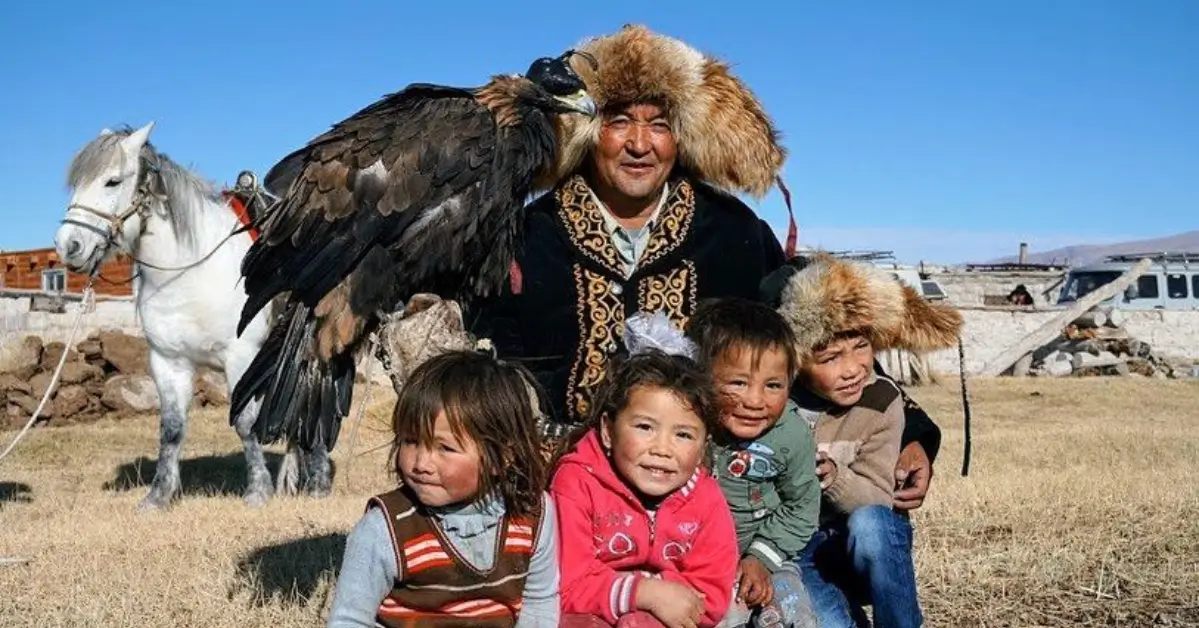
For the Kazakh community of Mongolia’s Altai, the dombra travelled with them. When Kazakh families migrated into western Mongolia in the 19th and 20th centuries, they carried their language, their faith, their eagle-hunting tradition — and their music. The dombra played in a Bayan-Ölgii ger today is the same instrument, playing the same repertoire, as in Kazakhstan.
Kuy — The Solo Instrumental Tradition
The deepest part of dombra music is the kuy — a solo instrumental composition. UNESCO’s recognition specifically names the “dombra kuy” as the inscribed heritage element.
A kuy is not a song. It has no words. It is a piece of instrumental storytelling — and traditionally, every kuy carries a story or a meaning that the audience knows. A kuy might depict: – A historical event or a battle – A landscape — a river, a mountain pass, a galloping horse – An emotion — grief, longing, joy – A legend or a moral tale
The performer does not narrate the story aloud. The music itself carries it, and a knowledgeable Kazakh listener “reads” the kuy the way a Western listener follows a piece of programme music. Master kuy performers (küyshi) hold a respected place in Kazakh culture, and the great historical composers of kuy are remembered by name.
This is what makes a dombra performance more than background music. When a Kazakh elder plays a kuy in the evening, they are performing a piece of cultural memory.

The Dombra and the Spoken Word
The dombra is not only a solo instrument. It is also the constant companion of the Kazakh oral tradition — the music behind the words.
Song accompaniment. The dombra backs Kazakh folk songs, from lullabies to celebration songs to long narrative ballads. The two strings provide both melody and rhythm, leaving the singer’s voice free to carry the words.
Aitys. The most striking word-and-dombra tradition is the aitys — an improvised poetry duel. Two performers (aqyns) face each other and trade improvised, rhyming, often witty verses, each accompanying themselves on the dombra. An aitys can be a friendly contest of skill or a sharp exchange of social commentary. It demands quick wit, deep knowledge of poetic form, and musical skill all at once. Aitys remains a living, popular tradition in Kazakh communities.
Epic recitation. Historically, the dombra and related long-necked lutes accompanied the recitation of epic poems and legends. The instrument has carried poetic legends and heroic tales across centuries of oral transmission.
In all three forms, the principle is the same: the dombra and the human voice work together. Kazakh culture is profoundly oral — its history, values, and humour have been carried in spoken and sung form — and the dombra is the instrument that carries the voice.
How the Dombra Is Built and Played
The dombra is a deceptively simple instrument that rewards a lifetime of practice.
Construction:
| Part | Detail |
|---|---|
| Body | Hollow wooden, traditionally teardrop or triangular |
| Neck | Long, fretted |
| Strings | Two — traditionally sinew, modern dombras usually nylon |
| Amplification | None — a purely acoustic instrument |
Playing technique: The Kazakh dombra is “played by strumming with the hand or plucking each string individually, with an occasional tap on the main surface.” That occasional tap on the body of the instrument adds a percussive accent — the player is, in effect, drummer and melodist at once.
With only two strings, the dombra’s expressive range comes from technique rather than from a large note palette: the speed of strumming, the dynamics, the percussive taps, and the interplay between the two strings. A skilled küyshi makes two strings sound like far more.
The simplicity is also why the dombra survived the nomadic life. It is light, durable, made from local wood, needs no external power, and a family can carry it through every seasonal migration. An instrument that travels with the herds is an instrument that endures.
UNESCO Recognition and a Living Tradition
In November 2014, the Kazakh dombra kuy was registered as a UNESCO Intangible Cultural Heritage element. The recognition affirmed what Kazakh communities have always known — that the dombra and its kuy repertoire are a cultural treasure worth safeguarding.
The instrument’s importance is also marked by National Dombra Day, celebrated on the first Sunday of July.
What matters for a traveller is that this is not a heritage frozen in a museum. In Bayan-Ölgii, the dombra is alive: – It hangs on the wall of working family gers, not behind glass – Children learn it from parents and grandparents – It is played at weddings, at Naadam, at family gatherings, and on ordinary evenings – The kuy repertoire is still performed, and aitys duels still happen
A Kazakh family in the Altai who plays the dombra for guests is not staging a performance — they are sharing something they would be doing anyway.

Hearing the Dombra in the Altai
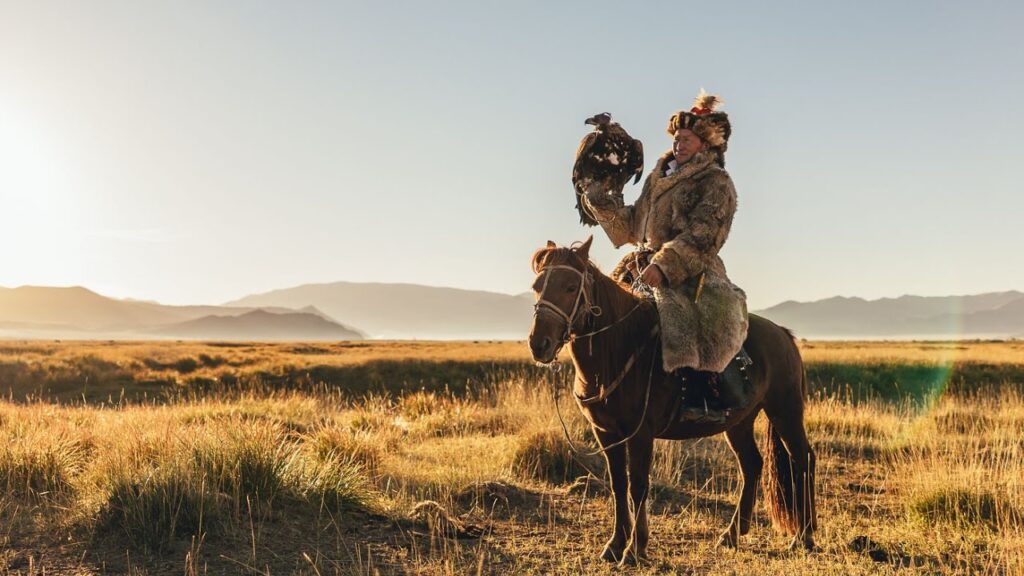
For travellers, the dombra is one of the quieter rewards of a Kazakh homestay. It is not advertised on a tour brochure the way eagle hunting is, but for many visitors the evening a host plays a kuy becomes a highlight they did not expect.
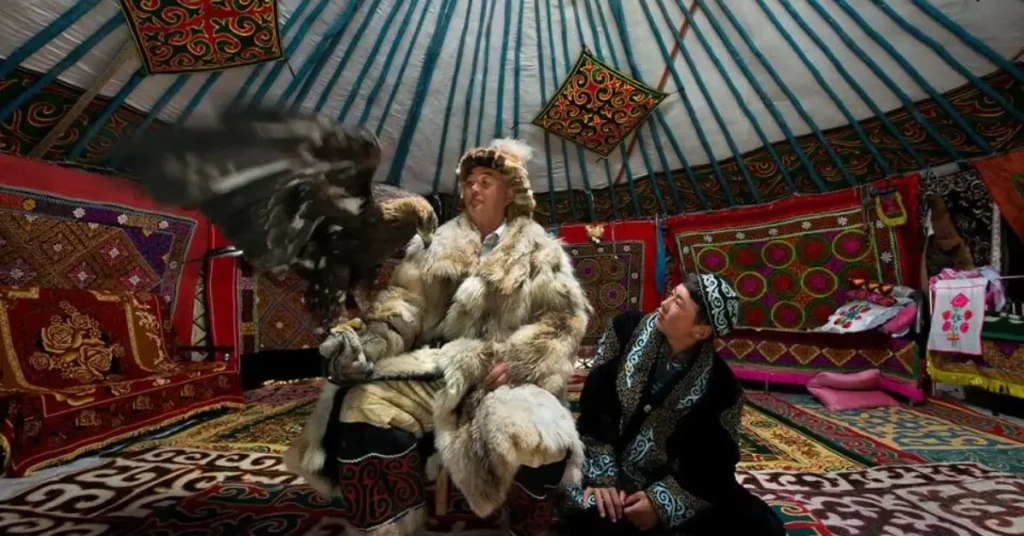
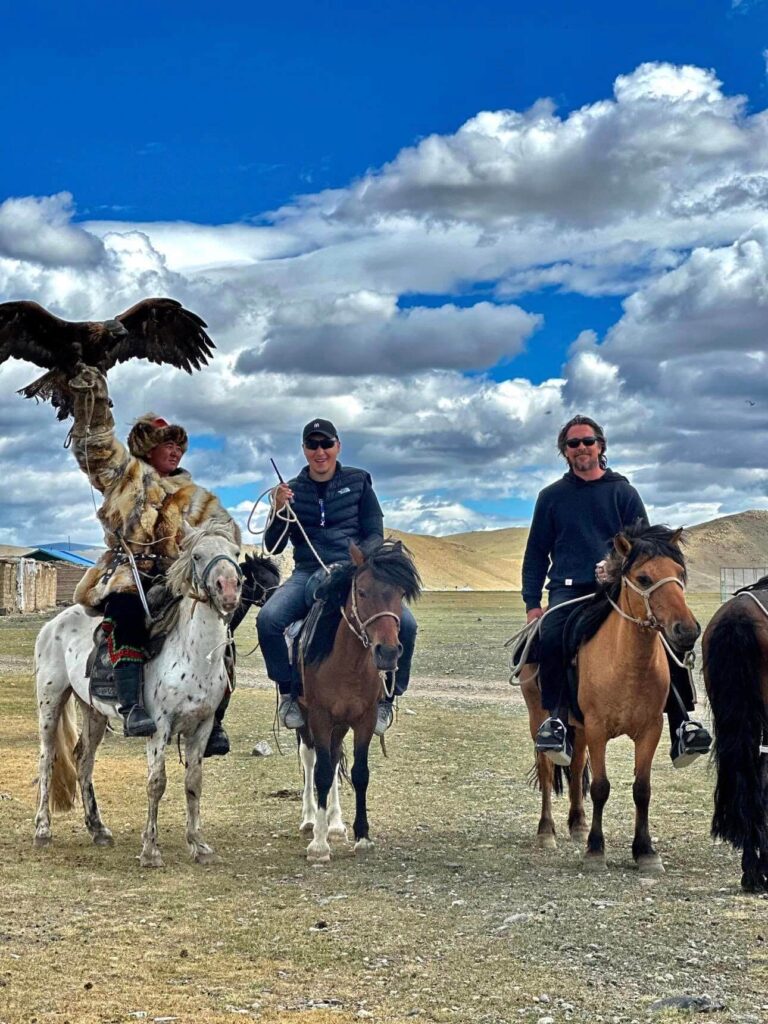
When and where you might hear it: – In a family ger after dinner — a host or an elder takes the dombra down from the wall and plays. This is the most authentic setting. – At celebrations — weddings, Naadam, family events all involve dombra music and song. – During an eagle hunter homestay — the same families who keep the berkutchi tradition keep the musical one.
How to be a good listener: – Be quiet and attentive. A kuy carries a story; treat it as a performance, not background sound. – Don’t request “play something” like a jukebox. Let your guide or host offer it naturally. – Ask, through your guide, what a kuy means. Many kuy have titles and stories — knowing the story transforms the listening. – Applaud and thank the player. Appreciation is welcomed and encourages families to keep sharing. – Recording: ask first. Most families are happy to be recorded, but courtesy matters.
For travellers who want this kind of cultural depth — not just the headline experiences but the evening dombra, the shared meal, the conversation — a homestay is the way to find it. Our Mongolian Eagle Hunter Tour and Mongolian Nomadic Life Tour both place you with Kazakh families where music is part of home life. To understand the wider culture, see our guides to Kazakh food in Mongolia and Kazakh vs Mongol nomads.
Suggested Tours:
Suggested Blogs:
Kazakh Wedding Traditions: The Customs That Still Shape Altai Marriages
A Kazakh wedding in Mongolia’s Altai is not a single event but a sequence of ceremonies stretching over months. It…Naadam in Bayan-Ölgii: How Western Mongolia’s Kazakh Province Celebrates the July Festival
Naadam is Mongolia’s national festival of “the three games of men” — wrestling, horse racing, and archery — held nationally…Kazakh Food in Mongolia: A Traveller’s Guide to Altai Steppe Cuisine
Kazakh food in Mongolia’s Altai region is built on meat and dairy from four animals — horses, camels, cows, and…








What is a dombra?
The dombra is a long-necked, two-string plucked lute — the central instrument of Kazakh folk music. It has a hollow wooden body, a fretted neck, and is played by strumming and plucking with an occasional percussive tap on the body. It is so important to Kazakh culture that it functions as a national symbol.
What is a kuy?
A kuy is a solo instrumental composition played on the dombra. It has no words but traditionally tells a story or depicts a landscape, an event, or an emotion — a form of instrumental storytelling that knowledgeable Kazakh listeners “read” through the music. The Kazakh dombra kuy was registered as UNESCO Intangible Cultural Heritage in 2014.
Is the dombra the same as the morin khuur?
No. The dombra is the Kazakh two-string plucked lute. The morin khuur (horse-head fiddle) is the Mongol bowed instrument. They are different instruments from different cultures — though both are found in Mongolia, the dombra is the Kazakh tradition concentrated in Bayan-Ölgii, while the morin khuur is the Mongol tradition.
What is aitys?
Aitys is an improvised Kazakh poetry duel. Two performers (aqyns) trade improvised, rhyming verses while accompanying themselves on the dombra. It is a contest of wit, poetic skill, and musical ability, and remains a popular living tradition in Kazakh communities, including in Mongolia’s Altai.
Can I hear dombra music on a tour in Mongolia?
Yes — on a Kazakh homestay in Bayan-Ölgii Province. The dombra is a living part of family life, not a staged show. During an eagle hunter or nomadic family stay, a host may take the dombra from the ger wall and play a kuy in the evening. It is one of the quieter, more memorable parts of the homestay experience.
What are dombra strings made of?
Traditionally, dombra strings were made of sinew. Modern dombras usually use nylon strings, which are more durable and consistent. The instrument is otherwise fully acoustic — a hollow wooden body and neck, with no electronics — which is part of why it survived the nomadic lifestyle so well.