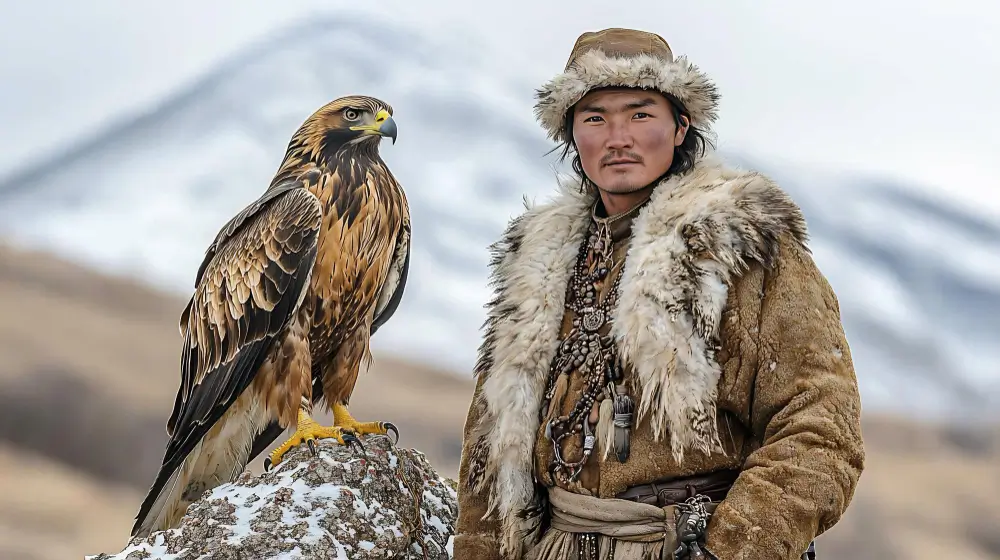
The Eagle Hunters of Western Mongolia represent one of the world’s last surviving nomadic falconry cultures. Practiced by ethnic Kazakhs for centuries in the Altai Mountains, this tradition blends survival skills, spiritual beliefs, and deep kinship between humans and golden eagles. Today, eagle hunting remains an iconic symbol of Mongolian Kazakh identity—yet it is also a way of life undergoing significant transformation in the 21st century.
From ancient training techniques to the rise of female huntresses and the pressures of modernization, this guide explores the full story of the Eagle Hunters of Western Mongolia: their traditions, their family life, and the challenges they face as the world around them changes.
1. Introduction to the Eagle Hunters of Western Mongolia
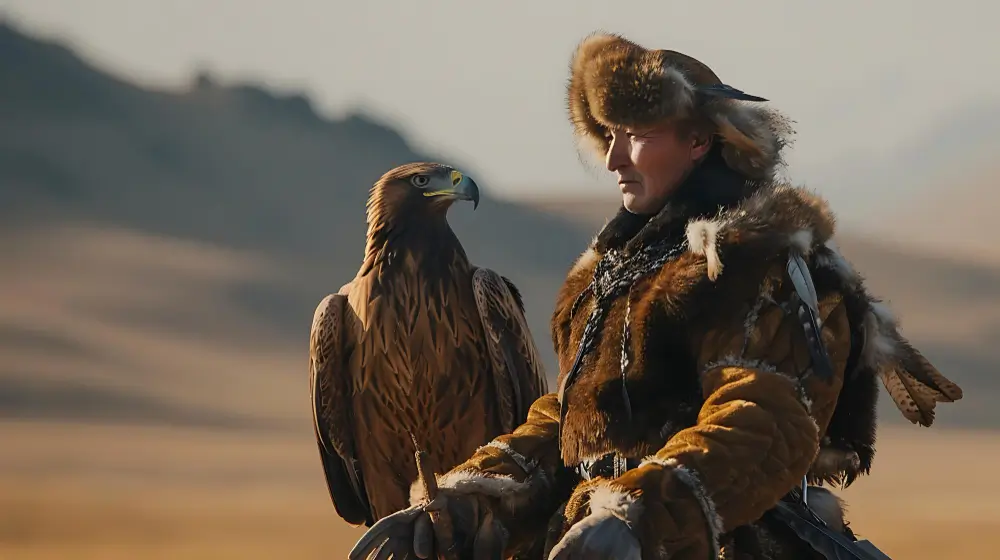
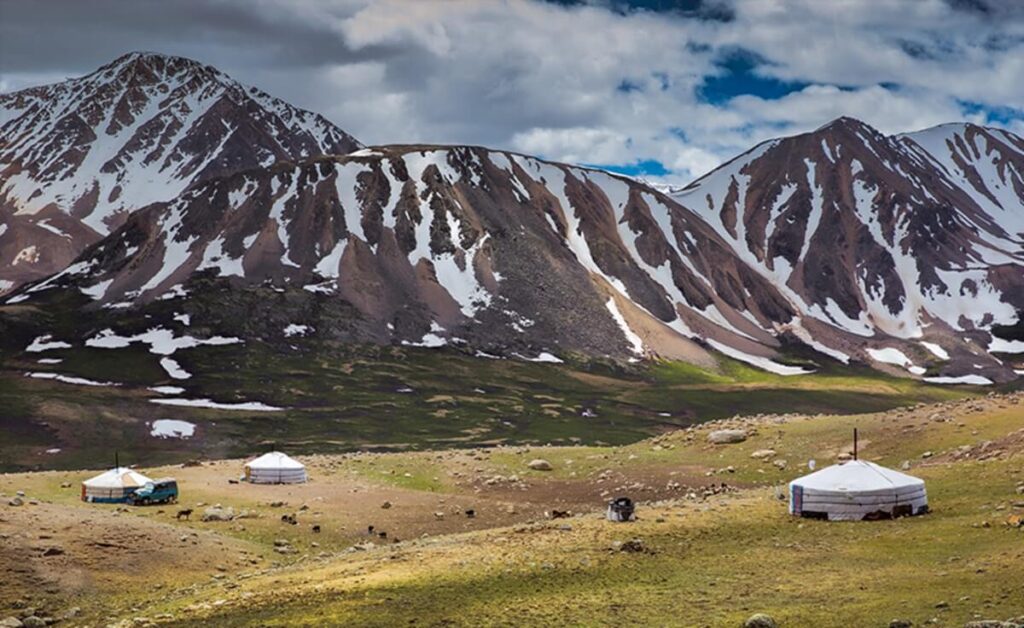
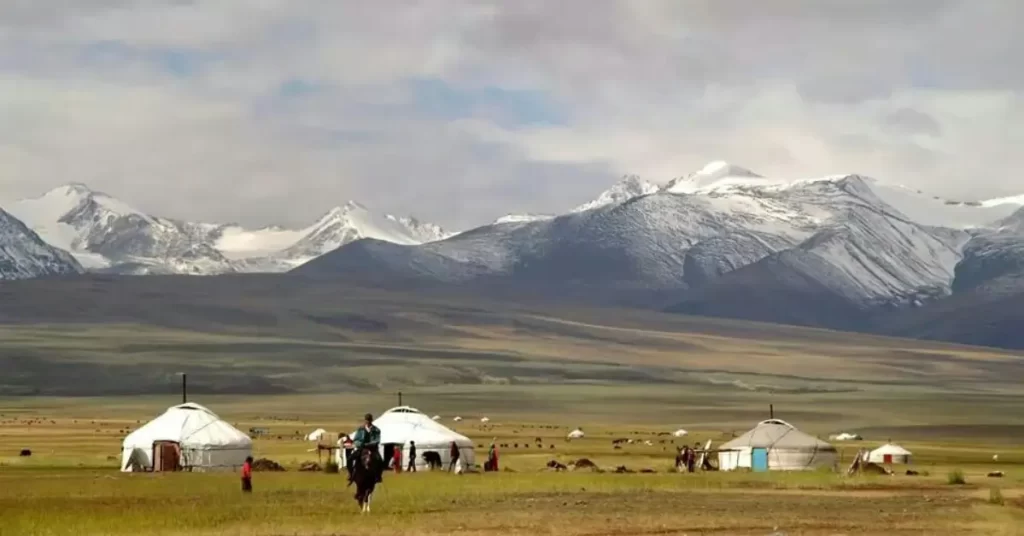
The Eagle Hunters of Western Mongolia live primarily in Bayan-Ölgii province, a mountainous region bordering Russia and China. Here, at altitudes of 2,000–3,000 meters, Kazakh nomads continue the centuries-old tradition of training golden eagles to hunt foxes and hares in winter. This practice is not only a hunting method but also a cultural legacy passed from generation to generation.
Unlike modern falconers, Kazakh eagle hunters live in close connection with nature, relying on the landscape, livestock, seasons, and the rhythms of nomadic migration. Their lifestyle offers a rare window into one of the world’s most resilient nomadic cultures.
2. The Origins of Kazakh Eagle Hunting
Kazakh eagle hunting—known as berkutchi—dates back nearly 1,000 years. Historically, golden eagles provided fur-bearing animals essential for survival in the harsh Altai winters. Skilled hunters became respected leaders in their communities.
UNESCO recognized eagle hunting in Mongolia, Kazakhstan, and Kyrgyzstan as an Intangible Cultural Heritage of Humanity, acknowledging the cultural and ecological value of this tradition.
A vital characteristic of the Eagle Hunters of Western Mongolia is that the practice remains deeply tied to nomadic life—not as performance, but as a functional tradition.
3. Traditional Training Methods
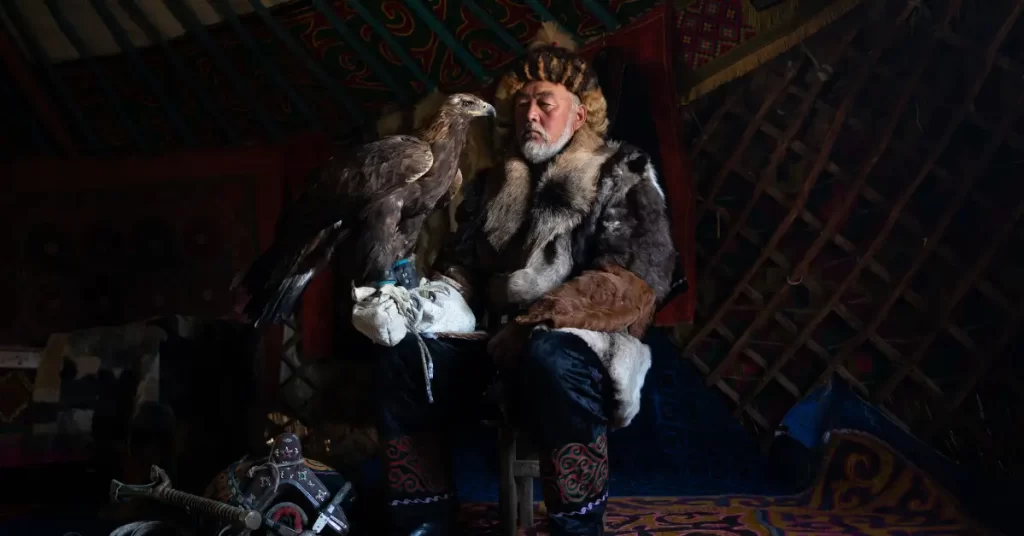
Golden eagles (Aquila chrysaetos) are known for extraordinary strength, eyesight, and intelligence. Training begins when hunters climb steep cliffs to collect a young eagle from the nest. Only female eagles are trained because they are:
- Larger
- Stronger
- More aggressive
- More loyal to their hunter
Training Process
- Bonding – The eagle lives close to the hunter, often indoors, allowing trust to form.
- Food training – The eagle learns to respond to the hunter’s call and whistle.
- Flight training – Eagles are trained from short distances, then from mountain ridges.
- Hunting practice – Hunting small prey strengthens the eagle’s instinct.
Hunters use a leather hood called tomaga, a thick glove (biyalai), and a saddle-mounted wooden rest to carry the eagle.
Releasing the Eagle
A unique aspect of the Eagle Hunters of Western Mongolia is that after 6–7 years the eagle is released back into the wild, often with a ceremonial blessing.

4. Daily & Seasonal Life of Eagle Hunter Families
Eagle hunters typically live with their extended family in gers (yurts) near mountain valleys. Their life is seasonal:
Spring–Summer
- Herding livestock
- Moving to summer pastures
- Preparing food and felt
- Eagle training continues lightly
Autumn
- Most important training season
- Families prepare for the winter hunt
- Hunters gather for festivals and competitions
Winter
- The peak of hunting
- Hunters ride through snow-covered valleys searching for foxes and hares
Family Participation
Every member of the family contributes:
- Women make eagle hoods, saddle decorations, and fur clothing
- Children assist in feeding the eagle
- Elders teach traditional knowledge and songs
This makes the Eagle Hunters of Western Mongolia not just a profession, but a full-family cultural system.
5. Women in Eagle Hunting: A Growing Movement
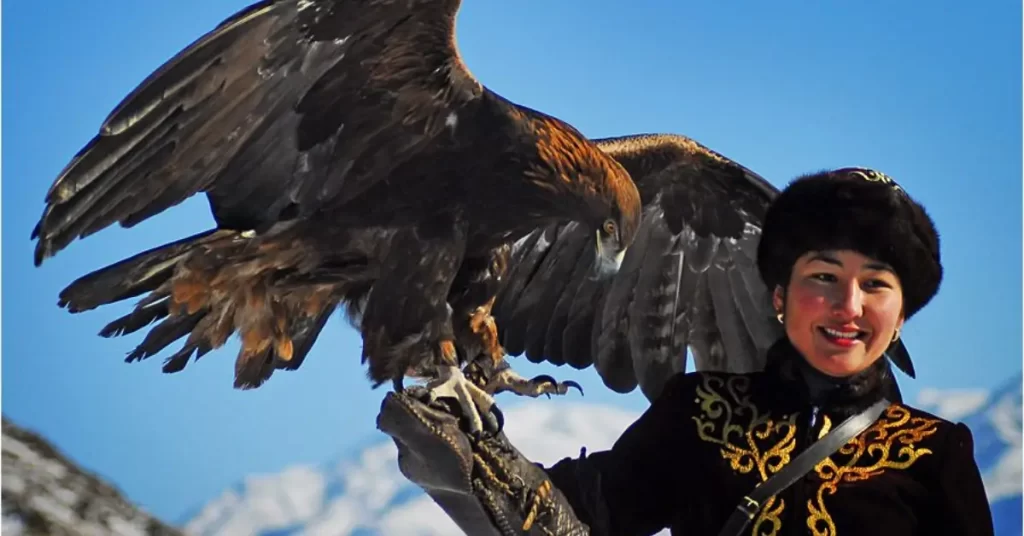
In recent years, a new phenomenon has emerged: female eagle hunters.
Women have always helped train and care for eagles, but today:
- More girls are learning eagle training
- Families encourage daughters to participate
- Young huntresses compete at festivals
- International media has increased global awareness
The most famous example is Aisholpan, the young huntress featured in the documentary The Eagle Huntress. Her success inspired many Kazakh girls across Mongolia.
This rise of women in eagle hunting is reshaping cultural identity while honoring tradition.
6. The Impact of Modernization
Modern life is shifting the realities of the Eagle Hunters of Western Mongolia:
Positive Impacts
- Better access to education
- Higher income through tourism
- Improved technology for safety and travel
- Opportunities to share culture globally
Negative Impacts
- Younger generations leaving for urban jobs
- Climate change affecting animal populations
- Reduced need for hunting for survival
- Festival commercialization risks
Balancing tradition with modern life is becoming one of the key challenges for Kazakh families.
7. Challenges Facing the Tradition Today
The most critical challenges include:
- Loss of youth participation
- Economic pressure driving families to move to cities
- Climate shifts affecting eagle habitats
- Over-commercialization at large festivals
- Declining fox populations in hunting areas
Despite this, many Kazakh families are committed to passing down their knowledge, ensuring the continuity of the Eagle Hunters of Western Mongolia.
8. Tourism: Support or Threat?
Tourism plays a complex role:
Positive
- Provides income for nomadic families
- Funds cultural preservation programs
- Encourages youth to value their heritage
Negative
- Some events are staged for tourists
- Risk of disrupting eagle training routines
- Overreliance on tourism income
Responsible, community-led tourism helps preserve—not exploit—this tradition.
For example, the Golden Eagle Festival (linked internally) supports the Kazakh Falconry Association and promotes cultural education.
9. Where to Meet Eagle Hunters in Mongolia
Travelers can meet the Eagle Hunters of Western Mongolia in:
- Sagsai village (most common)
- Altantsugts
- Tolbo Lake region
- Dayan and Khoton Lakes
- Private homestays with eagle hunter families
Many tour operators offer immersive experiences including hunting demonstrations, training sessions, and photography tours.
(External resource: UNESCO profile on eagle hunting traditions.)
10. Final Thoughts
The Eagle Hunters of Western Mongolia are guardians of one of the world’s most extraordinary cultural traditions. Their deep connection with nature, their dedication to their eagles, and their ability to preserve their heritage amid modern challenges make them an inspiring symbol of resilience.
As cultural interest grows in 2026–2027, supporting responsible tourism and ethical storytelling is essential to ensuring that this ancient nomadic practice continues to thrive for generations to come.
If you would like to read more about eagle hunting traditions click below links:
- Training a Golden Eagle: How Hunters Build Lifelong Bonds
- Meet the Kazakh Eagle Hunters of the Altai Mountains – Lifestyle and Culture of Eagle Hunter Families
- The Ancient Art of Eagle Hunting in Western Mongolia – History, Traditions, and UNESCO Heritage
- Women and the Future of Eagle Hunting in Mongolia – Rising Role of Young Female eagle Hunters in Keeping Traditions Alive
CLIMB MOUNT KHUITEN MONGOLIA CLIMB
Come and enjoy a unique expedition in the remotely located Altai Mountains CLIMB MOUNT KHUITEN MONGOLIA ⭐⭐⭐⭐⭐ 5.0 · 72…MONGOLIA SNOW LEOPARD PHOTOGRAPHY TOUR
Unleash your adventure spirit, explore Mongolia on your own terms MONGOLIA SNOW LEOPARD PHOTOGRAPHY TOUR ⭐⭐⭐⭐⭐ 5.0 · 72 reviews…Mongolia Altai Mountain Tour 2026 — 8 Days: Peak Climb + Culture + Nomadic Stay | $1,700
Unleash your adventure spirit, explore Mongolia on your own terms MONGOLIA ALTAI MOUNTAIN TOUR ⭐⭐⭐⭐⭐ 5.0 · 72 reviews on…