The Golden Eagle Festival is one of Mongolia’s most remarkable cultural events, where visitors from around the world gather to witness the living traditions of eagle hunting in the Altai Mountains. More than just a competition, the festival is a vibrant celebration of Kazakh nomadic heritage, showcasing the deep bond between hunters and their majestic golden eagles. Whether you attend in autumn or winter, the festival offers an unforgettable immersion into Mongolian culture, hospitality, and adventure.
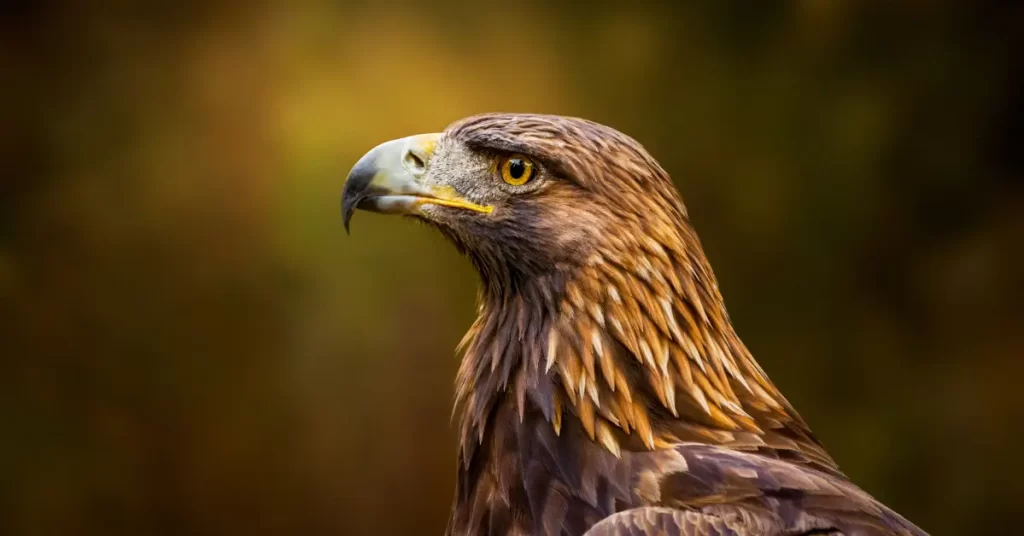
🦅 Experience the Golden Eagle Festival in person
Join our guided Golden Eagle Festival Tour — October 2–3, 2027, small group, local Kazakh guides, and front-row access to the eagle competitions in Ölgii.
The Origins of the Golden Eagle Festival
Eagle hunting, known as berkutchi, is an ancient tradition practiced by the Kazakh people of Western Mongolia for centuries. This unique art involves training golden eagles to hunt foxes, hares, and even wolves in the harsh landscapes of the Altai. Today, around 300 practising eagle hunters remain, nearly all of them in Bayan-Ölgii province — which makes every festival gathering a significant share of the world’s living eagle hunters in one valley.
To preserve and honor this heritage, the first official Golden Eagle Festival was organized in 1999 near Ölgii city. Since then, the festival has grown into an internationally recognized event, drawing eagle hunters, travelers, and photographers from around the world. In 2010, UNESCO listed Kazakh eagle hunting as part of the Intangible Cultural Heritage of Humanity, further emphasizing its cultural importance. Most international visitors attend as part of a guided Golden Eagle Festival Mongolia tour, which covers festival access, transport from Ölgii and homestays with local Kazakh families.
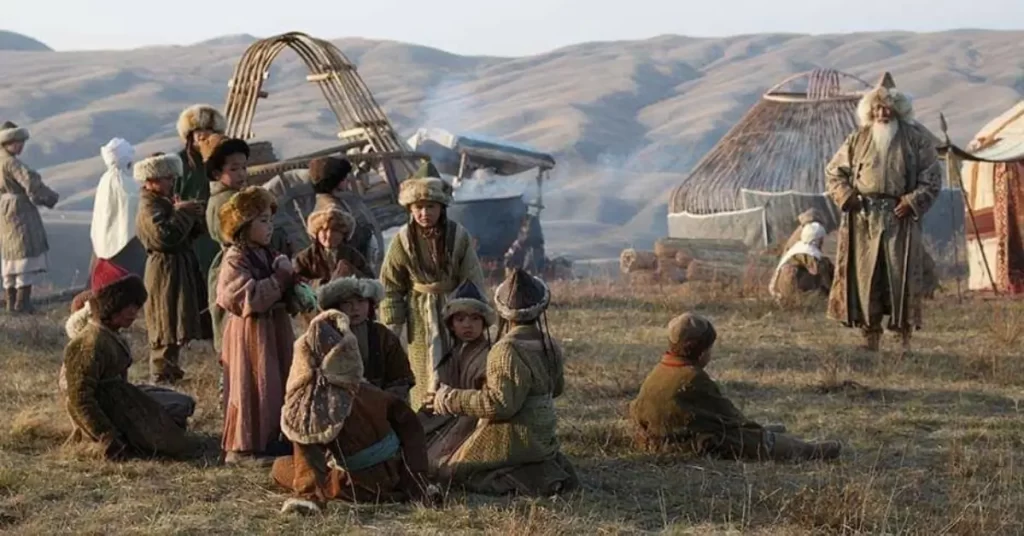
When and Where the Festivals Take Place
There are several Golden Eagle Festivals across the year:
Golden Eagle Festival Dates for 2026 and 2027
These are the confirmed and expected dates for every eagle festival in Bayan-Ölgii. The main festival is traditionally held on the first weekend of October; March dates are announced each January.
| Festival | 2026 Dates | 2027 Dates | Location | Scale |
|---|---|---|---|---|
| Golden Eagle Festival (main) | October 3–4 | October 2–3 | Near Ölgii (2027: Shar Nuur, 15 km away) | 70–100 hunters, thousands of visitors |
| Sagsai Eagle Festival | September 17–18 | September 17–18 | Sagsai village | Up to 40 hunters, small crowds |
| Winter Eagle Festival | Early March | Early March | Sagsai or Altantsugts | Intimate, snowy, photographer favourite |
If your dates are flexible, the September festival pairs beautifully with an Altai Tavan Bogd trek in the same trip — the mountain passes are still open, and Ölgii flights are easier to book than in October.
Autumn Golden Eagle Festival – October
- The largest and most popular festival
- First weekend of October in Bayan-Ölgii
- 70–100 eagle hunters compete
- Thousands of visitors and photographers
Winter Golden Eagle Festival – March
- Held in Sagsai or Altantsugts
- More intimate, authentic, and less crowded
- Dramatic snowy scenery perfect for photography
September Mini-Festivals (2026–2027 Update)
Not widely known but extremely valuable for travelers:
- Two smaller September festivals
- Up to 40 hunters each
- Ideal for photographers
- Easier to book flights and accommodation
These mini-festivals offer a more peaceful, personal version of the October festival while maintaining the same cultural depth.
What Visitors Can Expect at the Golden Eagle Festival
1. The Grand Parade of Eagle Hunters
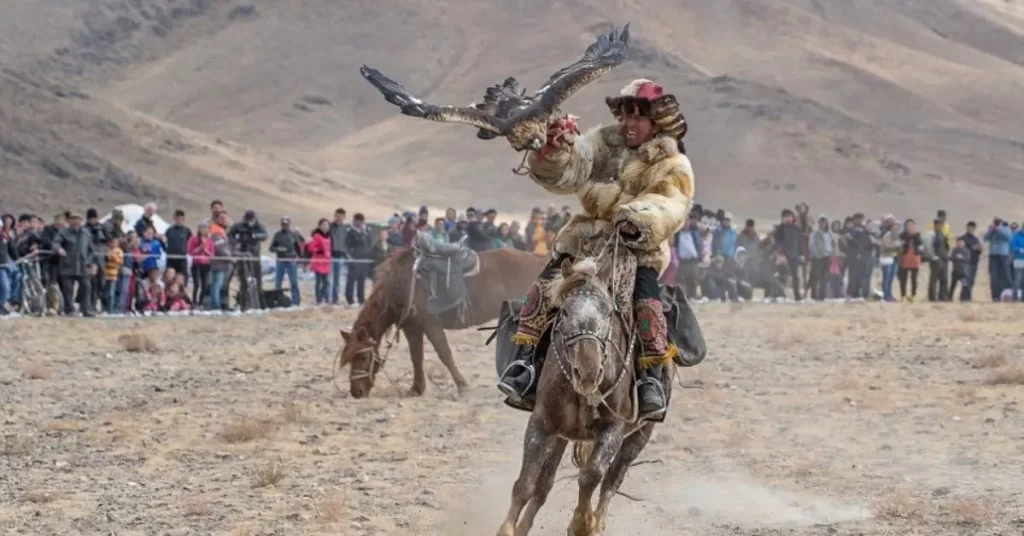
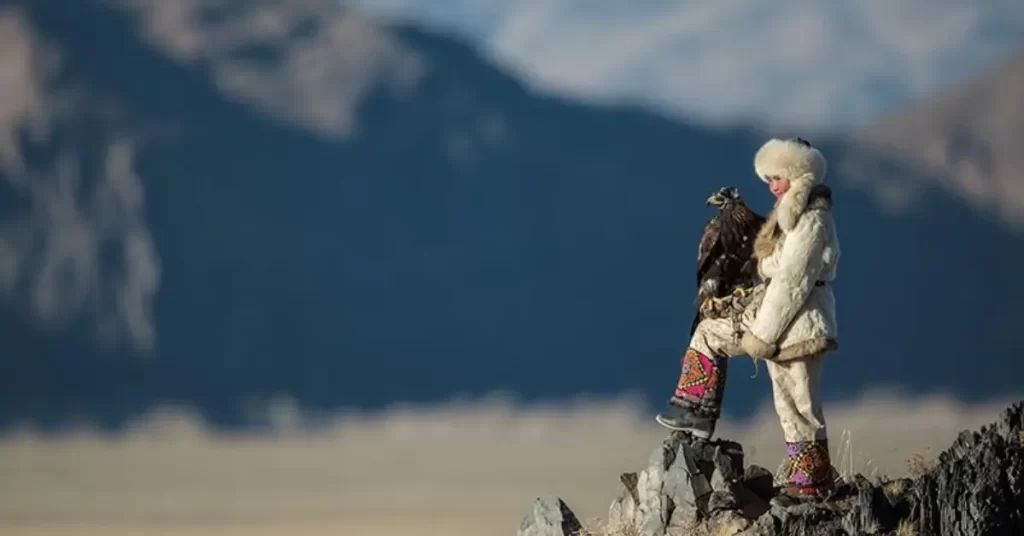
One of the most stunning moments is the arrival parade: eagle hunters dressed in traditional fur clothing, riding decorated horses, carrying golden eagles on their arms. Many travel long distances from remote mountains to attend, offering visitors one of the most iconic cultural scenes in Mongolia.
2. Festival Competitions
The heart of the festival lies in a series of competitions designed to test the skill, speed, and cooperation between hunter and eagle:
Calling the Eagle
Hunters release their eagles from a distant hill; the eagle must recognize its master’s voice and land gracefully on his arm.
Fox Skin Dragging
Hunters drag a fox skin across the field on horseback, and the eagle must swoop down and seize the moving target.
Agility and Horsemanship
Includes:
- Archery
- Camel and horse racing
- Kokpar (Kükbar) – a tug-of-war on horseback with a goat skin
- Coin Grabbing – picking up a coin from the ground while galloping
- Kyz Kuar – a traditional women’s horse chase game
These events showcase not just eagle hunting, but the full spectrum of Kazakh nomadic athleticism.
3. Cultural Experiences & Kazakh Heritage
Golden Eagle Festival visitors also enjoy:
- Traditional Kazakh music and dance
- Kazakh throat singing
- Felt crafts, embroidery, and handmade carpets
- Local cuisine such as besbarmak, kuirdak, and baursak
- Warm salted milk tea served endlessly
Each activity offers a deeper understanding of Kazakh nomadic life.
Photography Paradise: Why Photographers Love This Festival
The Golden Eagle Festival is considered one of the most photogenic cultural events in the world.
Cinematic visual factors include:
- Snow-capped Altai Mountains
- Hunters in colorful fur-lined attire
- Eagles soaring through crisp mountain air
- Warm sunset light over the steppe
- High contrast between snow, sky, and fur garments
Photographers from National Geographic, BBC, and global agencies frequently attend.
Unique & Lesser-Known Facts About Golden Eagles
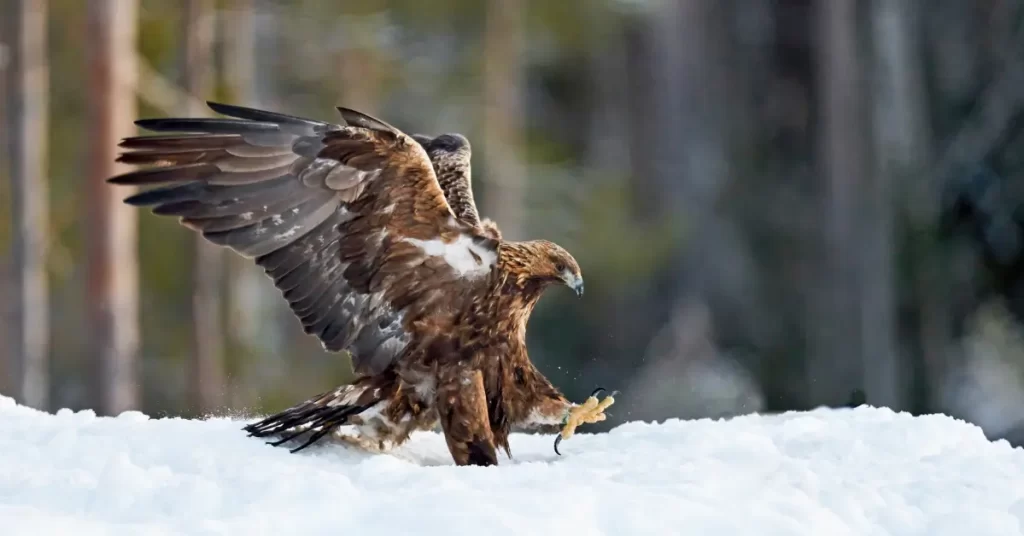
- Golden eagles are the second-fastest hunting birds on earth.
- They do not migrate, making them well-adapted to Mongolia’s harsh climate.
- Female eagles are preferred for hunting as they are larger, stronger, and bolder.
- Wingspan ranges between 1.8 m to 2.5 m (6–8 feet).
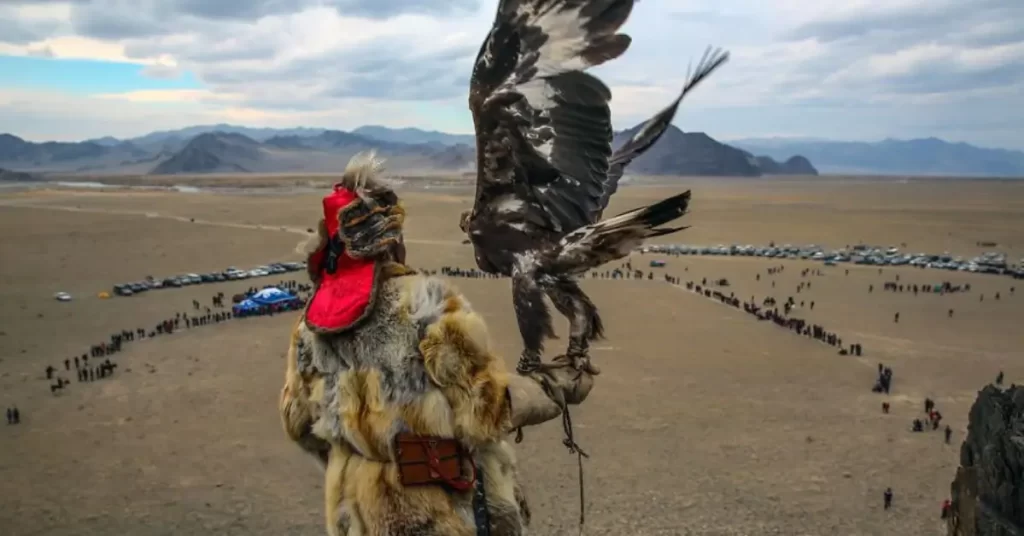
- A special hood called tomaga keeps the eagle calm during travel.
- After 6–7 years of hunting partnership, trained eagles are ceremonially released back into the wild.
- Golden eagle chicks used for training come from remote mountain nests.
- Children as young as 9 or 10 years old learn eagle training.
- There are several female eagle hunters today—most notably Aisholpan, star of The Eagle Huntress documentary.
The Eagle Huntress: the Film That Took the Festival Worldwide
Much of the festival’s international fame traces back to one teenager. In 2014, thirteen-year-old Aisholpan Nurgaiv entered what had always been a men’s competition — and won it, with the eagle she had raised herself. The 2016 documentary The Eagle Huntress followed her journey to that victory and brought the Golden Eagle Festival to cinema audiences worldwide. Visitors still meet female eagle hunters competing at the festival today, and locals will happily point out where the film’s key scenes were shot. If you watch one thing before your trip, make it this film.
Why the Golden Eagle Festival Matters (2026–2027 Perspective)
The festival serves as a cultural lifeline:
- Preserves a near-endangered nomadic tradition
- Supports local Kazakh families and youth
- Protects golden eagles through ethical training
- Funds the Kazakh Falconry Association via ticket sales
- Strengthens community pride and continuity
In an era of modernization, this festival helps ensure eagle hunting survives for generations.
Practical Information for Visitors
Getting There
- Flight: Ulaanbaatar → Ölgii (3 hours, limited seats)
- Car: 2–3 days road trip
- Tours: Best option for logistics, accommodation, and festival access
Booking Tip (Important for 2026–2027)
The October festival books out 6–12 months in advance for both flights and hotels.
Tickets and What a Visit Costs
Festival entry is ticketed, with proceeds supporting the Kazakh Falconry Association that organises the event. Most travellers arrive on a package that bundles festival access with transport, accommodation and a guide, so tickets are rarely something you need to arrange separately.
A note on price: international operators sell Golden Eagle Festival group tours for $6,900–$9,500 per person. Booking directly with a local Ölgii-based operator typically costs a fraction of that for the same festival access, local Kazakh guides and homestay accommodation — see our Golden Eagle Festival tour for the local option.
Accommodation Options
Visitors can stay in:
- Hotels in Ölgii
- Tourist ger camps
- Guesthouses
- Kazakh family homestays
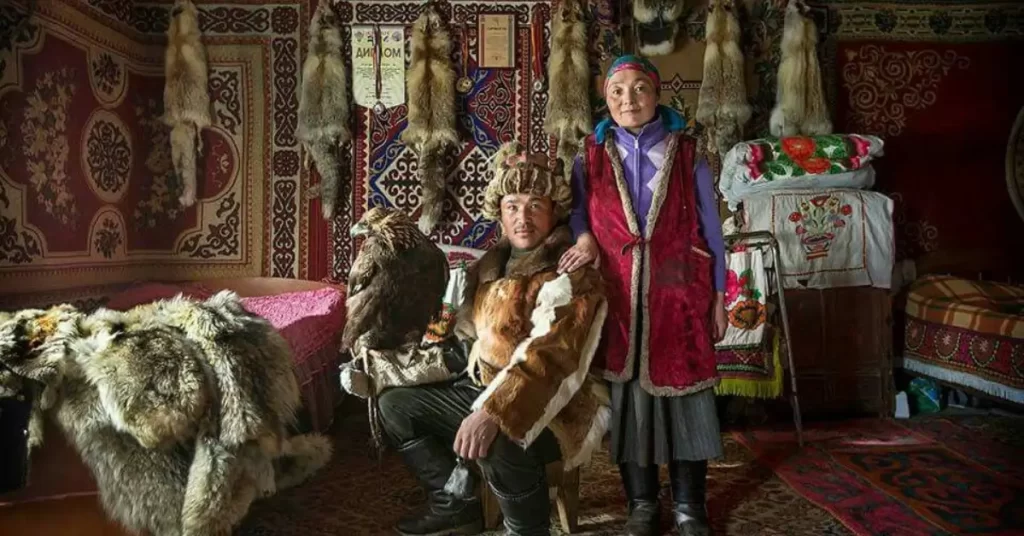
- Eagle hunter home visits
Festival grounds are usually 7–14 km outside town.
Meals & Food
Temporary ger restaurants offer:
- Traditional Kazakh dishes
- Mongolian meals
- Western food options
One highlight is the chance to try authentic Kazakh home-cooked meals.
What to Pack
Depending on the season:
October: 0°C to –10°C
March: –20°C or below
Bring:
- Thermal layers
- Insulated boots
- Windproof gloves
- Sunglasses and sunscreen
- Camera with zoom lens
Autumn vs. Winter Festival: Which Should You Choose?
| Autumn Festival (October) | Winter Festival (March) | September Festivals | |
|---|---|---|---|
| Hunters | 70–100 | 30–50 | Up to 40 |
| Crowds | Thousands — book 6–12 months ahead | Small | Small |
| Weather | 0°C to −10°C | −20°C or below | 5°C to −5°C |
| Best for | First-time visitors, full spectacle | Photographers, snow scenery | Combining with Tavan Bogd trekking |
Both festivals offer unforgettable experiences.
Beyond the Festival: Exploring Western Mongolia
Enhance your trip with:
- Altai Tavan Bogd National Park
- Tsambagarav Mountain
- Dayan, Khoton, and Khurgan Lakes
- Nomadic family visits
- Migration trail expeditions
Western Mongolia is one of the most untouched wilderness regions on earth.
Final Thoughts
Attending the Golden Eagle Festival 2027 is more than a trip—it’s a journey into the heart of nomadic culture. The sight of golden eagles soaring over the Altai, the sound of horse hooves, and the warmth of Kazakh hospitality create an experience that stays with you forever.
Whether you choose the autumn or winter festival, you will witness one of humanity’s most extraordinary living traditions and immerse yourself in the timeless spirit of Mongolia’s nomads.
If you would like to read more about eagle hunting traditions click below links:
- Training a Golden Eagle: How Hunters Build Lifelong Bonds
- Meet the Kazakh Eagle Hunters of the Altai Mountains – Lifestyle and Culture of Eagle Hunter Families
- The Ancient Art of Eagle Hunting in Western Mongolia – History, Traditions, and UNESCO Heritage
- Women and the Future of Eagle Hunting in Mongolia – Rising Role of Young Female eagle Hunters in Keeping Traditions Alive
- Kazakh Eagle Hunters of Western Mongolia: Traditions, Family Life & Modern Challenges
Ready to see it for yourself?
Our Golden Eagle Festival Tour runs during the festival weekend each October — including airport pickup in Ölgii, festival tickets, an eagle hunter family visit, and English-speaking local guides. Groups are small and usually sell out by August.
When is the Golden Eagle Festival in 2027?
The main Golden Eagle Festival takes place on October 2–3, 2027 at Shar Nuur, 15 km from Ölgii, Bayan-Ölgii. The smaller Sagsai Eagle Festival runs September 17–18, 2027, and a winter edition is held in early March.
How much does it cost to attend the Golden Eagle Festival?
Package prices vary widely: international operators charge $6,900–$9,500 for Golden Eagle Festival group tours, while local Ölgii-based operators offer the same festival access with Kazakh guides and homestays for a fraction of that price. Flights from Ulaanbaatar to Ölgii are the main extra cost and sell out months ahead.
Is the Golden Eagle Festival worth visiting?
Yes. The Golden Eagle Festival is one of the world’s most unique cultural events, offering an authentic experience of Kazakh eagle hunting, traditional games, and stunning Altai mountain landscapes. It is especially recommended for photographers, cultural travelers, and adventure seekers.
How long should I stay for the Golden Eagle Festival?
Most travelers stay 3–4 days to fully experience the competitions, cultural shows, photography sessions, and local tours around Ölgii. Some extend their trip to explore Altai Tavan Bogd National Park.
3. Can I interact with eagle hunters outside the festival?
Yes. Many eagle hunters welcome visitors to their homes for private experiences, where you can participate in training sessions, photograph the eagles up close, and learn about Kazakh nomadic life.
4. How physically demanding is visiting the festival?
The festival itself is not physically demanding, but it is held at high altitude (1,700–2,000 m) in cold, dry weather. Visitors should be prepared for uneven ground, cold temperatures, and long hours outdoors.
5. Are drones allowed at the Golden Eagle Festival?
Drone use is restricted and often requires permission from organizers due to safety concerns for eagles. Unauthorized drones may be confiscated. It’s best to request approval from your tour operator beforehand.
6. What makes the Golden Eagle Festival different from other Mongolian festivals?
It is the only festival in the world dedicated to golden eagle falconry, featuring real hunters, real hunting techniques, and centuries-old Kazakh traditions preserved by a small community of nomads in the Altai.
7. How ethical is eagle hunting in Mongolia?
Eagle training in Mongolia follows strict cultural ethics: hunters use only female eagles that naturally leave the nest, support them during winter, and ceremonially release them back into the wild after several years. No eagle is kept for life.
8. What is the best time of day for photography at the festival?
The best photography light occurs during early morning and late afternoon when the sun creates cinematic shadows on the Altai Mountains. Many hunters also gather at sunrise before competitions, offering ideal portrait opportunities.
CLIMB MOUNT KHUITEN MONGOLIA CLIMB
Come and enjoy a unique expedition in the remotely located Altai Mountains CLIMB MOUNT KHUITEN MONGOLIA ⭐⭐⭐⭐⭐ 5.0 · 72…MONGOLIA SNOW LEOPARD PHOTOGRAPHY TOUR
Unleash your adventure spirit, explore Mongolia on your own terms MONGOLIA SNOW LEOPARD PHOTOGRAPHY TOUR ⭐⭐⭐⭐⭐ 5.0 · 72 reviews…Mongolia Altai Mountain Tour 2026 — 8 Days: Peak Climb + Culture + Nomadic Stay | $1,700
Unleash your adventure spirit, explore Mongolia on your own terms MONGOLIA ALTAI MOUNTAIN TOUR ⭐⭐⭐⭐⭐ 5.0 · 72 reviews on…