
Mongolia is one of the easiest places on Earth to see a truly dark sky. Away from Ulaanbaatar there is almost no light pollution, the air is dry and the skies are clear on most nights. For the best stargazing, go to the Gobi or the Altai Mountains, travel in late August to early October, and plan your nights around the new moon. You don’t need a special tour: any countryside night away from a town will show you the Milky Way.
Key Takeaways
- Light pollution is almost zero: Outside Ulaanbaatar and a few provincial towns, most of Mongolia is genuinely dark.
- Best regions: The South Gobi for warm, clear nights, and the high Altai for thin, dry air above 2,000 m.
- Best season: Late August to early October gives long, dark nights, the Milky Way overhead and comfortable temperatures.
- Mind the moon: Plan your trip around the new moon. A bright moon washes out the faint stars for about a week either side of full.
- June has short nights: Around the summer solstice, the north and west of Mongolia barely get fully dark.
Why Mongolia’s Night Sky Is So Dark
Three things make Mongolia exceptional for stargazing:
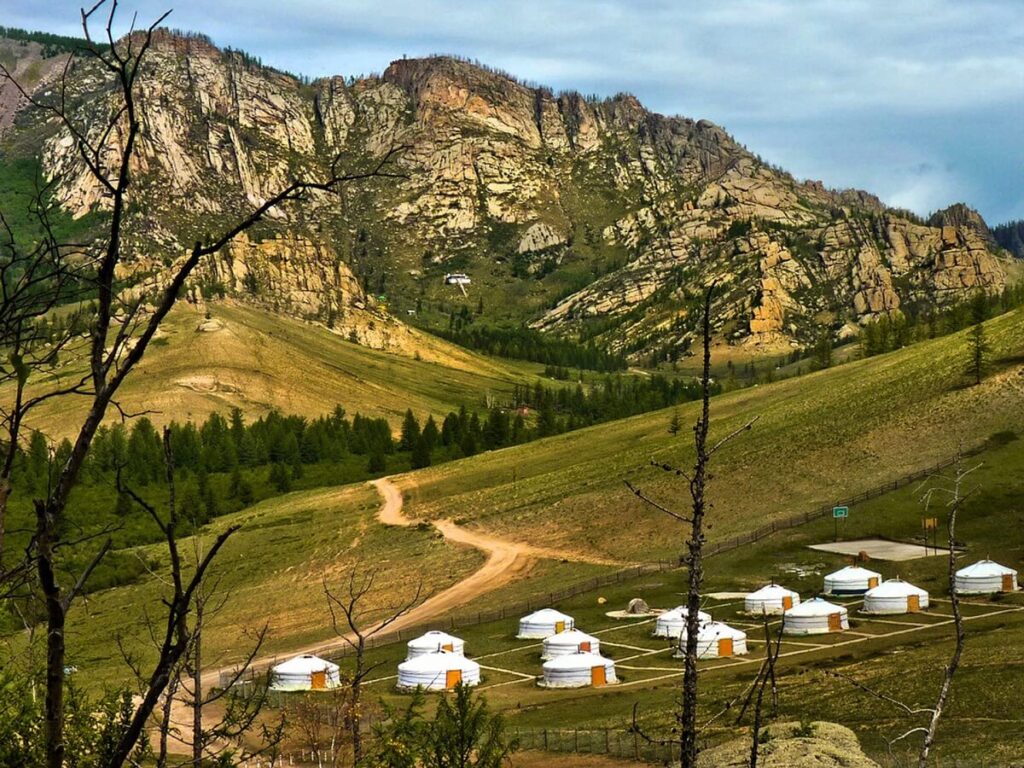
- Very few people: Mongolia is the least densely populated country in the world, and about half the population lives in Ulaanbaatar. Once you are a few hours outside the city, the only lights are the stove glow in a ger and the headlights of a passing jeep.
- Dry air: the continental climate means low humidity and little haze, so stars stay sharp down to the horizon.
- Altitude: much of the country sits above 1,000 m, and the Altai lakes and valleys above 2,000 m. Less atmosphere above you means a crisper sky.
As far as we know, Mongolia has no officially certified dark-sky park yet. It doesn’t need one: the countryside is darker than most certified sites in Europe or North America.
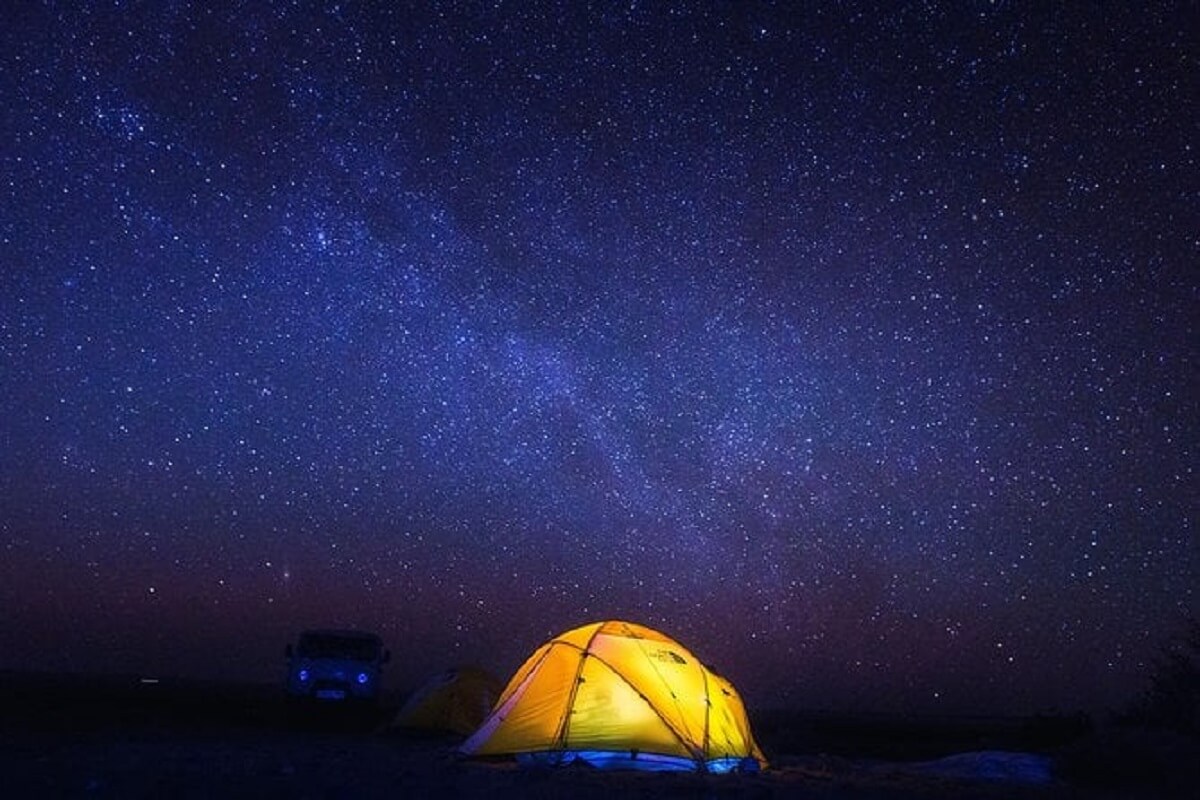
The Best Places for Stargazing in Mongolia
The Gobi Desert
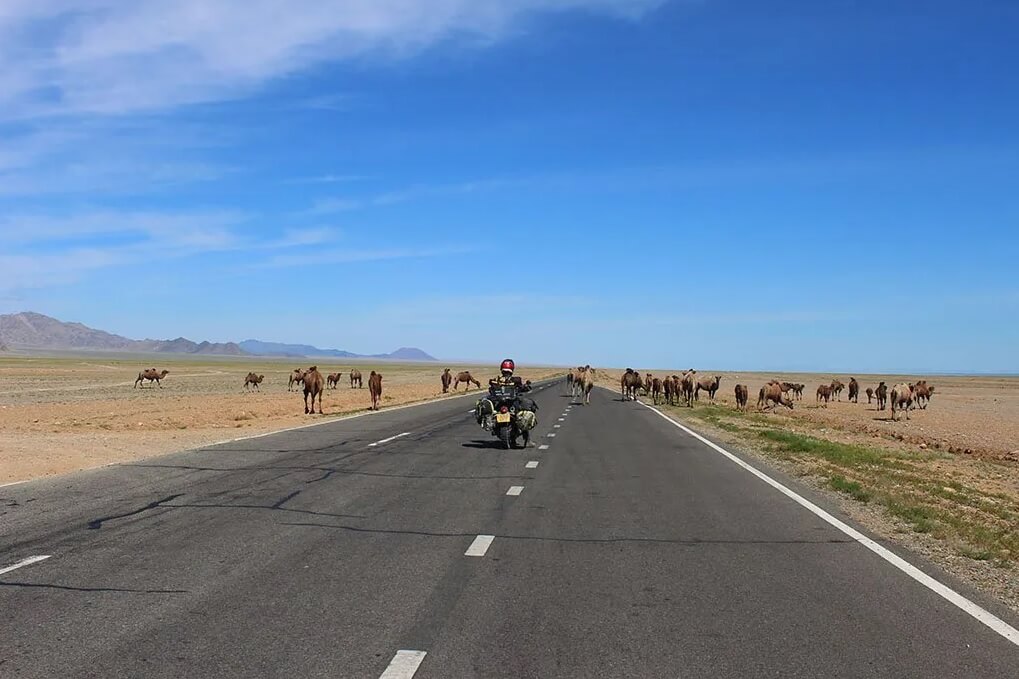
The South Gobi offers the most reliable clear skies and the warmest nights. A ger camp near the Khongoryn Els dunes or at Bayanzag gives a wide, flat horizon in every direction. Climb a low dune after dinner and you will see the Milky Way rise from the sand. See our Gobi Desert guide.
The Altai Mountains
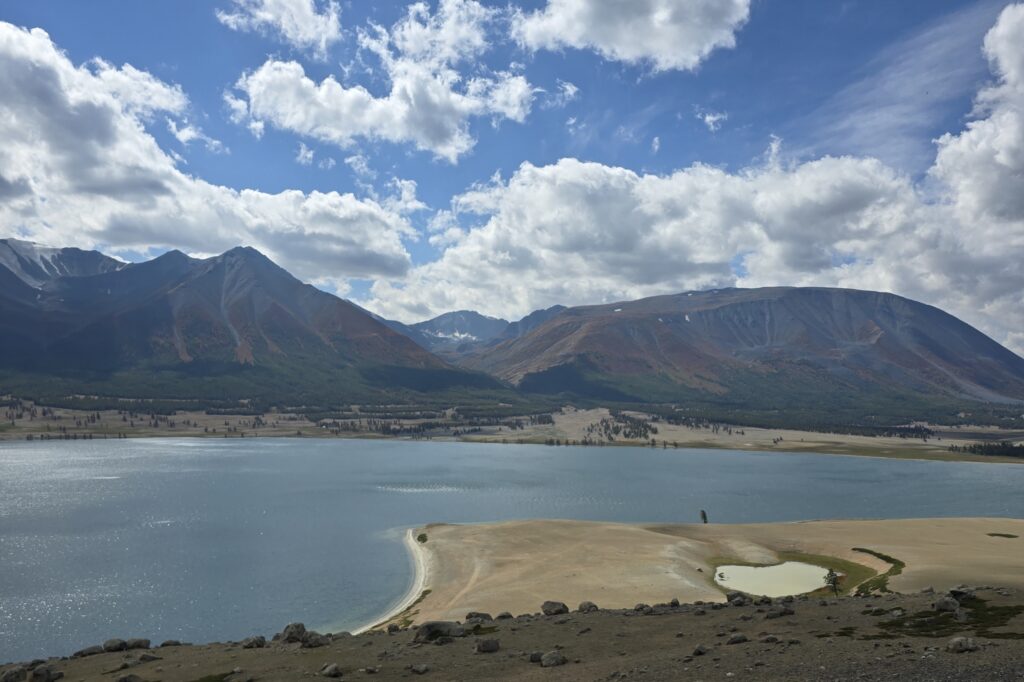
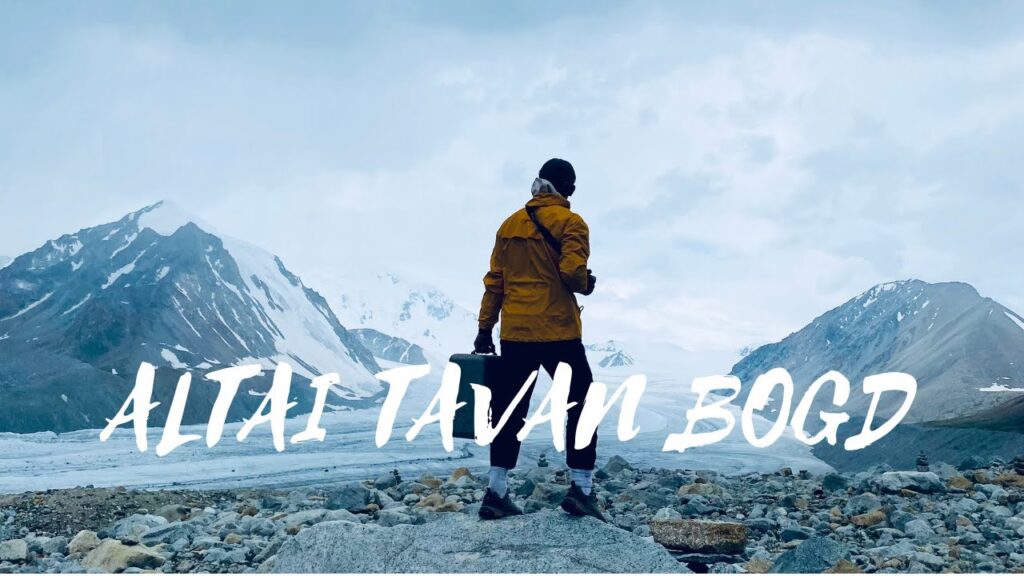
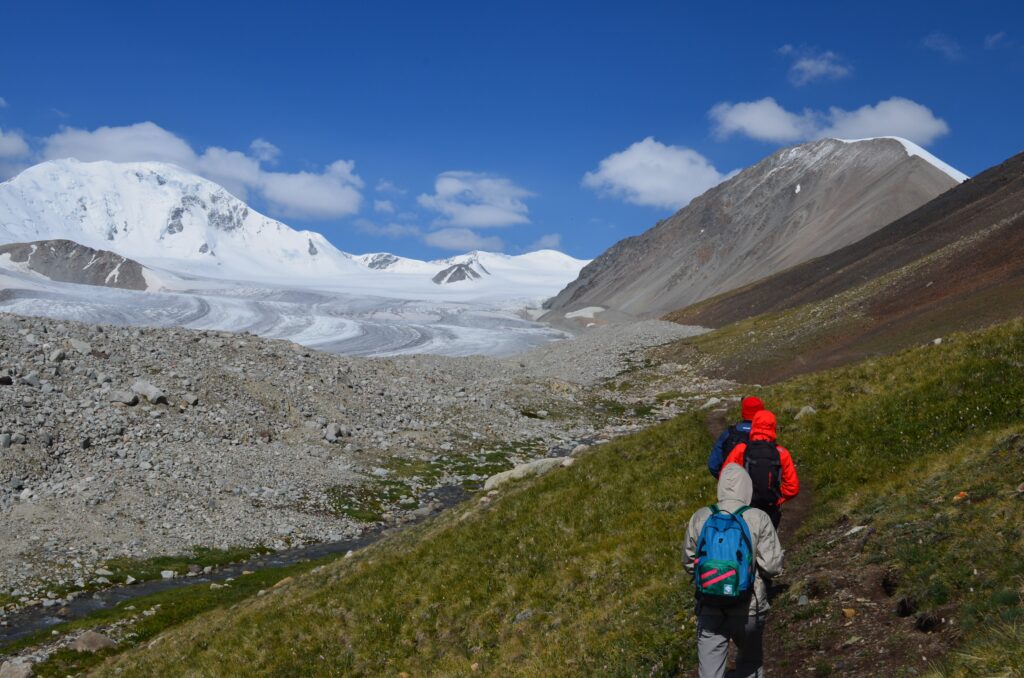
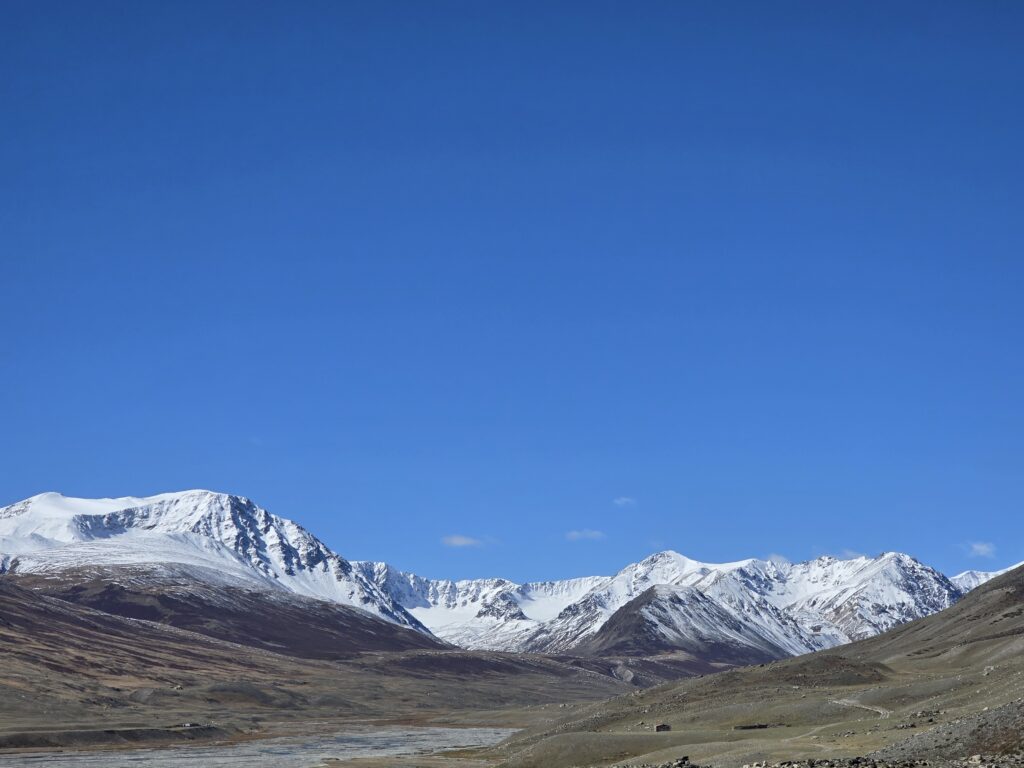
In Altai Tavan Bogd National Park, camps by Khoton and Khurgan lakes and the base camp below Khüiten Peak sit above 2,000 m, far from any town. On calm nights the stars reflect in the lakes. It gets cold after dark, even in summer, so bring a down jacket. Read about Altai Mountains weather.
Central and northern Mongolia
The steppe of Arkhangai and the shores of Khuvsgul Lake are also dark, but clouds are more common in summer, and the far north has shorter nights in June and July.
Close to Ulaanbaatar
Terelj is about 1.5 hours away, and while the city glow is visible on the horizon, you will still see far more stars than in town. It is a good option if you only have one night.

Best Months for Stargazing
| Season | Night length | Sky | Comfort | Verdict |
|---|---|---|---|---|
| June–July | Short; little full darkness in the north and west around the solstice | Milky Way core low in the south; summer clouds and storms | Mild | Possible, but not the best |
| Late Aug–early Oct | Long and dark | Clear, stable, Milky Way overhead | Cool to cold nights | Best overall |
| Oct–Feb | Very long | Very clear and crisp | Extreme cold, often -20 to -30°C | Superb sky, hard conditions |
| Mar–May | Medium | Windy, dusty in the Gobi | Cold and changeable | Patchy |
Around the June solstice, places in the north and west of the country, including Ölgii, never reach full astronomical darkness: a faint twilight glow stays on the northern horizon all night. The Gobi, further south, does get properly dark.
September is our favorite: the nights are long, the weather is settled, and it pairs well with the autumn colors and the eagle festivals. Read visiting Mongolia in September.
Plan Around the Moon: New Moon Dates 2027
The moon matters more than anything else. Within a few days of the full moon, the sky is too bright to see the Milky Way. Aim to be in the countryside in the week around the new moon. In 2027, the new moons fall on or around these dates (they can shift by a day depending on time zone):
- June 4 and July 3
- August 2 and August 31
- September 29
- October 29
The new moon around September 29 lines up with the start of our Golden Eagle Festival tour (September 30 to October 7, 2027), so you can combine dark-sky nights in the Altai with the festival.

What You Can See
- The Milky Way: bright enough to cast a faint glow, with dark dust lanes visible to the naked eye.
- The Andromeda Galaxy: a faint smudge in autumn, about 2.5 million light-years away.
- Meteors: the Perseids peak around August 12–13 each year. In 2027 the moon sets around or after midnight on peak night, so the hours before dawn are the darkest.
- Satellites: you will see dozens drift across the sky in the first hours after dark.
- Planets: whichever are up that season, bright and steady, low over the steppe.
Herders have their own names and stories for the stars. Ask your hosts about Doloon Burkhan, the “Seven Burkhans”, which is the Mongolian name for the Big Dipper.
Astrophotography Tips for Mongolia
- Camera: any camera with manual mode works. A full-frame sensor and a fast wide lens (f/2.8 or faster, 14–24 mm) are ideal.
- Settings to start: f/2.8, ISO 3200, 15–20 seconds at 20 mm. Shorten the exposure with longer lenses to avoid star trails.
- Tripod: essential. The wind on the steppe is strong, so choose a sturdy one and hang your bag from it.
- Batteries: they drain fast in the cold. Keep spares in an inside pocket and bring a power bank, as many camps have limited electricity.
- Focus: use live view on a bright star and focus manually. Tape the focus ring once it is sharp.
- Foreground: a ger, a camel, an eagle hunter’s horse or a lake shoreline makes the picture. Ask before photographing anyone’s home.
For a trip planned around the light, see our Mongolia photography tours and our tips on golden eagle photography.
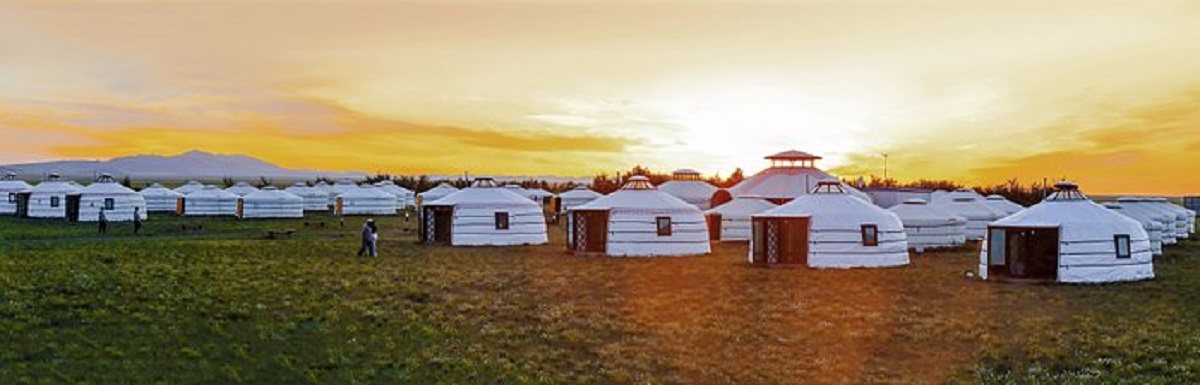
Practical Tips for a Night Under the Stars
- Bring a red-light headlamp so you keep your night vision.
- Dress for winter even in summer: nights in the Altai can drop below freezing in any month.
- Give your eyes 20–30 minutes to adapt to the dark.
- Watch out for herding dogs if you walk away from camp at night. Stay close to your camp and tell someone where you are going.
- Check the forecast with your driver or guide; clouds build fast over the mountains.
Camping is the easiest way to be under the stars all night. Read our guide to camping in Mongolia, or contact us to plan a trip around dark-sky dates.
Suggested Blogs:
Taimen Fishing in Mongolia: Season, Rules, Cost and Where to Go
Taimen fishing in Mongolia: best season, catch-and-release law, permits via licensed outfitters, trip prices, gear and fishing in the Altai…Mongolia Dinosaurs: Fossils, the Flaming Cliffs and Where to See Them
Mongolia dinosaurs guide: why the Gobi is a fossil treasure house, the Flaming Cliffs, Tarbosaurus, repatriated fossils and where to…Tsagaan Sar 2027: Dates, Traditions and What Visitors Should Know
Tsagaan Sar 2027 starts around February 7. Mongolian Lunar New Year traditions, food, greetings and etiquette, and why the Kazakh…






Is Mongolia good for stargazing?
Yes. Outside Ulaanbaatar there is very little light pollution, the air is dry and clear nights are common, so the Milky Way is easy to see.
Where is the best place to see stars in Mongolia?
The South Gobi for warm, clear nights, and the Altai Mountains for high, dry air far from any town.
What is the best month for stargazing in Mongolia?
Late August to early October, when the nights are long and dark, the weather is settled and temperatures are still manageable.
Can you see the Milky Way from Ulaanbaatar?
Not really. City light hides it. Drive at least to Terelj, or better, several hours into the countryside.
Do I need a stargazing tour in Mongolia?
No. Any trip that overnights in ger camps or tents in the countryside will give you dark skies. Just time it around the new moon.
Does Mongolia have a dark sky park?
As far as we know, Mongolia has no officially certified dark-sky park yet, but most of the countryside is naturally darker than many certified sites.