
Mongolia uses round two-pin European-style plugs, Type C and the earthed Type E/F, on a 230V, 50Hz supply. If you come from Europe, your plugs fit. From the UK, US, Australia, India or most of Asia you need a plug adapter, and from North America or Japan you should also check that your devices accept 230V. The bigger challenge is not the socket but the lack of power once you leave the towns: ger camps run on solar panels or generators, and on an Altai trek you may go days without a socket.
Key Takeaways
- Plug types: Type C (two round pins) everywhere; sockets often also accept earthed Type E or F plugs.
- Voltage: 230V at 50Hz. Most phone, laptop and camera chargers handle 100-240V; hair dryers and kettles from the US may not.
- Bring a universal adapter: One that covers C, E and F works in every Mongolian socket.
- Power is limited in the countryside: Ger camps often charge only in the evening, and family gers rely on small solar panels.
- Power banks are essential: On treks in Altai Tavan Bogd, carry enough battery capacity for several days.
Mongolia Plug Type and Voltage at a Glance
| Item | Mongolia |
|---|---|
| Plug types | Type C; Type E/F sockets are also common |
| Voltage | 230V (some sources list 220V) |
| Frequency | 50Hz |
| Adapter needed from | UK, Ireland, US, Canada, Australia, NZ, India, China, Japan, most of Southeast Asia |
| No adapter needed from | Most of continental Europe and Russia (C/E/F plugs) |
Different references disagree on whether Mongolia’s earthed sockets are Type E or Type F, and you will find both in practice. It does not matter much for travelers: Type C plugs fit both, and an adapter rated for C, E and F covers everything. Hotels in Ulaanbaatar sometimes also have universal sockets that accept other plug shapes, but don’t count on it.
Do You Need a Voltage Converter?
An adapter only changes the plug shape. A converter changes the voltage. Look at the small print on each charger:
- Input 100-240V: fine in Mongolia with just an adapter. This covers almost all phone, laptop, tablet and camera chargers.
- Input 110-120V only: needs a converter or it may be damaged. This is common with US hair dryers, curling irons and electric shavers.
- Heating appliances: anything that heats (kettles, straighteners) draws a lot of power. In ger camps and family gers, leave these at home.
Electricity in Ger Camps and Family Gers
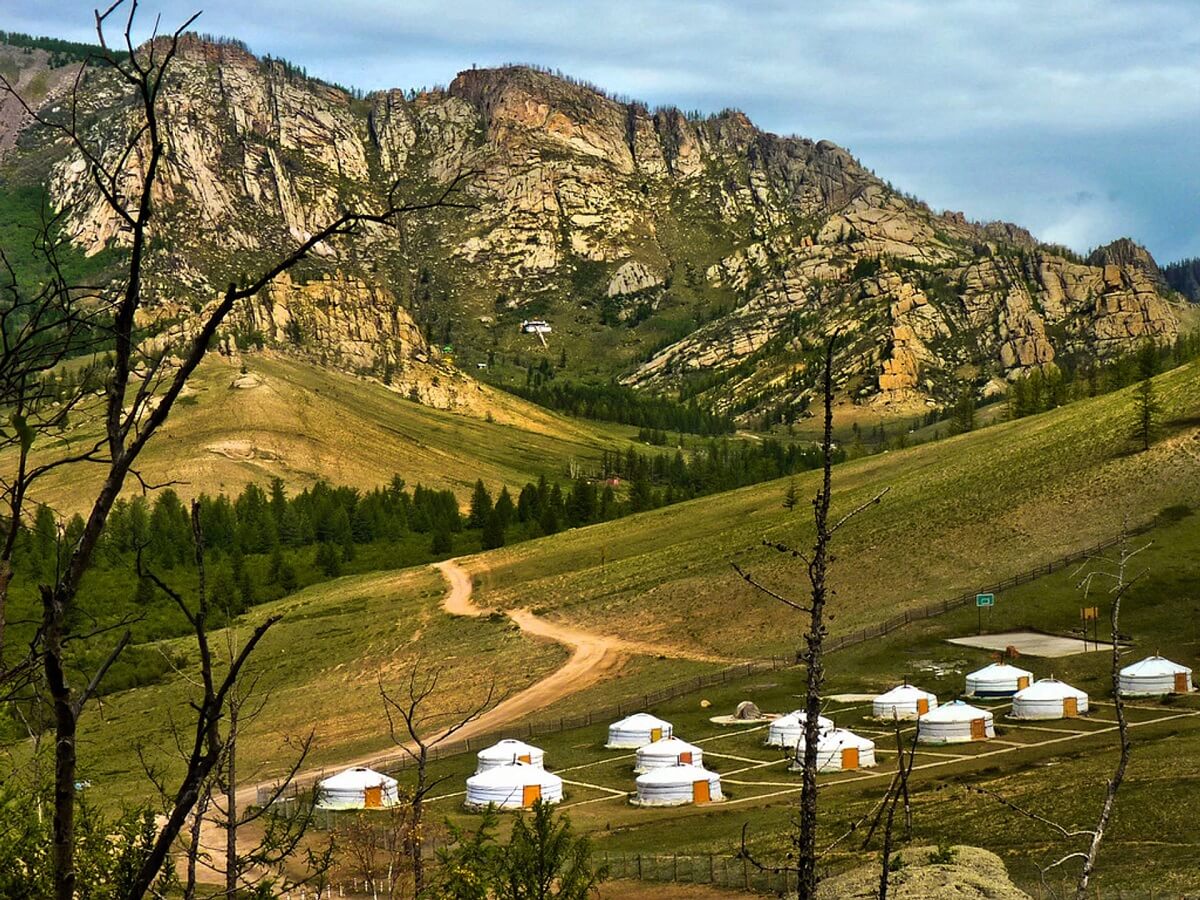
Outside the towns, power depends on where you sleep. Tourist ger camps usually have electricity from the grid, a generator or solar panels, but it may only run for a few hours in the evening, and there may be just one or two sockets in each ger or a shared charging point in the restaurant. Our guide to the ger camp experience explains what to expect.
Nomadic families usually have a small solar panel and a car battery that powers a light, a phone and often a satellite TV. They may kindly offer to charge your phone, but their power is limited, so do not plug in a laptop and three camera batteries. Bring your own power and ask before using theirs.
Charging on Treks in the Altai
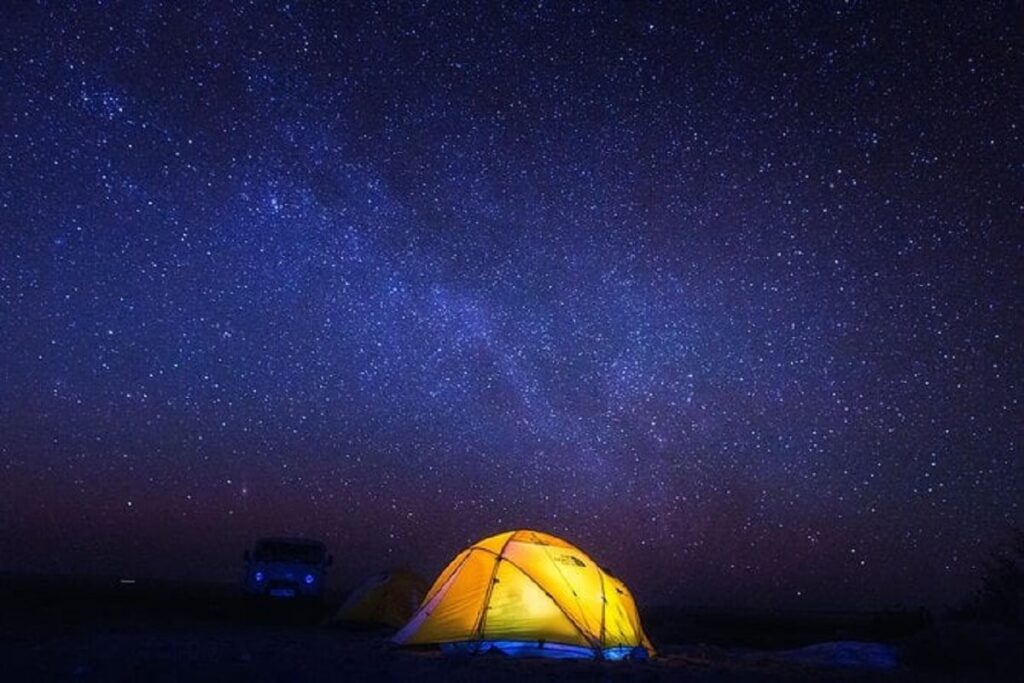
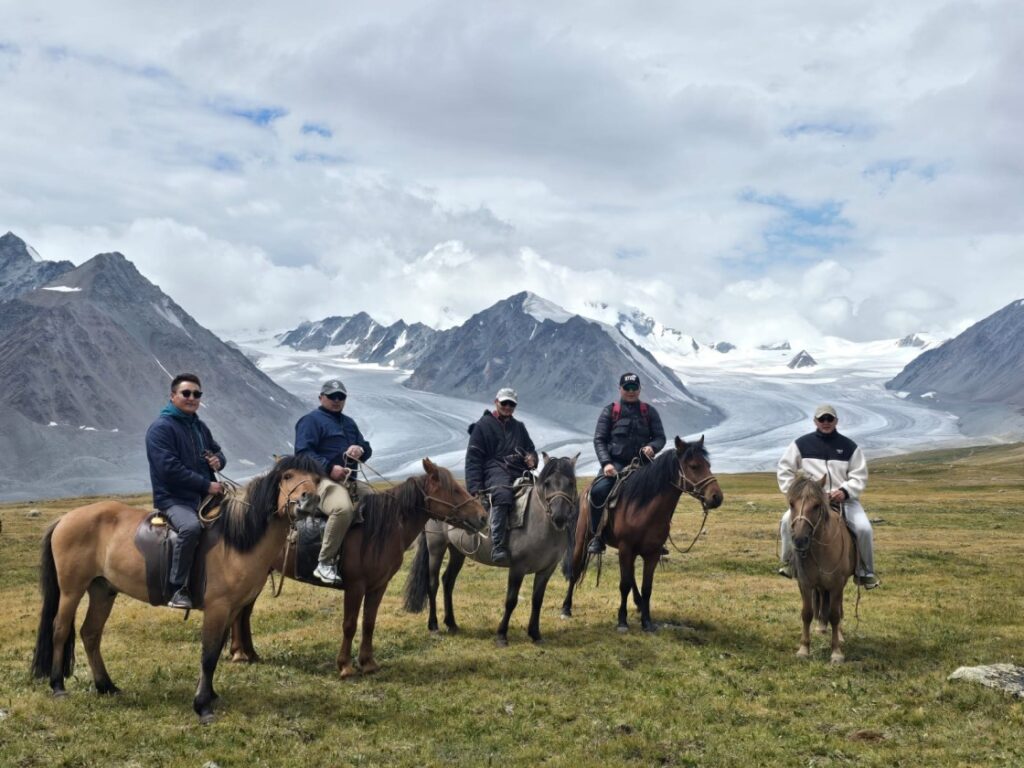
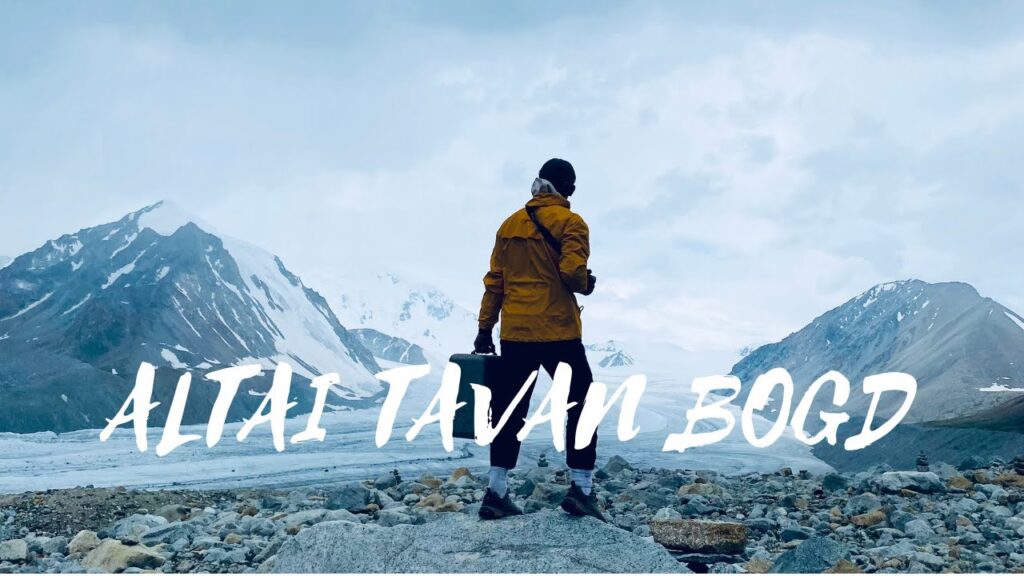
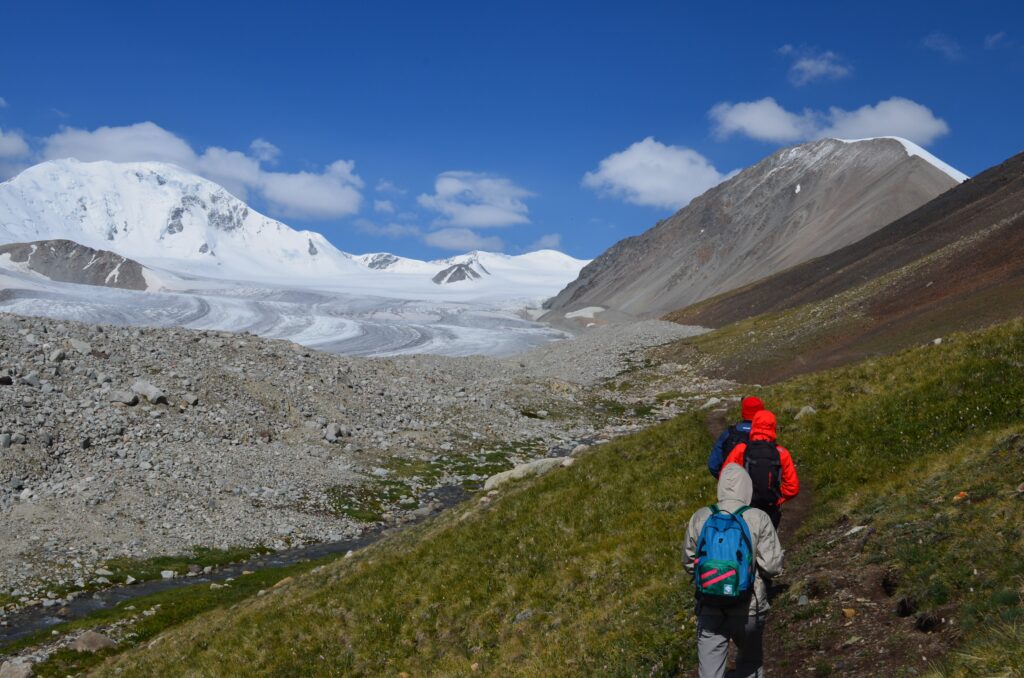
On trips like our 11-day Altai Tavan Bogd trek, you will spend several nights in tents with no sockets at all. Cold also drains batteries fast. A simple plan:
- Carry power banks: roughly 20,000mAh per person covers a phone for several days; photographers need more.
- Bring a small solar panel: useful on sunny days, which are common in the Altai, but slow and not something to rely on alone.
- Keep batteries warm: sleep with your phone and spare camera batteries inside your sleeping bag on cold nights.
- Use flight mode: searching for a signal that is not there empties a battery quickly.
- Charge everything in Ulgii: top up all devices in town before heading into the mountains.
Check the full Altai Tavan Bogd packing list for the rest of your gear, and our camping in Mongolia guide for life in a tent.

Winter Travel and Batteries
In winter, temperatures in the Altai can drop below -30°C, and lithium batteries lose charge much faster in the cold. On our Mongolia winter tour or a winter eagle hunting trip, keep spares in an inside pocket, and let cold devices warm up slowly before charging them inside a warm ger to avoid condensation.

Internet and Mobile Coverage
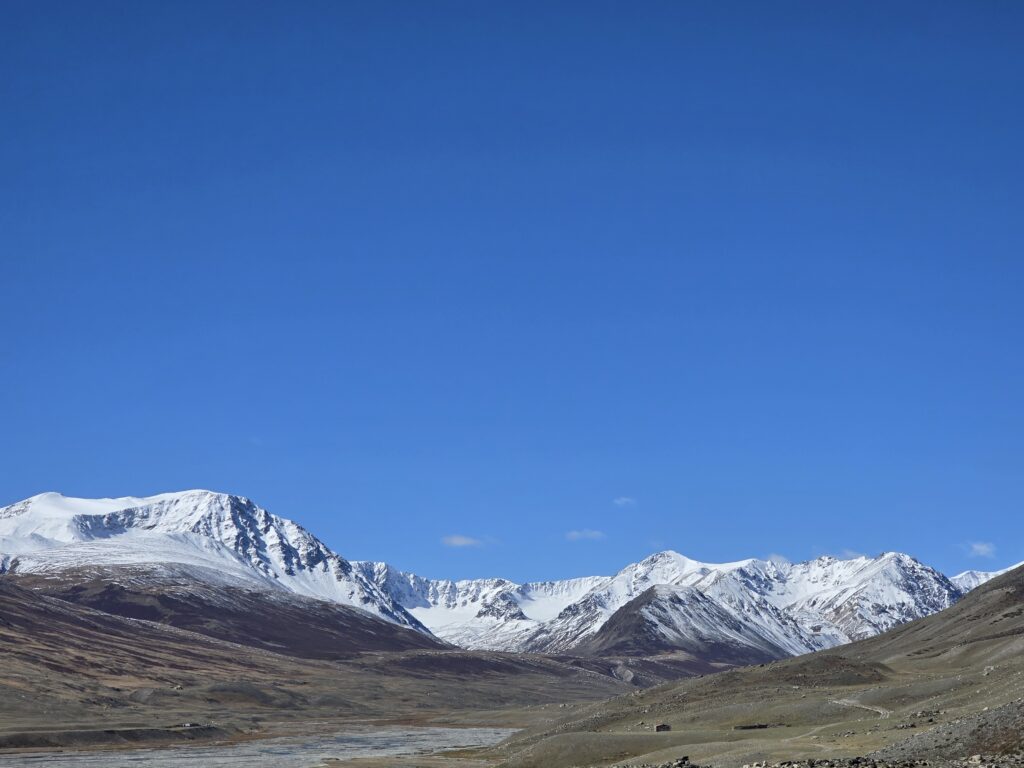
Ulaanbaatar and the provincial centers have good 4G coverage, and most hotels and many ger camps offer Wi-Fi, though it can be slow. Coverage follows towns, soum (district) centers and main roads. In the mountains of Altai Tavan Bogd National Park, expect long stretches with no signal at all.
A local SIM card is cheap and gives you data in towns. Tell family and friends that you may be offline for several days while trekking. Your guide will know where the last signal point is before you head into the mountains. For more planning tips, read our Mongolia travel tips.
Suggested Blogs:
Taimen Fishing in Mongolia: Season, Rules, Cost and Where to Go
Taimen fishing in Mongolia: best season, catch-and-release law, permits via licensed outfitters, trip prices, gear and fishing in the Altai…Mongolia Dinosaurs: Fossils, the Flaming Cliffs and Where to See Them
Mongolia dinosaurs guide: why the Gobi is a fossil treasure house, the Flaming Cliffs, Tarbosaurus, repatriated fossils and where to…Tsagaan Sar 2027: Dates, Traditions and What Visitors Should Know
Tsagaan Sar 2027 starts around February 7. Mongolian Lunar New Year traditions, food, greetings and etiquette, and why the Kazakh…





What plug type does Mongolia use?
Mongolia uses Type C plugs, with sockets that often also accept earthed Type E or F plugs.
What is the voltage in Mongolia?
The supply is 230V at 50Hz (some sources list 220V). Most modern chargers rated 100-240V work with just a plug adapter.
Do I need an adapter for Mongolia from the UK or US?
Yes. UK and US plugs do not fit Mongolian sockets, so bring an adapter that covers Type C, E and F.
Can I charge my phone in a ger camp?
Usually yes, but electricity may only run in the evening and sockets are limited. Bring a power bank.
Is there electricity on Altai treks?
No. On multi-day treks in Altai Tavan Bogd National Park you camp in tents with no sockets, so you need power banks or a solar panel.
Is there internet in rural Mongolia?
In towns and along main roads there is usually 4G, but in remote mountains such as the Altai you can be without signal for days.