
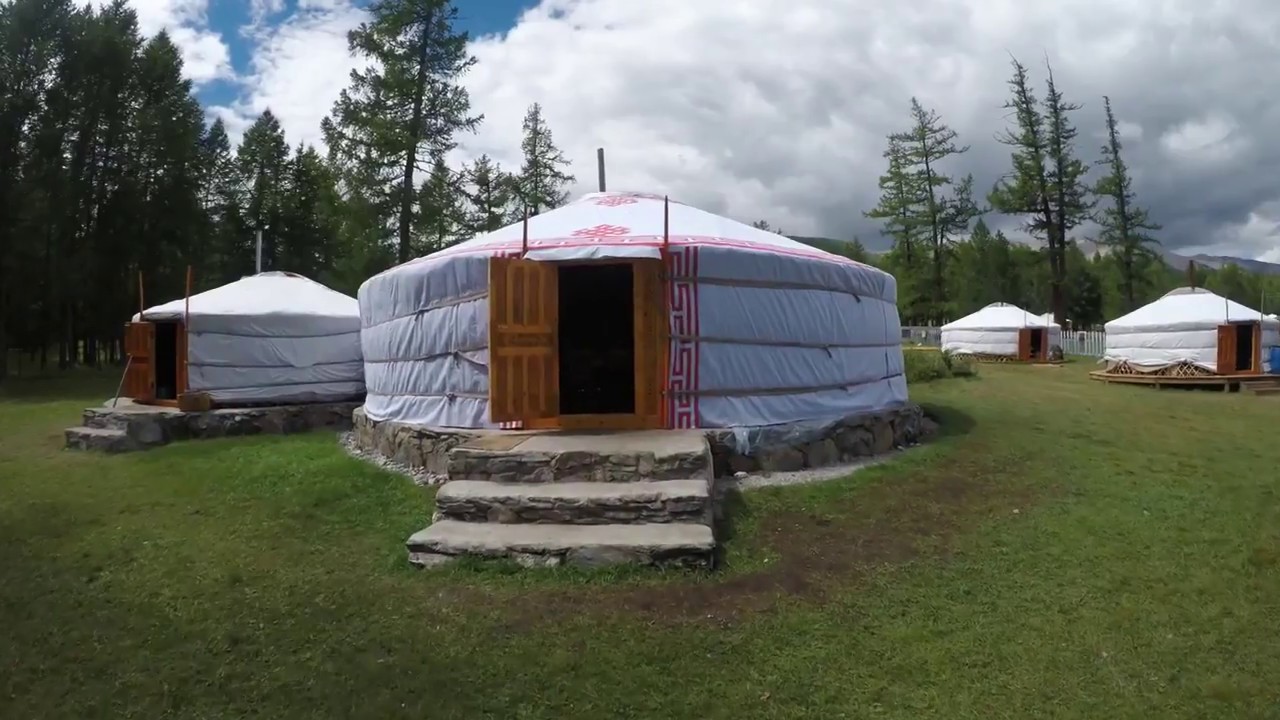
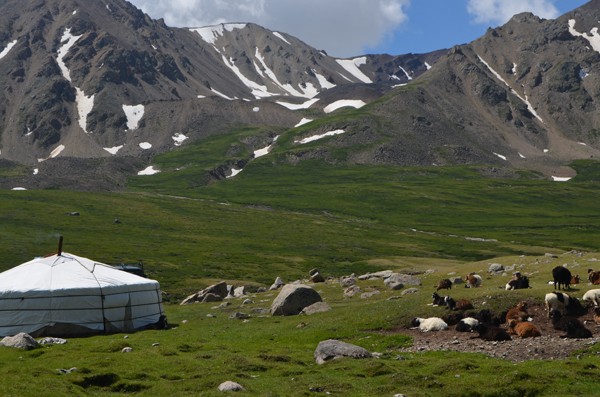
“Ger” and “yurt” describe the same type of round, portable felt home. Ger is the Mongolian word, meaning “home”, and yurt is the Turkic-derived term used in English. The main structural difference is between the Mongolian ger, with straight roof poles, a flatter roof and usually two central columns, and the Kazakh yurt (kiiz üi), with curved poles, a taller dome and richly embroidered interiors. You can find both in western Mongolia.
Key Takeaways
- Same idea, different words: ger is Mongolian, yurt is the Turkic/English term
- Mongolian ger: straight roof poles, flatter roof, two central columns
- Kazakh kiiz üi: curved poles, higher dome, embroidered tus kiiz wall hangings
- Layout: stove in the centre, place of honour at the back facing the door
- Etiquette: don’t step on the threshold, move clockwise, don’t lean on the columns
- Assembly: a family can put one up in a couple of hours
If you are planning a trip to Mongolia, you will see the words “ger” and “yurt” used for the same round felt tent. Are they the same thing? Mostly yes, but not quite. And in western Mongolia there is a third version, the Kazakh kiiz üi. Here’s a clear explanation of the Mongolian ger vs yurt, how they are built and what it’s like inside.
Ger and yurt: is it just a name?
“Ger” is the Mongolian word, and it simply means “home”. “Yurt” comes from Turkic languages via Russian, where it originally referred to a homeland or encampment. In English, “yurt” became the general word for portable round felt dwellings across Central Asia.
So all gers are yurts in the broad English sense, but Mongolians call theirs a ger and many prefer that term. Different peoples, including Mongolians, Kazakhs, Kyrgyz and Turkmen, build their dwellings in slightly different ways.
Mongolian ger vs Kazakh kiiz üi: the main differences
| Mongolian ger | Kazakh kiiz üi (yurt) | |
|---|---|---|
| Roof poles | Straight poles, giving a flatter, lower roof | Curved poles, giving a higher, dome-shaped roof |
| Central support | Usually two painted columns support the roof ring | Often no central columns. The curved poles carry the load. |
| Interior | Brightly painted furniture, orange doors | Rich embroidered wall hangings (tus kiiz), carpets and felt rugs (syrmak) |
| Feel | Compact, cosy, built for wind | Taller, roomier, very decorative |
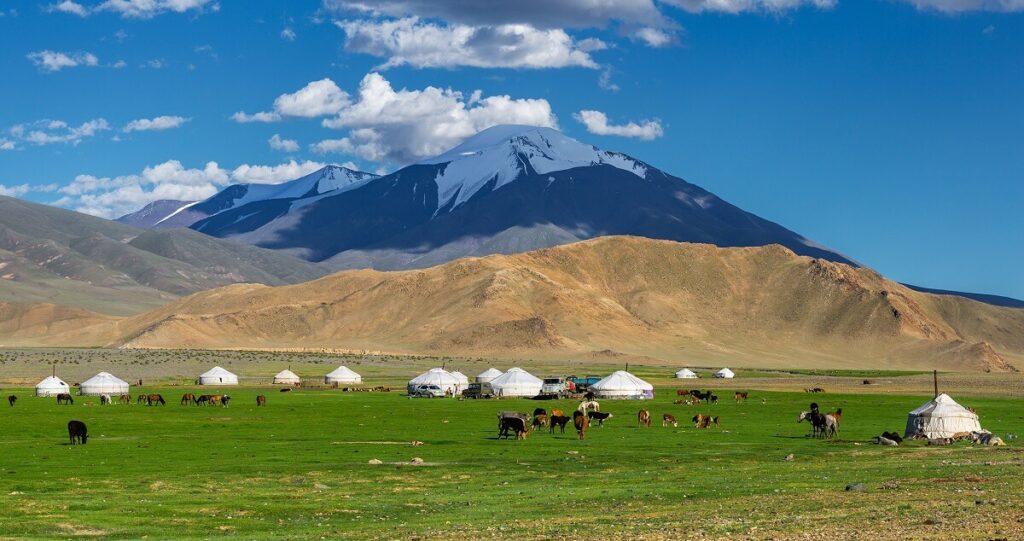
In Bayan-Ölgii you’ll see Kazakh yurts in summer pastures, decorated inside with colourful embroidery that women spend years making. See Cultural heritage of Kazakh people.
How a ger is built
- Lattice walls (khana): expandable wooden trellis sections form the circular wall.
- Door: a wooden door frame, traditionally facing south.
- Roof ring (toono): the crown at the top, which lets in light and lets smoke out.
- Roof poles (uni): connect the walls to the crown.
- Felt layers: thick sheep’s-wool felt for insulation, more layers in winter.
- Canvas cover and ropes: waterproofing, tied down against the wind.
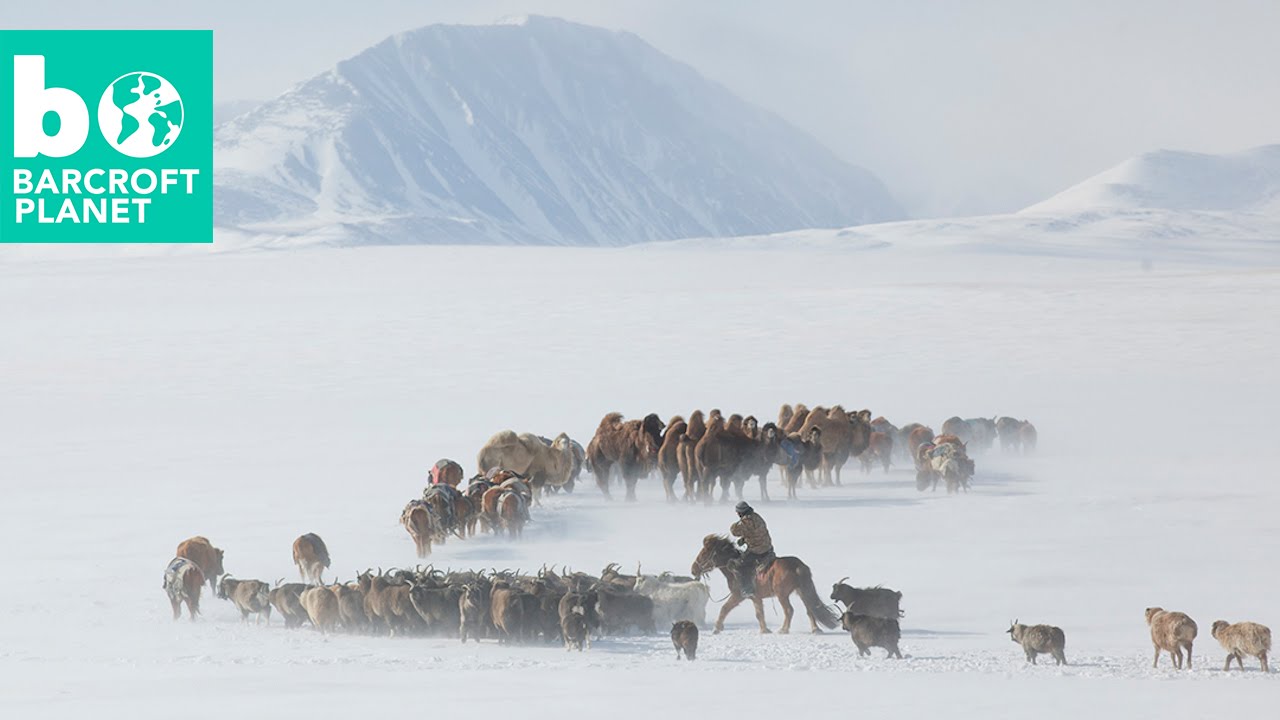
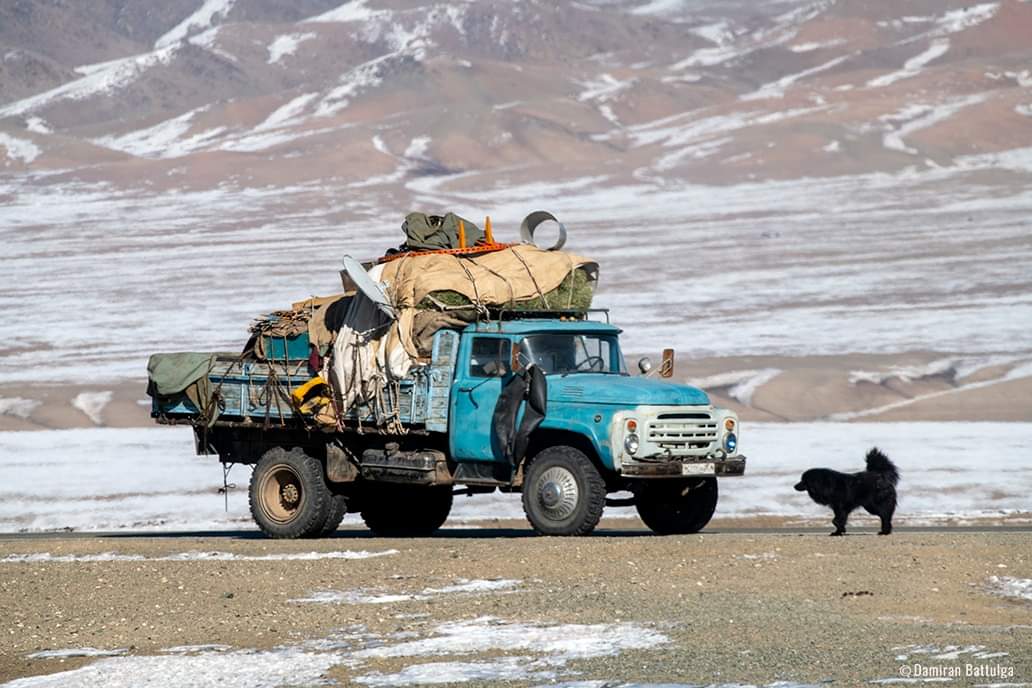
A family can put up or take down a ger in a couple of hours, which is perfect for nomads who move several times a year.
Inside a ger: layout and meaning
- Centre: the stove, the heart of the home
- North (back, opposite the door): the place of honour, where elders and guests sit and the family altar or photos are kept
- West (left as you enter): traditionally the men’s side, with saddles and tools
- East (right as you enter): traditionally the women’s side, with kitchen items
Ger etiquette
- Don’t step on the threshold.
- Move clockwise inside the ger.
- Don’t lean on the central columns or walk between them.
- Accept tea or food with your right hand (or both hands).
- Don’t point your feet at the stove or the altar.
More tips: What not to do in Mongolia.
Staying in a ger as a traveller
There are two very different experiences:
- Tourist ger camps: beds, a stove and shared showers and toilets nearby. Comfortable and easy. See Ger camps in Mongolia.
- Family gers: you share the family’s space, eat with them and sleep on beds or felt mats. Authentic and unforgettable. See our nomad homestay tour.
Why the ger still matters
Even in modern Mongolia, a large share of people live in gers, both nomads on the steppe and families in the “ger districts” around Ulaanbaatar. The ger is warm in winter, cool in summer, portable and made from local materials. It’s a design perfected over many centuries.
On our Altai trips you can stay in both Kazakh yurts and Mongolian-style gers with herder families. Ask us about homestay options.
Suggested Tours:
Suggested Blogs:
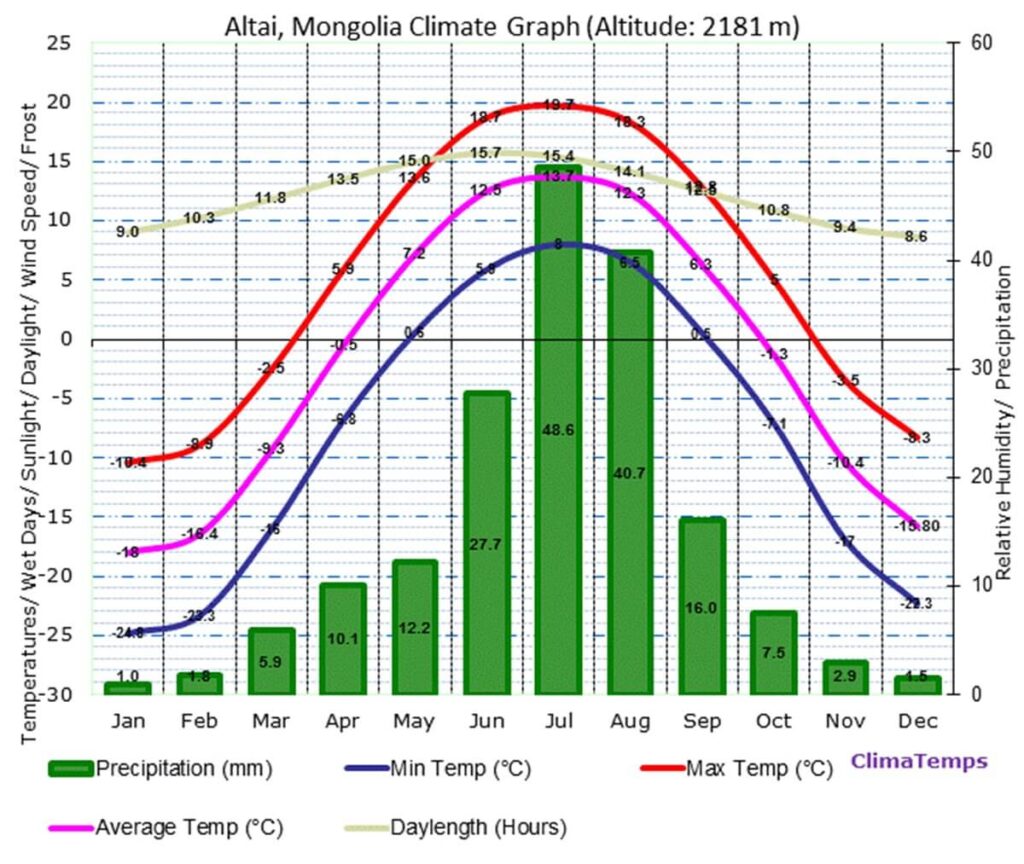
Ulgii Weather: A Month-by-Month Guide to Bayan-Ölgii’s Climate
Ölgii (Ulgii) sits at about 1,700 m in a dry valley of the Altai, with a cold semi-arid continental climate…Altai Mountains: Russia vs Mongolia. Which Side Should You Visit?
The Altai Mountains span Russia, Mongolia, China and Kazakhstan. The Russian Altai has green forested valleys, rivers, Belukha (4,506 m,…Does Mongolia Border Kazakhstan? Travelling Between Kazakhstan and Western Mongolia
Mongolia and Kazakhstan do not share a border. At their closest point in the Altai Mountains they are separated by…

Is a ger the same as a yurt?
Essentially yes. Ger is the Mongolian name and yurt is the general English term for round felt dwellings across Central Asia. Different peoples build them in slightly different styles.
What is the difference between a Mongolian ger and a Kazakh yurt?
Mongolian gers use straight roof poles and usually two central columns, giving a flatter roof. Kazakh yurts use curved poles, creating a taller dome, and are decorated with embroidered wall hangings and felt rugs.
Are gers warm in winter?
Yes. Thick layers of sheep’s-wool felt and a central stove keep gers warm even at -30°C, although the fire needs feeding through the night.
Can tourists stay in a ger with a nomad family?
Yes. Family homestays are one of the highlights of Mongolia, especially in the Altai, where you can stay with Kazakh herders and eagle hunters.