
The Khüiten Peak climbing season runs from late June to mid-September, with July and August as the prime climbing months. Mongolia’s highest summit (4,374 m) sits in the western Altai on the Mongolia–Russia–China tri-border, where summer is short and dry; outside this window, the high passes block with snow, the Potanin Glacier becomes unstable, and the route is functionally closed. Most successful summit ascents happen on glacier-stable mornings between July 15 and August 25 when overnight refreezing makes the standard route safe and daytime temperatures stay above −5 °C at the summit. Roughly 70% of fit, properly equipped climbers reach the summit during this window; weather is the most common reason for unsuccessful attempts.
Key Takeaways
- Season window: late June → mid-September
- Prime months: July and August
- Standard route: glacier ascent from Potanin Glacier base camp (3,400 m)
- Summit-day temperature: −5 °C to −15 °C even in peak summer
- Success rate: ~70% for fit climbers with proper gear and an acclimatised approach
- Weather is the #1 reason for failed attempts (not fitness or technique)
Why is the Climbing Season So Short?
Khüiten Peak’s climbing window is constrained by three overlapping factors:
1. Glacier stability. The standard route ascends Potanin Glacier, the largest glacier in Mongolia at roughly 14 km long. Outside June–September, the glacier surface is unconsolidated snow that wind-loads into avalanche slabs. Crevasses are also harder to detect under fresh snow.
2. Approach access. Reaching base camp at 3,400 m requires a 6–8 hour 4×4 drive from Ölgii to the trailhead, then 2–3 days of trekking with pack horses. Outside the summer window, the high passes are snow-bound and the rough mud roads to the trailhead become impassable.
3. Daylight and temperature. Khüiten sits at roughly 49°N latitude — by mid-September, daylight on summit day shrinks below the 12 hours typically needed for a safe round-trip from high camp. Overnight summit-area temperatures drop below −20 °C as winter approaches.
By mid-September the season ends abruptly. Some operators continue running treks to lakes and lower terrain into early October, but the actual Khüiten summit is not climbed in October–May.
Month-by-Month Conditions
| Month | Weather (base camp 3,400 m) | Glacier stability | Operator availability |
|---|---|---|---|
| June (mid-late) | Snowmelt, day +5 to −5 °C; afternoon clouds | Edge-of-stable; some routes still snowed in | Limited departures |
| July | Day +10 to −5 °C; periodic afternoon storms | Stable, refreezes overnight | Peak departures |
| August | Day +5 to −10 °C; driest, most stable | Most stable of season | Peak departures |
| September (early) | Day 0 to −10 °C; first frosts, fewer storms | Stable; ice conditions firmer | Available; reduced |
| September (mid-late) | Day −5 to −15 °C; first snowfalls possible | Becoming unpredictable | Last departures only |
| October–May | Below −15 °C; deep snow on passes | Closed | Not operated |
The single best week of the year is typically the first week of August — historically the most stable weather, lowest river crossing levels on the approach, and warmest summit-day conditions.
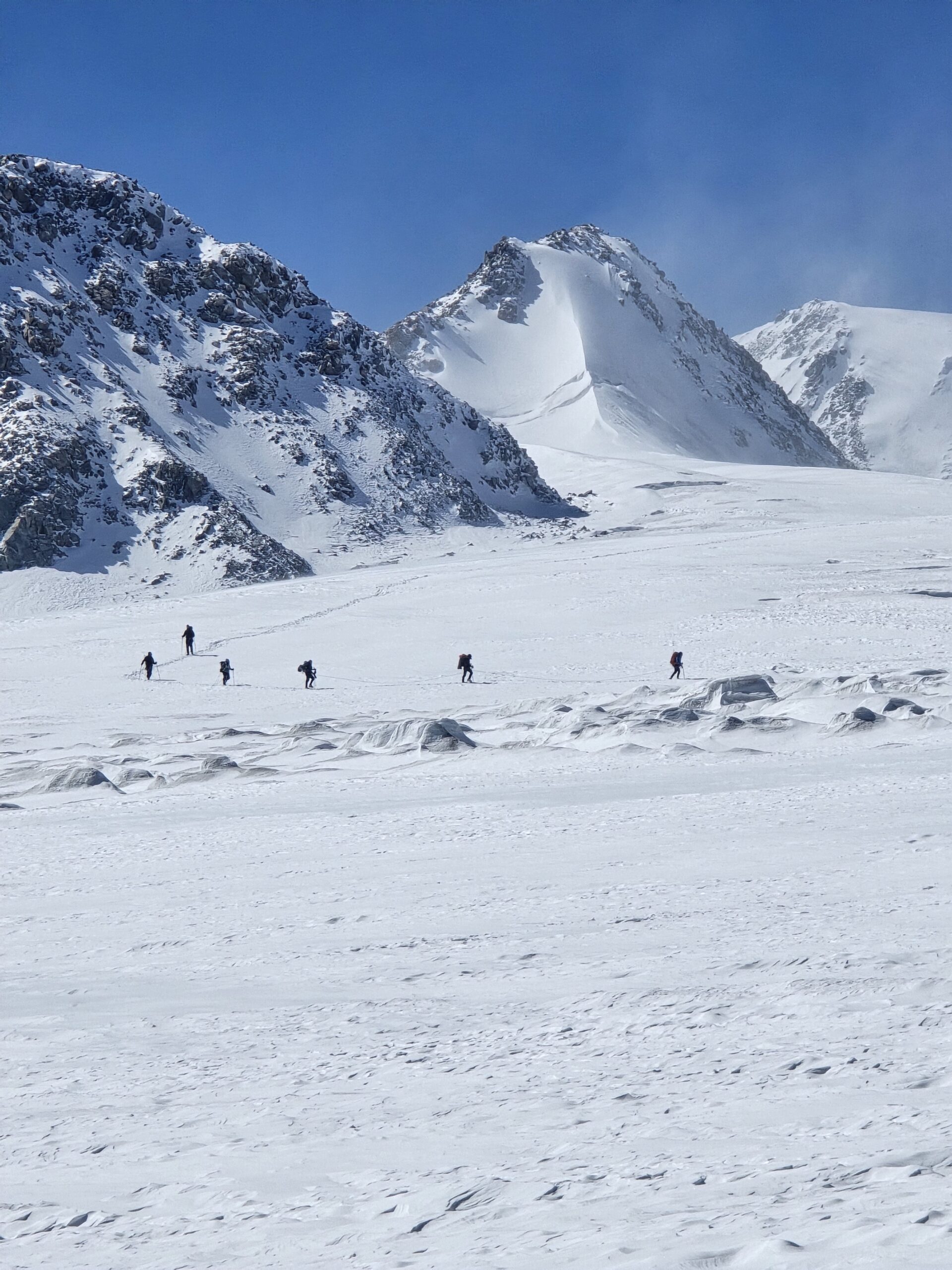
Why July and August Are Prime
These two months concentrate roughly 75% of all summit attempts for three connected reasons:
Predictable weather windows. Mongolian Altai summer is a continental high-pressure pattern — most days follow the same rhythm of clear cold mornings, cumulus cloud build-up by noon, isolated afternoon thunderstorms, and a clear cold night. This predictability lets summit-day plans rest on a 24-hour weather forecast rather than a 5-day one.
Glacier in good condition. Overnight temperatures at base camp typically drop to −5 °C or colder, refreezing the glacier surface and making crampon travel secure. Daytime warming opens crevasses but bridge them with thicker, more visible snow.
Daylight. Summit-day in late July gives roughly 15.5 hours of usable daylight, plenty of margin for a typical 8–12 hour round-trip from high camp.
For all three reasons, our Mt Khüiten Climb tour operates almost exclusively in this window.
Shoulder-Season Trade-offs (June and September)
Climbing in June or September is possible but comes with real costs:
June advantages: fewer climbers on the route; alpine wildflowers in lower meadows; long daylight (16+ hours). June disadvantages: unstable late-season snow on the glacier; rivers at peak snowmelt levels (some crossings unsafe); high passes still partially blocked.
September advantages: the most reliable cold-clear weather of the season; firm glacier ice (better cramponing); lowest crowding; spectacular autumn light for photography. September disadvantages: colder (summit-day −15 °C is normal); shorter daylight; first snows can shut the season at any time; rescue logistics more difficult as ranger stations begin to scale down.
For a first ascent of Khüiten, stick to July or August. Save shoulder seasons for return climbers who already know the route.
Daily Weather Pattern at Altitude
A typical July morning at base camp (3,400 m) looks like this:
| Time | Temperature | Conditions |
|---|---|---|
| 04:00 | −8 to −12 °C | Clear, cold, no wind — perfect summit-day start |
| 08:00 | −2 to +2 °C | Warming begins; first cumulus clouds appear |
| 12:00 | +5 to +10 °C | Cumulus building; possible isolated thunderstorm |
| 16:00 | +3 to +8 °C | Thunderstorm risk peak; rain showers possible |
| 20:00 | 0 to −5 °C | Clearing as sun drops; refreezing begins |
| 24:00 | −8 to −12 °C | Clear, cold, low wind |
Summit-day departure is always before dawn (3-4 AM) to maximise the safe glacier-travel window before afternoon weather builds. Climbers typically reach the summit by 10–11 AM and are back at high camp before the worst afternoon weather hits.
How Weather Affects Success Rates
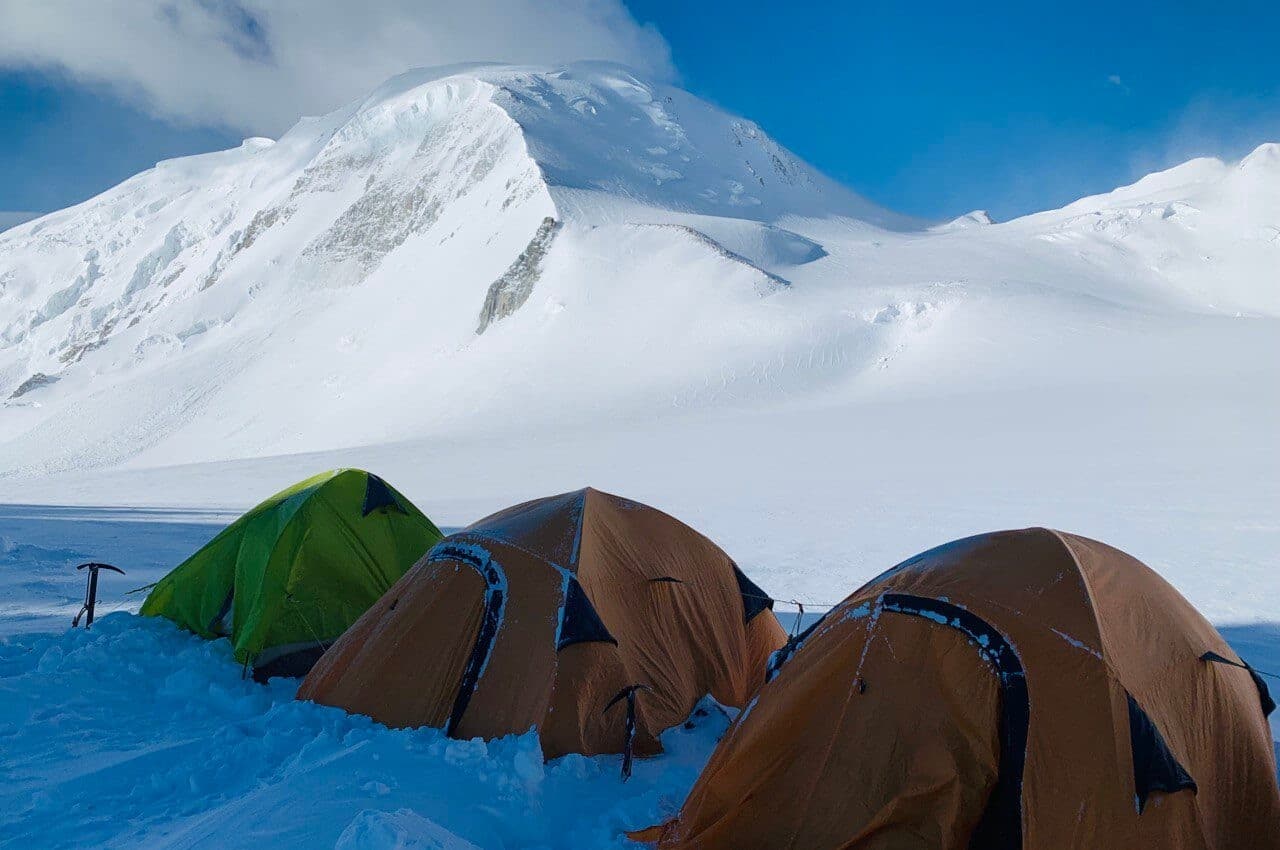
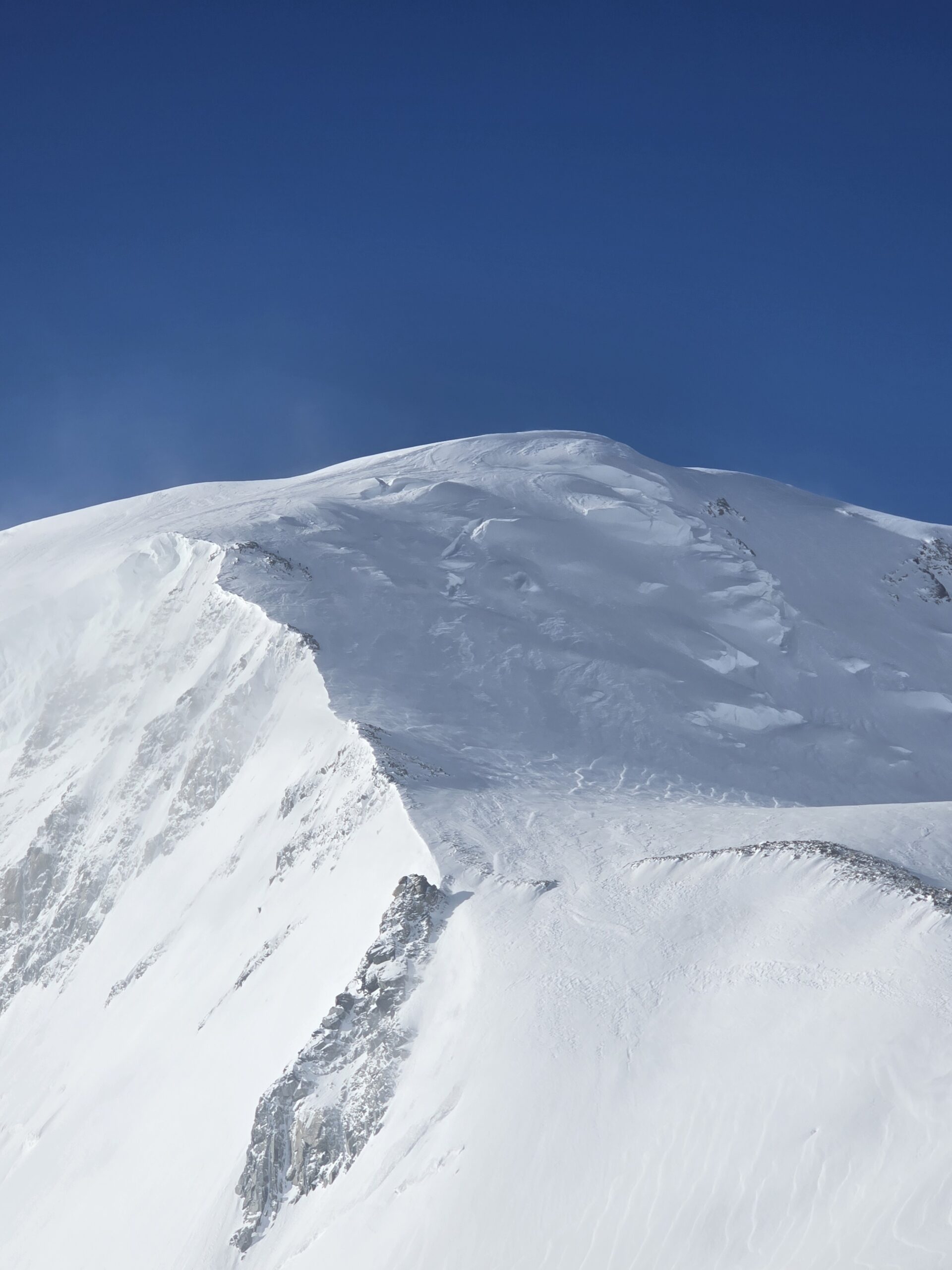
Approximately 70% of fit, properly equipped climbers reach the Khüiten summit on their first attempt. The remaining 30% miss the summit primarily for two reasons:
Weather (about 60% of failures). A multi-day weather window is needed — base camp acclimatisation, move to high camp, summit attempt, descent. If a 36-hour storm hits during the summit attempt, the team is forced to retreat. Most operators build in a “weather day” buffer at high camp, but a multi-day storm can still break the trip.
Altitude sickness (about 30% of failures). The standard 10-day itinerary builds in 2 acclimatisation days at base camp before the summit push, but a small percentage of climbers still experience moderate-to-severe AMS that prevents the summit attempt.
The remaining 10% are split between minor injuries, equipment failures, and personal choices to turn back.
For climbers selecting a date, the lesson is: book a 10-day window rather than a tight 5-day one. The extra days are insurance against weather and altitude. For full route logistics see our Altai Tavan Bogd trekking routes guide.
Best Dates for Booking a Climb
Based on a decade of departures, the best historical date ranges for booking are:
| Date range | Why |
|---|---|
| July 15–25 | Warmest summit days, most stable weather window, longest daylight of season |
| July 28 – August 8 | Driest, most predictable weather; historically highest success rate |
| August 10–25 | Glacier most stable; cooler but firmer climbing conditions |
| August 28 – September 5 | Reduced crowding, autumn light starting; still warm enough |
Avoid: – Before June 20 — most operators don’t run trips this early – After September 15 — first major snowfalls can hit any day – Around July 11–13 — Naadam Festival closes domestic flight bookings to Ölgii
For the actual climb itinerary and what to bring, see our 5-day Altai Tavan Bogd 5-day climb tour or the comprehensive 10-day Mongolia Altai Mountain Tour. The dedicated Mt Khüiten Climb tour is timed exclusively to these prime windows.
Suggested Tours:
Suggested Blogs:
Mountain Rescue in Mongolia: How It Works, Emergency Contacts, and Why You Need Insurance
Mountain rescue in Mongolia is limited and self-organised. There is no national equivalent of the Swiss Air-Glaciers, French PGHM, or…Mountain Climbing Risks: Exploring the Challenges and Safety Measures
Mountain Climbing Risks: Exploring the Challenges and Safety Measures – Mountain climbing is an exhilarating and adventurous activity that has…9 tips about rock climbing basics for mountaineers
Rock climbing basics are an essential skill for mountaineers, providing the techniques and confidence needed to tackle challenging terrain safely…





When is the best time to climb Khüiten Peak?
July 15 – August 25 is the prime climbing window for Khüiten Peak. The single best week is typically the first week of August — most stable weather, lowest river crossings, warmest summit-day conditions. Mongolia’s highest summit (4,374 m) is functionally closed October to May due to snow-bound passes and unstable glacier conditions.
Can you climb Khüiten Peak in winter?
Technical winter ascents (December–March) are possible but extremely rare. The challenges multiply: temperatures at the summit drop below −30 °C, daylight is too short for a standard round-trip, the approach roads are impassable to vehicles, and rescue is essentially unavailable. No commercial operator runs winter Khüiten climbs as part of a scheduled itinerary.
What’s the success rate for Khüiten Peak summit attempts?
Approximately 70% of fit, properly equipped climbers reach the summit on their first attempt with a guided expedition. About 60% of failures are weather-related (a multi-day storm hits during the summit window) and about 30% are altitude-sickness related. A 10-day itinerary with built-in weather days has higher success than a tight 5-day push.
How cold is summit day on Khüiten Peak?
Summit-day temperatures range from −5 °C to −15 °C even in peak July–August conditions. Wind chill at the summit ridge typically pushes felt-temperature 5–10 °C colder. Pre-dawn starts mean leaving high camp at −8 to −12 °C; the warmest part of summit day is around 10 AM at −5 to 0 °C.
Why isn’t Khüiten Peak climbed in autumn (September)?
It is, but only by experienced climbers. September gives the most stable weather of the season and firmer glacier ice — but daylight shrinks rapidly, summit-day temperatures drop below −15 °C, and the first major snowfall can shut the season unpredictably. For first-time Khüiten climbers, July or August are safer choices.
How long does a Khüiten Peak expedition take?
A typical guided expedition runs 8–10 days door-to-door from Ulaanbaatar. That includes the 2.5-hour flight to Ölgii, 6–8 hours of 4×4 driving to the trailhead, 2–3 days of trekking to base camp, 1–2 acclimatisation days, the summit attempt, and the return trek and drive. Tight 5-day itineraries skip acclimatisation and have lower success rates.