
Tsagaan Sar, the Mongolian Lunar New Year, begins around February 7, 2027, with Bituun, New Year’s Eve, on February 6. It is a three-day public holiday and the most important family celebration of the year: people visit their elders in order of seniority, greet them with the formal zolgokh, and share steamed buuz dumplings, milk tea and a towering plate of layered biscuits. For visitors, it is a quiet time in the cities and a warm, food-heavy one in the countryside. In Bayan-Ölgii, home of the Kazakh eagle hunters, the main new year is Nauryz in March instead.
Key Takeaways
- 2027 dates: Bituun (the eve) is around February 6 and the first day of Tsagaan Sar around February 7, with the public holiday running for three days. The government confirms the official dates.
- It follows the lunar calendar: Tsagaan Sar moves every year and usually falls between late January and early March. It does not always match Chinese New Year.
- A family holiday: Celebrations happen in homes, not in public squares. The youngest visit the oldest, and visiting can go on for days.
- Greeting with respect: The zolgokh greeting is done with arms extended, the younger person supporting the elder’s elbows, often holding a blue khadag scarf.
- Different in the far west: Bayan-Ölgii is mostly Kazakh and celebrates Nauryz on March 22, so Tsagaan Sar is much less visible there.
When Is Tsagaan Sar 2027?
Tsagaan Sar means “White Moon” or “White Month”. It marks the first day of the first month of the Mongolian lunar calendar, so its date changes every year. Most calendars place the first day of Tsagaan Sar 2027 on Sunday, February 7, 2027, with Bituun on February 6. A few sources list February 6-8, so check the government’s official announcement if you need exact office closure dates.
| Day | 2027 date (approx.) | What happens |
|---|---|---|
| Bituun (eve) | Saturday, February 6 | Cleaning, settling debts, a big family dinner |
| Day 1 | Sunday, February 7 | Sunrise walk, visits to the eldest relatives, the first zolgokh greetings |
| Day 2 | Monday, February 8 | Visits continue to other relatives |
| Day 3 | Tuesday, February 9 | More visits; many people return to work after this day |
Mongolia’s lunar calendar is related to, but not identical with, the Chinese one. In most years Tsagaan Sar and Chinese New Year fall on the same day, but sometimes they are a month apart. Don’t assume one from the other.
Bituun: New Year’s Eve
The day before Tsagaan Sar is Bituun, meaning “closed” or “blind”, for the dark moon. Families clean the ger or apartment thoroughly, settle debts and try to finish old business so they don’t carry it into the new year. In the evening they eat a large meal together; it is considered good to eat until you are completely full, as a sign of a well-fed year ahead.
Some families place small pieces of ice at the door for the horse of the goddess Palden Lhamo, who is said to pass by on that night. On the morning of the first day, many men walk to a nearby hill or ovoo to greet the first sunrise of the year, walking in the direction recommended by the lunar astrologer for that year.
Tsagaan Sar Traditions: The Greeting and the Visits
The heart of Tsagaan Sar is visiting. On the first day, families gather at the home of the eldest relative, and over the following days people move from house to house, younger relatives visiting older ones. A busy family can make dozens of visits during the holiday period.
Zolgokh: the New Year greeting
The younger person holds out both arms, palms up, and supports the elder’s elbows from below, as if offering help. The elder places their arms on top and gently touches cheeks or sniffs the younger person’s cheek. Often a long blue silk scarf, the khadag, is draped across the younger person’s hands. The greeting is followed by “Amar baina uu?” (“Are you living peacefully?”). Spouses traditionally don’t do zolgokh with each other. If you are offered the greeting, simply follow the elder’s lead.
Snuff bottles and small gifts
Older men often exchange snuff bottles: you receive the bottle with your right hand, open it slightly, sniff the top or take a pinch, and hand it back. Guests leave with a small gift from the host, often money in a new note, a bar of soap, sweets or a small household item.
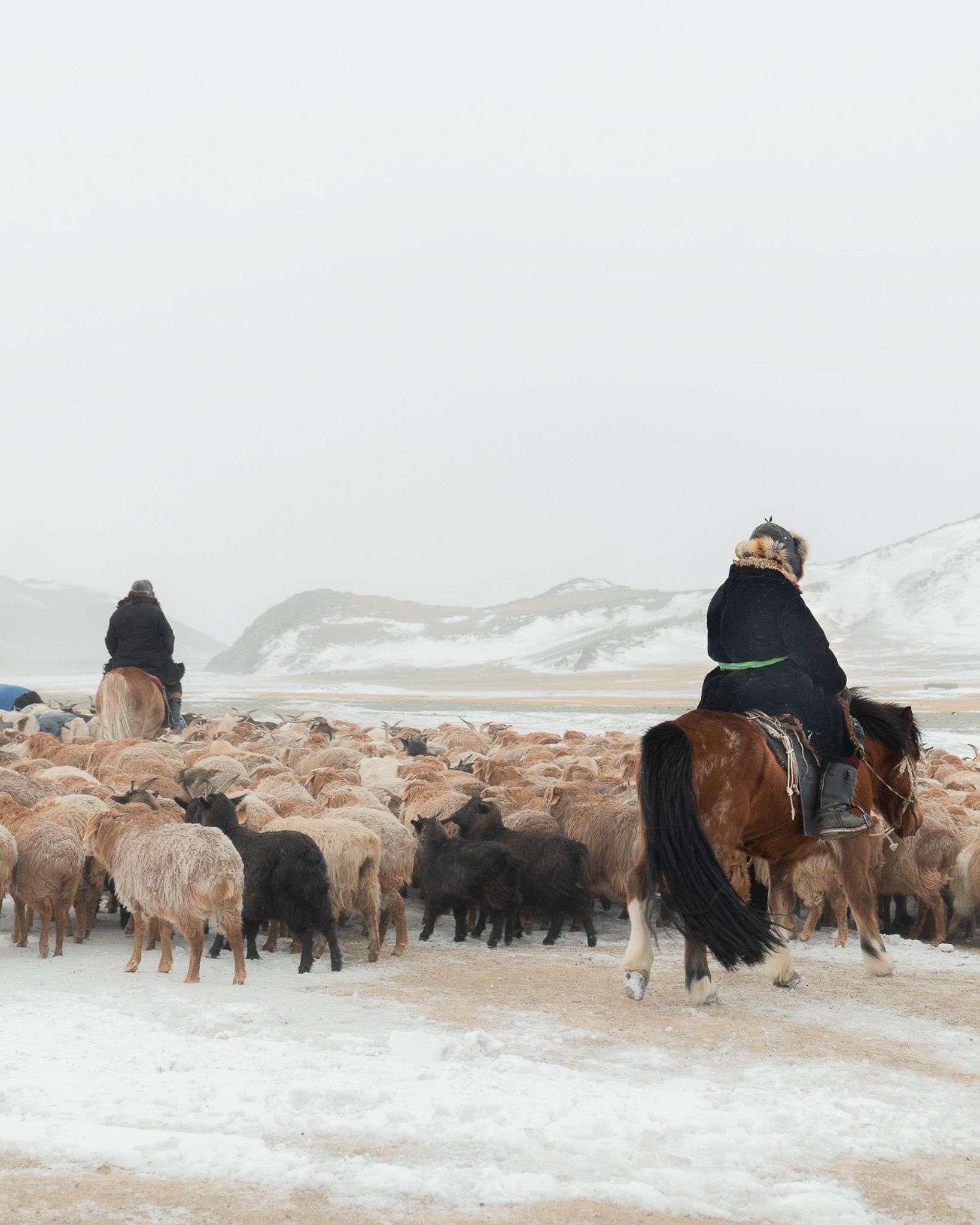
Many people wear their best deel during the holiday. Our guide to Mongolian traditional clothing explains the deel and how it is worn.
Tsagaan Sar Food
Food is the main event of every visit, and each host lays out the same core spread. Expect to eat at every house, even if you are full.
- Buuz: steamed dumplings filled with minced mutton or beef. Families make hundreds or even thousands in the days before the holiday and freeze them outside.
- Ul boov: layers of hard, oblong biscuits stacked in an odd number of tiers (often three, five or seven) and decorated with sweets, dried curd and sugar cubes. The number of layers reflects the age and status of the household.
- Uuts: the whole back and tail of a sheep, boiled and placed at the centre of the table. The head of the household cuts the first slices.
- Dairy: aaruul (dried curd), urum (clotted cream) and milk tea served throughout the day.
- Drinks: milk tea first, then often airag (fermented mare’s milk) or vodka. You can politely touch a glass to your lips and set it down if you don’t drink.
For a wider picture of what Mongolians eat day to day, see our guide to Mongolian food.
Tsagaan Sar in Bayan-Ölgii: Nauryz Instead
If you visit the Altai Mountains in February, you may be surprised by how little Tsagaan Sar you see. About nine in ten people in Bayan-Ölgii are Kazakh, and Kazakh families celebrate their new year at the spring equinox, on March 22, with Nauryz. Mongolian families in the province and in government offices still mark Tsagaan Sar, but the big celebration in Ölgii is Nauryz.
Nauryz brings visits between families, a special soup called nauryz kozhe made with seven ingredients, music on the dombra and horse games when the snow allows. Read more about Kazakh life in the Altai in Kazakh vs Mongol nomads and Kazakh food in Mongolia.

Visiting Mongolia During Tsagaan Sar: What to Expect
Tsagaan Sar is a family holiday, not a tourist festival. That shapes what a visit is like:
- Cities go quiet: many shops, offices, museums and some restaurants in Ulaanbaatar close for two or three days. Plan museum visits for before or after.
- Transport is busy: Mongolians travel to the countryside to visit relatives in the days before, so book domestic flights and buses early.
- It is very cold: February temperatures in Ulaanbaatar are often around -20°C, and colder in the countryside.
- Invitations are a privilege: if you are invited to a family, accept. Bring a small gift such as sweets or tea, receive food and drinks with your right hand (the left can support the right elbow), and try a little of everything.

A winter trip in the west can combine the holiday season with real eagle hunting in the snow. Our Mongolia winter tour stays with Kazakh eagle hunter families in the Altai, and winter eagle hunting in Mongolia explains what to expect.
Tsagaan Sar Etiquette at a Glance
- Greet elders first, and let the eldest person present lead.
- Accept food, tea and the snuff bottle with your right hand.
- Don’t refuse food outright. Take a little, even a single buuz.
- Don’t step on the threshold of a ger, and don’t point your feet at the hearth or at an elder.
- Leave the house with the small gift you are given; refusing it is impolite.
For more cultural do’s and don’ts, read what not to do in Mongolia. If you want to plan a winter trip around the holiday, contact Discover Altai.
Suggested Blogs:
Khovsgol Lake, Mongolia: Facts, Best Time and How to Visit
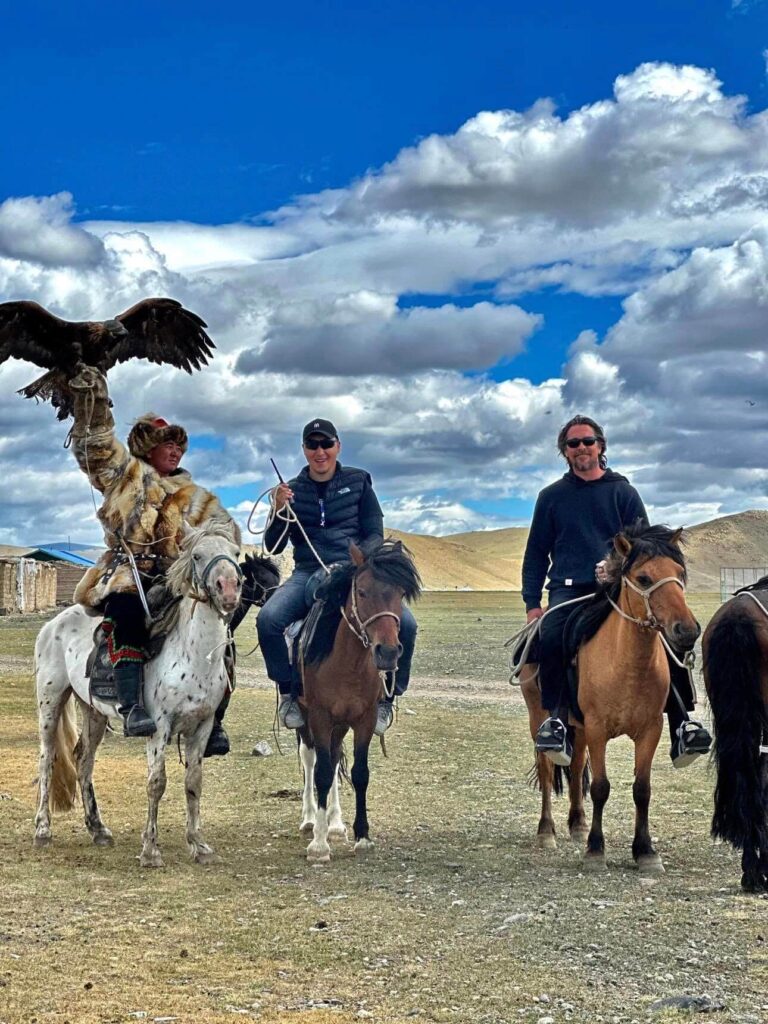
Khovsgol Lake is an ancient freshwater lake in Khövsgöl Province, northern Mongolia, near the Russian border. It lies 1,645 meters…Our history with Christian Bale in Mongolia to visit Mongolian Eagle Hunter
Who is Christan Bale Christian Charles Philip Bale is an English actor known for his powerful performances in both big-budget…Places to stay in Mongolia: About Hotels & Nomadic Homestay
In most locations near the sights of Mongolia, you can find quite comfortable accommodation by local standards, at least in…



When is Tsagaan Sar 2027?
Most calendars place the first day of Tsagaan Sar 2027 on February 7, with Bituun (New Year’s Eve) on February 6. It is a three-day public holiday; the Mongolian government confirms the official dates.
Is Tsagaan Sar the same as Chinese New Year?
They are related lunar new year festivals and often fall on the same day, but the Mongolian calendar is calculated differently, so in some years the dates differ by a month. The customs are also distinctly Mongolian.
What do people eat during Tsagaan Sar?
The main dishes are buuz (steamed meat dumplings), a boiled sheep’s back called uuts, layered ul boov biscuits, dairy products such as aaruul, and milk tea.
How do you greet someone at Tsagaan Sar?
With the zolgokh greeting: the younger person supports the elder’s elbows from below, often holding a blue khadag scarf, and asks “Amar baina uu?” (“Are you living peacefully?”).
Is Tsagaan Sar a good time to visit Mongolia?
It can be, if you have an invitation or a guide with family connections, and don’t mind deep cold and closed shops. As a tourist without local contacts, you will see little of the holiday itself.
Do the Kazakhs in western Mongolia celebrate Tsagaan Sar?
Most Kazakh families in Bayan-Ölgii celebrate Nauryz on March 22 as their new year instead. Tsagaan Sar is still a public holiday there, but it is much quieter.